Category: Arts and Culture

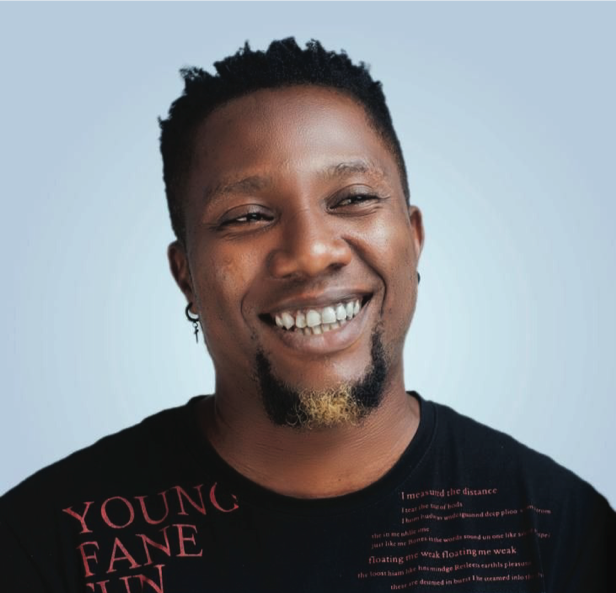
  • Nigerian singer TJ Eleweukwu is cruising on his latest Desire

    Nigerian singer TJ Eleweukwu is cruising on his latest Desire

    NIGERIAN SINGER TJ ELEWEUKWU IS CRUISING ON HIS LATEST DESIRE

    TJ Eleweukwu’s love for music can be traced back to his younger days. His mom was the music director of their church choir, so it became natural for him to sing. He grew the passion and eventually ran with it though college, at the University of Calabar, and later at IMT Enugu. He released his debut single, ‘Eleweukwu’, while serving as a national youth corps member in Nigeria. That track shot him straight to limelight and lent him a lot of recognition, relevance and respect. He began to collaborate with artists like Mr. Raw, SlowDog, etc.
    As time went on, TJ decided to put his musical career on hold to pursue his interest in construction. He did very well in that field but continued to write music and even did voicing for other artists.

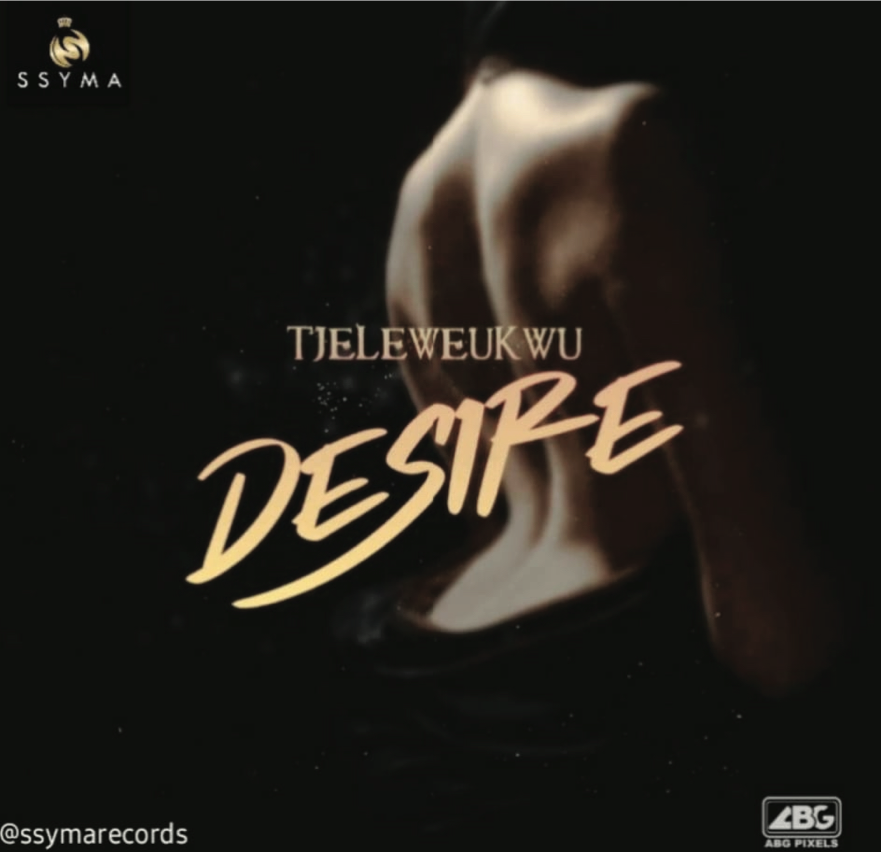
    A chance meeting with Ssyma Records boss, Uju Nnanna, deflect- ed TJ’s trajectory and shot him back to music, his first and greatest love. His latest release, Desire, an afro-highlife party favorite, is buzzing on the music scene and his fans are feeling the tremor. His label boss believes TJ has already secured a foothold in the music arena. She told Afrik Digest, “TJ writes music with so much ease, and his voice is definitely a powerful instrument.” Read more of our interview with TJ Eleweukwu.

    Can you tell us who you are please?

    My name is TJ Cartel, AKA Eleweukwu. I am a recording artist under Ssyma Record label, a Nigerian owned label with a base in the United States. I was born and raised in Imo State, Nigeria.

    How many albums or tracks have you released so far and why do you think
    your last single gained
    so much traction?

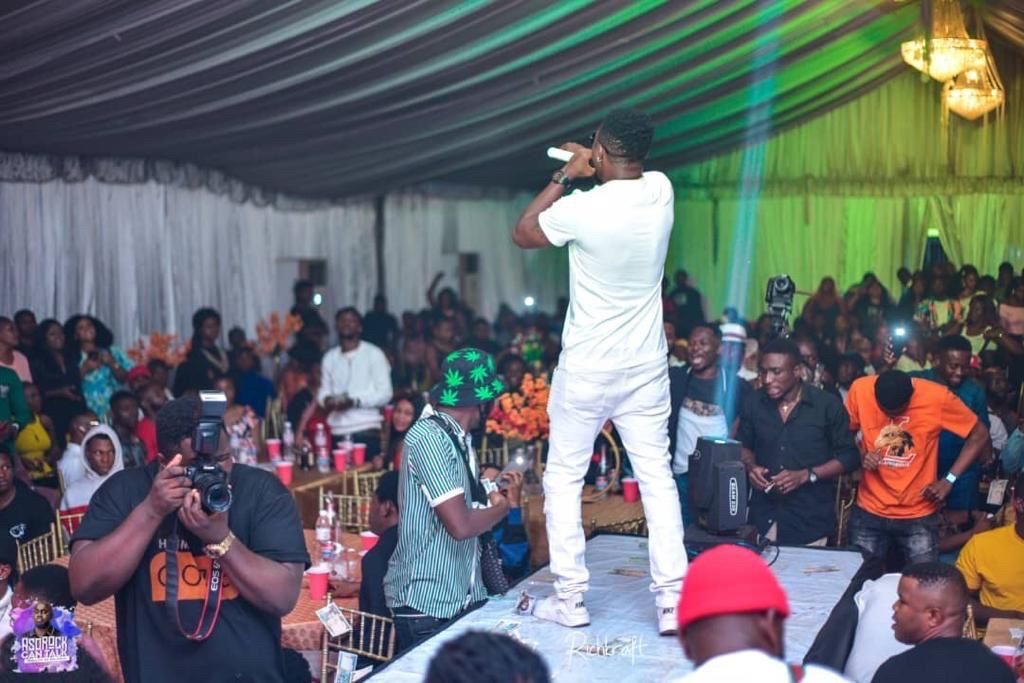
    I have released two full length albums to date, and a lot of singles. I believe that my songs are doing well and gaining a lot of traction because they’re really good music – not to be cocky, but they are pretty good! I also feature other artists that I love and respect, and I know my fans do as well.
    What first got you into music?

    My first inspiration, as far as I can remember, is my mom. My Mom was the choir director at our church growing up, so, watching her, I guess inspired me. I got my first limelight performing with the choir. Also, Boyz 2 Men inspired me a lot too.

    How would you classify your type of music?

    I would classify my type of music as Afrobeat, Afro pop, or highlife.

    What processes do you go through to create music?

    I’m not sure I have a particular process of creating my music. Each song has a creative process of its own.

    Who would you like to collaborate with?

    I’d like to collaborate with anyone who would bring out the best in any particular song of mine. I have no limits to whom I’d like to collaborate with.

    If you could go open a show for any artist, who would it be?

    I admire the works of a lot of artists and would like to open for some of them. I’d say Patoranking, for starters.

    What is one message you would give to your fans?

    I’d like to thank my fans very much for believing in me. I would also advise them to turn that belief inwards as well and believe in themselves and their dreams. To succeed we must chase our dreams with everything we’ve got!

    Do you have any talent you consider useless?

    In my humble opinion, there’s no useless talent. It’s all about time and place.

    What or whose songs would you sing in the shower?

    usually do gospel music in the shower.

    Do you have any other pass- ion aside from music that could be a career?

    My other big passion is construction, like building roads and stuff.

    Where would be your favorite place to perform?

    I’d love to perform in a few places – National Stadium in Surulere Nigeria. I would also love The O2 Arena in London and Madison Square Garden in New York!

    Do you have any upcoming shows?

    I have a lot of upcoming shows.

    Do you think the Internet has impacted the music business?

    We are all grateful one way or another for the internet. It’s impacted this business a lot. In a lot of ways, it has given a platform and a voice to those who ordinarily would not have had it.

    Which musicians in and outside Nigeria do you admire?

    Some international musicians that I’d love to work with outside of Nigeria are Eddy Kenzo, Chris Brown, Avant, Jason Derulo, Cardi B, Jamie Foxx… lots of them. Within Nigeria – I can’t even list them. Nigeria is brimming with talents. It would be impossible to choose.

    Is there anywhere you’d rather be or anything you’d rather have?

    Career wise, there’s a lot of places I’d like to be. Let’s start with global… lol. I’d also like to be surrounded by a lot of kids. I want kids. I love kids a lot.

    Have you ever got caught looking at a woman’s butt or boobs?

    Isn’t that obvious? Yea, I’ve been caught a few times admir- ing how God made women. Especially their butts and boobs.

    What is the best advice you’ve been given?

    Best advice I’ve been given is by my father. He gave me quite a few actually. He’d say to me “Always respect women”, “Do not abuse the attention they give to you”, “Stay where you’re celebrated, not tolerated”, and “Always stay Humble!”

    Is there anyone in your life’s journey that you are grateful for?

    Yes, there are a few. I consider it a blessing, when you have someone in your corner who believes in you, your vision, your art, and is there for you, good or bad. It makes the journey a whole lot easier. It’s a blessing when you’re made to feel like you’re a part of the family, and you’re treated like Blood. I’m grateful to my Label Boss. She’s very private and prefers to be in the background, so I’m not sure I can mention her name here. I’m sure you know who she is… lol. I’m very grateful to her. She is more than a boss.

    If you could change anything about the industry, what would it be?

    I’d like to encourage everyone in the industry to, as much as possible, pay it forward!

    How do you relax?

    I love to relax with friends when am not working, watch a good movie or go for really long walks.

    What’s next for you?

    Next is to continue to do the things I love, but bigger!!
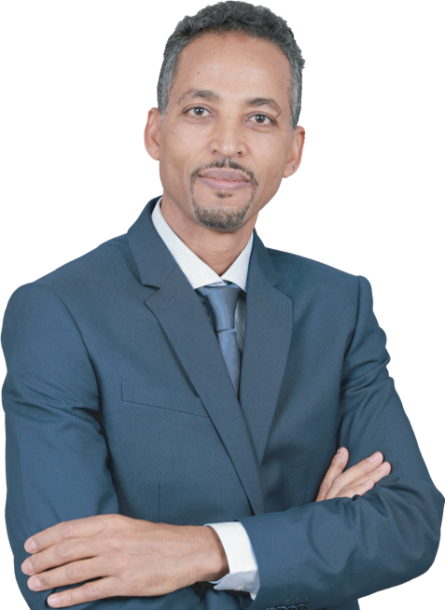
  • Amharic -A language brought about by religion

    Amharic -A language brought about by religion

    AMHARIC -A LANGUAGE BROUGHT ABOUT BY RELIGION

    Did human beings adopt language or religion first? This is a question which may need to be proved through research. I will not be doing this research for this article, rather, I will intuitively present my opinion about which was adopted first and proceed to show how Amharic is religious in comparison to English – the languages I know very well.

    Ever since humans existed on this planet the questions of ‘Who are we?’, ‘Where did we come from?’ and ‘Where are we going to?” have been a vital quest for the human mind. As part of the answer to these questions, people in history had submitted to a supernatural body and they called that body a lot of different names, starting from the Sun, Water, Thunder, and later in time, Alla, Allah, God, Dieu, Deus, Diyos, Theos, Chukwu, Nkulunkulu, Igziabher, etc. in different languages.

    Long before language was invented, people quested to know who or what brought them to this world, who or what brought the whole universe into existence. Then instinctively people began to associate themselves to a heavenly superpower and creator then started to fear and worship him in their own different ways. Logically, ideas or objects should come before power of expression to explain the idea. Then when language was invented, people named their gods and the creator of the universe different names according to their languages. Amharic is one of such languages, and due to how the language was invented, it is like a religion.

    When I say Amharic is religious, I mean that the concept of the Creator or God is embedded in most expressions in the language. Even if a speaker of Amharic is a follower of a different religion, the expressions he or she uses are the same, but the sound may be slightly different according to the specific religion. I cannot speak many other languages, but to put this idea into context, I will compare Amharic with English and give you some examples.

    HOLIDAY AND ANNIVERSARY GREETINGS

    A holiday greeting in English, can go like this, “Happy holiday/Happy celebration!” To which the other person replies the same way or just say, “Thank you”. The main theme of this greeting is happiness, making the holiday/celebration a happy moment. The equivalent in Amharic, can go like this, ‘Enkuan Adereseh/sh….” which roughly translates as “Happy that God let you get to this day”. The main theme in Amharic holiday greeting is safety, existence, and the safety or existence as attributable to God. The other person will answer, “Amen, enkuan abro aderesen” which again translates roughly to “Happy that God let both of us get to this day.”

    REGULAR GREETINGS

    In every day greeting, the English language send out good wishes for the times yet to come. For example, when English says, “Good morning”, it is wishing a second party a good morning ahead. The same goes for the afternoon, evening and the night. In Amharic, it is almost the reverse. In the morning it asks how a second person spent the night, “Endemn aderih/ader- ish?” (How did you pass the night), and the other person answers “Dehn, Igziabher Yimasgan!” (Fine thanks to God). Same happens in the afternoon when it asks how they spent the morning, and so on. This way, Amharic is asking ‘How have you spent the night?’ and the answer is ‘I’m well, thanks to God’. Here again, the theme is safety, existence, and the mercy or will of God.

    Here, the theme is similar, both English and Amharic attribute the sneeze to God. The people who sneeze are wished blessings from God by persons present.

    Whereas, when visiting a patient, English says, “I wish you well”, “I wish you fast recovery”, “I wish you feel better soon”, etc. These are wishes for the ‘betterment’ of the patient, but they do not directly invite or refer to God. Amharic say “Igziabher yimarh/yimarish” which

    roughly means “Let God have mercy on you”, “Let God heal you soon”. The initiating party wishes that God heals the patient and the patient answers “Amen”, which they can translate to, “I accept your wish and prayer to God,

    RESPONSE TO SNEEZING AND VISITING PATIENTS

    In English, when one sneezes, a person who is present may say “Bless you!” Conversely, an Amharic second party says, “Yimarh/Yimarsh!” which means, “Let God have mercy on you” or “Let God forgive you”.

    RECEPTION

    In English, we receive a person by saying, “Welcome” (Well come), which seems to match the Amharic’s theme of safety and wellbeing. Amharic also says “Enkuan dehna metah/metash” meaning “Welcome, happy that you come safely”.

    In these examples and
    many more other instances, Amharic directly refers to God or the Creator. This characteristic is embedded in the language and used by every speaker of the language in most social interactions. God’s name in those expressions’ changes according to the faith. If the parties are Muslims, for instance, they change the name of God to Allah but the translation remains the same.

    A language carries the faith, philosophy or thoughts of a speaker, but to figure out whether it comes before religion may be seen as the egg and the chicken puzzle.

  • Aurora ranks highest on immigrant champions list in Colorado

    Aurora ranks highest on immigrant champions list in Colorado

    AURORA RANKS HIGHEST ON IMMIGRANT CHAMPIONS LIST IN COLORADO

    The city of Aurora now sits at the very top of the list of immigrant champions in Colorado on an index that lists cities that are committed to their immigrant population. The index includes several cities in the United States, ranking them according to their commitment in supporting the new Americans.

    Among the ranked cities in Colorado the Aurora scored 3.25 on the Cities Index, placing the city on the highest place in the individual categories for economic empowerment, inclusivity, government leadership, community, emergency management and job opportunities.

    Since 2015 when it unveiled its first plan to advance the prosperity of immigrants in Colorado, integration and inclusion have been of great priority to the city of Aurora. It has consistently put forward programs that aim at elevating immigrants resident within its borders. Aurora has been working on a 10-year immigrant integration plan titled, “Aurora Is Open to the World.” The integration plan had been crafted to lend a listening ear to the underserved and under-represented members of the community, and the strategies include supporting vocational training, licensing and entrepreneurship; ensuring access to translated

    materials published by the city and building language support through vendors and city staff; having an office dedicated to immigrant services and supporting the immigrant population through resolutions and programs; advising City Council on issues related to immigrants and diversity; and providing programs that support and guide immigrants through the naturalization process.

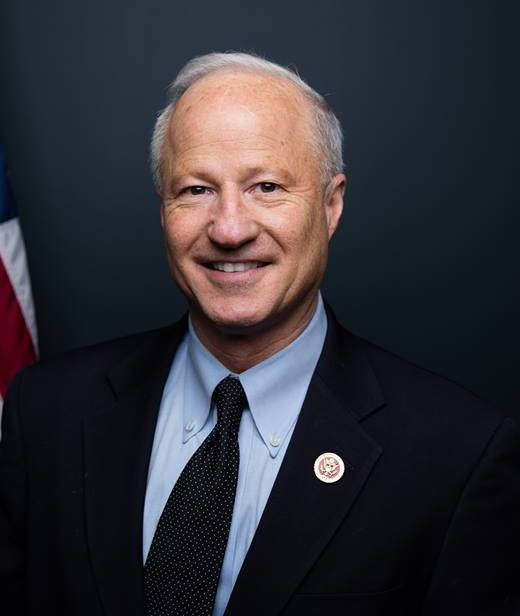
    In a press release, Aurora Mayor, Mike Coffman responded to the index score, “This ranking shows the important work that’s already been done in supporting our immigrant communities and serves as a foundation for our continued efforts to be a welcoming city to all who want to make Aurora their home.”

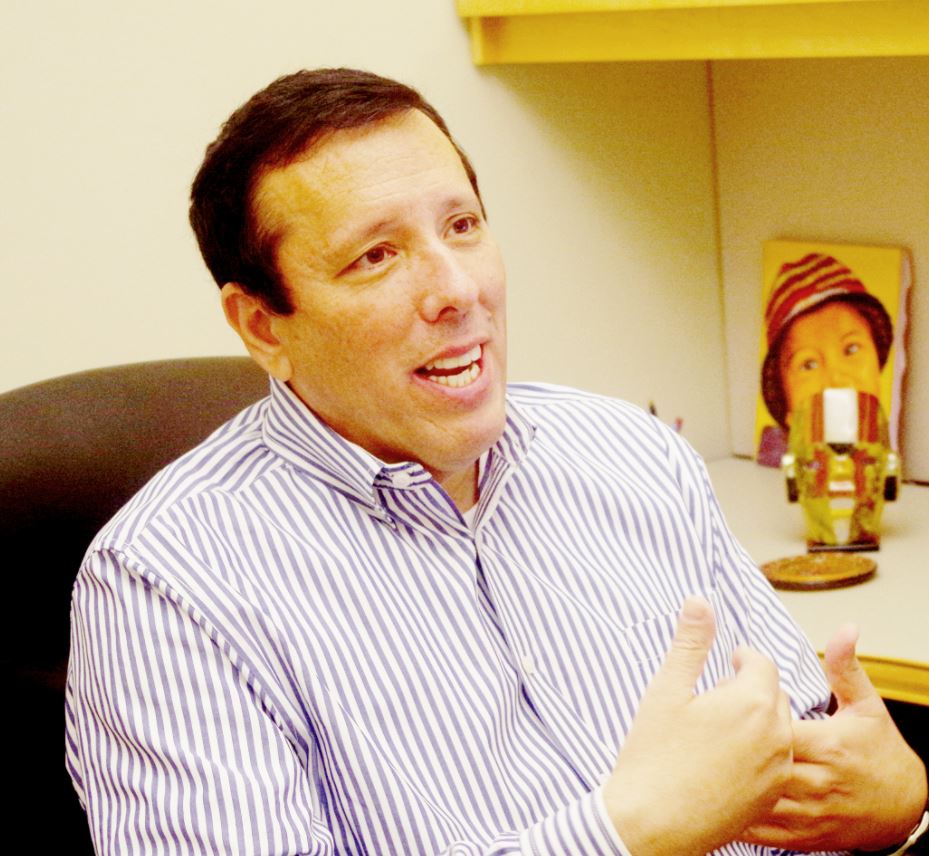
    Aurora is the third-largest city in Colorado and one of the most diverse cities in the United States. The city has been able to achieve tremendous success because of the activity of one of its most significant offices set up to handle immigrant matters. The Office of International and Immigrant Affairs continues to constructively partner with the diverse community groups in the state. In his response to the ranking, the manager of OIIA, Mr. Ricardo Gambetta said, “I’m excited to see this work recognized by New American Economy and look forward to continue improving our services and engagement with our immigrant community.”

    He went further, “From innovative leadership programs like Natural Helpers, to a wide network of community partners serving our immigrant and refugee community, Aurora has been at the forefront of how to create an integrated city.”

    New American Economy is a bipartisan research group that advocates for smart immigration policies at all levels of government, and evaluates policies relating to the immigrant population to gauge how well immigrants are faring in their adopted cities.

  • South Africa

    South Africa

    SOUTH AFRICA

    South Africa is located at the southern point of Africa. During the seventeenth century, Dutch colonists from the Netherlands (known as Boers) settled there. Over the next 200 years, British, French, and German settlers joined them. At first, they settled along the coast, but eventually settlers moved inland. These settlers developed a unique cultural identity and language and became known as Afrikaners. Their language, Afrikaans, began as a spoken dialect, but developed into a written language, too. Over the next 300 years, the Afrikaners battled indigenous (native) African peoples. established independent republics in the interior, and fought the British in two wars known as the Anglo-Boer Wars. All territories were finally united on May 31, 1910, to become the Union of South Africa. (The Republic of South Africa was established fifty years later on May 31, 1960). In 1910, there was a clear division between the Afrikaners (who belonged to Afrikaner political parties, spoke Afrikaans, supported Afrikaner cultural and linguistic endeavors, and belonged to one of the Dutch Reformed Churches) and British-oriented, English-speaking South Africans. In 1948 the Afrikaner-based National Party came to power. Under a strong religious philosophy and racist social policy, the National Party started to implement the system of apartheid. Apartheid separated the people of South Africa by law along color lines. By the 1980s, there were many Afrikaners who joined the effort to do away with apartheid.

    Food in Our Culture

    The everyday meal of the Afrikaner is characterized by an emphasis on meat, starch, and cooked vegetables. Green or fresh salads are rare. Breakfast features some kind of porridge. Away from the coast, Afrikaners learned from the native peoples to make a gruel called stywe pap or putu pap (stiff porridge or putu porridge). It is common to have this porridge for breakfast with milk and sugar, and also to eat it with meat or boerewors (boer sausage, made of beef and pork) at a braai (barbecue). Venison has always formed part of Afrikaner dishes, as grazing animals could be hunted or culled from national parks. Sosaties (skewered marinated meat similar to shish kebab) is frequently included in a braai . A recipe for bobotie , another favorite dish accompanies this article. Fish has become popular for those living near the ocean. Two foods from pioneer days are still popular among Afrikaners: beskuit and biltong . Beskuit (rusks) are biscuits that have been oven-dried. They are served with coffee. Biltong are strips of dried meat (traditionally, beef or venison; more recently, elephant and ostrich). The biltong are treated with salt, pepper, and spices prior to drying.

    Potjiekos

    Marriage in Our Culture

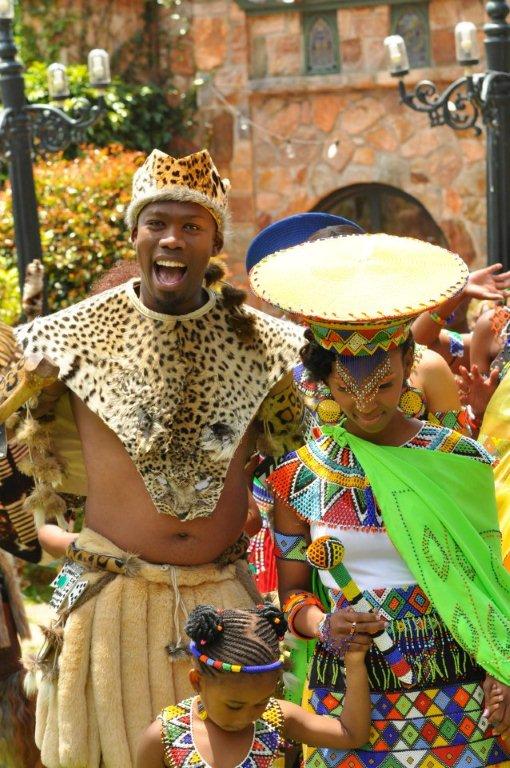
    Pre-Christian marriage in black communities was based on polygyny and bridewealth, which involved the transfer of wealth in the form of livestock to the family of the bride in return for her productive and reproductive services in the husband’s homestead. Christianity and changing economic and social conditions have dramatically reduced the number of men who have more

    than one wife, although this practice is still legal. Monogamy is the norm in all the other groups, but divorce rates are above fifty percent and cohabitation without marriage is the most common domestic living arrangement in black and Coloured communities. Despite the fragility of marital bonds, marriage ceremonies are among the most visible and important occasions for sociability and often take the form of an elaborate multisited and lengthy communal feast involving considerable expense.

    Source: Everyculture

  • Touring the Goree Island of Slaves in Senegal

    Touring the Goree Island of Slaves in Senegal

    TOURING THE GOREE ISLAND OF SLAVES IN SENEGAL

    Just as the sun began to force its light on the suburbs of Dakar Senegal, I made my way to the Port of Dakar, one of the busiest in West Africa. There were several hundreds of us; some adventurers who came from within the country, and others who came as tourists from all over the world. All of us were headed toward the famous House of Slaves in Goree, which sits in the island like an over-fed crocodile.

    We left the crowded port of Dakar at 10:30 am, on one of the Mondays in July, 2018. As we embarked the boat, the mood slowly started to change. People, mostly tourists, were now less talkative. I could feel reality sinking in; especially for the African American couple that approached me back at the port. They told me it was their first time visiting the island. They had always wanted to come but could never afford the trip until now.

    They asked questions about our destination so I told them a little about the history of the island and how I used to visit a lot before moving to the US. I told them that when I lived in Senegal, I visited the Goree three to four times a year. I mostly accompanied family friends from outside the country, cousins or my personal friends. Over the years, I had become a regular visitor, so much so that I mastered the tour, even the tour guide recognized me. 

    I was familiar with the Island and all of its history, but there was a difference this time. As we started to see the old building, five minutes away from the Island, I found myself lost in the loud silence of the boat. I know this silence. This is the moment I used to make fun of visitors. The moment when everyone goes quiet, when the abundance of tears takes over the loudness. This time was different for me though; I was not observing, I was lost in my thoughts. Perhaps living in the US and learning about slavery in America and the African American journey has lent me a new identity.

    The loud voice of the captain announcing our arrival snapped me out of my thoughts. A tour guide greeted us, before separating us in two groups, the first for the English and the second for the French speakers. I went with the English group. I had heard the story many times in French, Fulani and Wolof, so I wanted to hear it in English for the first time. Besides, the African American couple had invited me to join their group. 

    As we made our way through the narrow streets of the city, I explained to my new friends that all the houses were randomly painted in yellow, red or white because the whole island had been built in the 18th century and the colors represented the different colonial countries that occupied the island before Senegal gained its independence. The white houses were built by France which was the last occupier. The yellow houses were put up by Portuguese colonizers (the first occupier) who built the first slave house before being replaced by the Netherlands, who owned the red houses. 

    On the last street, leading to the famous House of Slaves, stands the Statue of Liberation. This house of slaves was the last one built on the island. The Statue of Liberation is a slave couple standing on a giant drum with a broken chain. The drum symbolizes the courage of the couple, and the force required to break such chains. 

    We entered the House of Slave at 12:20 pm, and the tour began. The tour guide explained the significance of each of the houses. He cited renowned people who had visited the island, which included three American presidents: Bill Clinton, George W. Bush and  Barack Obama. While visiting, Pope Jean Paul II apologized to the African continent on behalf of the Catholic Church. Nelson Mandela, who during his visit, stood in the punition room (punishment room) for five minutes, before bursting into tears. The punition room is a small room, no larger than three feet with walls about four feet tall reserved for rebellious slaves. 

    As we entered the other rooms, our tour guide explained how the slaves were separated mostly according to age and gender. Slaves were also separated according to weight, and adults who weighed less than 60 kilos were kept in a separate room where they were well fed, as slave traders would not buy slaves who weighed under 60 kilos. Such slaves were regarded as being unable to survive the long trip to the New World and could be wasted. 

    After touring all the slave houses and rooms, we were now headed to the famous Door of No Return, which is at the end of a long narrow chamber. The tour guide stood at the door and pointed to where the boats were docked, and explained that Goree was the last stop the boats made because its port is the closest one to the Americas. He directed us to take turns to stand at the door. 

    The famous Door of No Return is without doubt the most emotionally charged stage of the tour. Almost everyone broke down as they stood at the door; perhaps imagining themselves as slaves, chained, desparate and helpless! Or maybe just picturing the thousands of slaves that must have stepped foot on that same door. 

    It was an emotional moment but I had no tears on my face, largely because I had been there many times before.

    The Senegalese government claims that over 6 millions slaves were taken away from this house but some historians argue that only a few thousand slaves have been held in this place. They argue that there couldn’t have been that many slaves because the place was built near the end of the slave trade in 1776. Others argue that there has never been any slaves in this House of Slaves, although it is recognized by UNESCO.

  • Africans in America – A call to come together!

    Africans in America – A call to come together!

    By Amlaku Eshetie

    As Africa was the land of the pioneers, the origin of humanity, its people travelled and diffused into the rest of the world in two forms of travel or journey. First, voluntarily – a journey in search of better weather, better land, better situations to live and thrive. The second and later journey was forced by the colonizers – Europeans and Americans.

    For the latter form of Africans, leaving their native land was so massive and grave. The inhumane, harsh treatment and exploitation was so denigrating for the human race in general. African youth, men and women, were forcefully taken to the cotton and sugar cane plantations in the Americas. Not only did the African labor cultivate and harvest the industrial crops, but they also built the infrastructure of the major American cities over several centuries.

    And now, in our time when slavery was left to history, there is a third and new form of exploitation of African youth – immigration! Including myself, many Africans left (and are leaving) Africa immigrating to mainly the United States of America and Europe. In doing so, they are intergenerationally feeding the labor market and are building the economy of the host countries.

    This happens because of the level of hegemony or authority on two realms: economic and political! If a nation or a continent is economically strong and powerful, it is also possible to resist the pressure that any kind of politics or supremacy throws onto it. The prerequisite leading to economic, and hence, political power is education. Citizens have to be well educated so that they can create infrastructures and build their respective country’s economy.

    Citizens of most African nations were just contained with what nature endowed them with and never aspired for more for two major and obvious reasons: lack of education and lack of conducive and supportive leadership. Even those who have been lucky to go to school and get educated were educated in colonial education systems and could not tap into local wisdom to solve local problems. On the contrary, we left our respective countries by denouncing the incumbent leadership and political system at the time of fleeing.

    As a result, the United States of America has been benefiting a lot in exploiting both forced and voluntary immigrants of Africa – historical and modern slavery! Africans made America and now are continuing to sustain the hegemony of America both in economy and politics.

    Well, it is not bad to help and be helped! We work for America and the American system houses and supports us to nurture our talents, realize our ambitions, and support a few of our kins back in Africa from the wealth we make here. Some of us even start some forms of investment back home. That’s a great thing to do as well. However, whatever we do individually never get Africa out of the vicious cycle of poverty, insecurity, violence, and emigration. How about all Africans in the United States join hands and minds? How about if these joined hands and minds to create and implement continental projects focusing on peace and security, regional infrastructure, health, and education?

    If Africans living in the United States come together and work together in peace and love, will there be any reason that we can’t bring all our people together back at home as well?

    Let’s get all Africans in the United States united! Let’s create an ambitious, stretched goal of remaking Africa. It is possible to build both America and Africa and make both our homes. If Africa is equally strong and wealthy, people can freely travel back and forth, invest and live in both continents; Africa will be for all Americans, and America will be for all Africans. Ambassadors of African nations in the USA will be our liaisons and messengers. We will be the brain house and the funding source and the people and administration on the ground will be implementers of our farfetched, elevating projects.

    I’ve not researched, and I do not know if there are any similar formations. However, it is possible that those existing could not be more than a regional entity, if at all targeting beyond a single nation. This one is going to be different and all about AFRICA as ONE! This is the spirit of our Pan African forefathers: Du Bois, Kwame Nkrumah, Haile Selassie, Julius Nyerere, and their compatriots!

    Imagine all of us, represented from all the 54 states and the African American brothers and sisters, coming together in love and purpose. Imagine when this love and purpose extends back home and creates peace between and among the African sister nations. Imagine when our poor, innocent, strong, and loving African mothers and fathers benefit from our transnational or cross-border projects. Imagine when leaders sit around the same table and talk about cost and benefit-sharing. Imagine all the kids going to school in peace and happiness. Imagine all the youth put their minds and hands to work, not to stones and weapons of destruction. Imagine when our kids raised in the USA go back to their ancestors’ land to share skills and knowledge with their cousins. Imagine…imagine all of that!

    Steps for Action

    Interested and like-minded Africans and African Americans here in Colorado will meet a few times to brainstorm to develop or expand this idea. When the idea matures, I suggest that we form a non-profit organization. This organization will be registered at a federal level, and it will work to bring all the black race and problacks together across the board. This global organization will have chapters in different countries such as Canada, China, Germany, and Australia.

    The first project will be ‘Peace Awareness and Building”, which starts from the networking and relationships of the members who represent their respective African countries. Although our politicians are often in friction, the people at the grassroot level know nothing about it. What they need is peace and security in order to be able to toil hard to win their daily bread.

    The next projects may focus on standardization and liberation of financial transactions – could be to the extent of aspiring for one currency for all Africans (which appears to be a bit too early but it should be on the table), supporting a Pan African University so that it can open campuses in every African capital city, designing or supporting inter-regional railway and bus transportation projects, learning our history and using our respective native language to learn/teach, so and so on.

    This is just an aspiration or wish project of a dreamer African, me – Amlaku. Is it your aspiration too? Let’s add your thoughts and aspirations! Let’s come together and realize our wishes for Africa. You don’t agree with this aspiration? Do you call it a fantasy – too good to be implemented? No worries, what alternative and practical vision or wishes do you have for Africa and beyond? Bring them forward and let’s all support you if your ideas are more practical or workable than this one! Let’s come together to be a lot stronger!

  • One Brave Bone within

    One Brave Bone within

    Unleashing the power of creativity

    By: Deepali Lindblom

    Everyone has a brave bone in their body, at least one.

    You can do it.

    – Princess, Samba the Coward

    Kritti, aged 12 is part nervous, part excited for the rehearsal with live adult musicians for Samba the Coward, a new play she has been a part of since June. This is her first public play and she is playing the role of a Queen with a lot of lines. She has memorized them well but still …

    The rehearsal begins. As the music ends, Kritti walks in with Jeszenne, a senior high school student who later plays the princess but is now her prime minister in this scene. The dialogue commences. Kritti falters but then something extraordinary happens. She smiles and improvises. Just as a true actor would. It takes courage to speak in front of a public, even more so to do it in a language not your own. Kritti Basnet arrived in the US in winter of 2017 along with her parents and 3 brothers. She was born in a refugee camp in Nepal and had lived there until through the US Refugee resettlement program they were one of the lucky ones chosen to come here.

    And so, it was the summer of 2017, when I met Kritti at the camp at Crawford Elementary School, where I was teaching Bollywood dance. Naturally shy, she would stand at the back and smile. Thankfully, I speak Nepalese and so I could connect with her and several other recently arrived refugee children from Nepal.

    This is my work. I use the medium of dance, theatre, and storytelling, as a creative outlet for our refugee children/youth. In the last four years, I’ve seen how opportunities for self-expression can help children/youth to practice unleashing the courage and strength within. Whatever struggles they are facing, they can put their energy into something that is fun and creative. Like this new play, Kritti is in. Which is all about converting fear into courage. Especially those inherent. Samba the Coward is a popular African folktale but one that I also grew up listening to in India. A tale that made such a great impact on me, that all my life, I’ve embraced the unusual, the unfamiliar, and the unknown. Probably why I ended up in Colorado and founded Roshni, an Arts organization that strives to bring Joy, Heal, and Inspire. And to promote Empathy.

    Samba the Coward is a new play produced through our youth program New American Stories, where we hope to foster a sense of creativity and ownership among the participants from diverse ethnic backgrounds. This play will premier at the second annual New American Arts Festival on Tuesday, 14 Sept, at 5 pm. All the actors are BIPOC youth with 90% having arrived in the US in the last 5 years. Korey Wiley and Theo will provide live music, while Rafi’ah will dance.

    Being in Samba the Coward has been unlike anything I have ever experienced. Working with my other amazing youth actors has been fun and I made new friendships which is why theatre is so cool. It brings together people of different ages, religions, and ethnic backgrounds. It focuses on what they have in common rather than discriminating against what’s different.

    • Jeszenee Turner, Senior at East High School

    I love being a part of the play because it feels magical to become a different person with their own personality

    • Ana Pareira Alves, 4th grade St. Mary’s Academy

    Remembering so many lines was hard but with the help of the group, it was possible. I learned how to act and be more confident. I also think that telling a story of finding courage is relevant because it can really inspire others.

    • Kritti Basnet, 7 grade, Aurora West Preparatory Academy

    About the Festival:

    New American Arts festival is an initiative of Roshni, an Aurora-based arts organization to promote Diversity, Inclusivity and racial equity in the performing arts. This year’s theme is Cultures on the Margins, and it will take place in Aurora from September 11-18, 2021, showcasing multiple genres of 52 live performances. For more information about the festival and artists: Roshniislight.org

    About Roshni:

    Roshni, meaning Light in several languages, aspires to work with those at the margins, to share stories with them, but more importantly, help them tell their stories.

    For more information: Roshni- islight.org. Instagram @rosh- ni_islight. Facebook #roshniligh- tingtheway. YouTube Channel: Roshni, Step into the Light. Festival YT channel: New American Arts Fes

  • Colorado Black Arts Festivals 2021

    Colorado Black Arts Festivals 2021

    Building a bridge of unity for African immigrants and Black Americans

    The long history of racism and anti-black inclination in the United States has caused so many American blacks to be at the bottom of the economic and social ladders, concentrated in dysfunctional “hoods” and struggling to make ends meet.

    By: Mohamadou Cisse

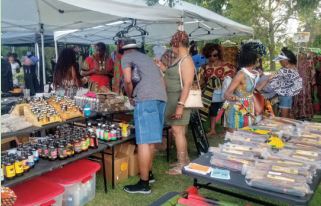
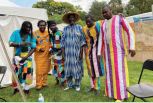
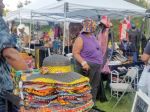
    Community leaders from Ghana, Nigeria, Senegal, Sudan, Ethiopia, Kenya, and other countries of the African continent engaged on July 9th, 2021, with an audience composed of various segments of the African diaspora of Colorado, in a conversation that was aimed at building bridges of understanding and developing friendship among people. The conversation was part of the agenda of 35th edition of the Colorado Black Arts Festival’s opening day. That day celebrated the diverse cultures of Africa and its nations.

    Community members of various countries of Africa came together to showcase culture and share traditions. One cultural highlight in the program of the day was the Ethiopian coffee ceremony. The audience watched Mickias and his crew demonstrates how coffee is traditionally made in his country and showed some of the coffee rituals practiced in the East African country for ages. The freshly brewed coffee was passed around for tasting. Mickias is the owner of Lucy Coffee, located in the Denver metropolitan area.

    Disk-jockeys and singers entertained the crowd throughout the afternoon. The culminating performance of the day was provided by the Sing Sing, A group of five incredibly talented Senegalese percussionists, based in Boston. Colorado Black Arts Festival is a highly anticipated three-day event that showcases black talents, arts and crafts, cultures, and traditions. The festival draws visitors from all over the country each year, as a major venue to celebrate the cultural and artistic contributions of blacks in the Rocky Mountain region.

    In dedicating the opening day to the celebration of African nations, the leadership of the festival asserted the necessity to provide a dynamic space for Colorado African Diaspora and Americans to thrive and work together towards improving the amicable relationships between the two groups. American Blacks and African immigrants have continued to have a complex relationship, sometimes characterized by fear and ignorance; other times expressed in solidarity, based on the acknowledgment of a common plight.

    As a result of the long history of racism and anti-black inclination in the United States, so many American blacks are at the bottom of the economic and social ladders, concentrated in dysfunctional “hoods” and struggling to make ends meet. Also, when they arrive here, most African immigrants often find themselves living in rundown neighborhoods, the only places they can afford.

    So, the first impression these groups have of each other is mostly formed in competitive settings where they contend for scarce resources in order to get ahead. Rather than a development of understanding and amicable relationship, competitors tend to engage in adversity, which can generate feelings of animosity.

    The mainstream media’s bias against Africa feeds the ignorance and prejudice, so prevalent in a country where a sitting president had no problem referring publicly, to African nations as shithole countries or calling a black athlete ‘son of a bitch’.

    The audience enjoyed a highly electric drumming performance by Sing Sing. The session reminded some in the audience when, in the 90s, legendary percussionist Mor Thiam and his wife, Ndeye Gueye, parents of Senegalese American rapper AKON, played at the Colorado event.

    Coordinated by Sharon D. Diop and fashion designer Amadou Dieng, who is also the media strategist at ALG, the celebration resulted from a partnership between African Leadership Group and Colorado Blacks Arts Festival, based on exploring ways of building goodwill bridges throughout the diaspora.

    Founded by former banking executive, Papa Marie Tew Dia, African Leadership Group is a Denver-based nonprofit organization which provides support to various communities in Colorado and is also a strong

    advocate for the African immigrant community.

    Perry Ayers and his brother Baba Oya founded the Black Arts Festival more than three decades ago to celebrate the dynamism of black heritage and culture in the Rockies. In his welcoming remarks, Perry spoke of his dream of creating space for continuously strengthening relationships and of greater collaboration between the African diaspora and Americans. His dream is being carried on by his niece, Dana Manyhotane, who is working tirelessly alongside many volunteers who made Colorado Blacks Arts Festival the success story it has become.

  • ‘Ma Rainey’s Black Bottom’ is a Hard, Fast Lesson on the Blues

    ‘Ma Rainey’s Black Bottom’ is a Hard, Fast Lesson on the Blues

    Ma Rainey’s Black Bottom drags to a different beat, and no one has any other choice but to drag on with her. Expertly performed, directed, and produced, this film brings Broadway back at a time when the world so desperately misses the stage. A thick molasses of blues that conducts like a musical, every word is a rhythm, and the actor’s step in impeccable time. This production is a hard, fast lesson on the broken heart of the blues.

    “You sing ’cause that’s a way of understanding life.”

    The play turned feature film is based on the mother of the Blues herself Gertrude Pridgett better known as Ma Rainey. Her music was the essence of southern grit, style, and experience. Her parents were part of a traveling minstrel show in the late 1800s which is where she may have gotten her desire to perform. Ma Rainey told every last bit of her story through music keeping it ahunnit about poverty, sex, prison,

    magic, superstition, drinking, and the whiles of her travels. Let’s just say, there is no Lizzo without Ma Rainey, there is no Rihanna without this mother of Blues hands down. The film captured not only the essence of Ma, but of Blues and the black experience to a T. This is the essence of August Wilson’s plays.

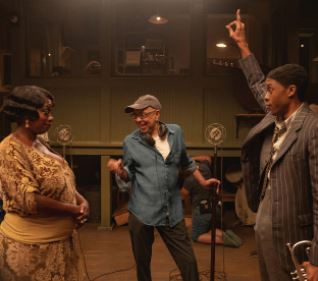
    We begin with dogs barking and two black boys running through the dark woods, you think – dang we starting like this? The boys emerge at a long line leading to a large white tent among the trees and a feeling of relief takes over. A strong sultry voice is heard singing in front of a chorus line of women, dancing to that sexy swing. You can tell everyone would give their mommas left foot to be in that audience every night. What a setting, the audience is in a mood now! Chadwick Boseman’s character, Levee, is eyeing one of our dancing girls; the same girl Ma is eyeing. The young blood that he is, he jumps up in front and starts playing a different swing, but it is clear he is not the conductor of this symphony. Ma throws daggers with her eyes, and this is the tempo set for the concert of this film.

    “You done seen the rest, now I’m gonna show you the best.”

    August Wilson writes plays for study, each word is to be picked apart, thrown against a wall to see what kind of mark it makes. We see Chadwick Boseman’s character, Levee, pull at the rehearsal door to open it once or twice in each scene. It just won’t open. What does it mean? What is Levee’s unspoken desire to leave, almost a habit, a knee-jerk reaction that becomes a habit? These are the questions and observations a thespian is given when they see a beat, a moment like this. It is rich and full of more than what one person can perceive. It requires dissection. The tensions seem so small but through the screen, they hit like a dagger, as a Black person, it hits like a ton of brick full of knives. You understand the strain and stress, but that is the blues.

    The performances allow each word to hit the cement, displaying every piece of text falling ever so slowly so we understand truly what it means. Expect nothing less from the great George C. Wolfe. A director for the culture from ‘Bring in Da Noise Bring in Da Funk’ to well on past it. Wolfe can pull out the heat in a room and direct it to a furnace keeping that ish hot for the camera. No joke, each character moves with his fire, his given intention for the scene. Every actor soaked in that fever and together it made the perfect stew.

    “If you are gonna tell it, tell it right.”

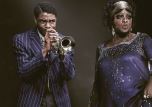
    The cast brings a sweet and tangy flavor to the mix. Colman Domingo (Ali, Euphoria) plays Cutler, a man who has seen enough and believes faith’s what keeps him together. His performance is cool, calm, and the perception of collect, but like any August Wilson character he is shaken, and that treble can be seen out of the cracks here and there. Coleman sits in this character well and commands space at all the right times. The same can be said for his bandmates. Glynn Turman playing Toledo brings generational thought and presence to the film. His effortless delivery and vulnerability will sweep your heart away. Michael Potts playing Slow Drag, our bassist of the group, lays down the foundation for each scene. He is the stock and ham hock of the stew. Ma Rainey is the spoon, the sauce, the drippings, and the pot on the kettle. Viola Davis’s performance made me want to cut myself a switch, her glare was the backhand of every one of my ancestors, I was sweating! She dug deep into her ancestral memory to pull out 7 generations behind herself to the forefront. Glistening in the power, she stood with a hand on a hip and a firm flat foot pointed at her target. You know that stance so you better just do what she says.

    Davis’ portrayal whips you into shape and scolds you forever forgetting the intelligence, sharp wit, and power of a Black woman. Her poignant speech about silence has your thoughts swimming; it’s in her delivery and in the direction that you see the spark in between her teeth lighting your inner conversation. The character talks about being used and finding the power in the moments before they throw you away. You’re proud but it is a painful type of pride.

    “This be an empty world without the blues.”

    Having not read the play, every turn was like a surprise. Boseman was dancing across the scene, and I tried to keep up. He is the new cat to this old alley of a band, trying to swing the notes to a new beat. He is unrecognized for his time, too ahead of it for them, and Ma ain’t having it.

    His infectious smile told the story of Levee but his story at the same time the mark of an extraordinary talent flying in his element. I wish he were here to receive this praise, and I wish he were here to bless us with more.

    We bear witness to Chadwick’s soul in this piece. He performed like a man whose life belonged to the script, and his bones made from the brick and mortar of the stage. His tears fell like more than what they seemed. Knowing what he was enduring does add a layer but even without that knowledge, it’s beyond this world what he does with this character. He becomes the thorn of the piece and shocks you right through the end.

    Ma Rainey’s Black Bottom is a beautiful piece of film that captures the root of theater and the very gut of Blues. Boseman and Davis give the performances of their lives and honor the spirit of all those brought forward in this piece.

    Source: blacknerdproblems.com
  • Amharic, the World Class Language

    Amharic, the World Class Language

    Every language is complete on its own. All languages help their users to fully express themselves, interact with others and communicate daily. They can represent the social and political; historical and religious; traditional and cultural, etc. constructs of their respective speakers. In this regard, all languages are equal and complete. However, when we consider the linguistic features, the scientific/technological advancement, the semantic, syntactic, and phonological richness, etc. of the languages, some languages can be richer, more advanced, and more complex than others.

    English language for example, has amassed so many words and semantics from the rest of the world’s languages. It has been a language of politics (as British used to be the colonizer of many parts of the world), and it has also been used as a language of international trade/business and education. For these reasons, English has proven itself as the most advanced, the most complex and the most widely used language of all other world languages.

    English: A Crazy Language?

    Yet, English is often referred to as the crazy language by most, including the native speakers because it is full of exceptions and contradicting rules. Above all, it is phonologically so limited. Sounds are made from the single and/or combined use of only the 26 alphabet letters. As a result, there are so many sounds that are foreign to English speakers.

    Amharic, a major Ethiopian language, in contrast, has most of (if not all of) the possible sounds that we humans can make. It has only 34 base letters and each one of them has six variants (seven including themselves) which will make the total number of the alphabet letters 238. Each of these 238 letters are distinct and complete sound units or phonemes. In English there are only 44 phonemes or sounds.

    Compare how Amharic is richer and English is so limited! This limitation makes learning other/foreign languages difficult for the (English) native speakers. For Amharic speakers, however, no sound or pronunciation will be difficult to produce, except the English “th” pronounced in two different ways as /ð/ and /θ/. Even these sounds are so close to our “ዘ” and “ዝ”.

    That means, Amharic is easier than other languages (it’s not to generalize but I am writing this article by having the other languages I learned at school – English and French, as reference), and conversely Amharic speakers are advantageous for learning other/foreign languages. Because Amharic is a phonemic language, pronunciation and spelling are not problematic. Learners or users can read what they see written and can write as exactly as they hear or say. Spelling and pronunciation in English and most other languages (for instance in English and French – the languages I know) are too complex and unpredictable!

    Capitalization is another language feature which is irrelevant in Amharic. So, for people who find the Amharic alphabet letters as too many, let them add the upper case and lower-case English letters. They are 52 English letters. Using them appropriately is another hurdle for learners of English.

    Critically speaking, shapes of the letters have nothing to do with the meaning creation or semantic process in the words they are used. It rather is just a form which adds to the complication of the language for users and learners.

    Pluralization in English is another intricate feature. In Amharic, it is so straightforward. In English, it could be fine if it were only adding ‘-s’, ‘-es’ or ‘-ies’ to singular nouns but there is also another set of nouns collectively known as irregular nouns which are pluralized in a lot of different ways.

    In Amharic, you add “-ዎች/-woch/och”, “-ች/-ch/och”, or “-ያን/ናን/-ian/nan” depending on the type of the ending sound of the noun and by making a modification to the final letter/sound.

    Amharic the Semitic Language

    Amharic is a Semitic language written from left to right, unlike its sister Semitic languages – Arabic, and Hebrew which are written right to left. Its history as a written language goes back as far as the 14th century or earlier. Since then, it has accumulated rich written knowledge and literature.

    Its writing system is so unique to itself. Only a few Ethiopian languages (Geez – probably its mother language, Tigrigna/Tigre, Guragigna, and other Ethiopian languages) share its alphabet or writing system.

    Its speakers are mainly about 50/60% of Ethiopians (as both first and second language speakers) in Ethiopia and abroad. And the world hasn’t known much about this language with these and potentially other world class linguistic features – and above all learner-friendly features!

    *You can contact Amlaku Eshetie via LinkedIn at amharicethiopiakhaabamlaku and Twitter @amlakube