Category: Issues

  • NIGERIA’S TERRORISM CHALLANGES: MATTERS ARISING

    NIGERIA’S TERRORISM CHALLANGES: MATTERS ARISING

    A deep dive by Tolulope Omotunde of Afrik Digest Magazine has revealed troubling patterns behind Nigeria’s recent surge in kidnappings and terrorist activities, revealing a complex mix of insecurity, political calculation, and fragile state mechanisms.

    In the last fortnight alone, armed men abducted 25 female students from Government Girls Comprehensive Secondary School in Maga town, Kebbi State, killing two staff members, including the Vice Principal. Just days later, over 300 students and teachers were taken from St. Mary’s Catholic Primary and Secondary School in Papiri, Niger State, though 50 students managed to escape. Some weeks prior to that, a church in Eruku, Kwara State was attacked in which several members were left dead and others kidnapped.

    While the nation has recently had cause to breathe a sigh of relief over the rescue of some students, there’s a school of thought that believes that these attacks are more than random criminal acts—they reflect a calculated exploitation of government weaknesses, negotiation dynamics, and, disturbingly, political interests.

    Nigerian President Bola Tinubu has seen his administration come under serioius fire for Nigeria’s worsening security crisis. Credit-Aegis

    For years, journalists, activists, observers, and many citizens have complained about the Nigerian government’s lack of urgency in dealing with the terrorism that has rocked the majority of the country. Since 2011, Nigeria has been consistently ranked in the top ten of the Global Terrorism Index (GTI), and rose up two spots to sixth place on the latest edition.

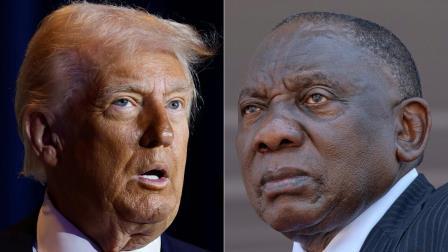
    The last few weeks have brought arguably the highest attention to Nigeria’s gross insecurity crisis, since the 2014 abduction of the 276 Chibok girls that sparked the international outcry of ‘Bring Back Our Girls.’ This time, however, the catalyst is an alleged Christian genocide, a narrative being led by U.S. President Donald Trump. Earlier this month, the Trump administration designated Nigeria a “Country of Particular Concern” (CPC), alleging that the Nigerian government was doing little to curtail Islamist insurgents from attacking Christians.

    In a social media post before the designation, Trump stated that the U.S. “may very well go into that now disgraced country, guns-a-blazing,” threatening military action. On Thursday, November 20, the U.S. Congress Subcommittee on Africa held a hearing on Nigeria’s CPC status, but it could not reach a consensus on whether the claim of a Christian genocide is fitting for the crisis.

    It is factually correct to state that hundreds of Christians have been killed by armed insurgents in the last decade-plus, many in their places of worship. Just recently, at least two people were killed at a Christ Apostolic Church in Eruku, Kwara state. Perhaps the most gruesome in recent memory was in June 2022, when armed men opened fire into St. Francis Xavier Catholic Church in Owo, Ondo state, in the country’s southwest, far from the northern region where terrorism happens the most.

    Eleven years before that, a suicide bomber detonated a car outside St. Theresa Catholic Church in Madalla, Niger state, an attack that killed at least 40 people. Boko Haram was responsible for the attack, as well as another in February 2012, when another suicide bomber drove a vehicle filled with explosives into the Church of Christ in Nations (COCIN) in Jos, Plateau state.

    However, to frame Nigeria’s insecurity issue as a Christian genocide is reductive. That narrative simply oversimplifies the core issues that a typical Nigerian faces. In all of the violence that’s happening across these regions, it’s glaring to see that everybody falls victim to these events. Contrary to what a lot of people believe, majority of the communities in Northern Nigeria are religiously mixed, so when the narrative that a particular community has been targeted and that people from a particular religion are the main victims, it tends to complicate the understanding of the conflicts that Nigeria is currently facing.

    The crisis is complex, with multiple actors and factors. Boko Haram, which has splintered into factions, based the beginning of its terrorist attacks on opposition to Western education. Armed groups, primarily operating in the northwest, ventured into kidnap-for-profit, a business that Islamist insurgents have also joined in on. Across the middle belt region, farmer-herder conflicts over resources have escalated into massacres, with roots in ethno-religious conflicts dating back to the early 2000s and even further back to pre-independence.

    It is factually correct to state that hundreds of muslims have been killed by armed insurgents, considering that the northern parts of Nigeria are majority muslim. Some of the fatalities have also happened in places of worship. More than 80 people died after two suicide bombers detonated at the Kano Central Mosque in November 2014. Just over three years later, 86 were killed in a twin suicide bomb attack at a mosque in Mubi, Adamawa state, just six months after 50 were killed by a suicide bomb in a mosque in the same town.

    Meanwhile, recent analysis shows that kidnapping in Nigeria has evolved into a lucrative economy. Armed groups manipulate fear, exploit gaps in security, and use negotiation as a revenue stream. The cycle is sustained because responses are inconsistent, sometimes delayed, and occasionally entangled with political agendas.

    Further research indicates that political narratives play a pivotal role in how kidnappings unfold and are perceived. Analysts argue that abductions in schools or religious centers are sometimes leveraged to project claims of persecution, potentially influencing international attention and intervention. At the same time, other attacks highlight gaps in government capacity, undermining public confidence and feeding narratives of insecurity ahead of the 2027 general elections.

    A picture of a terrorist sect that has terrorized large parts of Northern Nigeria. Credit-BBC

    The rapid release of abducted students under non-kinetic military strategies, coordinated by the Office of the National Security Advisers (ONSA), has further fueled speculation about government complicity or political calculation. Armed groups themselves have posted on social media claiming that federal authorities negotiated the students’ freedom, adding to public suspicion.

    Various security analysts believe that the country faces multiple, evolving threats from splintering criminal and terrorist networks. The scale of attacks shows Nigeria is no longer dealing with a single insurgency. These actors are rebranding and reorganizing, making them far more dangerous.

    The President Bola Tinubu-led administration has moved to address recent security gaps. These measures include:

     – Establishing 24-hour security cordons around forests in Kwara, Kebbi, and Niger States.


    – Redeploying police officers from VIP duties to frontline security.


    – Directing the Nigerian Air Force to intensify aerial surveillance of remote forested regions.

    Security agencies have already rescued 38 worshippers in Eruku, Kwara State, and 25 schoolgirls in Kebbi State. Additionally, a five-year counter-terrorism strategy (2025–2030) has been unveiled, aimed at modernizing security architecture and enhancing national resilience.

    A lot of people have cast doubts on the effectiveness of these directives as they believe they have heard the same lines over and over. Soldiers on the frontline have lamented about poor welfare and being underequipped to deal with terrorists, despite millions of dollars allocated in the yearly budget. With little to no accountability, it means military leaders and government officials loot a significant portion of the funds meant to combat terrorism.

    Similar to former President Buhari, current President Bola Tinubu has been rather tepid in his response to the rampant insecurity in Nigeria. Perhaps, renewed agitation in the last few days could spur some positive action. However, there’s the possibility that the government is waiting for things to dial down. Even now, it has blamed the recent surge of violent activity on attention from the U.S., with a government official claiming that Trump’s threats have “inadvertently emboldened opportunistic violent groups.”

    For Nigeria to finally take decisive action, the government must move beyond deflection and political posturing, committing to radical and comprehensive security sector reform. This includes ensuring strict accountability for the billions allocated to the military budget, prosecuting officials and commanders implicated in the diversion of funds, and ending the impunity that has allowed military abuses and war crimes to fuel public distrust and sympathy for insurgents. Only by addressing the root causes of the crisis — corruption, lack of trust, and the failure to provide basic security — can a true, long-lasting victory against terrorism and safety for the everyday Nigerian be achieved.

  • Soldiers seize power in Guinea-Bissau and detain the president

    Soldiers seize power in Guinea-Bissau and detain the president

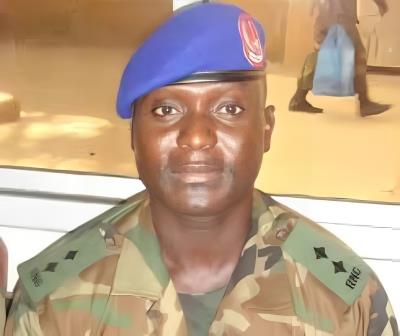
    Brigadier General Denis N’Canha (C), head of the military office of the presidency gives a press conference at the General Staff of the Armed Forces. Photo – WNDC

    A group of military officers say they have seized control of Guinea-Bissau amid reports that the president, Umaro Sissoco Embaló, has been arrested.

    Shortly after gunshots were heard in the capital, Bissau, government sources revealed to newsmen that Embaló had been detained.

    The officers then appeared on state TV, saying they had suspended the electoral process, as the West African nation awaited the outcome of Sunday’s presidential election.

    They said they were acting to thwart a plot by unnamed politicians who had “the support of a well-known drug baron” to destabilise the country, and announced the closure of its borders and imposed a night-time curfew.

    Sandwiched between Senegal and Guinea, the coup-prone country is known as a notorious drug-trafficking hub where the military has been influential since independence from Portugal in 1974.

    The election results were expected on Thursday – both Embaló and his closest rival Fernando Dias had claimed victory.

    Dias was supported by former Prime Minister Domingos Pereira, who had been disqualified from running.

    Late on Wednesday afternoon, Embaló revealed to the press in a phone call: “I have been deposed.”

    Government sources have since made it known that Dias, Pereira and Interior Minister Botché Candé have also been detained.

    The putschists have taken army chief Gen Biague Na Ntan and his deputy, Gen Mamadou Touré, into custody too, the sources say.

    Guinea-Bissau’s outgoing President Umaro Sissoco Embalo

    Witnesses in Bissau heard gunfire earlier on, at around 13:00 GMT, but it was not immediately clear who was involved in the shooting or if there were any casualties.

    Hundreds of people on foot and in vehicles fled, seeking shelter as the shots rang out, the AFP news agency reported.

    Later on, General Denis N’Canha, head of the military household at the presidential palace, read out a statement declaring a takeover.

    He said officers had formed “the High Military Command for the Restoration of Order” and instructed the population to “remain calm”.

    Checkpoints have been erected across Bissau and the streets were deserted ahead of the curfew, that was due to start at 19:00 GMT.

    Opposition figure Domingos Simoes Pereira. Photo – GBHC

    Portugal has called for a return to constitutional order, with its foreign ministry urging “all those involved to refrain from any act of institutional or civic violence”.

    The former Portuguese colony has witnessed at least nine coups or attempted coups over the last five decades.

    Embaló has said he has survived multiple coup attempts during his time in office. However, his critics allege he has fabricated crises in order to crack down on dissent.

    The 53-year-old had wanted to make history as the country’s only president to secure a second consecutive mandate in the last 30 years.

    He had initially said he would not seek a second term. Prior to the delayed polls, his legitimacy had been questioned, with the opposition saying his term should have officially ended in February 2025.

    Guinea-Bissau is one of the poorest countries in the world with a population of more than two million people.

    Its coastline has many uninhabited islands, making it ideal for drugs traffickers – with the UN dubbing it a “narco-state” as it has been a key transit point for cocaine coming from Latin America en route to Europe.

  • Cameroon’s opposition leader in The Gambia after fleeing for his safety

    Cameroon’s opposition leader in The Gambia after fleeing for his safety

    Tchiroma Bakary has vowed to resist President Paul Biya’s government. Credit-BBC

    Cameroonian opposition leader Issa Tchiroma Bakary, who is contesting the outcome of the presidential election, has fled to The Gambia for his safety, The Gambian government has said.

    Tchiroma Bakary has insisted he is the legitimate winner of the 12 October election, alleging that the result was rigged to give President Paul Biya, 92, an eighth term.

    The Gambian information ministry said on Sunday that Tchiroma Bakary arrived on 7 November and was allowed to stay on humanitarian grounds.

    Cameroon’s government had threatened to put him on trial for allegedly inciting violent post-election demonstrations. He denied the allegation, and blamed the security forces for a crackdown on protesters.

    The government put the number of people killed in post-election violence at 16, but other organisations have given a higher death toll.

    Tchiroma Bakary has repeatedly promised to resist Biya’s government until his “victory” in the election is recognised.

    Biya, the world’s oldest president, has been in power for 43 years, and was declared the winner with 53.7% of the vote amid allegations of fraud.

    Tchiroma Bakary, who served in Biya’s government for many years, came second with 35.2%.

    His resistance tactics have included calling for street protests and “ghost town” operations aimed at bringing cities and towns to a standstill.

    Until The Gambian government confirmed his presence, his whereabouts had remained a mystery although there was speculation that he had fled to another country in the region.

    “He is being hosted temporarily in The Gambia purely on humanitarian grounds in the spirit of African solidarity and for the purpose of ensuring his safety while discussions continue to pursue a peaceful and diplomatic resolution to the post-electoral tensions in Cameroon,” The Gambian government said in a statement.

    The Gambian authorities said the country would not be used as a “base for subversive activity against any state”.

    Reacting to the announcement, The Gambia’s main opposition United Democratic Party (UDP) criticised the government for withholding the announcement of Tchiroma Bakary’s arrival until late in the week.

    It said it raised “serious questions about transparency, accountability, and respect for The Gambian people’s right to know what actions are taken in their name”.

    However, the party said it was proud that Tchiroma Bakary could find “safe sanctuary” in The Gambia, adding that it was fully aware of how “despotism operates and how dissenters are treated”.

  • Colorado Rep. Jason Crow accuses ICE of obstruction on Oversight tour of GEO ICE Aurora Facility

    Colorado Rep. Jason Crow accuses ICE of obstruction on Oversight tour of GEO ICE Aurora Facility

    Grace Wright, communications director for U.S. Rep. Jason Crow, takes a short video of Crow, second from left, with U.S. Reps. Diana DeGette, Brittany Pettersen, and Joe Neguse after conducting an oversight visit of the GEO ICE facility in Aurora, Colorado. Credit: CPR

    Democratic Rep. Jason Crow has recently revealed he was first denied access to the immigration detention facility in Aurora, and now, Crow says he’s being denied basic information about who is being held there.

    Crow and Colorado’s three other Democratic U.S. House members — Reps. Diana DeGette, Joe Neguse, and Brittany Pettersen — visited the ICE facility lately after giving seven days’ notice under a federal policy they are suing to overturn.

    Crow says he was unable to get an exact head count at the facility, let alone information on who’s being detained and whether they have criminal records. He was also unable to truly assess the conditions at the facility, he says, because the whole place was on lockdown for the entire visit.

    Crow says he’s visited the Aurora facility 10 times in six years, but he says this visit was unlike any other.

    “This has been the most difficult visit in terms of getting information, getting answers out of the facility and employees,” he said.

    He says ICE is now requiring members of Congress to submit any questions they have through the agency’s headquarters in D.C., and anyone wanting to talk to a detainee must have a signed privacy release in advance.

    “So, if I want to visit my constituents in this facility, then somehow, I have to get a privacy release to them through the mail or other means,” said DeGette.

    She says she was able to see immigration rights activist Jeanette Vizguerra, but the rest of the delegation was allowed to visit only one other detainee.

    The representatives say they have a duty to conduct oversight of federal operations, and ICE is making their job increasingly difficult. Last month, they were told they needed to give seven days’ notice before any visit, so they sued. Federal law, however, doesn’t permit the department to impose such conditions.

    “If you have to give seven days’ notice, they clean up pretty good,” said DeGette.

    Even at that, Pettersen says, what they did see was concerning, including a lack of access to legal resources: “There is a phone, but you have to pay 15 cents a minute in order to make the calls that you need. That is a huge barrier for a lot of people.”

    U.S. Rep. Jason Crow takes questions after a press conference following his tour of the GEO ICE facility in Aurora, Colorado, during an oversight visit with members of Colorado’s Democratic House delegation. Credit: CBS News

    In addition to Democrats, Republican Rep. Gabe Evans has also asked ICE for more information on those being detained.

    Government data from June showed that about half of all detainees nationwide had been convicted or charged with crimes, while 70% of those in the Aurora detention facility had. Evans and his Democratic colleagues want to know the nature of the crimes.

    Neguse says they will continue to push for more access and information.

    “Above all else, transparency matters, oversight matters, accountability matters,” he said. “You certainly can expect the Democratic members of Colorado’s House delegation to continue to lean in on all fronts.”

    Oversight visits by members of Congress have become a flashpoint in 2025 as President Donald Trump’s administration dramatically expands the scope of ICE detention and removal operations to achieve its mass deportation targets. One Democratic House member, Rep. LaMonica McIver of New Jersey, has been charged with interfering with federal law enforcement officers during a chaotic scene outside an ICE facility in Newark, during which officers also arrested the city’s mayor, Ras Baraka, on a trespassing charge.

    The Immigration and Customs Enforcement detention center in Aurora, operated by private prison firm GEO Group. Credit: CPR News

    The Aurora ICE detention center, with a total capacity of 1,532 detainees, has long been the target of criticism from activists over allegations of inhumane conditions and dehumanizing treatment.

    Crow, who has conducted regular oversight of the ICE facility in his district since being sworn in to Congress in 2019, said that work will continue.

  • 68 refugees and migrants die in boat sinking off Yemeni coast

    68 refugees and migrants die in boat sinking off Yemeni coast

    African migrants attempting to cross into Europe in a makeshift boat. Credit: AFP

    At least 68 refugees and migrants have died and 74 others remain missing after a boat capsized off the coast of Yemen, according to the United Nations migration agency. The head of the UN’s International Organization for Migration (IOM) in Yemen, Abdusattor Esoev, told members of the press recently that the boat, with 154 mostly Ethiopians on board, capsized off Yemen’s province of Abyan.

    Twelve people were said to have survived the shipwreck while the bodies of 54 refugees and migrants washed ashore in the district of Khanfar and 14 others were found dead at a different location and taken to a hospital morgue.

    The tragedy was the latest in a series of shipwrecks off Yemen that have killed hundreds of African migrants fleeing conflict and poverty in hopes of reaching the wealthy Gulf Arab countries.

    Despite more than a decade of civil war, Yemen is a major route for migrants from East Africa and the Horn of Africa trying to reach the Gulf Arab countries for work. Migrants are taken by smugglers on often dangerous, overcrowded boats across the Red Sea or Gulf of Aden.

    Hundreds of migrants have died or gone missing in shipwrecks off Yemen in recent months, including in March when two migrants died and 186 others were missing after four boats capsized off Yemen and Djibouti.

    More than 60,000 migrants arrived in Yemen in 2024, down from 97,200 in 2023, probably because of greater patrolling of the waters, according to Yemeni authorities in March.

    In addition to being the most travelled African migration route, the Eastern Route is widely considered the most dangerous, as migrants encounter life-threatening situations and are exposed to violence, abuse, and exploitation. Yemen’s ongoing civil war has exacerbated security issues for migrants, as the governance vacuum in the country creates an ideal environment for smuggling and trafficking networks to flourish.

    Yemen is in the midst of a decade-long internal conflict that has seen the country carved up among several factions, notably Iran-backed Houthi rebels who seized control from the internationally recognized government, which in turn was, and continues to be, backed by a Saudi-led, U.S.-backed military coalition trying to restore it to power.

    The fighting triggered one of the worst of the world’s worst humanitarian crises, with almost 20 million people in need of food, medical and other assistance, more than half of them children, and more than 4.5 million people internally displaced, according to UNICEF.

    According to the International Organization for Migration (IOM) nearly 11,000 people have died or gone missing from 2024 till date over attempts to migrate in search of greener pastures.


  • Kemi Badenoch: UK Conservative leader’s controversial statement stirs anger in Nigeria

    Kemi Badenoch: UK Conservative leader’s controversial statement stirs anger in Nigeria

    Kemi Badenoch is the leader of the UK Conservative Party. Credit: BBC

    Kemi Badenoch’s recent claim that women of Nigerian descent abroad cannot pass citizenship to their children has sparked outrage at home, fuelling a long-standing criticism that she distances herself from her country of origin to appeal to the British right.

    Badenoch, the leader of what is often called the world’s most successful political party, may be one of the most prominent Black women in British politics today. But in Nigeria, the country of her parents, she is far from universally admired. For many of her compatriots, she represents not a source of pride, but a cautionary tale of political ambition detached from ancestral loyalty.

    The backlash against Badenoch intensified after she made a controversial claim during a CNN interview aired recently, suggesting that Nigeria’s laws discriminate against women.

    “It’s virtually impossible, for example, to get Nigerian citizenship. I have that citizenship by virtue of my parents. I can’t give it to my children because I’m a woman,” Badenoch said. “Yet loads of Nigerians come to the UK, stay for a relatively free period of time, and acquire British citizenship. We need to stop being naïve,” she added, justifying her tough stance on immigration.

    Legal experts and government officials in Nigeria swiftly debunked Badenoch’s statement, pointing out that the Nigerian Constitution allows citizenship by descent through either parent. Prominent Nigerian lawyer Femi Falana accused Badenoch of peddling falsehoods to curry favour with right-wing voters in the UK, while a presidential aide Dada Olusegun called her out for “continuous attempts to malign Nigeria”.

    Olusegun wrote on X: “Your children, whether born in Nigeria or abroad, are Nigerian citizens by descent, automatically under Section 25 of the Nigerian Constitution. This holds regardless of the father’s nationality.”

    The controversy laid bare what many Nigerians see as a broader pattern; Badenoch’s rhetorical distancing from her roots in a bid to align more closely with the UK’s hard-right political establishment. Though born in Wimbledon to Nigerian parents and having spent part of her childhood in Lagos, Badenoch has frequently framed Nigeria, and by extension, Africa, as a cautionary tale.

    In several speeches, she cited the dysfunction of postcolonial African states in contrast to the virtues of Western governance, with Nigeria often serving as her primary example.

    “I’m a child of the 1980s. Lagos was a place where almost everything seemed broken,” she said at a 2024 International Democracy Union Forum in Washington, DC.

    At the Conservative conference in 2024, she told delegates how her childhood in Nigeria was “filled with tales of horror”, characterised by “screams of neighbours every night being attacked”, leading to fears about whether her apartment would be the next target

    Such comments may resonate with Conservative voters in the UK, but they strike a different chord in Nigeria, where many people view them as reductive, patronising and rooted in a colonial narrative that positions Africa as inherently broken and the West as its saviour.

    Nigerian Vice President Kashim Shettima summed up the sentiment in a veiled rebuke in 2024, accusing Badenoch of “denigrating her country of origin”, in stark contrast, he noted, to former UK prime minister Rishi Sunak, who “never denigrated his nation of ancestry nor poured venom on India”.

    On social media, the response to her citizenship statement on Nigeria has been scathing. “She benefits from the same immigration system she now wants to dismantle,” one user posted on X. “If her parents hadn’t left Nigeria, she wouldn’t be where she is today. Yet she trashes Nigeria to get applause from racists.”

    Right now, there are many who feel Badenoch shouldn’t be bothered about getting Nigerian citizenship for her offspring from a country she has repeatedly rebuked and rejected. As far as a lot of Nigerians are concerned, the general sentiment seems to be “she should simply enjoy her adopted home and leave us alone in our father’s land”.

    For many in the diaspora, Badenoch’s brand of politics raises uncomfortable questions about assimilation and authenticity. Her critics argue that her sharp embrace of anti-immigration rhetoric, coupled with a dismissive tone toward Africa, reflects a calculated effort to reassure a white, conservative base that she is not like the rest of the immigrants.

    She has said a lot of things to get elected and she knows her base wants to hear her rags to riches stories. Frankly put, the Conservative leader is currently seen as a disaster for black and brown people who are trying to eke out a living in the UK.

    Badenoch’s political positioning has also put her at odds with the Nigerian youth, many of whom see her as complicit in the structural racism they face in the UK. “She may look like us, but she does not speak for us,” says a user on facebook.

    The dissonance, according to analysts, is particularly stark given how other Black British politicians with African heritage are received in Nigeria.

    Figures like UK Foreign Minister David Lammy or lawmakers Chi Onwurah and Abena Oppong-Asare are often celebrated for advocating racial justice and maintaining a respectful connection with their ancestral homelands. Badenoch, in contrast, is seen by some as leveraging her identity only when convenient.

    Badenoch’s defenders, however, argue that she is being unfairly targeted for refusing to play the role expected of her. A skilled political operator, her meteoric rise in the Conservative Party, handling of tough policy portfolios like international trade and equalities, and leadership bid following Sunak’s resignation all point to a politician with ambition.

  • Colorado’s Measles Crisis: State Health Officials say no cause for alarm.

    Colorado’s Measles Crisis: State Health Officials say no cause for alarm.

    Colorado has recorded up to 16 measles cases in 2025, more than double the total number of cases recorded in the previous 10 years.

    State public health officials traced 8 of the 16 cases to a Turkish Airlines flight into Denver in May. Seven of the 16 patients who contracted the virus were vaccinated against it. According to the chief medical officer at the Colorado Department of Public Health and Environment, four individuals were infected during the flight, while another four contracted the virus at Denver International Airport after being in close proximity to the original infected traveler.

    Officials have said all 13 of the 15 cases were travel-related. One person in Archuleta County and one in Denver County contracted the virus after being in close contact with infected people.

    Luckily Colorado is supported by a high vaccination rate, especially in the metro area, where there’s been a lot of work in ensuring the entire metropolis and by extension the state remain measle free.

    Denver Health has seen an uptick in those seeking the measles vaccine since May.

    Since the first measles case was diagnosed in Colorado in March, there has been a significant increase in MMR vaccinations at Public Health Immunization clinics all over the state. To further safeguard the community and prevent a potential outbreak, the state’s Ambulatory Care Services clinics have proactively reached out to families with unvaccinated children, ensuring they receive the necessary immunizations promptly.

    Officials also say fever and rash are common symptoms, especially in young children. With greater awareness about measles outbreaks nationally and globally, more patients are expressing concerns about measles. To date, Denver Health has had only one patient who tested positive.

    Health officials all over the state have been preparing the health care system for the possibility of a local outbreak by developing plans to safely test people as outpatients without exposing others and managing patients with measles or measles exposure during labor and post-partum.

    The first dose of the measles vaccine is 93% effective, and the second is 98% effective at preventing the virus. Colorado’s children have a 94% vaccination rate, which officials say is still below the 95% needed to achieve herd immunity.

    Colorado has several school districts where vaccination rates are below 90% among school-aged children. School districts in Montrose, Montezuma, Archuleta, Elbert, Hinsdale, Gunnison, Park, Lake, Costilla, Saguache, Lincoln, Baca and Logan counties all have vaccination rates of lower than 90%. Montezuma, Archuleta and Elbert County have school district rates lower than 80%, according to state data.

    Children over 5 years old, adults over 20, pregnant people and those with weakened immune systems are at the greatest risk for a measles infection that could lead to hospitalization. Symptoms typically appear eight to 12 days after being exposed to the virus and can include high fever, cough, runny nose, sore throat and rash.

    Health care providers and laboratories are legally required to report suspected or confirmed measles cases to The Colorado Department of Public Health and Environment. When the state receives a report, public health officials interview the infected person about when symptoms appeared, where the person went while contagious and who they were in contact with during that time period. Interviewers then reach out to known contacts, work with businesses and health care facilities to notify staff and others who may have been exposed and issue public notices when exposures may have occurred in public spaces, such as Denver International Airport.

    People who have received the measles vaccination are advised to monitor for symptoms. Those who are not immune may be eligible for post-exposure prophylaxis, such as a measles vaccine or antibodies if their exposure was recent. In some cases, people without immunity may be asked to quarantine or stay away from high-risk settings like health care facilities or child care centers to prevent further spread.

    The state has promised to continue working with providers, letting them know there’s more measles in the environment than they’re used to and urging them to stock more vaccines.

    There have been worries in a lot of quarters about further outbreaks across the United States, particularly after Health and Human Services Secretary Robert F. Kennedy Jr, a vaccine skeptic, fired all 17 members of a panel that advises the Centers for Disease Control and Prevention on immunizations. Kennedy recently hired eight new staff members to replace the previous panel.

    The American Medical Association has said it is concerned about Kennedy’s replacements, who lack the same expertise in vaccinations as their predecessors.

    “The AMA is deeply concerned to learn that new members have already been selected for the Advisory Committee on Immunization Practices (ACIP) without transparency and proper vetting to ensure they have the expertise necessary to make vaccine recommendations to protect the health of Americans,” the association wrote in a statement.

    “We urge the Administration to reconsider the removal of the 17 ACIP members who have deep expertise in vaccines so physicians can continue to have confidence in ACIP’s recommendations, which have for decades helped them make recommendations to patients about vaccination,” the statement continued.

    The United States has had about 1,200 confirmed measles cases in 2025. Texas, Oklahoma and Kansas have the country’s highest rates of infection.

    In April, Kennedy endorsed the MMR vaccine as the “most effective way to prevent the spread of measles,” a position that angered many of his supporters. Later that month, he claimed that the MMR vaccine contains “aborted fetus debris,” which has been proven to be false.

  • Organization of American States under pressure from the US to help quell gang violence in Haiti

    Organization of American States under pressure from the US to help quell gang violence in Haiti

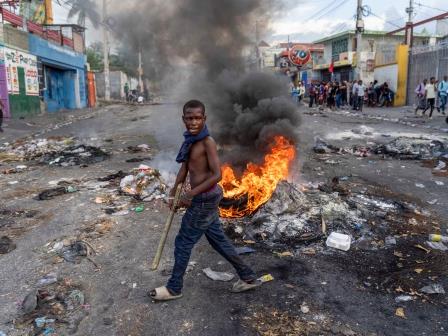
    Commuters pass by police patrolling an intersection in Port-au-Prince, Haiti. Credit: AP Photo

    The Organization of American States has recently come under pressure to help quash gang violence in Haiti as a U.N.-backed mission led by Kenyan police in the troubled Caribbean country has severely struggled with a lack of funds and personnel.

    U.S. Department of State officials attending an OAS meeting on Haiti’s security crisis strongly believe that the Washington-based group has a critical role to play in the nation. U.S. Secretary of State Marco Rubio at a recent House Appropriations Committee hearing on Haiti queried what the OAS was doing to quell the violence in Haiti. “Why do we have an OAS, if the OAS can’t put together a mission to handle the most critical region in our hemisphere?” Rubio was quoted as saying as he proposed building a mission with regional partners. “We’re grateful to the Kenyans, but this is a regional problem, and it should have a regional solution.”

    OAS Secretary-General Luis Almagro also acknowledged that the Kenya-led mission was struggling and said that the organization was working on new initiatives. Last year, the U.S. and Haiti called for it to be replaced with a U.N. peacekeeping mission, but the U.N. Security Council failed to support the move.

    An OAS meeting was held just hours after gangs launched another attack in Haiti’s central Artibonite region. Gunmen stormed a church in Préval, killing 22 people, including an 86-year-old pastor who was beheaded, according to Bertide Horace, spokesperson for the Commission for Dialogue, Reconciliation and Awareness to Save the Artibonite.

    “This tragedy has sparked a wave of indignation throughout the country,” she told members of the Press, adding that the victims called for help, but that neither police nor officers with the Kenya-led mission responded.

    A Kenya’s OAS representative, Jayne Toroitich, said that while the mission has made considerable progress in Haiti despite ongoing challenges, Haitian police need more training and that the mission more money and personnel.

    Only 1,000 out of the 2,500 personnel envisioned by the U.N. Security are currently in Haiti. In addition, the mission is operating at only 30% of its capability in terms of equipment, the representative said.

    The OAS meeting was held a day after Jimmy Chérizier, a former elite police officer who became one of Haiti’s most powerful gang leaders, pleaded with people from the Delmas 30 neighborhood in the capital, Port-au-Prince, to let armed men through, so that they could overthrow Haiti’s prime minister and its transitional presidential council.

    “I need the road to get to the prime minister’s office,” he said in a video recently posted on social media.

    Jimmy ‘Barbecue’ Cherizier, leader of the Vivre Ensemble gang alliance in a pose with members of his gang. Credit: Reuters

    Chérizier, best known as “Barbecue,” is among the leader of a powerful gang coalition called Viv Ansanm, which last year forced former Prime Minister Ariel Henry to resign as it attacked dozens of critical state infrastructure sites and forced Haiti’s main international airport to close for nearly three months.

    Gangs that control at least 85% of Port-au-Prince also have seized a significant amount of territory in Haiti’s central region in recent months.

    “Every day, these gangs are gaining more territory,” said Patrick Pélissier, Haiti’s minister of justice and public security.

    More than 5,600 people were killed across Haiti last year, and more than 1,600 others from January to end of March, according to the U.N. Gang violence also has left more than 1 million people homeless in recent years.

    Pélissier noted that Haiti’s National Police is severely understaffed — there is one officer for every 12,000 residents. He said that intelligence and counterintelligence also is greatly lacking.

    Jean-Michel Moïse, Haiti’s defense minister has also echoed those concerns.

    The military has about 1,000 members with limited training, he said.

    “They are unable, still now, to effectively (fight) the gangs, which are very strong, very well armed, very well financed,” Moïse said. “Haiti is on the brink of being fully controlled by criminal gangs, and we cannot allow that to happen.”

    He called on the OAS and the international community to help train military officers and new recruits.

    “The army is very small, very embryonic,” he said, adding that the current urban warfare in Haiti is overwhelming them. “They were not prepared for this kind of challenge.”

    Moïse said the government didn’t expect gangs to become so powerful after President Jovenel Moïse was killed in July 2021 at his private residence.

    He and other Haitian officials noted that the ongoing gang violence is fueled by the smuggling of weapons, many of which come from the U.S.

    Moïse and Pélissier thanked the OAS and the international community for their support so far, but stressed that much more is needed.

    “Haiti … needs this solidarity to be translated into concrete actions,” Pélissier said. “The problem that we have in front of us today is huge.”

  • Gambian ex-soldier convicted of torture in rare US trial

    Gambian ex-soldier convicted of torture in rare US trial

    Michael Sang Correa, a former member of Gambia’s military was recently convicted in a Denver federal court of torturing five people accused of involvement in a failed coup against the West African country’s longtime dictator nearly 20 years ago, capping a rare prosecution in the United States for torture committed abroad.

    Michael Sang Correa, was a member of Jammeh’s killer Junglers squad that tortured and killed tons of people. Credit-cpr.org

    Jurors at the trial in Denver which lasted for a week also found Correa guilty of being part of a conspiracy to commit torture against suspected opponents while serving in a military unit known as the “Junglers,” which reported directly to Yahya Jammeh.

    Correa came to the U.S. in 2016 to work as a bodyguard for Jammeh, eventually settling in Denver, where prosecutors said he worked as a day laborer. Correa, who prosecutors say overstayed his visa after Jammeh’s ouster in 2017, was indicted in 2020 under a rarely used law that allows people to be tried in the U.S. judicial system for torture allegedly committed abroad.

    He is the first non-US citizen to be convicted on torture charges in a federal district court for crimes committed overseas, according to the Department of Justice. The law has only been used twice since it was enacted in 1994 but both of the previous cases were brought against US citizens.

    The Department of Justice had been on Correa’s trail ever since he came into the U.S. and had successfully evaded the authorities until he was eventually captured. The evidence at the trial showed that Correa and his fellow Junglers tortured multiple people accused of plotting a coup to overthrow Jammeh.

    The victims included high-profile members of Jammeh’s inner circle who fell out with him and told the jury how they were tortured by being electrocuted, waterboarded and smothered with plastic bags. As it stands he faces a maximum penalty of 20 years in prison for each of the five torture counts and the count of conspiracy to commit torture.

    Correa’s conviction has been greeted with relief by an overwhelming majority of Gambians including victims and human rights activists with renewed calls for the Barrow government to put all other persons recommended for prosecution by Gambia’s truth commission on trial.

    Demba Dem, a former member of the Gambian parliament who testified to being tortured by Correa and others, was among those in the packed courtroom to hear the verdict. Dem and other survivors traveled from Gambia, Europe and elsewhere in the U.S. to testify, telling the jury they were tortured by methods such as being electrocuted and hung upside down while being beaten.

    Yahya Jammeh is the former president of Gambia who is currently living in exile in Equatorial Guinea. Credit-BBC

    Members of the media from Gambia covered the trial in Denver and immigrants now living in the U.S. attended proceedings, including sisters Dr. Jaye Ceesay and Olay Jabbi. They said their brother was killed by Junglers after returning to Gambia in 2013 to start a computer school for children there and they wanted to support others victimized by the regime.

    For 22 years Gambians lived under the grip of former president, Yahya Jammeh, whose rule was marked by allegations of human rights abuses including killings, witch hunts and forced labour – although Mr Jammeh has previously denied wrongdoing. Since his shock election defeat more than five years ago, the country has been coming to terms with its painful history.

    Jammeh’s reign of terror wasn’t limited to his citizens only. In July 2005, the Human Rights Watch and TRIAL International reported that the Junglers summarily executed more than 50 Ghanaian, Nigerian, and other West African migrants.

    Interviews with 30 former Gambian officials at the time, including 11 officers directly involved in the incident, revealed that the migrants, who were bound for Europe but were suspected of being mercenaries intent on overthrowing Jammeh, were murdered after having been detained by Jammeh’s closest deputies in the army, navy, and police forces.

    Demba Dem, a former member of the Gambian parliament who was tortured by former Gambian military member Michael Sang Correa, stands outside federal court following Correa’s conviction in Denver. Credit-AP Photo

    Martin Kyere, the sole known Ghanaian migrant from that group who managed to survive by jumping off a moving truck that was transporting the group to be executed, has never been the same since his ordeal. He helped Ghanaian authorities identify some of the victims he traveled with and also spent a considerable amount of time traversing all over Ghana to notify families of the victims.

    A lot of women also accused Jammeh of rape and sexual assault while he was in office. Former Gambian officials said that presidential aides regularly pressured women to visit or work for Jammeh, who then sexually abused many of them.

    Those interviewed made detailed allegations against the former president, saying that he forced or coerced young women into having sex with him. Some were put on the state payroll and worked at State House as so-called “protocol girls.” Former officials reported that Jammeh and his subordinates gave the women cash and gifts and promised them scholarships or other privileges – powerful tools in one of the poorest countries in the world. Witnesses said that both consensual and non-consensual sex took place at the president’s residences.

    Last year, Jammeh’s former interior minister was sentenced to 20 years behind bars by a Swiss court for crimes against humanity. In 2023, a German court convicted a Gambian man who was also a member of the Junglers of murder and crimes against humanity for involvement in the killing of government critics in Gambia.

    Human rights activists in Gambia hope those who committed torture under Jammeh’s regime will also be held accountable at home.

    The defense had argued Correa was a low-ranking private who risked torture and death himself if he disobeyed superiors and that he did not have a choice about whether to participate, let alone a decision to make about whether to join a conspiracy. But while the U.S. government agreed that there’s evidence that the Junglers lived in “constant fear,” prosecutors said at trial that some Junglers refused to participate in the torture.

    Massacre survivor Martin Kyere at Accra cemetery where six bodies were returned from Gambia. Credit-hrw.org

    A sentencing hearing for Correa will be scheduled after lawyers determine when survivors can return to Denver to speak about the impact of his actions.

    Jammeh, a member of the military, seized power in a coup from the country’s first president in 1994 aged 29, and survived three significant coup attempts, making him suspicious of the very military he depended on to stay in power. In 2013, he vowed to stay in power for “a billion years” if God willed it and was eventually forced from power in January 2017 by regional powers after losing elections in 2016. He’s currently living in exile in Equatorial Guinea.

  • The African Organ Trafficking Pandemic

    The African Organ Trafficking Pandemic

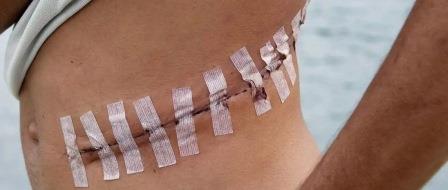
    An unidentified man shows the scar after an operation to remove his kidney in Durban, South Africa, in 2023. Credit-BBC

    The trafficking of Illegal organ parts is growing rapidly across the African continent. This sophisticated operation is worth over $1 billion annually and targets the vulnerable and desperate, while a clear lack of regulation and huge demand for organs drives the practice.

    The rising trade of human organs in Africa has gotten to an epidemic level and most African governments are silent or paying lip service to a scourge that requires immediate attention.

    It is expected that by now, the outcry against it should have gathered some serious momentum, but unfortunately, the reverse is the case.

    Organ harvesting or procurement refers to the surgical procedure that removes an organ from an individual, typically for transplantation, which may be consensual or coerced.

    A recently released report by Global Financial Integrity (GFI), a Washington DC-based think tank focused on corruption, illicit trade and money laundering, estimated that between $840 million and $1.7 billion (€755 million and €1.5 billion) is generated annually from trafficking in persons for organ removal.

    Organ donation and transplantation are well-established medical practices that are important for sustaining patients with failing organs. The procedures can be highly successful when conducted with informed consent and transparency. But there are concerns that the majority of the organ donations going on in Africa is driven mainly by poverty rather than the noble motivation of trying to save a life or trying to help any person’s medical condition.

    That the black market for parts of the human body is booming in Africa is not surprising. According to various news sources, a kidney now costs $262, 000; the heart costs $119, 000 and liver costs $157, 000. It’s then easy to see why so many Africans who are enmeshed in poverty and illiteracy would fall easily into the hands of organ harvesters.

    Kidneys are one of the most trafficked human organs, as donors can continue living after one is removed. Credit-Dw.com

    Though details about the illicit world of human organ trafficking are unclear, it is believed that Niger, Liberia, Egypt, Libya, Somalia, Sudan, South Africa, Kenya, Djibouti, Burkina Faso and Nigeria are the most affected countries in Africa.

    The reasons for this are complex, but because the regulation of transplants and organ donation differs from region to region, the United Nations Office on Drugs and Crime (UNODC) has highlighted the issue of trafficking in persons for organ removal, commonly known as transplant tourism, and raised concerns that illicitly transplanted organs normally tend to flow from vulnerable populations to wealthier recipients.

    According to the Global Observatory on Organ Donation and Transplantation, less than 10% of required transplants are performed worldwide, which has led to some patients trying to obtain organs illegally.

    There is also a comparatively low number of medical centers that perform legal transplants in Africa. For example, a World Health Organization (WHO) paper from 2020 listed just 35 kidney transplant centers for the entire continent. This type of insufficient capacity is blamed on lack of accessibility, limited expertise and inadequate financial support.

    The illicit and lucrative nature of the trade means organ trafficking networks are highly organized. The skills needed to perform complex surgeries, both on the donor and recipient, the connecting of buyers and sellers, all while avoiding the attention of international law enforcement agencies, mean that organ traffickers involve members of the medical sector, local criminal groups  and even politicians.

    The current revelation about the organ trafficking situation in Kenya that buttresses the assertion that financial gain remains the number one motivator for vulnerable people who submit themselves for organ harvesting.

    At the center is a transplant clinic in Eldoret, Kenya, where patients from Turkiye, Germany and Israel in particular have been fingered to be the highest beneficiaries of these illicit organs.

    Mediheal Hospital and Fertility Centre in Eldoret, Kenya. Credit-Kenya Today

    The Kenyan government has launched a probe into a suspected illegal kidney transplant syndicate, implicating the privately owned Mediheal Hospital in Eldoret, amid growing concerns that foreign patients are receiving organs sourced from vulnerable local donors enticed by financial incentives.

    It has been said that between November 2018 and 2023, the hospital carried out 372 kidney transplants, an unusually high number by local standards. The facility is owned by Dr Swarup Mishra, a prominent businessman and former MP for the Kesses constituency. Originally from India, Mishra is considered a close political ally of President William Ruto, who appointed him in late 2024 as chairman of the state-run Kenya BioVax Vaccine Institute.

    The report also highlighted procedural violations, including cases where consent forms were not translated into languages the donors or recipients could understand — despite Kiswahili and English being Kenya’s official languages. It further found that donors and recipients were frequently not biologically related, in contravention of ethical transplant protocols.

    Exclusive investigations by various media and intelligence sources reveal foreign recipients pay up to $400,000 for transplants at the private Kenyan hospital.

    Right now, there are strong indications that local authorities all over the continent are looking the other way while politicians lend their assistance in covering up the trade.