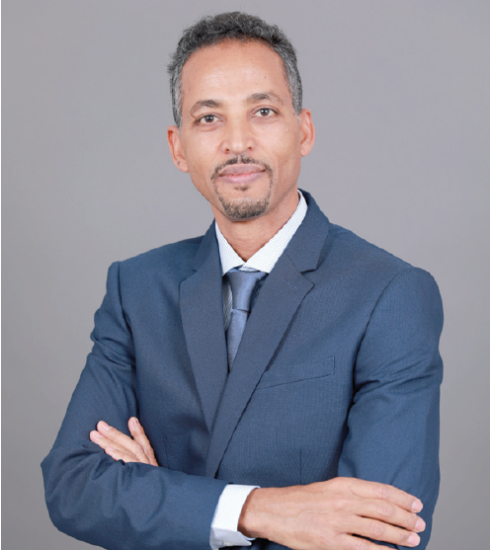
Author: Amlaku Eshetie

  • Mancala, Manqalah, GȁbȁTa: A Game From Antiquities

    Mancala, Manqalah, GȁbȁTa: A Game From Antiquities

                                     BE Amlaku

    A close friend bought me Mancala as a gift. Although I had not expected the gift, I was glad when I got the gift for two major reasons. Firstly, I love board games and I was happy to get such a gift. Secondly, it is one of the oldest traditional games of the native Africans, and I got a chance to learn more about it.

    Even if I knew that Mancala was one of the oldest traditional games in Ethiopia, I did not know many things about it. I did not know that it was known as Mancala in English; I only knew its Amharic name ገበጣ (gȁbȁTa:). I also did not know that the name Mancala was from Arabic: Mancala (Arabic: منقلة manqalah), according to Wikipedia.

    Above all, I did not know where its origin was. It’s only after I got this gift that I did a little research about it on the Internet and learned about it. Of the lessons I got from my brief research, the information about its origin stands out for me.

    Mancala, again according to Wikipedia, is the oldest known game that is still played in our time too. Archeologists found that the game was played by ancient societies in these countries: Egypt, Eritrea, Ethiopia, Israel, Jordan, and many others.

    In Ethiopia, as I stated above, the game is known as ገበጣ (gȁbȁTa:) and is played by shepherds, and young people. I grew up hearing from my church preachers that the people who whipped and crucified Jesus Christ had been playing Mancala. They had taken turns to whip Jesus and to count the number of whips or floggings so carelessly while they played this game that they would start to count over again from one (I’m not sure if this is recorded in the Bible or if it is just a legendary story).

    This game is not only popular in Ethiopia, it is also in the entire East Africa, extending to Madagascar. It was also discovered that Kenyans, Mozambicans, and Tanzanians played and still play it. It generally is a game of antiquities (as early as ~5,870 BC) that still gains traction in our current society, including in Europe and North America.

                                                                                                                          The image of the Mancala game.

    The Mancala Enterprise
    Entrepreneurship and creativity or innovation often do not go together. In other words, a product, although I’ve not researched it, doesn’t often make business for the society that created, innovated, developed, or originated it, especially in the old days. They even wouldn’t think that it could make a business.

    Over time, another society takes the idea or the product and makes a lucrative business out of it. They tweak it, slightly modify or improve it, and claim themselves as the inventors, developers, or owners of the product. This is the fate of African resources and knowledge looted and transported to Europe and America just to be processed, copyrighted, and sold back to Africans.

    Although my research did not go further into investigating where Mancala is produced and sold the most, I assume that the same thing has happened to it: most entrepreneurs of Mancala games might be concentrated in the US or Europe.


    How To Play Mancala
    As this ancient game is spread nearly in every corner of the world, the rules of playing it vary significantly. I watched multiple YouTube videos and I saw that multiple people play it in a few different ways. Yet, the most common rules among the different players are the following:

    The game has two pairs of 6 cups (on a board game), or holes/pits (on the ground), and 48 stones or pebbles or beans (24 for each side or each player)

    The game is played between two people, each on either side. The two players should take turns to play. The game is over when all the cups (on a board game), or holes/pits (on the ground) on one of the sides or both sides go empty.  The winner is the one who has the most stones at the end of the game. For more details about the rules of playing the game, you may learn by watching YouTube videos yourself.

    Conclusion

    In conclusion, I thank my friend who brought me the gift. As a result of the gift, he made me discover the history of Mancala, and write this article to share it with you. So, tell me, what do you, the reader, take away from this? It should all depend on your background and interests.

    If a mathematics researcher reads this article, for example, I would assume that they might ask questions like: ‘Why was this game made to have 12 holes and 48 stones? Did it have any mathematical significance? Were people using this as a calculator rather than a game?’

    If a sociologist or an anthropologist reads it, they would probably like to go further into different sources of similar literature and would want to investigate if the game was used as a means of passing time, socializing, and contesting within families, or between clans or tribes.

    If a regular reader like myself reads it, they would simply appreciate the history of the game as well as its current existence and might want to buy and play the game, if they are board game lovers. What about business-minded people? They might think of a stylish and attractive design for it and merchandise it!

    Therefore, the takeaway from this article hugely depends on who the reader is. And, this is generally true for most writings or literature. The writer just writes with a certain intention (personal astonishment and impression, in my case) and it is up to the reader what to take away from what they read.

  • Amharic -A language brought about by religion

    Amharic -A language brought about by religion

    AMHARIC -A LANGUAGE BROUGHT ABOUT BY RELIGION

    Did human beings adopt language or religion first? This is a question which may need to be proved through research. I will not be doing this research for this article, rather, I will intuitively present my opinion about which was adopted first and proceed to show how Amharic is religious in comparison to English – the languages I know very well.

    Ever since humans existed on this planet the questions of ‘Who are we?’, ‘Where did we come from?’ and ‘Where are we going to?” have been a vital quest for the human mind. As part of the answer to these questions, people in history had submitted to a supernatural body and they called that body a lot of different names, starting from the Sun, Water, Thunder, and later in time, Alla, Allah, God, Dieu, Deus, Diyos, Theos, Chukwu, Nkulunkulu, Igziabher, etc. in different languages.

    Long before language was invented, people quested to know who or what brought them to this world, who or what brought the whole universe into existence. Then instinctively people began to associate themselves to a heavenly superpower and creator then started to fear and worship him in their own different ways. Logically, ideas or objects should come before power of expression to explain the idea. Then when language was invented, people named their gods and the creator of the universe different names according to their languages. Amharic is one of such languages, and due to how the language was invented, it is like a religion.

    When I say Amharic is religious, I mean that the concept of the Creator or God is embedded in most expressions in the language. Even if a speaker of Amharic is a follower of a different religion, the expressions he or she uses are the same, but the sound may be slightly different according to the specific religion. I cannot speak many other languages, but to put this idea into context, I will compare Amharic with English and give you some examples.

    HOLIDAY AND ANNIVERSARY GREETINGS

    A holiday greeting in English, can go like this, “Happy holiday/Happy celebration!” To which the other person replies the same way or just say, “Thank you”. The main theme of this greeting is happiness, making the holiday/celebration a happy moment. The equivalent in Amharic, can go like this, ‘Enkuan Adereseh/sh….” which roughly translates as “Happy that God let you get to this day”. The main theme in Amharic holiday greeting is safety, existence, and the safety or existence as attributable to God. The other person will answer, “Amen, enkuan abro aderesen” which again translates roughly to “Happy that God let both of us get to this day.”

    REGULAR GREETINGS

    In every day greeting, the English language send out good wishes for the times yet to come. For example, when English says, “Good morning”, it is wishing a second party a good morning ahead. The same goes for the afternoon, evening and the night. In Amharic, it is almost the reverse. In the morning it asks how a second person spent the night, “Endemn aderih/ader- ish?” (How did you pass the night), and the other person answers “Dehn, Igziabher Yimasgan!” (Fine thanks to God). Same happens in the afternoon when it asks how they spent the morning, and so on. This way, Amharic is asking ‘How have you spent the night?’ and the answer is ‘I’m well, thanks to God’. Here again, the theme is safety, existence, and the mercy or will of God.

    Here, the theme is similar, both English and Amharic attribute the sneeze to God. The people who sneeze are wished blessings from God by persons present.

    Whereas, when visiting a patient, English says, “I wish you well”, “I wish you fast recovery”, “I wish you feel better soon”, etc. These are wishes for the ‘betterment’ of the patient, but they do not directly invite or refer to God. Amharic say “Igziabher yimarh/yimarish” which

    roughly means “Let God have mercy on you”, “Let God heal you soon”. The initiating party wishes that God heals the patient and the patient answers “Amen”, which they can translate to, “I accept your wish and prayer to God,

    RESPONSE TO SNEEZING AND VISITING PATIENTS

    In English, when one sneezes, a person who is present may say “Bless you!” Conversely, an Amharic second party says, “Yimarh/Yimarsh!” which means, “Let God have mercy on you” or “Let God forgive you”.

    RECEPTION

    In English, we receive a person by saying, “Welcome” (Well come), which seems to match the Amharic’s theme of safety and wellbeing. Amharic also says “Enkuan dehna metah/metash” meaning “Welcome, happy that you come safely”.

    In these examples and
    many more other instances, Amharic directly refers to God or the Creator. This characteristic is embedded in the language and used by every speaker of the language in most social interactions. God’s name in those expressions’ changes according to the faith. If the parties are Muslims, for instance, they change the name of God to Allah but the translation remains the same.

    A language carries the faith, philosophy or thoughts of a speaker, but to figure out whether it comes before religion may be seen as the egg and the chicken puzzle.

  • Africans in America – A call to come together!

    Africans in America – A call to come together!

    By Amlaku Eshetie

    As Africa was the land of the pioneers, the origin of humanity, its people travelled and diffused into the rest of the world in two forms of travel or journey. First, voluntarily – a journey in search of better weather, better land, better situations to live and thrive. The second and later journey was forced by the colonizers – Europeans and Americans.

    For the latter form of Africans, leaving their native land was so massive and grave. The inhumane, harsh treatment and exploitation was so denigrating for the human race in general. African youth, men and women, were forcefully taken to the cotton and sugar cane plantations in the Americas. Not only did the African labor cultivate and harvest the industrial crops, but they also built the infrastructure of the major American cities over several centuries.

    And now, in our time when slavery was left to history, there is a third and new form of exploitation of African youth – immigration! Including myself, many Africans left (and are leaving) Africa immigrating to mainly the United States of America and Europe. In doing so, they are intergenerationally feeding the labor market and are building the economy of the host countries.

    This happens because of the level of hegemony or authority on two realms: economic and political! If a nation or a continent is economically strong and powerful, it is also possible to resist the pressure that any kind of politics or supremacy throws onto it. The prerequisite leading to economic, and hence, political power is education. Citizens have to be well educated so that they can create infrastructures and build their respective country’s economy.

    Citizens of most African nations were just contained with what nature endowed them with and never aspired for more for two major and obvious reasons: lack of education and lack of conducive and supportive leadership. Even those who have been lucky to go to school and get educated were educated in colonial education systems and could not tap into local wisdom to solve local problems. On the contrary, we left our respective countries by denouncing the incumbent leadership and political system at the time of fleeing.

    As a result, the United States of America has been benefiting a lot in exploiting both forced and voluntary immigrants of Africa – historical and modern slavery! Africans made America and now are continuing to sustain the hegemony of America both in economy and politics.

    Well, it is not bad to help and be helped! We work for America and the American system houses and supports us to nurture our talents, realize our ambitions, and support a few of our kins back in Africa from the wealth we make here. Some of us even start some forms of investment back home. That’s a great thing to do as well. However, whatever we do individually never get Africa out of the vicious cycle of poverty, insecurity, violence, and emigration. How about all Africans in the United States join hands and minds? How about if these joined hands and minds to create and implement continental projects focusing on peace and security, regional infrastructure, health, and education?

    If Africans living in the United States come together and work together in peace and love, will there be any reason that we can’t bring all our people together back at home as well?

    Let’s get all Africans in the United States united! Let’s create an ambitious, stretched goal of remaking Africa. It is possible to build both America and Africa and make both our homes. If Africa is equally strong and wealthy, people can freely travel back and forth, invest and live in both continents; Africa will be for all Americans, and America will be for all Africans. Ambassadors of African nations in the USA will be our liaisons and messengers. We will be the brain house and the funding source and the people and administration on the ground will be implementers of our farfetched, elevating projects.

    I’ve not researched, and I do not know if there are any similar formations. However, it is possible that those existing could not be more than a regional entity, if at all targeting beyond a single nation. This one is going to be different and all about AFRICA as ONE! This is the spirit of our Pan African forefathers: Du Bois, Kwame Nkrumah, Haile Selassie, Julius Nyerere, and their compatriots!

    Imagine all of us, represented from all the 54 states and the African American brothers and sisters, coming together in love and purpose. Imagine when this love and purpose extends back home and creates peace between and among the African sister nations. Imagine when our poor, innocent, strong, and loving African mothers and fathers benefit from our transnational or cross-border projects. Imagine when leaders sit around the same table and talk about cost and benefit-sharing. Imagine all the kids going to school in peace and happiness. Imagine all the youth put their minds and hands to work, not to stones and weapons of destruction. Imagine when our kids raised in the USA go back to their ancestors’ land to share skills and knowledge with their cousins. Imagine…imagine all of that!

    Steps for Action

    Interested and like-minded Africans and African Americans here in Colorado will meet a few times to brainstorm to develop or expand this idea. When the idea matures, I suggest that we form a non-profit organization. This organization will be registered at a federal level, and it will work to bring all the black race and problacks together across the board. This global organization will have chapters in different countries such as Canada, China, Germany, and Australia.

    The first project will be ‘Peace Awareness and Building”, which starts from the networking and relationships of the members who represent their respective African countries. Although our politicians are often in friction, the people at the grassroot level know nothing about it. What they need is peace and security in order to be able to toil hard to win their daily bread.

    The next projects may focus on standardization and liberation of financial transactions – could be to the extent of aspiring for one currency for all Africans (which appears to be a bit too early but it should be on the table), supporting a Pan African University so that it can open campuses in every African capital city, designing or supporting inter-regional railway and bus transportation projects, learning our history and using our respective native language to learn/teach, so and so on.

    This is just an aspiration or wish project of a dreamer African, me – Amlaku. Is it your aspiration too? Let’s add your thoughts and aspirations! Let’s come together and realize our wishes for Africa. You don’t agree with this aspiration? Do you call it a fantasy – too good to be implemented? No worries, what alternative and practical vision or wishes do you have for Africa and beyond? Bring them forward and let’s all support you if your ideas are more practical or workable than this one! Let’s come together to be a lot stronger!

  • Amharic, the World Class Language

    Amharic, the World Class Language

    Every language is complete on its own. All languages help their users to fully express themselves, interact with others and communicate daily. They can represent the social and political; historical and religious; traditional and cultural, etc. constructs of their respective speakers. In this regard, all languages are equal and complete. However, when we consider the linguistic features, the scientific/technological advancement, the semantic, syntactic, and phonological richness, etc. of the languages, some languages can be richer, more advanced, and more complex than others.

    English language for example, has amassed so many words and semantics from the rest of the world’s languages. It has been a language of politics (as British used to be the colonizer of many parts of the world), and it has also been used as a language of international trade/business and education. For these reasons, English has proven itself as the most advanced, the most complex and the most widely used language of all other world languages.

    English: A Crazy Language?

    Yet, English is often referred to as the crazy language by most, including the native speakers because it is full of exceptions and contradicting rules. Above all, it is phonologically so limited. Sounds are made from the single and/or combined use of only the 26 alphabet letters. As a result, there are so many sounds that are foreign to English speakers.

    Amharic, a major Ethiopian language, in contrast, has most of (if not all of) the possible sounds that we humans can make. It has only 34 base letters and each one of them has six variants (seven including themselves) which will make the total number of the alphabet letters 238. Each of these 238 letters are distinct and complete sound units or phonemes. In English there are only 44 phonemes or sounds.

    Compare how Amharic is richer and English is so limited! This limitation makes learning other/foreign languages difficult for the (English) native speakers. For Amharic speakers, however, no sound or pronunciation will be difficult to produce, except the English “th” pronounced in two different ways as /ð/ and /θ/. Even these sounds are so close to our “ዘ” and “ዝ”.

    That means, Amharic is easier than other languages (it’s not to generalize but I am writing this article by having the other languages I learned at school – English and French, as reference), and conversely Amharic speakers are advantageous for learning other/foreign languages. Because Amharic is a phonemic language, pronunciation and spelling are not problematic. Learners or users can read what they see written and can write as exactly as they hear or say. Spelling and pronunciation in English and most other languages (for instance in English and French – the languages I know) are too complex and unpredictable!

    Capitalization is another language feature which is irrelevant in Amharic. So, for people who find the Amharic alphabet letters as too many, let them add the upper case and lower-case English letters. They are 52 English letters. Using them appropriately is another hurdle for learners of English.

    Critically speaking, shapes of the letters have nothing to do with the meaning creation or semantic process in the words they are used. It rather is just a form which adds to the complication of the language for users and learners.

    Pluralization in English is another intricate feature. In Amharic, it is so straightforward. In English, it could be fine if it were only adding ‘-s’, ‘-es’ or ‘-ies’ to singular nouns but there is also another set of nouns collectively known as irregular nouns which are pluralized in a lot of different ways.

    In Amharic, you add “-ዎች/-woch/och”, “-ች/-ch/och”, or “-ያን/ናን/-ian/nan” depending on the type of the ending sound of the noun and by making a modification to the final letter/sound.

    Amharic the Semitic Language

    Amharic is a Semitic language written from left to right, unlike its sister Semitic languages – Arabic, and Hebrew which are written right to left. Its history as a written language goes back as far as the 14th century or earlier. Since then, it has accumulated rich written knowledge and literature.

    Its writing system is so unique to itself. Only a few Ethiopian languages (Geez – probably its mother language, Tigrigna/Tigre, Guragigna, and other Ethiopian languages) share its alphabet or writing system.

    Its speakers are mainly about 50/60% of Ethiopians (as both first and second language speakers) in Ethiopia and abroad. And the world hasn’t known much about this language with these and potentially other world class linguistic features – and above all learner-friendly features!

    *You can contact Amlaku Eshetie via LinkedIn at amharicethiopiakhaabamlaku and Twitter @amlakube