Category: News Briefs

  • Colorado House members at loggerheads in the wake of Kirk’s death

    Colorado House members at loggerheads in the wake of Kirk’s death

    The House chamber during Special Legislative Session. Credit- CPR News

    Democrats and Republicans in the Colorado House are blaming each other for stoking political tensions in the aftermath of conservative activist Charlie Kirk’s assassination in Utah.

    Former Republican Minority Leader Rose Pugliese, who abruptly resigned recently, sent a letter on behalf of her caucus to Democratic leaders a week before her resignation, criticizing social media posts from some of the chamber’s Democrats about Kirk and characterizing them as “inflammatory” and “demeaning.”

    The posts include comments about Kirk’s character, criticism of his views and opinions about responses to his death. They also denounce his killing and political violence in general.

    “Our duty is not only to advance the policy priorities of our constituents but also to model non-violent civil discourse. The conduct at issue falls short of these expectations and is, in my view, unbecoming of members of the House of Representatives,” said Pugliese in the letter.

    Pugliese also claimed the posts are out of line with Democrats’ recent promises to maintain civility in the House. A Democratic-led resolution passed by the chamber during last month’s special legislative session included both a condemnation of a former Republican lawmaker’s misconduct and a commitment that House members treat each other respectfully. It was passed with wide bipartisan support.

    “We want to make clear that we condemn all forms of political violence,” Democratic House Speaker Julie McCluskie said in an emailed response to Pugliese’s letter. “The resolution discusses how members of our chamber treat one another and calls for our disagreements with one another to remain rooted in policy. When our members have fallen short in this regard, we have addressed it with them and will continue to do so.”

    Pugliese called on leadership to direct members to remove the posts. Five days and counting, they have not yet been deleted.

    House Assistant Minority Leader Ty Winter, serving as Acting Minority Leader, accused Democrats of holding their members to a different standard than Republicans.

    “The response from Democrat Leadership when we demanded they uphold what was adopted in that resolution is absolutely unacceptable,” Winter said in a statement.

    Meanwhile, Democrats are also accusing Republicans of crossing the line with political rhetoric.

    They point to one of Pugliese’s social media posts in which she, along with many other accounts, calls on Gov. Jared Polis to fire a state employee for criticizing Kirk’s views online.

    “[The employee] has a right to her opinion, and we have elected officials targeting her, saying ‘this person should be fired.’ It does feel like the political temperature generally is a lot higher,” said Democratic Rep. Yara Zokaie.

    A number of people across the country have lost their jobs because of critical comments about Kirk. Most recently, late-night comedian Jimmy Kimmel was indefinitely suspended, raising concerns about free speech and professional backlash.

    Colorado legislative leaders on both sides of the aisle have expressed concern over the increase in inflammatory rhetoric and called on their colleagues to ease political tensions rather than exacerbate them.

    “I am deeply concerned about the rise of hateful rhetoric, personal attacks, and the increasing temperature of our political debates,” Speaker McCluskie said in a statement. “Now is the time to change course and for leadership in both parties to model the respectful dialogue and engagement this moment demands. All elected officials in Colorado, and everyone in a position to influence the public square, should do so as well.”

    In the Senate, Democratic Senate President James Coleman and Republican Minority Leader Cleave Simpson issued a joint statement.

    “Violence as a means of settling disagreements is incompatible with freedom and is fundamentally un-American. We must condemn it in all its forms. As elected officials, we carry a solemn responsibility to lead not only with conviction, but also with restraint. None of us are perfect, but we strive every day to be better human beings. We must remember that our words and actions shape the tone of our civic life.”

    The debate over what is acceptable speech for inside and outside the House chamber has also long been a subject of contention between Democrats and Republicans. But the latest partisan attacks between members following Kirk’s death also come amid an already-damaged relationship between the caucuses.

    Last spring, Republican Rep. Ryan Armagost shared a surreptitious photo of Democratic Rep. Zokaie, who was subjected to harassment as a result.

    Then, during last month’s special legislative session, Democratic House Majority Leader Monica Duran and former Minority Leader Pugliese clashed dramatically on the House floor over the handling of Armagost’s misconduct.

    Pugliese has cited the confrontation as one reason for her resignation.

  • Former Colorado Senate president begin campaign for state treasurer

    Former Colorado Senate president begin campaign for state treasurer

    Former State Senate President Kevin Grantham, R-Canon City, calls the Senate to order as lawmakers work on the final day of the legislative session Wednesday, May 9, 2018, in Denver. Credit-CPR

    Former Colorado Senate President Kevin Grantham announced recently that he will be joining the fray for state treasurer, becoming the first Republican to enter the race. Grantham, of Canon City, was the last Republican to lead the state Senate. After being term-limited from serving again in the chamber in 2019, he successfully ran in 2020 for the Fremont County Board of Commissioners, where he has served since.

    The state treasury essentially functions as Colorado’s bank for public funds and manages the state’s investment portfolios, debt and unclaimed property fund. Treasurers can also help guide the state’s economic policy in the Legislature.

    “I’m a conservative at heart. I believe in fiscal accountability and that there is no greater responsibility than making sure Colorado is a safe and affordable place to raise our families,” the 55-year-old Republican said in a video posted to his campaign website.

    Grantham became a state senator in 2010 and served as Senate president from 2017 to 2018. While in the Legislature, he was on the bipartisan Joint Budget Committee, which crafts the state budget each year. He is in his second term as a Fremont County commissioner.

    In a statement, Grantham criticized the growth of the treasury department, noting that the number of employees has doubled under current Treasurer Dave Young, a Democrat.

    “Thanks to the last seven years of reckless spending and not enough concern for the hardworking taxpayers of this state, Colorado has become increasingly unaffordable for too many. Since 2019, the staff in the Treasurer’s office has doubled while the population has only grown by 3% — something is wrong with that picture,” Grantham said.

    He is also against use of the approximately $1.8 billion in the Unclaimed Property Fund to pay for legislation, a strategy that some lawmakers have tried in recent years in an increasingly tight budget scenario. A successful bill this year, for example, directs the state to borrow interest from the fund’s investments to make sure safety net health care providers get paid. A bill from a recent special legislative session originally would have used the fund to soften health insurance premium increases, but the funding mechanism was amended to rely on tax credit sales instead.

    “I will work tirelessly to make sure we return taxpayer’s unclaimed property faster than the Legislature can spend it,” Grantham said.

    The treasurer’s office returned about $62 million to 73,900 people during the 2024 fiscal year, according to the office’s most recent budget request document.

    Grantham has not yet filed his candidate paperwork with the secretary of state. Grantham is the only Republican running for state treasurer. However, there are a handful of Democrats seeking the job.

    The Democrats running to be Colorado’s treasurer are state Sen. Jeff Bridges of Greenwood Village, who is the current chair of the JBC; state Rep. Brianna Titone of Arvada; Jefferson County Treasurer Jerry DiTullio; and John Mikos of Monument, who previously served as chairman of the El Paso County Democratic Party.

    The primary election will be held in June 2026.

    Whoever wins the Democratic primary for treasurer is likely to win the general election, too, given the leftward shift of Colorado’s electorate. There hasn’t been a Republican elected to statewide office in Colorado since 2016. 

    Current Treasurer Dave Young, a Democrat, won reelection in 2022 by nearly 11 percentage points. Young is term-limited and now running in the crowded Democratic primary in Colorado’s 8th Congressional District.

  • Duran drops out of race for Attorney General

    Duran drops out of race for Attorney General

    Colorado House Speaker Crisanta Duran speaks at the opening of the legislative session on Wednesday, Jan. 10, 2018. She has now dropped out of the race for state Attorney General. Credit: CPR News

    Former Democratic state House Speaker Crisanta Duran has dropped her bid to be the next state attorney general, her campaign announced.

    “When I began my campaign for Colorado attorney general, it was to take on monopolies of power that have eroded the health, safety, and economic security of Americans,” said a statement from Duran. “Since the launch, the knowledge I’ve gained has been tremendous and there is no doubt that access to democracy must be strengthened.”

    Duran was part of a crowded Democratic primary field to replace Democratic Attorney General Phil Weiser, who is term-limited and running for governor in 2026. Democrats in the race include Secretary of State Jena Griswold, Boulder District Attorney Michael Dougherty, David Seligman, the executive director of the legal nonprofit Towards Justice, and former federal prosecutor Hetal Doshi.

    Duran first entered the race in February. According to campaign finance records she had raised about $51,000 in the race and had about $11,000 cash on hand. Griswold has raised the most money so far at roughly $805,000 with nearly $700,000 funds on hand.

    In the 2020 election cycle, Duran briefly challenged U.S. Rep Diana DeGette for the 1st Congressional district seat representing Denver. But she shut down her campaign eight months after it started as she struggled to raise campaign cash, and lost key endorsements — including from the United Food and Commercial Workers, where her father had worked as an attorney.

    She is a sixth-generation Coloradan and has been in private practice since leaving the legislature where she handles divorce, family law and estate planning work, according to the firm. She is a graduate of the University of Denver and received her law degree from the University of Colorado.

    Duran served in the state House of Representatives from 2011 to 2019 — and was speaker from 2017 to 2019.

    The Democratic primary for attorney general will be held in June 2026.

  • Rabbits shot with blow darts in Aurora

    Rabbits shot with blow darts in Aurora

    Aurora Animal Services is asking for the public’s help in finding who is responsible for shooting wild rabbits with blow darts.

    A photo provided by Aurora Animal Services shows a wild rabbit with several darts in it. It’s one of at least four rabbits the department said have been shot with darts over the past month. Officials are looking for a suspect in connection with the incidents. Credit: CPR

    Animal control officers have taken multiple reports of rabbits hit and injured with darts, according to the City of Aurora. One of the rabbits died. The incidents were reported between July 15 and Aug. 15 near East Glasgow Place and South White Crow Way in the Southlands area, the city said.

    “Just because an animal isn’t a traditional pet, doesn’t mean we won’t look out for their wellbeing,” said Animal Control Officer Lucas Barr. “These darts cause internal bleeding as well as infection that can cause severe pain before the animal will succumb to their injuries. Deliberately harming an animal is something our agency takes seriously, and we will investigate it thoroughly.”

    Already at the bottom of the food chain, rabbits are having a hard enough summer as it is. A tentacle- and horn-growing virus specific to rabbits, cottontail rabbit papillomavirus, is sweeping through the Front Range this summer. According to Colorado Parks & Wildlife, most rabbits eventually shed the odd-looking growths and survive the virus, but it can be fatal.

    Aurora Animal Services says that whoever’s responsible could face charges of animal cruelty and, if convicted, fines and even jail time.

    Anyone with information about the incidents or who may be responsible for them is being asked to contact Animal Control dispatch at 303.326.8288, option 6, or email animalprotectiondispatch@auroragov.org. Witnesses are being asked not to contact Aurora police about this.

  • Trump to host five African leaders to discuss ‘commercial opportunities’

    Trump to host five African leaders to discuss ‘commercial opportunities’

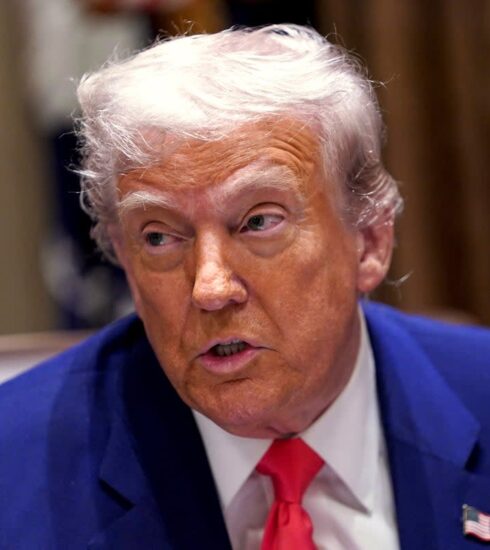
    U.S.President Donald Trump. Credit: BBC
    U.S. President Donald Trump will host leaders from five African nations in Washington to discuss “commercial opportunities,” a White House official said recently. Trump will host leaders from Gabon, Guinea-Bissau, Liberia, Mauritania and Senegal for a discussion and lunch at the White House on July 9, the official said.
    “President Trump believes that African countries offer incredible commercial opportunities which benefit both the American people and our African partners,” the official said, referring to the reasons why the meeting was arranged.

    This gathering might seem like a surprise, but some analysts view it as a clear sign of America’s increasingly active diplomatic push across the African continent.

    Just last month, for instance, the White House notably helped broker a peace deal between Rwanda and the Democratic Republic of Congo. This move brought a preliminary end to hostilities that had seen Rwandan-backed rebel groups clashing with DRC troops in the east for several months.

    While a separate bilateral meeting with South African President Cyril Ramaphosa in May was reportedly quite tense—with some observers even describing Trump as “ambushing” the South African leader. It had been reported by some news outlets that the Trump administration would hold a summit for the five countries in Washington from July 9-11. The Trump administration has axed swaths of U.S. foreign aid for Africa as part of a plan to curb spending it considers wasteful and not aligned with Trump’s “America First” policies. It says it wants to focus on trade and investment and to drive mutual prosperity.

    Secretary of State Marco Rubio reinforced the new approach recently, saying the US will prioritise support for African nations that show “both the ability and willingness to help themselves.”

    Troy Fitrel, head of the State Department’s Africa bureau, has also revealed that US envoys on the continent will now be evaluated based on commercial deals struck, rather than development assistance outcomes a clear signal of the administration’s new strategic direction.

    The selected nations represent diverse economic profiles across West Africa, from oil-rich Gabon to emerging democracies like Senegal. The summit’s timing suggests urgency in establishing stronger commercial relationships before potential political changes affect diplomatic priorities.

    Plans for a broader US-Africa summit have been announced for September, though neither American nor African officials have confirmed specific details or participant lists. The larger gathering would represent a more comprehensive engagement with continental leadership, potentially including major economic powers like Nigeria, Kenya, and Ghana.

    The July summit’s success could influence the scope and ambitions of the September gathering.

  • US Imposes Visa Restrictions on Individuals ‘Undermining Democracy’ in Liberia

    US Imposes Visa Restrictions on Individuals ‘Undermining Democracy’ in Liberia

    Blinken says the restrictions are targeted at specific individuals believed to pose a threat to the democratic process in Liberia. Credit: CNN

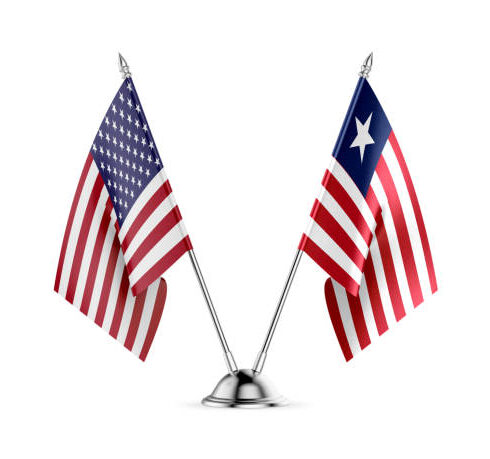
    Ahead of the October 10 Liberian presidential and legislative elections, the government of the United States has announced visa restrictions for individuals found guilty of undermining democracy in the West African country.

    U.S. Secretary of State Antony Blinken in a statement released by the U.S. State Department did not specify how many people were affected or identify them. The move restricts their ability to travel to the U.S. and the policy is not aimed at the Liberian people or government, the statement said.

    The policy, which takes effect in advance of the upcoming election, will affect officials of the government and others who are or will be involved in the manipulation and rigging of the electoral process, as well as those involved in alleged acts of intimidating voters, election observers, and civil society activities. It signifies the intent of the U.S to ensure the credibility of the election process and deter any form of rigging or violence. The right to peaceful assembly, freedom of expression, and association are at the heart of a functioning democracy. Adherence to these democratic norms and the rule of law allows all citizens to engage in political dialogue and support their choice of candidates, parties, and platforms.

    This is not the first time the U.S has used visa restrictions as a tool to protect democracy in Africa. In the past, visa restrictions were placed on Nigerians who undermined the February and March 2019 elections. While the measures were specific to certain individuals, they reflected the commitment of the U.S to work with the Nigerian government to end corruption and strengthen democracy, accountability, and respect for human rights.

    However, the threats to democracy in West Africa are not limited to Liberia. Several countries in the region have been experiencing issues ahead of crucial elections. For instance, in Ivory Coast and Guinea, there have been tensions and protests over the possibility of the incumbent Presidents seeking a contentious third term. In Liberia itself, there have been growing concerns over the cleaning of the voter roll ahead of the December 8 Senatorial Midterm elections.

    This move comes at a time when members of the opposition community in Liberia are already crying foul that the National Elections Commission is doing everything in its power to rig the elections in favor of the incumbent, President George Weah and his party, the Coalition for Democratic Change (CDC).  With less than twelve days until the elections, the NEC has yet to make public the Final Voter Roll (FVR), which will make known the total number of people that are supposed to partake in the elections.

    President George Weah and his party, the Coalition for Democratic Change (CDC) have been accused of intimidating the opposition and trying to compromise the Nation’s electoral body. Credit: Wikipedia

    The main opposition, the Unity Party of former Vice President Joseph Nyuma Boakai, slammed the conduct of the electoral process by the NEC, terming it as lacking transparency. The UP has already taken the NEC to court for its failure to publish the FVR. The main opposition believes the actions of the electoral body are deliberate and are meant to rig the elections in favor of the incumbent, President George Weah.

    The threat of visa restrictions is expected to have a significant impact on the actions of politicians and decision-makers. It is hoped that it would encourage them to ensure a free, fair, and peaceful election process. However, it is also argued that the U.S and other stakeholders need to go a step further and consider freezing assets and imposing sanctions on governments that deliberately attempt to influence the outcome of elections.

    Liberia, founded in 1822 as an outpost for returning freed slaves from the Americas, is still recovering from a military coup in 1980 and a 14-year civil war that ended in 2003. It remains to be seen how effective these measures will be in deterring potential threats to Liberia’s forthcoming elections and ensuring a free, fair, and peaceful democratic process.


  • Uganda In Debt Trap Over Entebbe Airport

    Uganda In Debt Trap Over Entebbe Airport

    UGANDA IN DEBT TRAP OVER ENTEBBE AIRPORT

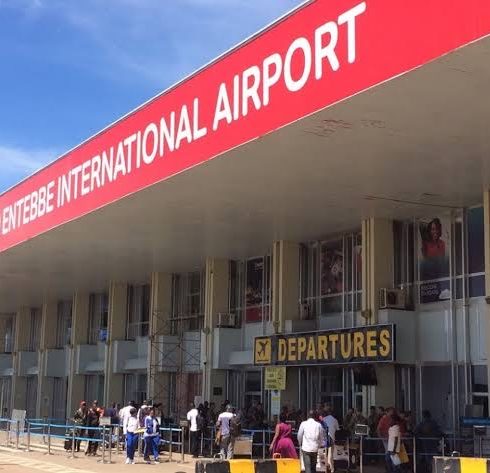
    Top Ugandan officials are in a difficult position after lenders in China rejected their request to re-negotiate clauses in the U.S.$200 million loan signed six years ago to expand Entebbe International Airport.

    Uganda : Entebbe International Airport

    Some of the unfavourable provisions in the loan agreement that Uganda signed with the Export-Import Bank of China on March 31, 2015, will – if not amended – expose Uganda’s sovereign assets to attachments and take-over upon arbitration awards in Beijing. Approximately 13 clauses were deemed “unfriendly,” including

    the clause that gave Exim Bank the sole authority to approve the withdrawal of funds from the Uganda Civil Aviation Authority accounts.

    Planning Minister Amos Lugoloobi admitted that the loan was poorly negotiated and signed but that the ministry has put in place stringent measures, including setting up an entire department to ensure loans are closely monitored so that the country does not slip into debt distress.

    Attorney General Kiwanuka Kiryowa, playing down the fears of the airport takeover, says there is no cause for alarm because no property of Uganda has been mortgaged. He added that the loan was a commercial contract with an obligation to both parties.

    Source: All Africa

  • Ministers Resign as Sudan Prime Minister Hamdok Returns to Office

    Ministers Resign as Sudan Prime Minister Hamdok Returns to Office

    MINISTERS RESIGN AS SUDAN PRIME MINISTER HAMDOK RETURNS TO OFFICE

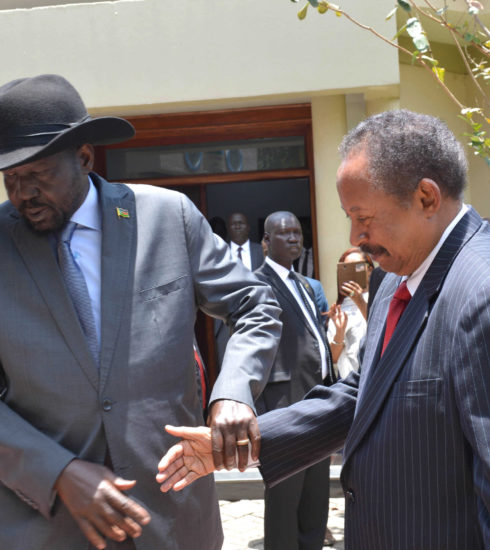
    Eleven ministers representing the Forces for Freedom and Change (FFC), who participated in the transitional government before the military junta seized power in a coup d’état in Sudan on October 25, 2021, have announced that they have submitted their resignations in writing to Prime Minister Abdallah Hamdok, disavowing an agreement signed in Khartoum on Sunday with junta leader

    General Abdel Fattah al-Burhan, stating that the agreement “legitimises and perpetuates the military coup regime”.

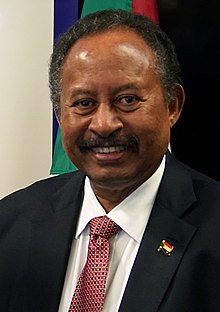
    Prime Minister Abdallah Hamdok

    Hamdok is to form an independent cabinet of technocrats and all political detainees will be released under the agreement between the military and civilian political parties. However, a number of pro-democracy groups rejected the deal and called for coup leaders to be put on trial for undermining the regime, and for crimes against peaceful demonstrators. The FFC was a major driver of the revolution that overthrew the 30-year Al Bashir dictatorship in 2019, and has been a convenor of an ongoing campaign of civil disobedience and mass demonstrations since the coup, Radio Dabanga reports.

    Source: All Africa

  • How Covid-19 Jabs Gave Boost to Tourism in Tanzania

    How Covid-19 Jabs Gave Boost to Tourism in Tanzania

    HOW COVID-19 JABS GAVE BOOST TO TOURISM IN TANZANIA

    Swift action by the Tanzanian government to launch a vaccination campaign against Covid-19 has had a positive effect on tourism, Minister for Natural Resources and Tourism, Damas Ndumbaro has said. Despite being severely battered by the pandemic, the tourism sector recorded a 52% increase in the number of visitors from January to November 2021. This has led to a 69% rise in revenue collection from the tourism sector, as well as the hospitality industry.

    COVID-19 Vaccine

    In July 2021, the government had down-played the importance of Covid-19 vaccines but decided to adhere to the World Health Organization (WHO) rules. The outbreak of the pandemic in early 2020 led to a sharp fall in tourism arrivals from slightly more than 1.5 million tourists in 2019 to about 600,000 tourists in 2020. The fall in arrivals triggered an even more devastating drop in revenue collections to U.S.$1.7 billion in 2020 from an all-time record of U.S.$ 2.5 billion in 2019.

    Source: All Africa

  • COVID-19 is widening Africa’s immunization gaps

    COVID-19 is widening Africa’s immunization gaps

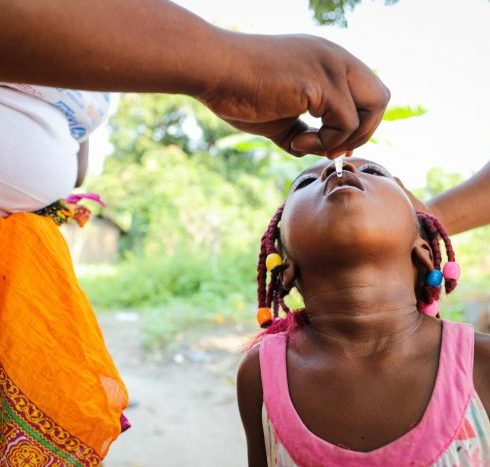
    Africa has the greatest number of unvaccinated children in the world but stats from the World Health Organization (WHO) reveal that the COVID-19 epidemic disrupted health services throughout Africa, resulting in a roughly 10% increase in missed vaccines, compared to the previous year. In 2020, about 7.7 million African children, which makes up 45% of the world, would have missed out on critical first doses of Diphtheria, Tetanus, Pertussis, Measles, and Polio vaccinations. Ethiopia, Nigeria and the Democratic Republic of Congo are among the top 10 nations in the world for unvaccinated children in 2020 for the first dose of Diphtheria- Tetanus-Pertussis (DTP-1) and Measles. Due to disruptions of COVID, 3.7 million more children are expected to miss out on routine immunization. It is estimated that in Africa, 1.7 million children would not have received a third dose of the DTP vaccine.

    The immunization agenda aims to achieve 90 percent coverage of all critical children immunizations in the following nine years, however, the vaccination rates are far below expected. Due to low regular vaccine coverage and delay, there were severe measles outbreaks in eight African nations between January 2020 and April 2021, with tens of thousands of children affected. The quality of measles monitoring in Africa plummeted to its lowest level in seven years by 2020, with just 11 nations reaching their targets.