Author: Tolulope Omotunde

  • Rosalind Brewer: Black CEO, breaking records 

    Rosalind Brewer: Black CEO, breaking records 

    The vision and actions of a CEO permeates every aspect of an organization. Financials, customer service, and company culture reflect the goals and strategies of those in leadership positions. A recent shift in the U.S. toward expanding diversity, equity, and inclusion initiatives has created new opportunities for people of color in the corporate world.

    One of such people who have risen to a place of prominence in the American corporate scene is Rosalind Brewer who until becoming the CEO of Walgreens Boots Alliance was the first African American woman to serve as the chief operations officer (COO) of Starbucks.

    Brewer was born in Detroit, Michigan in 1962 and was the youngest of five children. Brewer and her siblings were the first generation in her family to go to college. She received her bachelor’s degree in chemistry from Spelman College in Atlanta, Georgia, after graduating from Cass Technical High School in Detroit, Michigan in 1980. She decided not to pursue a career in medicine after completing her undergraduate studies and began working as a research technician at Kimberly-Clark.

    Brewer, who joined Starbucks in 2017 as the company’s first Black and first woman COO, previously spent five years serving as the CEO of Sam’s Club, which is owned by Walmart. Prior to working for Walmart, she spent 22 years of her professional career working for manufacturing company Kimberly-Clark, where she started her career as a scientist and eventually worked her way up to being president of the company’s Global Nonwovens Sector in 2004. 

    As a long-time executive in the American corporate scene, Brewer has been transparent about the challenges she’s faced as one of very few Black women in the C-Suite.
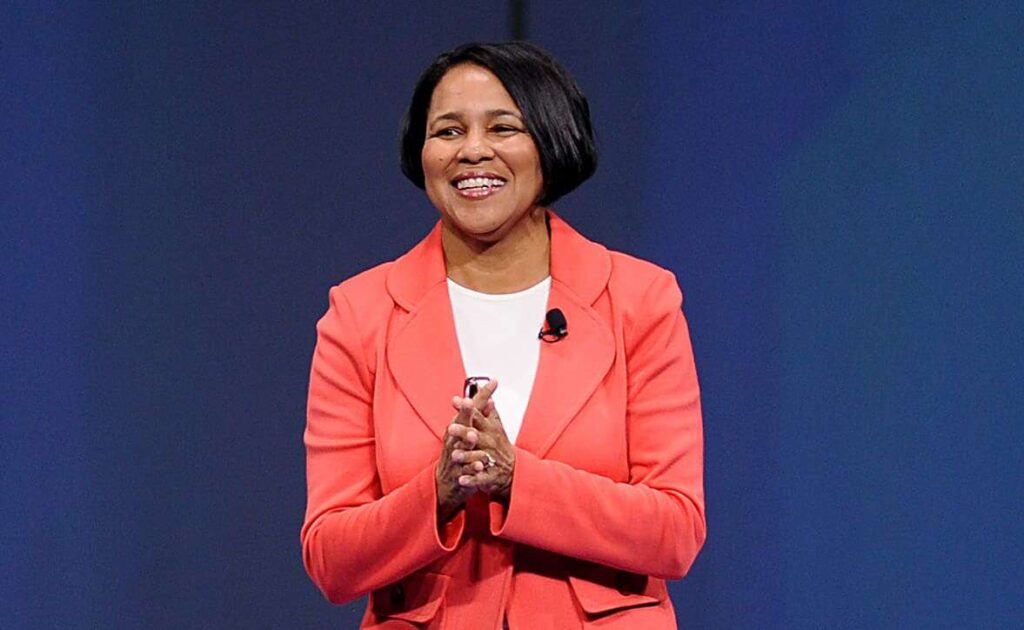
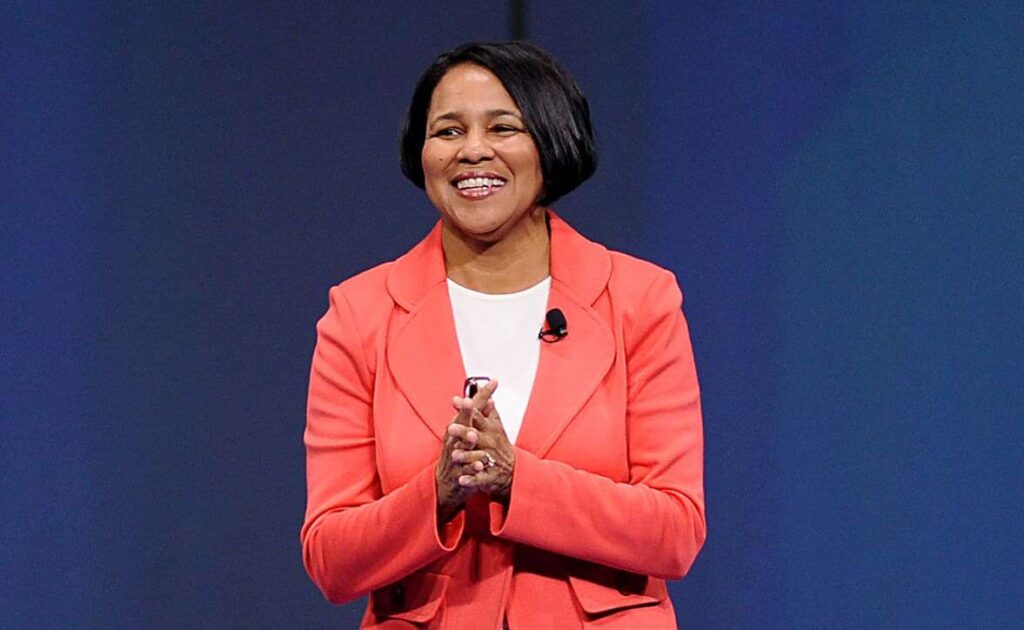
    Rosalind Brewer is making her mark as one of the most succesful and effective CEO’S in an American Fortune 500 company. Photo(CNBC)

    During a 2018 speech at her alma mater, Spelman College, she admitted that she’s had to face hurdles and work twice as hard to prove she had what it took to take on every role she has ever held. “When you’re a Black woman, you get mistaken a lot; you get mistaken as someone who could actually not have that top job. Sometimes you’re mistaken for the kitchen help or the janitor. Sometimes people assume you’re in the wrong place, and all I can think in the back of my head is, ‘No, you’re in the wrong place.’”

    Frustrated by the lack of control in research and development when she was at Kimberley-Clark, she moved over to administration. By 2006 she had worked her way up to be the organization’s president for manufacturing and global operations.

    Brewer left Kimberly-Clark in 2006 and joined Walmart as regional vice president for operations in Georgia. From there, she became the division president of Walmart’s Southeast market and finally a president of Walmart East.

    In 2012, Brewer was named President and CEO of Sam’s Club, becoming the first African American to lead a Walmart division. She has focused on health and wellness by doubling the number of organic products offered at Sam’s Clubs and led the development of the company’s curbside pickup service and e-commerce efforts, including introducing a process that allows customers to scan items with their phones in order to speed up checkout.

    As CEO of Walgreens, Brewer has been responsible for improving the company’s revenue amid the pandemic and oversaw the drugstore chain’s Covid-19 vaccine rollout. Just a few months after assuming her role at Walgreens, she pushed for the organization to increase its starting hourly wage to all workers to $15 an hour which will come into effect in November.

    What made the move more impressive was the fact that it came at a time when her organization like so many others were still reeling from the effects of the COVID-19 pandemic as questions arose about how vaccines would be distributed and who would be prioritized. Walgreens was one of the first retail pharmacies to administer COVID-19 vaccines to the public after being tapped by the U.S. Department of Health and Human Services. “Investing in and rewarding our team members is not only the right thing to do, it’s highly important to retaining and attracting a talented workforce, and to continuing to serve our critical role in community health care,” Brewer was quoted as saying.

    Brewer, who has become known as a champion of diversity, worked to change the culture at Starbucks during her tenure as COO after the store manager of a Philadelphia location called the police on two Black men who had sat down in the location without ordering. In an interview with the Today Show, she said the incident had touched her deeply and was “very personal.”

    “I saw these two young men, and what really struck me was that they were the same exact age as my son, John, and I knew right away that I had to dive into this one,” Brewer said. “This could have happened to him.”

    Following the incidents which took place in 2018, over 8,000 Starbucks locations shuttered their doors for racial bias trainings. The coffee chain also adopted an “open bathroom” policy that allowed anyone who enters a location to use the restrooms, even if they didn’t make a purchase.
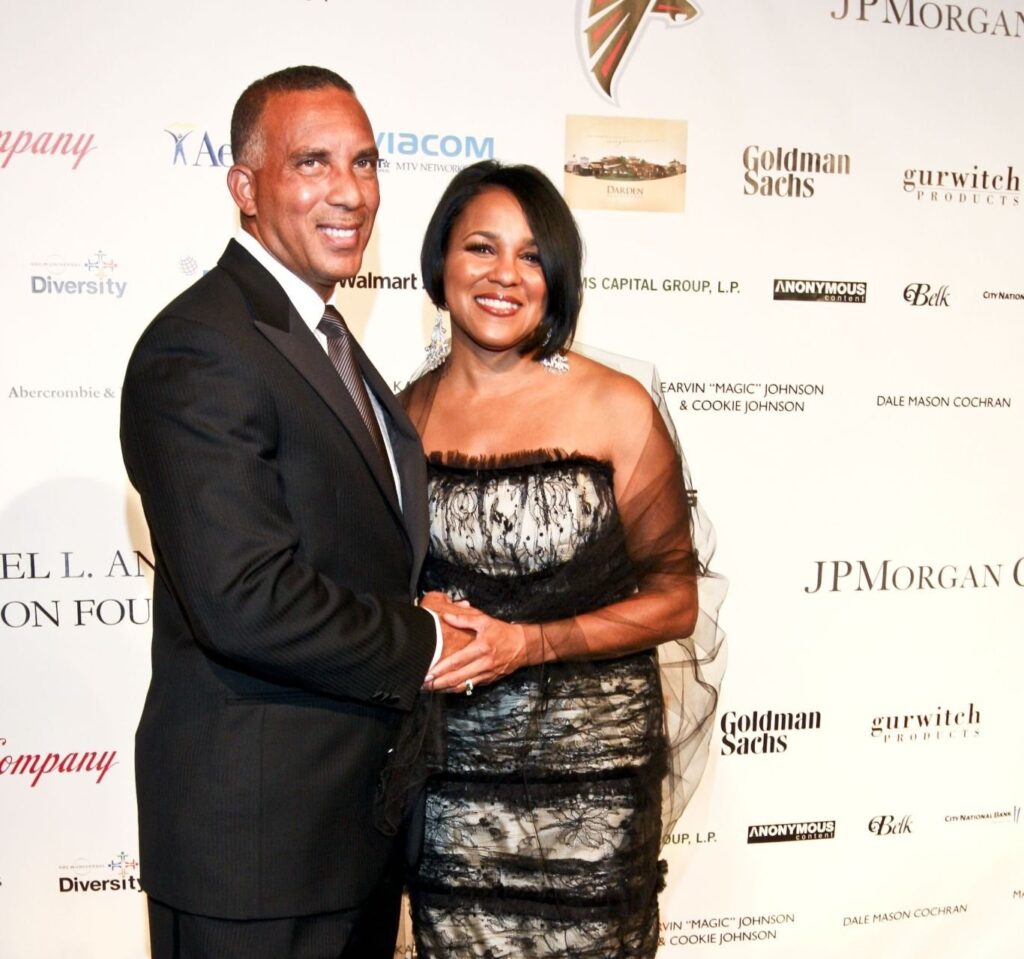
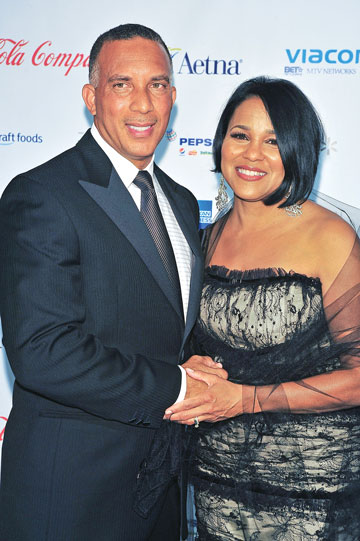
    Brewer and her husband John. Brewer has said that John has been a constant source of motivation for her. She believes a Black woman can combine a successful marriage with a successful career. Photo(GettyImages)

    In 2016, she was listed by Forbes as the 57th most powerful woman in the world. She was also named as one of the World’s 100 Most Powerful Women by Forbes earlier in 2013. The magazine named her among the Most Powerful Black Women of 2013 and has been honored by Fortune magazine as one of the 50 Most Powerful Women in Business.

    Brewer is married to John Brewer and has an estimated net worth of $11.6 Million. The couple have two children; John, III, a real estate investment banker, and a daughter Camryn Brewer, a senior in high school.

    Rosalind has said at several fora that she attributes gaining success as a leader by being a “whole person” who balances family, community, and work. For her the three are important and interwoven.

    Rosalind continues to act as an inspiration to not only all women but also women of color all over the country, reassuring them that reaching the summit is possible.

  • Boulder County Passes Gun Laws to help Stem Gun Violence 

    Boulder County Passes Gun Laws to help Stem Gun Violence 

    The Boulder County Commissioners at the beginning of this month unanimously approved five new gun control ordinances that will help keep residents safe in an era of mass shootings and lesser known incidents of gun violence, they said.

    Following a month-long comment period and a public hearing, Boulder County has joined a number of its neighboring agencies and municipalities in enacting a set of ordinances intended to address gun violence.

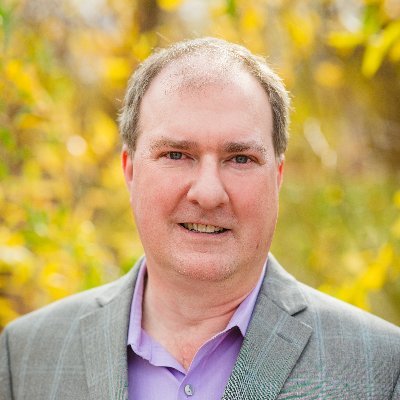
    Aaron Brockett, the Mayor of Boulder has backed the new measures put in place to stem the gun violence endemic. Photo-colorado.gov

    Commission Vice-Chair Claire Levy said in a statement to the press that “the rate of deaths in our country through gun violence is simply unacceptable. When you take a look at the homicides, suicides and the innocent bystanders who are injured or maimed, the laws we are putting in place is to prevent those deaths and injuries.”

    Naturally not everyone has welcomed the change. Some who spoke at the public hearing told the commissioners the county will face a similar lawsuit filed recently in Superior which halted the implementation of a slate of new gun restrictions in that community.

    Robert Jelgersma, a resident of Allenspark said preventing people from legally carrying a weapon in certain areas like schools and churches only encourages people who want to do harm. “It just opens up the possibility of these places being like a shooting gallery,” Jelgersma said. 

    Commission Vice-Chair Claire Levy believes they have a responsibility to protect people from gun violence. Photo- CPR News

    The ordinances which were adopted on August 2, 2022 are effective immediately, and they include Ordinance 2022-2, an ordinance prohibiting the purchase of firearms by anyone under the age of twenty-one. It also prohibits anyone under the age of 21 from purchasing and selling firearms to anyone under the age of 21. 

    Ordinance 2022-3 requires a waiting period prior to the sale of firearms. It establishes a 10 day waiting period for delivering firearms from a licensed firearms dealer and for the dealer to have received approval from the Colorado Bureau of Investigation for the firearms transfer. 

    Ordinance 2022-4 prohibits the carrying of firearms in sensitive public places. It also prohibits the carrying of firearms, whether in an open or concealed manner, in sensitive public areas in unincorporated Boulder County, including (but not limited to) government buildings, playgrounds, parks, within 500 feet of a polling station or ballot box, healthcare facilities, places of worship, preschools, and day-cares. 

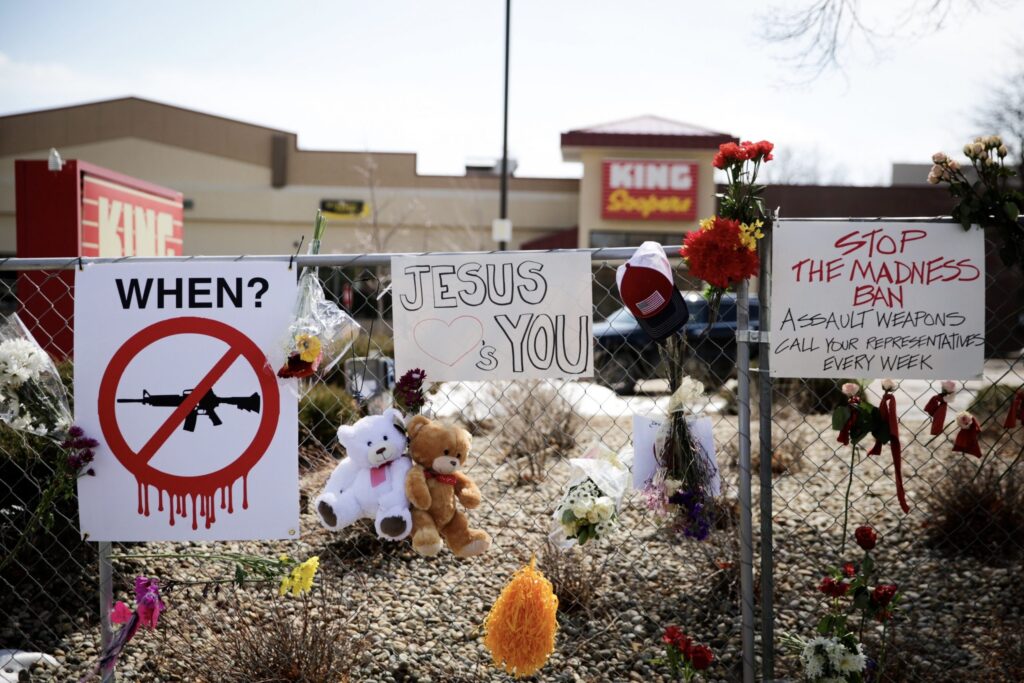
    Signs calling for an assault weapon ban join the makeshift memorial outside the Table Mesa King Soopers in Boulder, March 24, 2021. Photo- CPR News

    Ordinance 2022-5 prohibits the sale and purchase of assault weapons, large capacity magazines, and trigger activators. This also prohibits the manufacture, import, purchase, sale or transfer of any assault weapon, large-capacity magazine, or rapid-fire trigger activator in unincorporated Boulder County.

    Ordinance 2022-6 regulates the possession of unfinished frames and receivers, and unserialized firearms. It prohibits the possession of firearms that have not been identified with a serial number by a federal licensee (so called ‘ghost guns’).

  • Mandela Washington Fellows in Colorado: What next for African youths

    Mandela Washington Fellows in Colorado: What next for African youths

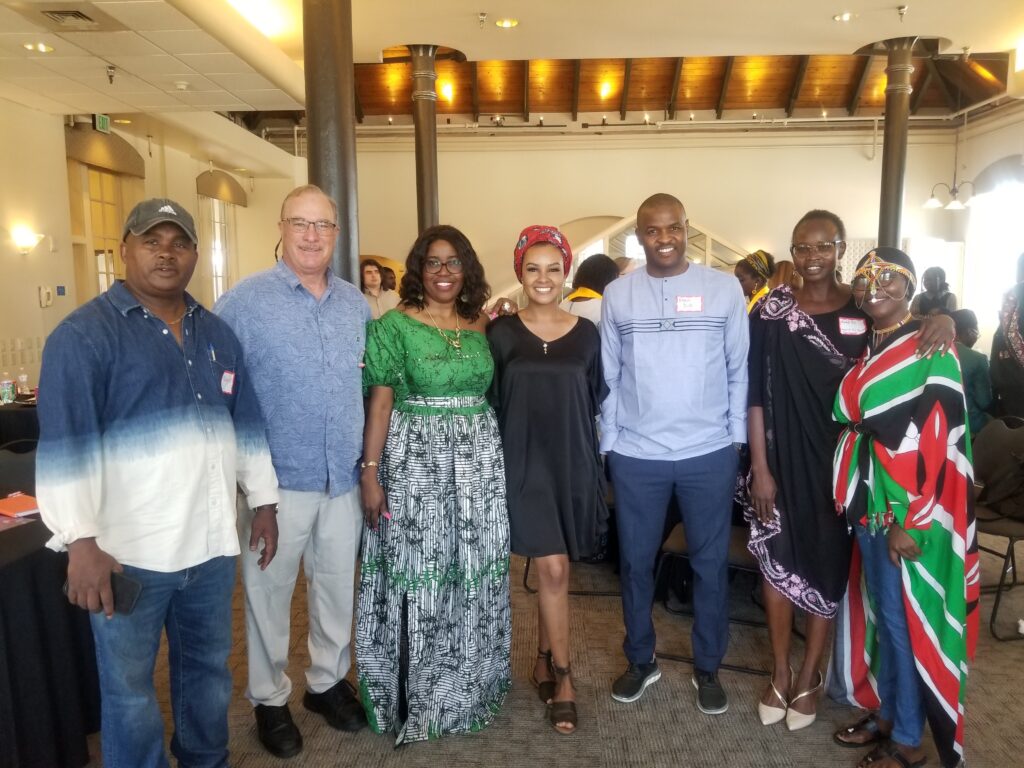
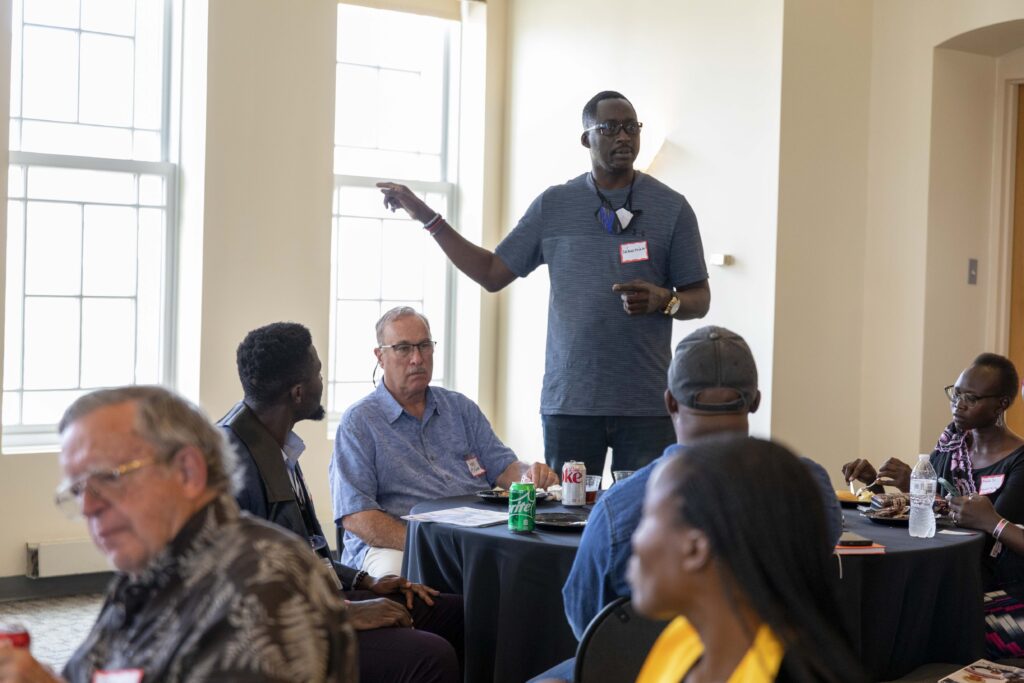
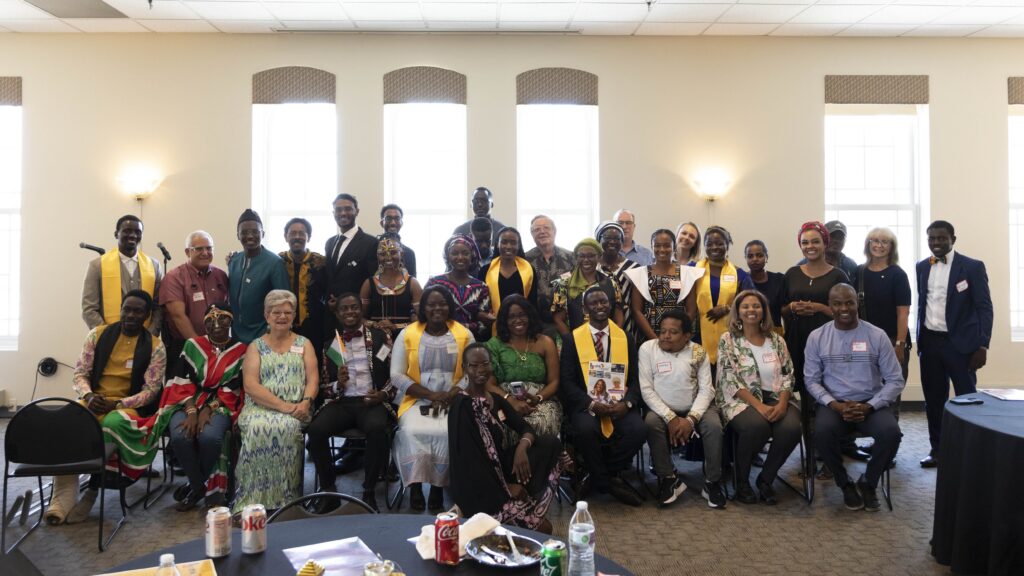
    Denver Colorado recently played host to a group of African young leaders who arrived in Colorado in July 2022 for the Mandela Washington Fellowship of the Young African Leaders Initiative. The visiting young Africans sat down to enjoy an appetizing lunch in a cozy small hall in the Tivoli Student Union block of the University of Colorado, during a small reception hosted by the Rotary Club of Denver.

    The July reception was attended by some proud Africa community leaders that included Dr. Azuka Idam, Publisher and CEO of Afrik Digest Magazine, Ms. Nyadak Pal of the Nyadak Pal Peace Foundation, Ms. Maya Wheeler from the African Chamber of Commerce, Dr. H. Malcolm Newton, founder of the Pan African Business Council, Mr. Nigusse Beyene from the Global Refugee Solution and Mr. Papa Dia the founder and Executive Director of the African Leadership Group. 

    The fellows who were picked from different countries of Sub-Saharan Africa, were extremely delighted to be received by Africans in Colorado. The African community leaders who were present congratulated the fellows on their outstanding journey so far and admonished them to continue being worthy ambassadors of the African continent. Some of the participants expressed gratitude to the fellowship organizers and spoke highly of the training they have received. They also thanked CU Denver and Rotary for the unforgettable experience.

    Since the Mandela Washington Fellowship for Young African Leaders Initiative (YALI) was established in 2014, the program has seen participation from more than 5000 young African leaders from all over the continent. President Obama launched the Young African Leaders Initiative (YALI) in 2010 as a signature initiative to offer support to young African leaders as they work to spur growth and prosperity, strengthen democratic governance, and enhance peace and security across the continent. This year, a cohort of 25 selected young leaders attended the training at the University of Colorado (CU Denver) School of Public Affairs, where they were paired with organizations in academia and the non-profit world for a mutual exchange of knowledge and information.

    The University of Colorado Denver (CU Denver) was an institute partner for this year’s fellowship program. The program works in collaboration with US colleges and universities toward a six-week leadership training to build skills in business, civic engagement, leadership and public management for visiting fellows.

  • The Africa-America Institute Announces its 38th Annual Awards Gala

    The Africa-America Institute Announces its 38th Annual Awards Gala

    Ceremony Set to honor the remarkable achievements of Africa, Africans and African descendants across various industries

    The Africa-America Institute (AAI), the premier US-based international organization connecting Africa to America through education, training and dialogue, announced its 38th Annual Awards Gala celebrating the vast contributions of Africa and its worldwide diaspora. Returning to an in-person format, the Awards Gala will take place at Cipriani 42nd St. in New York City, on September 20th at 6PM.

    Launched in 1984, the AAI Awards Gala is the most anticipated African-centered event convened in New York City. Held during the week of the United Nations General Assembly, the Gala brings together a host of distinguished notables including heads of state, diplomats, government officials, business and civil society leaders, scholars, journalists and other leading figures for an unforgettable evening.

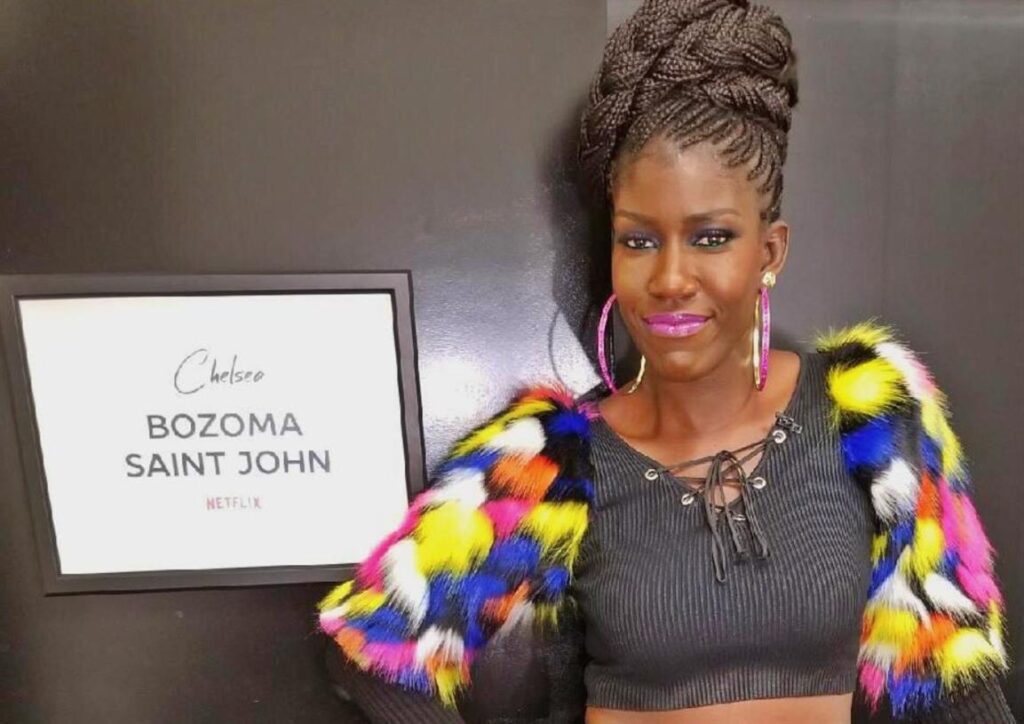
    Bozoma Saint John the chief marketing officer for Netflix will host the 38th Annual Awards Gala of The Africa-America Institute. Photo -Reuters

    Hosted by marketing executive, entrepreneur and author Bozoma Saint John, this year’s awards will center around the theme of “Africa in the World.” During the ceremony, AAI will honor an illustrious group of leaders across industries that have used their platforms to advance and affect substantive change locally, nationally and globally in their respective areas.

    The 2022 Awards and Honorees include:

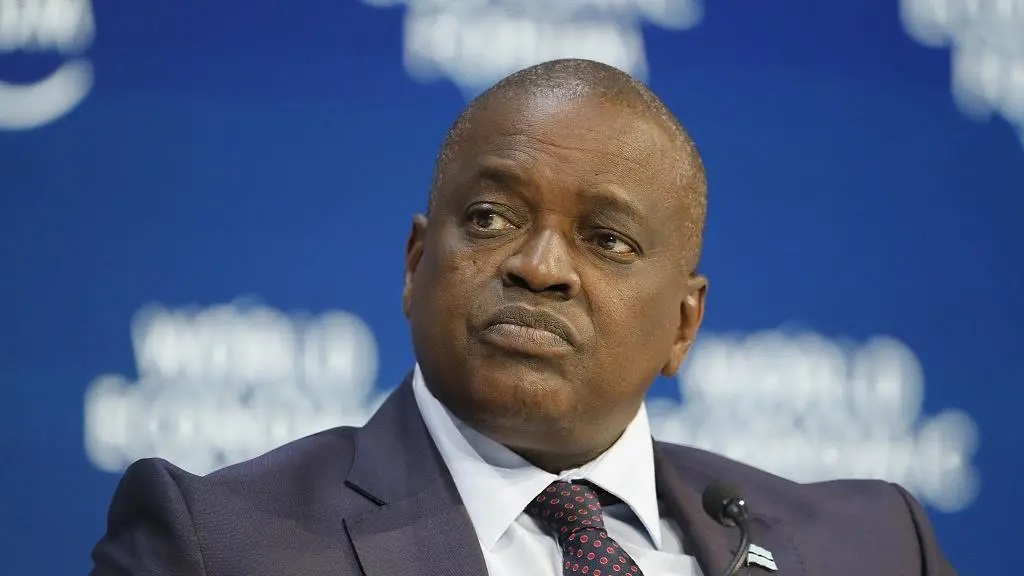
    National Achievement Award: The Republic of Botswana to be accepted by His Excellency Mokgweetsi Eric Keabetswe Masisi

    The President of Botswana,Mokgweetsi Keabetswe will be receiving the National Achievement Award on behalf of his country. Photo – vanguard.com.ng

    Science and Technology Leadership Award: Solomon Assefa – Vice President of IBM Research, Africa & Emerging Market Solutions

    Solomon Assefa – Vice President of IBM Research, Africa & Emerging Market Solutions will be the recipient of the Science and Technology Leadership Award. Photo -BBC
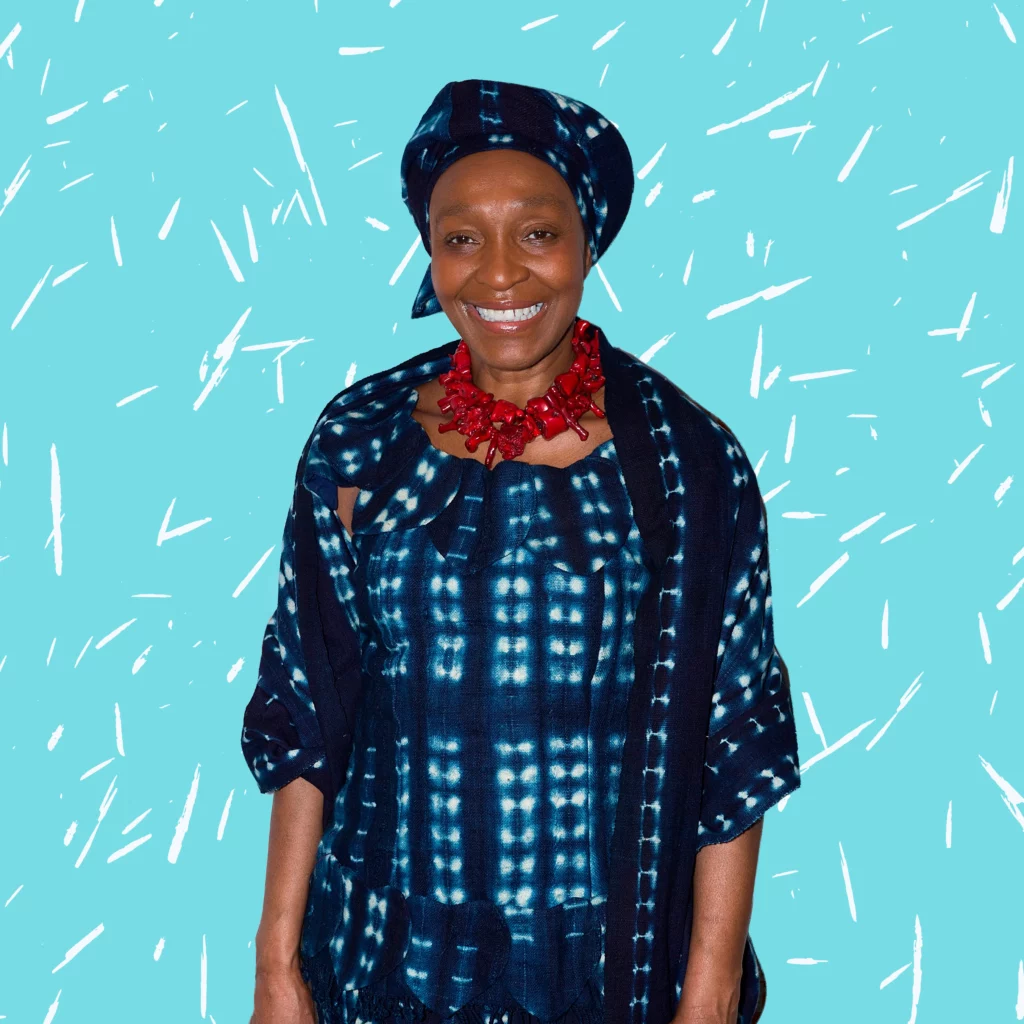
    Sierra Leonean born Mahen Bonetti will be receiving the Ambassador of African Film Award. Photo(Essence.com)

    Ambassador of African Film Award: Mahen Bonetti – Founder of the African American Film Festival, Inc. (AFF) and Executive Director of the New York African Film Festival (NYAFF)

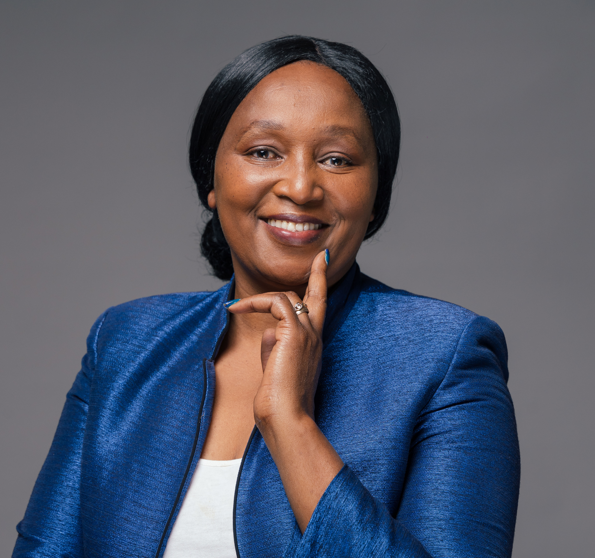
    Distinguished Alumnus Award: Betty Wambui Kibaara – Director of the Food Initiative at the Rockefeller Foundation

    Betty Wambui Kibaara, Director of the Food Initiative at the Rockefeller Foundation will receive the Distinguished Alumnus Award. Photo -Rockefellerfoundation.org

    “This year’s Gala promises to be especially exciting as it marks a return to an in-person event after the last two editions were held virtually due to the COVID-19 pandemic. We are delighted to have the opportunity to honor the people of the Republic of Botswana for their steadfast commitment to democracy and ground-breaking global partnerships in medical research and education,” said Kofi Appenteng, AAI’s President & CEO. “We’re also celebrating Dr. Solomon Assefa’s crucial work in deploying AI to enable sustainable futures, Betty Kibaara’s work championing food security and agribusiness investments, and Mahen Benetti’s legacy of bringing African and Diasporan voices to the forefront of global cinema. In geographical, scientific, artistic, and cultural terms these honorees embody this year’s Gala theme of Africa in the World.”

    Since its founding in 1953, AAI has awarded scholarships and fellowships to over 23,000 Africans. These individuals comprise an esteemed network of alumni, many of whom are leaders and influencers across the public, private, and governmental sectors in Africa and globally. Included in this network are current Heads of State, H.E. Hage Geingob, President of the Republic of Namibia; H.E. Alassane Ouattara, President of the Republic of Côte d’Ivoire; H.E. Mohamed Bazoum, President of the Republic of Niger; and H.E. Cyril Ramaphosa, President of the Republic of South Africa. Many of AAI’s Alumni have left an indelible imprint, including the late 2004 Nobel Peace Prize Laureate Wangari Mathaai and the late Barack Obama, Snr.

  • Miss Africa 2022: The search begins

    Miss Africa 2022: The search begins

    The Miss Africa Calabar beauty pageant which debuted in the year 2017 is gearing up for the 2022 event which promises to deliver on the hype.

    The beauty pageant, which is the initiative of Prof. Ben Ayade-led administration, is a platform aimed at creating awareness about the effect of climate change and its attendant impact.

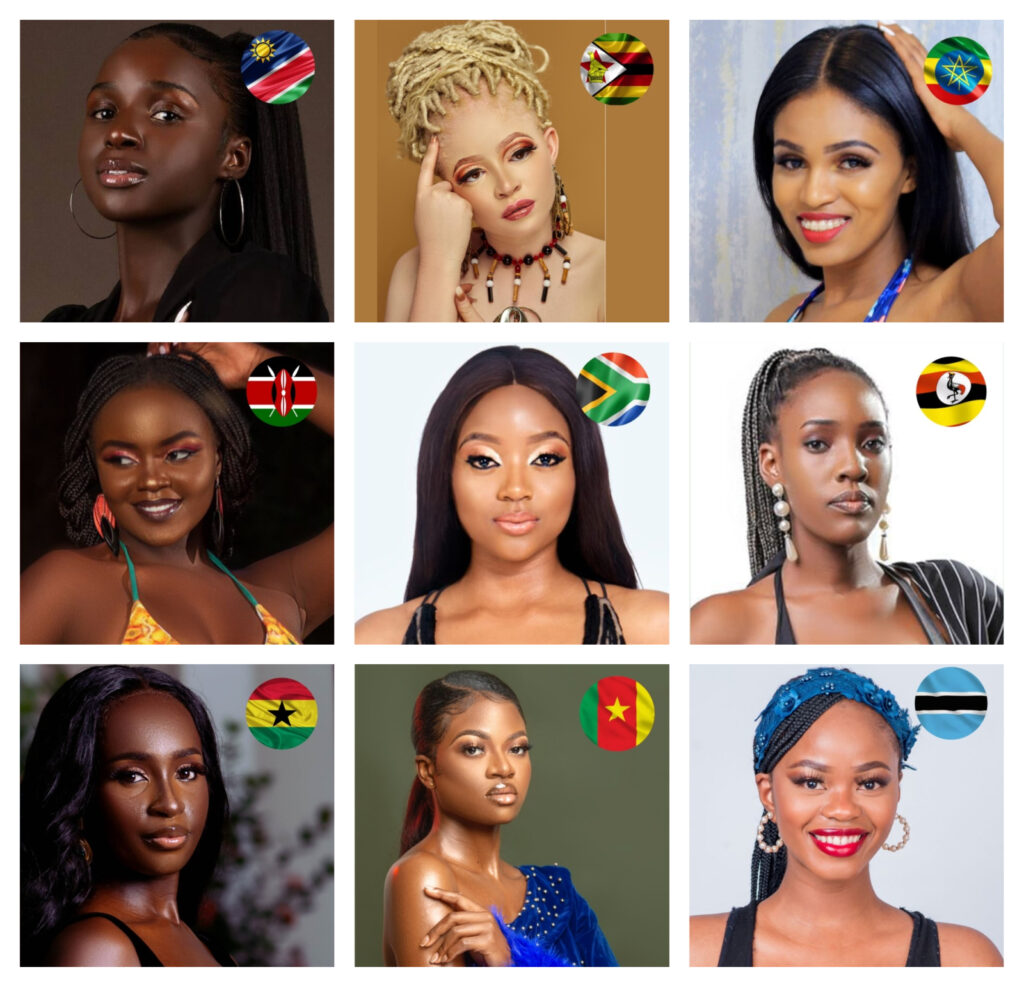
    The Contestants for this year’s beauty contest

    The Cross Rivers State governor, who himself is a strong environmental activist, has said that he hopes the beauty pageant continues long after he leaves office and would love nothing more than to see the continent begin to take more serious steps in protecting its environment and combating climate change.

    The event is held every December and this year’s event will be held on the 27th and 28th of December 2022. The organizers plan to have 13 contestants from Namibia, South Africa, Tanzania, Tunisia, Nigeria, Ethiopia, Botswana, Uganda, Zimbabwe, Zambia, Kenya, Ghana and Cameroon slug it out for the right to be crowned the African Queen for the year 2022.

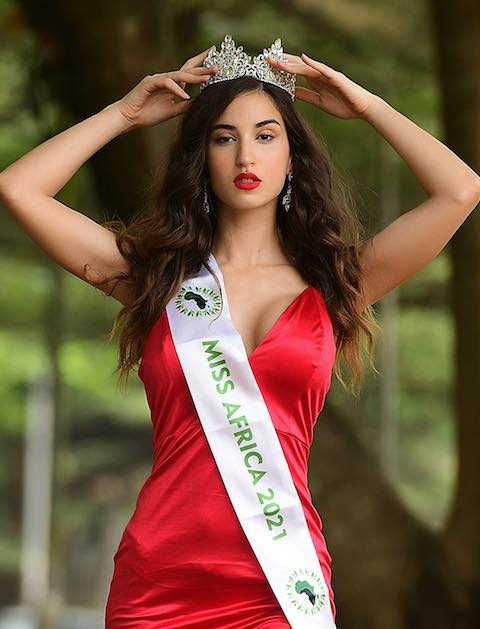
    Sarra Sellimi of Tunisia won the 2021 beauty pageant and is the current reigning queen. Photo(MissAfricatv)

    Like other Miss Africa beauty pageants that abound, the contest is among the activities designed to empower young women on the continent and give them a platform on which they can effect positive change as it pertains to the environment in Africa.

    The 2021 pageant was won by Sarra Sellimi from Tunisia.

  • Colorado’s Medicaid Problem: A Threat to Mental Health Patients

    Colorado’s Medicaid Problem: A Threat to Mental Health Patients

    Mental health counsellors in Colorado during the week expressed surprise with the new rules that will make it harder for those in private practice to treat the state’s most vulnerable patients: those with Medicaid insurance.

    For the benefit of those who may not know, Colorado’s Medicaid Program now known as “Health First Colorado” is a free or low cost public health insurance for Coloradans who qualify. The scheme covers doctor visits, emergency care, preventive care such as screenings and immunizations, and other procedures and treatments for beneficiaries. Finding a mental health provider while on Medicaid can be a challenge in Colorado according to residents in the state. There have been tons of complaints since the beginning of the year over the rising number of clinics, hospices and hospitals who have continued to turn back residents on the Medicaid plan.

    Danielle Patterson with the Patterson Center for Resiliency said earlier in the year that providers weren’t taking Medicaid patients because of the problems with Medicaid.

    Danielle Patterson with the Patterson Center for Resiliency has been critical of the numerous problems associated with medicaid. Photo(denver post)

    In her words; “We’ve had prospective patients call and say they’ve called ten to fifteen places and there are no openings. We have clinicians who have openings, but the problem is getting insurance to take these clinicians who are unlicensed or in their training program. They’ve done years of school, they’ve passed many tests, and they’ve done hours of internships and supervision. There are also some issues with getting paid on time, getting paid fairly, and there is something called a clawback which is where Medicaid has seven years in Colorado to take money back for appropriately performed services and change their mind about it. Many other states have six months to one year of that. Many of us got letters for tens of thousands of dollars that they wanted this year, and that could bankrupt us,” said Patterson.

    In February this year, The Colorado Department of Health Care Policy and Financing organized a virtual forum where mental health therapists, counsellors and psychologists from all over the state could join in and air their misgivings about all that is wrong with Medicaid from payment delays and burdensome paperwork to administrative burdens. The direction the meeting went left the majority of its participants angrier, incensed and frustrated.

    The forum, which was intended to clear the air, came after months if not years of intense frustration among mental health providers in private practice who want to treat patients covered by Medicaid. Many of the 160 therapists, psychologists and social workers who attended said they expected they would get to vent their frustrations and seek solutions during the forum. Instead, two mediators asked them to log into an instant polling website on their cell phones and respond to questions, including whether they felt the process was “moving in the right direction” and what was currently going well. As the answers were displayed live on the screen in colorful words and graphs, mental health workers quickly got annoyed.

    The workers of the health sector in Colorado are clearly frustrated at the slow pace of progress being made on this issue considering the fact that about 31% of the state’s citizens are on Medicaid according to stats from coloradohealthinstitute.org.

    According to the new rules which were announced at the beginning of this month, it imposes stricter requirements on using interns still working toward their graduate degrees and therapists who have graduated but have yet to receive their license, a process that takes two to four years after graduation. Those pre-licensed counsellors can see patients, but must have a licensed counsellor sign off on their diagnoses and progress notes from each counselling session.

    With the new rules, only counsellors who have been licensed for at least two years can sign off on the work of pre-licensed counsellors. The rules also stipulate that any counsellor sanctioned by the state licensing division, at the Department of Regulatory Agencies, must wait for two years after their sanctions have expired before supervising pre-licensed counsellors.

    Workers in the private health care practice clearly see these rules as grossly overreaching, as it will most definitely mean fewer appointments for patients on the government insurance program for the needy, Medicaid. Andrew Rose, a psychotherapist and director of Boulder Emotional Wellness, in an interview with the Colorado Sun last month said that “We feel like that is going too far, if DORA has decided you are safe to practice, that should be good enough.” The current disenfranchisement with the Medicaid plan is already at an all-time high amongst private health practitioners and even speaks to a larger dysfunction with how the State of Colorado runs its mental health programs.

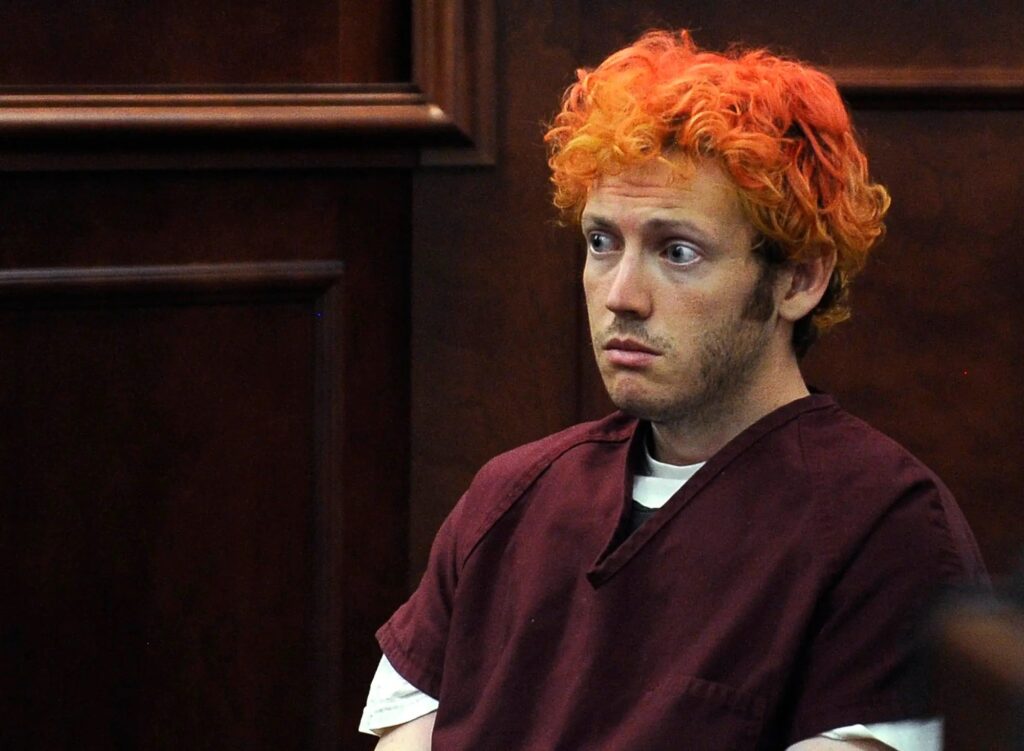
    In 2012, James Holmes, an Aurora based laborer, opened fire on a packed movie theatre in Aurora, killing 12 and injuring dozens more. Prior to him committing that gory act, James had been diagnosed with schizophrenia. Schizophrenia is a mental disorder in which people interpret reality abnormally. It’s on record that James had tried to get mental health treatment before the killings repeatedly but was never able to despite having met with at least three mental health professionals at the University of Colorado prior to the massacre.

    James Holmes who had been diagnosed with schizophrenia but was unable to receive adequate help opened fire in a movie theatre in 2012. Photo(Denver Post)

    Now going by multiple reports, then-Colorado Gov. John Hickenlooper began the search for preventive solutions. He turned to his cabinet and asked for a plan to expand crisis mental health services. He got a comprehensive blueprint to spend millions more, but it came with strings attached: To get the money, the system might have to change.

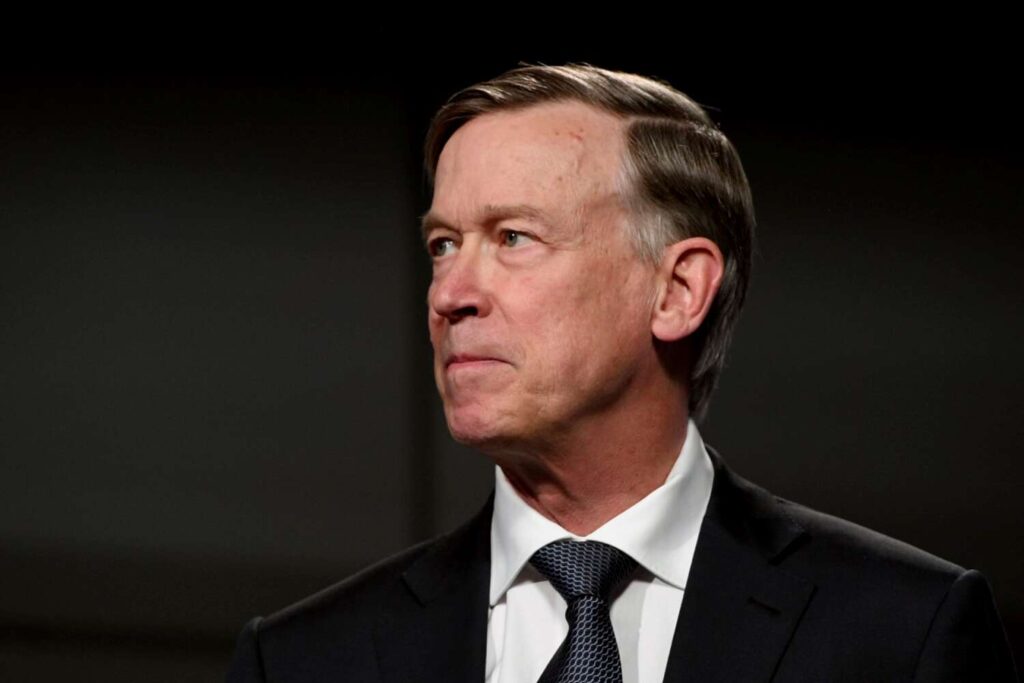
    John Hickenlooper former Governor of Colorado initiated mental health reforms in the state which has stalled over time. Photo(NBC News)

    Reggie Bicha, former head of the Colorado Department of Human Services had said at the time that “If you keep putting more money into that system, you’re likely to get more of the same result”. “And we felt as a leadership team at CDHS, and the governor’s team supported this, that we needed some new ideas and new perspectives, and we wanted these new dollars to go out in a competitive array.”

    Ultimately, that never happened. Why? No one can give a definite answer, but attempts have been made since then and even more recently to reform the delivery network for mental health care in the state. While the events of 2012 till date offers us a look at how difficult it can be to impose change on the politically connected, deeply-entrenched group of community-based providers that have managed the system for decades, it is one that needs to happen sooner rather than later for the benefit of all concerned. And that starts with tackling the issues surrounding the Medicaid plan once and for all.

    Cristen Bates, the state’s interim Medicaid director, has constantly defended the policies put in place by saying it’s all geared toward expanding the workforce — by creating standardized rules so that counsellors still seeking their license have a clear path to getting experience and becoming licensed counsellors. One of the pertinent issues is that the regional agencies that serve as the middlemen between clinics and the state Medicaid department have had inconsistent rules as they’ve allowed pre-licensed counselors to practice under supervision. The new policy, which also applies to community mental health centers, was created by those agencies to apply to counselors statewide.

    “We have to make sure that our members are getting high-quality care,” Bates further argued. “We were glad to see some very clear rules about when this is and is not appropriate”. Where the department erred, Bates said, was in not informing behavioural health care professionals about the policy changes or showing them a draft ahead of the implementation date.

    “The rollout was where we kind of had some challenges,” she said. Regional agencies are now considering possible changes to the policy and have said they will not deny claims or penalize clinics that are not following the new rules. After the outcry from providers, the regional agencies backtracked on the July 1 implementation date. One of them, Colorado Access, said in an email sent out to news outlets that the policy change is not in effect and that “any changes to our current program will include additional input and advance notice.”

    The discord is the latest in a long list of frustrations among mental health professionals who say they want to provide therapy for people on Medicaid but are fed up dealing with burdensome rules, low reimbursement rates, redundant paperwork and even threats of having payments revoked. It comes as Colorado is facing unprecedented need for services, due in part to the isolation and stress of the coronavirus pandemic. It’s also worth reiterating that Medicaid has the lowest reimbursement rate compared to other carriers, so it’s not like health practitioners are looking for ways to cash in. They are simply advocating and demanding for the leeway needed to be able to carry out services that the state desperately needs.

    A very disturbing thought that has continued to linger is, who sets policy and who gets to have a say in that process? How qualified are those who sets these policies and are they really in tune with the reality health workers all across the state face?

    Mental health providers have been meeting regularly with the Medicaid department to smooth out their relationship after a series of issues, including rate cuts and processing problems that resulted in a regional agency trying to take back money from clinics that had already been paid for seeing Medicaid clients. They also want a minimum credentialing time set because it can take six months to a year to become paneled with Medicaid, while other providers process theirs in 3-5 months.

    One thing is clear enough, the latest policy changes that have come out of nowhere threatens to leave the state with a large number of patients who need some form of mental help vulnerable. It’s time for the state lawmakers and the Governor to wade into this and prevent any form of catastrophe any delays may cause down the line.

    A stitch in time for the State of Colorado will definitely save nine.

  • The 2022 CAF AWARDS: AFRICA’S PREMIER EVENT STARTING TO LOOSE ITS SHINE?

    The 2022 CAF AWARDS: AFRICA’S PREMIER EVENT STARTING TO LOOSE ITS SHINE?

    The 2022 CAF awards which held on July 21st in Rabat, Morocco, was a gathering of African footballing royalty. Once regarded as the gold standard for celebrating the continent’s finest, the gala night raised eyebrows and questions.

    While the awards ceremony was indeed a fitting platform for the likes of Sadio Mane, Aliou Cisse, Desiree Ellis, and Asisat Oshoala to be recognized for their magnificent achievements in the previous year and for the rest of the continent to celebrate their contributions to the richness of the African game.

    However, some of the winners on the night, not to mention some of the inclusions in the list of nominees and some apparent organizational mix up ahead of the evening threatened to undermine the standing and credibility of the awards ceremony and the prizes themselves.

    In all honesty, there was never any doubt about Bayern Munich’s latest superstar picking up another African Footballer of the Year accolade following his individual and collective success since the turn of the year. The now iconic moment where Sadio Mane dispatched a rocket-propelled penalty past Egyptian goalie Mohamed Abou Gabal continues to evoke strong memories and will not be forgotten in a hurry.

    But serious eyebrows were raised when the initial 30-man shortlist for the CAF African Footballer of the Year award was announced, with Aston Villa’s Bertrand Traore among the 30 best African players of 2021-22. Traore must surely have been shocked himself to have been on the shortlist, having endured perhaps the worst season of his professional career. A season where he won just one match for club and country, made just one start for his club in the English premier league and had neither goals nor assists. It becomes something of a head scratcher when the likes of Victor Osimhen of Napoli, Ismael Bennacer of AC Milan, Wilfred Zaha of Crystal Palace and Joel Matip of Liverpool  who all had outstanding seasons in their respective leagues and didn’t even make it to the shortlist.

    The inclusion of Burkina Faso’s Bertrand Traore in the nominee’s list for player of the year despite having a very poor season raised string concerns over the ability of CAF to deliver an awards ceremony devoid of bias. Photo(goal.com)

    Victor Osimhen of Nigeria for example registered 18 goals and 11 assists in the Italian top flight and helped his club Napoli to a third place finish that enabled them qualify for the lucrative UEFA Champions League tournament. On what basis then could Traore’s 21-22 season be considered superior to that of Osimhen? There’s no doubt that these events would have left the whole world looking at CAF and the award organizers in bemusement.

    It’s hard to take the list seriously, or to begin to make a case to suggest that it was compiled by people with their eye on the African game week in, week out, considering the bizarre inclusions and glaring omissions.

    There won’t be too many arguments with the final three—Mane and Salah were the stand-outs—and Edouard Mendy was the Goalkeeper of the Tournament at the Nations Cup.

    Despite Mendy’s deserved inclusion, there are many who question if he was really superior to Riyad Mahrez of Manchester City, Sebastien Haller of Ajax Amsterdam or even Serie A-winning Franck Kessie during the season in question?

    It would be intriguing to know the steps and criteria that led to that particular decision.

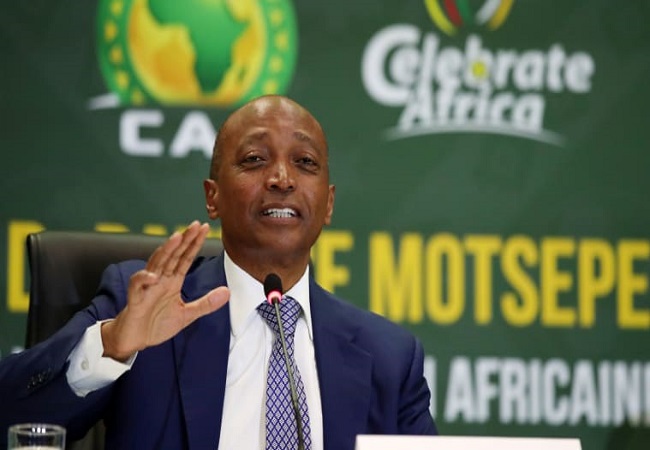
    CAF President Patrice Motsepe has been roundly criticized for failing to reform the continent’s footballing body as promised. Photo(cafonline.com)

    It’s hard to argue with the outcomes of many of the awards: Mane was a deserved POTY, even though Salah may feel hard done by after his sensational second half to 2021.

    Similarly, very few will debate that Wydad Casablanca, Mamelodi Sundowns, Aliou Cisse, the Senegal national team or Evelyn Badu were worthy winners, while Pape Ousmane Sakho’s overhead bicycle kick was selected as Goal of the Year by supporters.

    However, the picks for the Interclub Player of the Year and Young Player of the Year were utterly bizarre and threw a light once more on the ineptitude that avails African football at all levels.

    Egypt have a long and storied history in the Africa-based Player of the Year award, with the likes of Mohamed Barakat, Mohamed Aboutrika and Ahmed Hassan all previous winners.

    Al-Ahly goalkeeper Mohamed El Shenawy is a lovely man and at least used to be a fine goalkeeper, but he’s coming off the back of a tough year for club and country. Egypt fell short at the Nations Cup where he succumbed to injury midway through the competition—and in the World Cup qualifiers, while at club level, Ahly are off the pace domestically and were defeated in the final of the Caf Champions League.

    Fans of the Cairo based club even hold El Shenawy responsible for his recent troubles due to an increasing regularity of key errors in important matches.

    El Shenawy wasn’t able to attend the Caf gala evening—he was busy making a critical error in Ahly’s costly derby defeat by SC Zamalek—yet he was a bizarre choice for Africa-based Player of the Year.

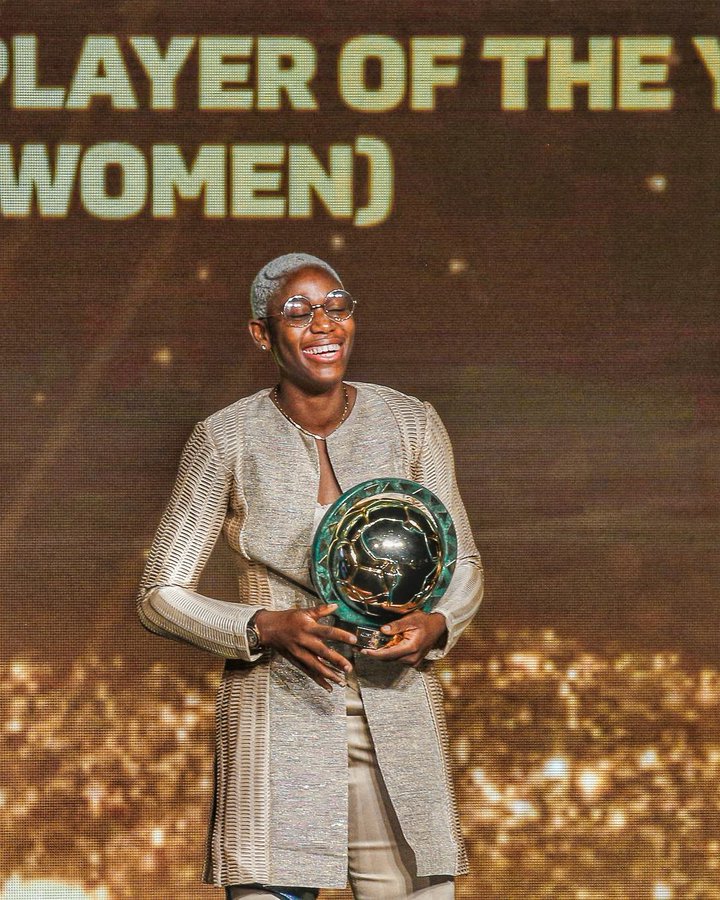
    Nigeria and Barcelona FC forward Asisat Oshoala has won the CAF best player award for an unprecedented five times. Photo(punch.ng)

    Surely a player from double-winners Wydad Casablanca—someone like Achraf Dari, Yahya Jabrane or Zouhair El Moutaraji, who netted two goals in the Caf CL final—would have been much worthier recipients.

    While Dari did make the final three, raising another perplexing question: how was he able to make the final three nominees for Africa-based shortlist, but didn’t make the 30-man longlist for the APOTY, while Jabrane, Blati Toure and Mohamed Abdelmomen were in contention for APOTY but didn’t make the final three for Interclub.

    It smacks of unseriousness, inconsistency and muddled thinking.

    The choice for the African Young Player of the Year award was also perplexing.

    Of the three final nominees, only Karim Konate—who moved to Austria after scoring goals aplenty with ASEC Mimosas—could be perceived to have had a positive season.

    Hannibal Mejbri failed to break through at Manchester United—playing just 68 minutes across the whole Premier League season—while eventual winner Pape Matar Sarr was relegated with FC Metz, having struggled to hold his own in the Ligue 1 relegation dogfight.

    He won the African Nations Cup—playing just 13 minutes throughout the entire tournament—but was criticized by his own club’s fans for allegedly putting his feet up as the Grenats dropped into the second tier.

    Kamaldeen Sulemana, playing in the same league, didn’t manage to make the final three-man shortlist, but did play a key role in Stade Rennais reaching the Champions League.

    Only Kylian Mbappe who was the Ligue 1 player of the season averaged more dribbles per match than Sulemana during the season, while he also had a hand in six goals throughout the course of the season and caught the eye at the Nations Cup.

    The omission from Sulemana from the final three and the election of Sarr as Young Player of the Year also raises significant questions behind the decision-making and rationale of the voters, with the young Tottenham Hotspur new boy enduring a disappointing season.

    If being part of a winning squad, or being the most well-known player among the final nominees is the only criteria required for a player to become Young Player of the Year, then the awards clearly no longer holds the credibility they once did.

    The CAF awards returning after a two year hiatus due to the effects of the COVID-19 pandemic is something that should be celebrated, but the muddled and baffling decisions in the Player of the Year shortlist, the Young Player of the Year award, and the Africa-based Player of the Year award clearly undermines what was once a great African football institution and brings to the fore the incompetence of those saddled with running the affairs of the game on the continent.

     Aside from the baffling and bizarre decisions that trailed the awards, those present at the ceremony and viewers all over the world were treated to awesome musical performances from some of the continent’s leading artistes.

    Award-winning Nigerian acts Tiwa Savage and Davido thrilled the audience with some of their hit songs like ‘koroba’, ‘all over’, ‘fire’ and ‘blow my mind’.

    Davido and Tiwa Savage entertaining guests at the CAF awards ceremony. Photo(cafonline.com)

    Morocco’s very own musical star Asmaa Lmnawar and Cote d’voire superstar group Magic System also performed admirably as the venue reverberated with back to back hit songs from the musical stars.

    Morocco’s Asmaa Lmnawar was on hand to perform to the delight of all present. Photo(cafonline.com)

    The musical artists ensured there was magic in the air as they provided the entertainment in Rabat to pay homage to the crème de la crème of African football and ensured that the awkward decisions on the night became an afterthought.

  • Rosalind Brewer: Walgreens CEO, breaking records and standing up to be counted

    Rosalind Brewer: Walgreens CEO, breaking records and standing up to be counted

    The vision and actions of a CEO permeates every aspect of an organization. Financials, customer service, and company culture reflect the goals and strategies of those in leadership positions. A recent shift in the U.S. toward expanding diversity, equity, and inclusion initiatives has created new opportunities for people of colour in the corporate world.

    One of such people who have risen to a place of prominence in the American corporate scene is Rosalind Brewer who until becoming the CEO of Walgreens Boots Alliance was the first African –American woman to serve as the chief operations officer (COO) of Starbucks.

    Brewer was born in Detroit, Michigan in 1962 and was the youngest of five children. Her and her siblings were the first generation in her family to go to college. Brewer received her bachelor’s degree in chemistry from Spelman College in Atlanta, Georgia, after graduating from Cass Technical High School in Detroit, Michigan in 1980. She decided not to pursue a career in medicine after completing her undergraduate studies and began working as a research technician at Kimberly-Clark.

    Brewer, who joined Starbucks in 2017 as the company’s first Black and first woman COO, previously spent five years serving as the CEO of Sam’s Club, which is owned by Walmart. Prior to working for Walmart, she spent 22 years of her professional career working for manufacturing company Kimberly-Clark, where she started her career as a scientist and eventually worked her way up to being president of the company’s Global Nonwovens Sector in 2004. 

    As a long-time executive in the American corporate scene, Brewer has been transparent about the challenges she’s faced as one of very few Black women in the C-Suite.

    During a 2018 speech at her alma mater, Spelman College, she admitted that she’s had to face hurdles and work twice as hard to prove she had what it took to take on every role she has ever held. “When you’re a Black woman, you get mistaken a lot; you get mistaken as someone who could actually not have that top job. Sometimes you’re mistaken for the kitchen help or the janitor. Sometimes people assume you’re in the wrong place, and all I can think in the back of my head is, ‘No, you’re in the wrong place.’”

    Frustrated by the lack of control in research and development when she was at Kimberley-Clark, she moved over to administration. By 2006 she had worked her way up to be the organization’s president for manufacturing and global operations.

    Brewer left Kimberly-Clark in 2006 and joined Walmart as regional vice president for operations in Georgia. From there, she became the division president of Walmart’s Southeast market and finally a president of Walmart East.

    In 2012, Brewer was named President and CEO of Sam’s Club, becoming the first African American to lead a Walmart division. She has focused on health and wellness by doubling the number of organic products offered at Sam’s Clubs and led the development of the company’s curbside pickup service and e-commerce efforts, including introducing a process that allows customers to scan items with their phones in order to speed up checkout.

    As CEO of Walgreens, Brewer has been responsible for improving the company’s revenue amid the pandemic and oversaw the drugstore chain’s Covid-19 vaccine rollout. Just a few months after assuming her role at Walgreens, she pushed for the organization to increase its starting hourly wage to all workers to $15 an hour which will come into effect in November.

    Rosalind Brewer is making her mark as one of the most succesful and effective CEO’S in an American Fortune 500 company. Photo(CNBC)

    What made the move more impressive was the fact that it came at a time when her organization like so many others were still reeling from the effects of the COVID-19 pandemic as questions arose about how vaccines would be distributed and who would be prioritized. Walgreens was one of the first retail pharmacies to administer COVID-19 vaccines to the public after being tapped by the U.S. Department of Health and Human Services. “Investing in and rewarding our team members is not only the right thing to do, it’s highly important to retaining and attracting a talented workforce, and to continuing to serve our critical role in community health care,” Brewer was quoted as saying.

    Brewer, who has become known as a champion of diversity, worked to change the culture at Starbucks during her tenure as COO after the store manager of a Philadelphia location called the police on two Black men who had sat down in the location without ordering. In an interview with the Today Show, she said the incident had touched her deeply and was “very personal.”

    “I saw these two young men, and what really struck me was that they were the same exact age as my son, John, and I knew right away that I had to dive into this one,” Brewer said. “This could have happened to him.”

    Following the incidents which took place in 2018, over 8,000 Starbucks locations shuttered their doors for racial bias trainings. The coffee chain also adopted an “open bathroom” policy that allowed anyone who enters a location to use the restrooms, even if they didn’t make a purchase.

    Brewer and her husband John. Brewer has said that John has been a constant source of motivation for her. She believes a Black woman can combine a successful marriage with a successful career. Photo(gettyimages)

    In 2016, she was listed by Forbes as the 57th most powerful woman in the world. She was also named as one of the World’s 100 Most Powerful Women by Forbes earlier in 2013. The magazine named her among the Most Powerful Black Women of 2013 and has been honored by Fortune magazine as one of the 50 Most Powerful Women in Business.

    Brewer is married to John Brewer and has an estimated net worth of $11.6 Million. The couple have two children; John, III, a real estate investment banker, and a daughter Camryn Brewer, a senior in high school.

    Rosalind has said at several fora that she attributes gaining success as a leader by being a “whole person” who balances family, community, and work. For her the three are important and interwoven.

    Rosalind continues to act as an inspiration to not only all women but also women of color all over the country, reassuring them that reaching the summit is possible.
  • Bloodshed in the Moroccan Border: Africans Murdered on the Verge of Promise

    Bloodshed in the Moroccan Border: Africans Murdered on the Verge of Promise

    Several African migrants were reportedly gunned down at a Moroccan border that shares very close boundaries with Spain in the Nador region of Morocco. The incident happened on June 24th 2002, and according to various reports at the time, the victims, who were shot at close range by Moroccan police, were among the 2,000 migrants that stormed a barrier between the Moroccan region of Nador and the Spanish enclave of Melilla while trying to scale the heavily fortified fence.

    Walking Borders, an asylum and refugees advocacy organization in Spain, had stated at the time that at least 37 migrants died in the unprecedented violence, but Moroccan authorities maintained that only 23 migrants died. Individuals and organizations all over the continent have widely condemned this wicked act and have called for probes into the deaths of those victims.

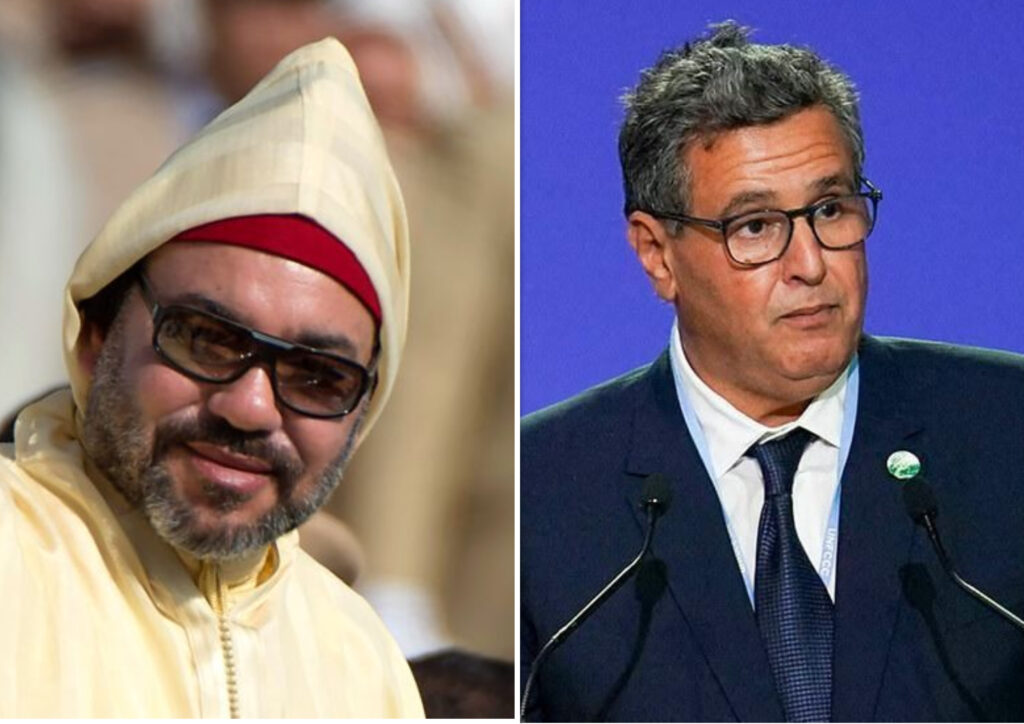
    King of Morocco, Mohammed VI and Prime Minister Aziz Akhannouch have both been widely condemned for the incident at the Moroccan border and for strong arming Europe to do it’s bidding with the threat of a migrant wave. Photo (Al Jazera)

    The African Youth Assembly through its Speaker of the Assembly in the West African Region, Comrade Matthew Naankin, in Jos, Nigeria condemned the killings in very strong terms and stated; “We wish to state categorically clear that the life of one African matters much to us with no reference to the part of the continent he or she comes from. The act is in contravention of the international convention on the protection of the right of migrants and workers and the members of their families as encapsulated in articles 9, 10 and 13 cum other articles of the treaty,” he said.

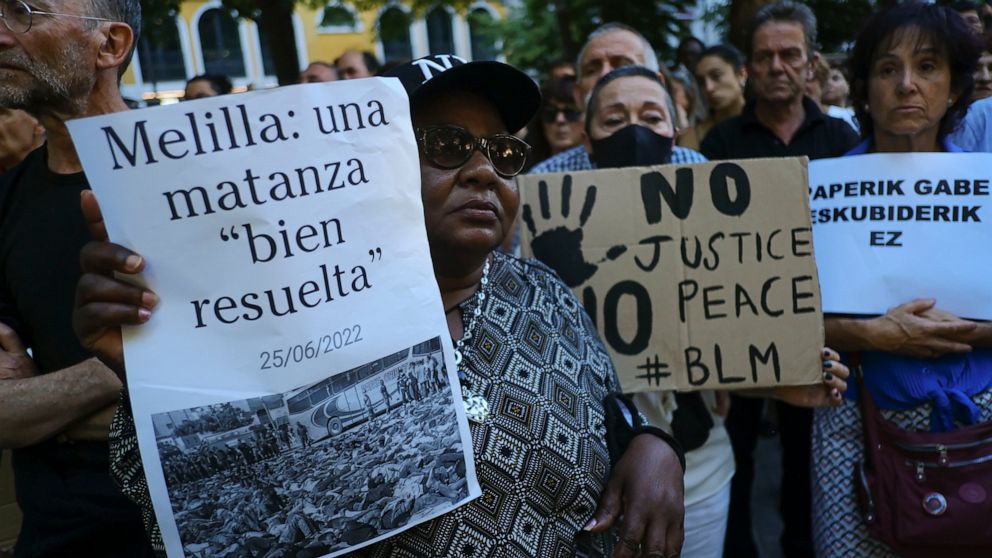
    Demonstrations to protest the killings were also held in Major Spanish cities with considerable African populations like Madrid, Barcelona and Seville under the moniker “Las Vidas Negras Importan” in Spanish or “Black Lives Matter” in English. In Madrid, demonstrators filled up Callao square and held signs that read “Borders Kill” and “No human being is illegal.” In Barcelona, participants marched as they chanted against racism and colonialism.

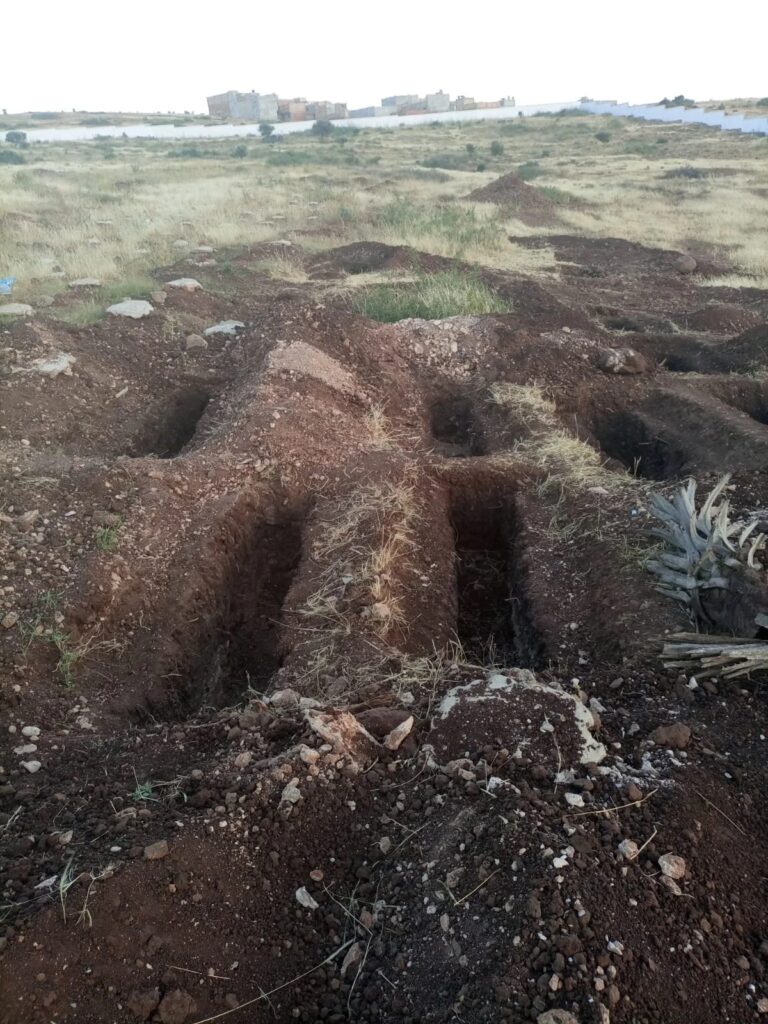
    Freshly dug graves at Sidi Salem cemetery, Nador, Morocco, where local activists believe authorities plan to bury the bodies of the migrants who died during an attempt to scale the fence dividing Spain and Morocco. Photo(AFP)

    Moussa Mahamat, the African Union Commission chairman, condemned the violent treatment meted out to the migrants, reminding countries of their obligations under international law that stipulates protection of migrants’ dignity and safety, and refraining from the use of excessive force.

    Even in Rabat, the capital city of Morocco, more than 60 people held placards splashed with red paint, emulating blood to demand justice for the dead migrants. “We are here to express our anger about the massacre that took place in Melilla,” says Mamadou Diallo, a coordinator with the Collective of Sub-Saharan Communities in Morocco. “We have issued recommendations to the Moroccan authorities, who are responsible for setting up an independent investigation to identify those responsible for this massacre, but above all for the identification of all the remains, in order to return their bodies to their relatives or to bury them in humane conditions.”

    Videos and Images that emerged in the days following the deaths sparked even greater outrage and condemnation by several human rights groups and officials, including the United Nations secretary-general, Antonio Guterres and the UN Human Rights Commissioner Michelle Bachelet. In one video shared by the Moroccan Human Rights Association dozens of young African men, some of them motionless and bleeding, were seen strewn on the ground as Moroccan security forces stood over them. Armed uniformed men could also be seen poking some bodies with their batons.

    In another video, a group of migrants are seen climbing a fence, some hurling rocks at Moroccan anti-riot police trying to stop them. At one point, the fence collapses, sending them to the ground from a height of several meters. Further disturbing news emerged when reports broke that the authorities in Morocco had dug mass graves and may be planning on organizing hasty mass burials.

    On June 26, the Association Marocaine des Droits Humains (Moroccan Human Rights Association or AMDH) posted two photographs on Twitter of what it estimated were between 16 and 21 graves being dug in the Sidi Salem Cemetery, on the outskirts of Nador, the Moroccan town across the border from Melilla. The first of these photographs was posted on Twitter by AMDH at 1:01 p.m. local time on June 26.

    People protesting over the deaths in Seville. The protests occurred in major Spanish cities like Madrid, Barcelona and Valencia. Photo(AFP)
    From the review conducted on those photographs, several human rights groups could identify at least 10 freshly dug individual graves, and by matching the shape of the perimeter of the cemetery, as well as buildings, trees, and landscape seen in the background with satellite imagery, the Moroccan Human Rights Association verified the exact location of the graves to be in the Sidi Salem Cemetery.

    The way the Moroccan government has gone about the issue clearly shows a blatant disregard for the lives that were lost on that fateful day. While no one in their right mind will condone illegal border crossings, anyone attempting an illegal crossing still does not deserve to be shot on the spot. The European Court of Human Rights has made it clear in several cases involving border control that while states can and should take measures to prevent unauthorized entry into their territory, including the use of force, the need for border control cannot justify resorting to practices or using force in a manner that violates human rights protections, including right to life and freedom from inhuman or degrading treatment.

    Morocco, which is the only African country to share a border with Europe, has long been a channel for sub-Saharan African migrants fleeing war and seeking better lives.

    There have been strong claims that the North African country has allegedly been using migration flows as a political tool to pressure European countries to support its claim on Western Sahara territory, a small island country tucked in between Africa and the Middle East.

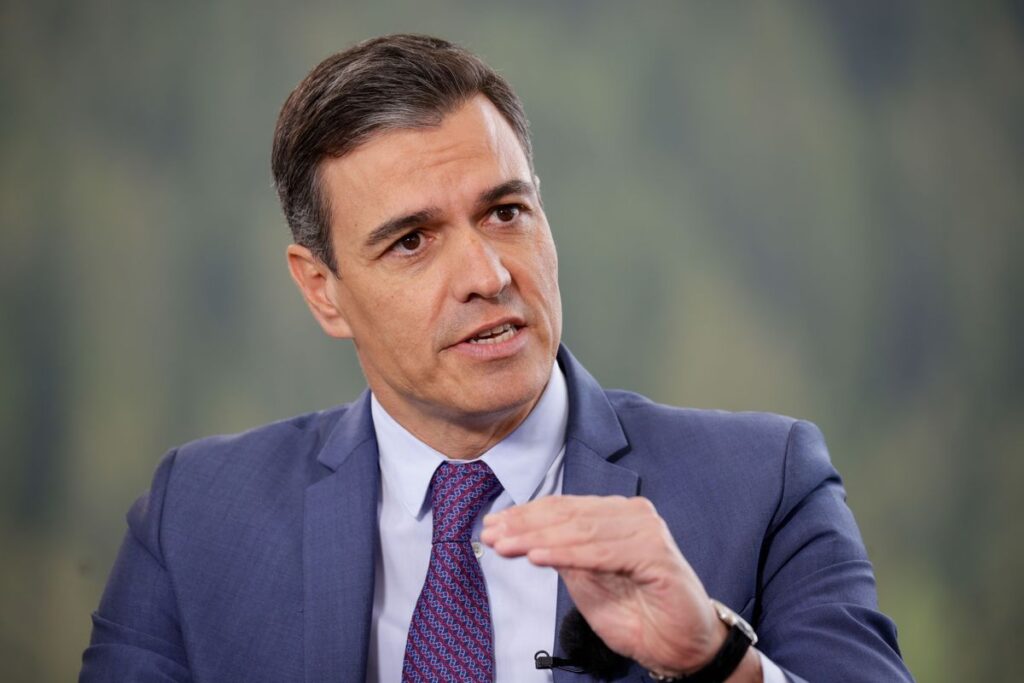
    Spanish Prime Minister Pedro Sánchez has been mute on the killings that occured in Morocco. (Photo -Bloomberg)

    In May 2021, when close to 10,000 migrants surged across the border into Spain’s other enclave, Ceuta, the Moroccan border guards took no action to stop the migrants from crossing. Instead, the action of the guards was seen as a punitive gesture by Morocco to pressure Spain for support in the political row over the disputed territory of Western Sahara.

    As though bowing to the pressure, the Spanish Prime Minister Pedro Sánchez sided with Morocco and altered the country’s stance on the longstanding neutrality on the dispute over Western Sahara in a bilateral accord signed in March. Sánchez hoped to ensure Morocco’s cooperation on migration flow would prevent a repeat of the Ceuta incident.

    Critics promptly rounded up on the Prime Minister and said the migration issue should not in any way be used for political ends.

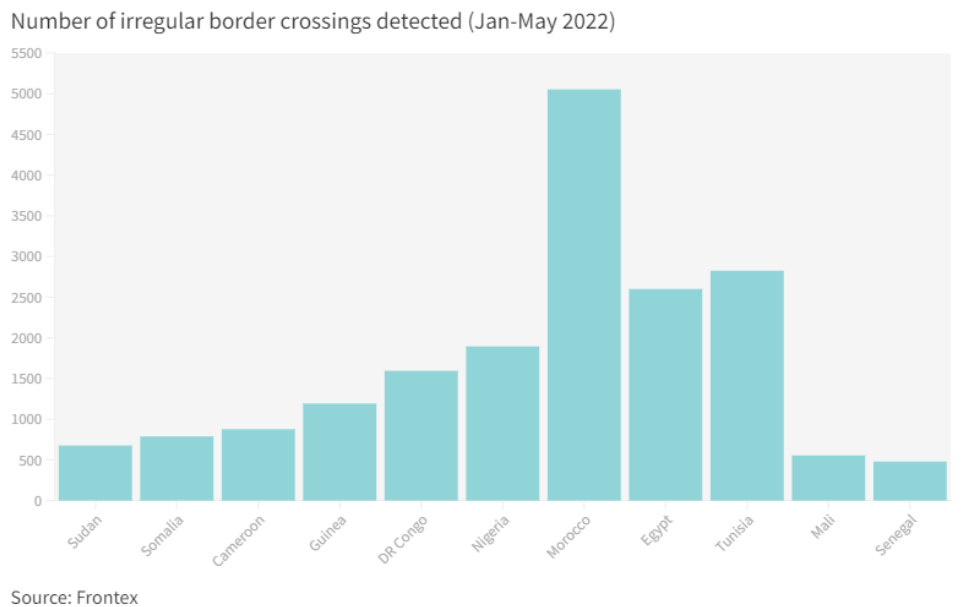
    An infographic showing the countries that have attempted illegal border crossings in Africa this year.

    The ever rising cases of violent border policing in Europe have raised calls for African governments to stop migration flows by improving conditions for their citizens. The number of Africans who are desperate, fleeing poverty and war at home and try to enter Europe illegally en masse annually keeps rising. While this piece isn’t trying to beat old drums of condemning African leaders for their inability to provide an enabling environment for their people thrive, the fact remains that wars and poverty are the biggest reasons why millions of Africans have subjected themselves to inhumane treatments just to eke out a better life in Europe or elsewhere.

    Several decades after attaining independence from colonial rule, a lot of African nations still cannot manage their own budgets properly and watch helplessly as their people wallow in poverty, while many lose their lives due to poorly resourced service facilities, such as healthcare institutions.

    It’s no secret that 85% of African governments often make policies within their countries with the expectation of assistance or aid from the developed world. This sort of thinking has severely crippled almost every aspect of our societies. Aid or assistance is in itself not wrong, especially when there is a real need for it, emanating mostly from catastrophes and natural disasters. The pattern in Africa has however seen the majority of our leaders neglecting their responsibility to serve their people by failing to create environments that allow their people to thrive.

    Until African governments and its leaders start to invest massively in Africa across various sectors that create employment and related opportunities, embrace and invest more in non-traditional business models such as sports and sporting academies, find ways to work with global partners to break various smuggler networks that currently grossly exploit young people and fashion out a way to ensure all Africans start to adopt a change in mindset, one that drives everyone to take control and responsibility for their futures, the unfortunate incident in Morocco will be one of many that will occur in the not too distant future.

  • The Ngorongoro Crater, Tanzania: Africa’s Garden of Eden

    The Ngorongoro Crater, Tanzania: Africa’s Garden of Eden

    The Ngorongoro Crater is one of Africa’s most famous sites. It is said to have the highest density of wildlife in Africa. Often described as the ‘eighth wonder of the world’, the crater has continued to attract an ever-increasing number of visitors each year. While you are unlikely to escape other vehicles here, you are guaranteed a great and exhilarating wildlife viewing experience in a genuinely mind-blowing environment. There is nowhere else in Africa quite like Ngorongoro.

    A view of Ngorongoro Crater’s Lake Magadi and Lerai Forest. Photo -RFP
    An elephant herd near the thickly forested wall of Ngorongoro Crater. Photo-RFP
    A mother Elephant and her calf head into the forest along one of the game roads. Photo -RFP

    The Ngorongoro Crater is a breathtakingly beautiful setting and the best place in East Africa to see the Big Five (The Big Five is a term that is used to encompass the following wildlife that are commonly found in Africa: The iconic lion; elusive leopard; gentle elephant; hardy rhino; and the powerful African buffalo).

    It is a great way to start your African safari adventure if you ever plan to go on one. However, as one of the world’s most astonishing and renowned natural wonders, the Ngorongoro Crater does get busy, and at times very very busy. 

    A lone ostrich presents a rather contemplative pose in the browned dry-season grass of Ngorongoro Crater. Photo-RFP

    The entire Ngorongoro Conservation Area (NCA) is a UNESCO natural World Heritage site located in the northern highlands of Tanzania. The Ngorongoro crater, the world’s largest intact volcanic caldera, is often referred to as ‘Africa’s garden of Eden’. It is a commonly told anecdote that when Noah left his (Biblical) Ark, he let all the animals he had taken with him disperse from the Ngorongoro crater.

    Black rhinos are very easy to spot at the crater as well. Photo -RFP

    Some scholars have as a matter of fact even concluded that the ‘true’ Garden of Eden or cradle of humankind must have been located in East Africa.

    The crater floor consists of a number of different habitats that include grassland, swamps, forests and Lake Makat (Maasai for ‘salt’) – a central soda lake filled by the Munge River.  All these various environments attract wildlife to drink, wallow, graze, hide or climb.  Although animals are free to move in and out of this contained environment, the rich volcanic soil, lush forests and spring source lakes on the crater floor (combined with fairly steep crater sides) tend to incline both grazers and predators to remain throughout the year.

    Dirt road through the centre of the Ngorongoro Crater, visitors are only allowed to explore the Crater in a safari vehicle. Photo -RFP
    Hippos are a staple of the marshland ecosystem in Ngorongoro Crater. Photo -RFP
    Hippos are a staple of the marshland ecosystem in Ngorongoro Crater. Photo -RFP
    Maasai children wearing traditional attire – the girls’ large, flat, beaded collars identify their clan and social status. Photo -RFP
    Zebras, hyenas and gazelles in the grasslands of Ngorongoro Crater. Photo -RFP

    Here are 10 great facts about Tanzania’s Ngorongoro Crater

    1.    The largest unbroken caldera in the world

    2.    The crater has several different ecosystems

    3.    The Ngorongoro Crater boasts 300 animal species

    4.    The crater has the Big Five, but no giraffes

    5.    It has the world’s highest density of lions anywhere in the world

    6.    The lions at the crater are the world’s best-studied population

    7.    Over 550 species of birds can be seen here (Egyptian vulture, Black kite, Martial eagle, Kenya rufous sparrow and a Adbim’s stork are some of the many birds that exist there)

    8.    Three discrete tribes have historic roots here (Maasai – 97% of the resident population, Datooga – 2% of the resident population and the Hadza – 1% of the resident population are the tribes that have historic roots to the crater)

    9.    It’s a natural and cultural World Heritage Site

    10. More than a quarter of all tourists to Tanzania visit the crater