Category: Wellbeing

  • WAFCON 2025 done and dusted, but did Africa’s women get the best out of it?

    WAFCON 2025 done and dusted, but did Africa’s women get the best out of it?

    Nigeria’s players celebrate with the trophy on the podium after winning the 2025 Women’s Africa Cup of Nations final. Credit: Al Jazeera

    The 2025 edition of the Women’s Africa Cup of Nations (WAFCON) culminated with the unforgettable final in Rabat last month, when Nigeria completed “Mission X” by coming from behind to defeat hosts Morocco 3-2.

    The fixture provided a glittering finale to a memorable if imperfect tournament, but it’s fair to ask, with the confetti settled on the Super Falcons’ glory, whether women’s football in Africa is truly getting the support, the recognition and the treatment that the talent surely merits.

    This year’s WAFCON wasn’t just a sporting event; it was a powerful statement about the growing strength and popularity of women’s football in Africa. What’s next for this burgeoning sport?

    The Confederation of African Football (CAF) has stated lofty commitments to the women’s game, but can WAFCON already be considered an event worthy of those who play the sport across the continent?

    Scheduling that prioritises the women’s game

    In recent years, there’s been a lingering sense that WAFCON has been something of an afterthought for the eggheads at CAF, despite president Dr Patrice Motsepe’s claims that the “development and promotion of women’s football” would be one of the “priorities” of his tenure.

    There has been notable progress, from the launch of the CAF Women’s Champions League, to incentives and resources being put in place for men’s clubs across the continent to develop their structures for women’s football, and the increase in WAFCON prize money to $US1 million for the winners.

    All that represents a 100% increase from the 2022 edition, with CAF also outlining that 45% of the winners’ pot is used to contribute to increasing the salaries of women’s “players, coaches and employees” in the winning country. However, the prize money remains well behind the €5.1 million ($US5.89 million) reward England won for defeating Spain in the Euro 2025 final on Sunday, and even further behind the $US7 million Ivory Coast won as men’s AFCON champions last year.

    While the increase is nonetheless well received, but is the big-money headline and a gleaming new trophy enough given the issues in the build-up to WAFCON?

    After the 2020 WAFCON was cancelled amid the COVID-19 pandemic, CAF opted to move the 2022 edition — also hosted by Morocco — to a June-July schedule (rather than the traditional November-December program) to match the move made with the men’s tournament.

    That plan quickly ran into problems, however, as the schedule overlapped with the Olympic Games in Paris. Given that senior women’s teams compete at the Olympics, and with two of the WAFCON favourites participating, the African showpiece had to be moved again.

    Only last June — just over a year before the competition — did CAF announce the revised intention to host the competition in July 2025, three years after the previous edition; match venues were announced only on May 27 of this year, and the competition schedule was announced only at the start of June, a month before kickoff.

    Nigeria’s midfielder Rinsola Babajide celebrates with a national flag after winning the 2025 Women’s Africa Cup of Nations final against Morocco. The Super Falcons received many rewards back home from their government. Credit: ESPN

    Several teams commented during the tournament that the uncertainty in the build-up impacted their ability to hit top form.

    The rescheduled tournament took place over 21 days, and while this was the same period of time as in 2022 and South Africa’s head coach Desiree Ellis bemoaned a schedule that she said proved too demanding on the players and ultimately impacted the on-field spectacle.

    Banyana Banyana, in particular, were disadvantaged by a tough program in which they played Nigeria in the semifinals in Casablanca on July 22, less than 72 hours after they’d finished their draining quarterfinal against Senegal, which they won in a penalty shootout, in the sapping heat of Oujda.

    The team travelled on July 20 — making the 609km trip on the morning after the match — undertook pre-match training on July 21, then faced a Nigeria team that had had an extra day’s rest, on July 22.

    “The Euros started three days before [WAFCON], and the final is on Sunday [a day after the WAFCON final],” Ellis said. “The normal recovery time should be 72 hours, if you want to have the best football in the latter stages; it needs another look… Fatigue sets in with games coming thick and fast; the legs are gone. If you want quality, you have to give the players a proper opportunity to recover.”

    Against Nigeria, Ellis had to introduce Hildah Magaia — still recovering from a hamstring injury — within the first half-hour after Tiisetso Makhubela was withdrawn with injury.

    “We can’t travel one day, have training the next, then have a semifinal,” Eliis said. “It’s impossible; impossible. The human body can only do so much. We have to take care of players first, because they’re human beings.

    “The Euros was more spaced out. OK, there were more teams, but they also had a quarterfinal, semifinal and final. The WAFCON would be more interesting with the same spacing.

    “Some teams are travelling more than others, and maybe that needs to change. We want quality at the backend [of the tournament] as well as in the beginning.”

    While the final was a particularly entertaining spectacle, it’s worth noting that four of the last six matches at the tournament went to penalties, with teams running out of dynamism and vitality in demanding climate conditions and ultimately struggling to go through the gears and impose themselves on opponents as they may have liked.

    The Black Queens of Ghana celebrate after producing a commanding second-half performance to claim a 4–1 victory over Tanzania and eliminate them. Credit: BBC

    Hot conditions for summer tournaments are not an Africa-exclusive problem — just look at how conditions during the Club World Cup have raised concerns for the World Cup in the United States, Mexico and Canada next year — but clearly Africa’s climate conditions make this a particularly acute problem for the continent, with the added complexity of diverse climatic patterns across this vast landmass.

    South Africa were one of several teams, along with Nigeria and Congo DR, to bemoan what they deemed to be sub-standard accommodation and training facilities.

    “Where we stay, we don’t have a proper gym, we don’t have a pool, but we have to deal with it,” Ellis said. “These things should be criteria, but we know the things we face in Africa; we have to find solutions for it.”

    Morocco’s games were well attended at WAFCON, but otherwise attendance was low, even for games featuring Nigeria or South Africa. Those venues were essentially empty. Credit: ESPN

    Ellis’ experience was partly shared by Ghana head coach Kim Lars Björkegren, who also questioned the tournament scheduling, while praising Morocco’s hosting.

    “The organisation has been really good, I think,” Björkegren told the media. “With good pitches, we’ve felt safe the whole time, nothing to complain [about].

    “Of course, for us to travel for the semifinal, I wish we could have had another day more there; I’m not sure if it’s possible for the future. Otherwise, I have nothing to complain about. It’s been a great experience.”

    While pitches and playing facilities were largely of a high standard, the tournament was perhaps a victim of Morocco’s coming hosting of the men’s AFCON later this year and the FIFA World Cup in 2030.

    With the iconic Stade Mohammed V being renovated, matches in Casablanca were moved to the soulless Stade Larbi Zaouli in the Hay Mohammadi neighbourhood, while in Rabat building works on the new Prince Moulay Abdellah Stadium meant that fixtures were played at the more modest Olympic Stadium.


    Poor attendances marred the tournament

    CAF claimed “massive global broadcast demand” in WAFCON ahead of the tournament, but this was not matched by a generalised groundswell of enthusiasm in Morocco, notwithstanding games involving the hosts.

    The hosts attracted capacity crowds, with final tickets available on CAF’s official handle for as little as 0.78 Euros/$0.9 and 3.9 Euros/$4.50, although reports got to reporters that supporters in attendance had confirmed that they’d paid approximately 19.06 Euros/$22 for their tickets on resale.

    There was a 21,000-capacity crowd in attendance to witness Nigeria’s stunning comeback against the hosts in the final, but uptake beyond Morocco’s matches was meagre, with official supporters clubs that travelled to support their nations battling to create some semblance of energy in empty stadiums.

    Match times, heat, financial realities (especially costs for travelling fans), and stadium logistics were understandable obstacles for the Moroccan public, but a general lack of awareness and enthusiasm on the ground could also be attributed to a commercial effort that failed to truly engage with local audiences, not giving them enough reason to turn out to watch players they didn’t know from countries with which they had no connection.

    Of course, there were billboards in Morocco advertising the tournament, but there was little visible attempt to create enthusiasm around the continent’s star attractions beyond the Atlas Lionesses and the ubiquitous Fatima Tagnaout.

    Nigeria’s Ashleigh Plumptre expressed some disappointment with WAFCON’s on-the-ground appeal when contrasting it with the Euros, which were played largely to packed houses across Switzerland, but Algeria’s Ghoutia Karchouni had a different opinion.

    “There’s no value in comparing two different atmospheres and cultures,” Karchouni revealed to newsmen. “In Africa, we’re beginning to have more and more keen interest in women’s football in a general sense. CAF are trying their best to improve conditions and promote the tournament. We need to be patient and give them time.”

    This is not exclusively a Morocco problem, nor is it exclusively a WAFCON problem — only 6,000 were in attendance at the 60,000-Alassane Ouattara Stadium in Abidjan last January for the Africa Cup of Nations decider between Mozambique and Ghana — but CAF and the LOC need to define more effective strategies to tackle the obstacles listed above if they’re to reduce the empty seats at international competitions and enhance the product as a whole.

    Even if they do, Africa’s sheer size and the logistical limitations of intracontinental travel mean comparisons with Europe can only illuminate so much. Of the teams participating at the Euros, the farthest any of their capitals was from Basel, the city that hosted the final, is 2,500km (Iceland). For context, all but four of the WAFCON qualifiers have capitals situated farther from Rabat than this, with Pretoria over 7,600km away from the Moroccan capital.


    How can federations find consistency?

    One change that CAF will not be able to make ahead of the next tournament is to address the qualifying campaign, a straight knockout, which can often see some of the competition’s would-be contenders miss out on the tournament proper.

    Algeria and Cameroon have been pitted together on the road to 2026, as have Senegal and Ivory Coast, and the DRC and South Africa, all teams that could have harboured realistic hopes of reaching the knockout stages of the tournament — also to be held in Morocco.

    With the next WAFCON doubling up as a World Cup qualifying campaign, defeat for any of these teams in the October double-headers will see them miss two tournaments and leave them without competitive senior football until the qualifying campaign for the 2028 Olympics begins.

    Tunisia were eliminated from both the 2026 WAFCON (and therefore the 2027 World Cup) before they’d even competed in this year’s Nations Cup, and it’s difficult to expect federations to maintain levels of domestic funding for the women’s game in countries where there’s no possibility of major tournament participation (and prize money) for another three years.

    Even for the more successful nations in the competition, federation support remains an issue despite the platitudes.

    Nigeria’s players were each rewarded with a three-bedroom apartment in Abuja and the naira equivalent of $US100,000 (with technical and administrative teams receiving an apartment and half the amount of money), it ought not go unnoticed that head coach Justin Madugu (nor indeed 2022 WAFCON-winning head coach Ellis) reportedly had formal contract of employment heading into the tournament.

    The rise of Zambia and Morocco in the women’s game is testament to what national teams and their most talented players can achieve when federations begin to prioritise the domestic game and grassroots football with a long-term strategy and genuine commitment to growth rather than glib platitudes.

    Without this, and without CAF working with Local Organising Committees to establish optimal conditions for an entertaining tournament, without a marketing strategy that truly engages supporters in the host country, then WAFCON might not keep pace with the immense African talent and enthusiasm that exists in the continent and beyond.


  • AFCON 2023 Review: Cote d’Ivoire’s turn around story in focus

    AFCON 2023 Review: Cote d’Ivoire’s turn around story in focus

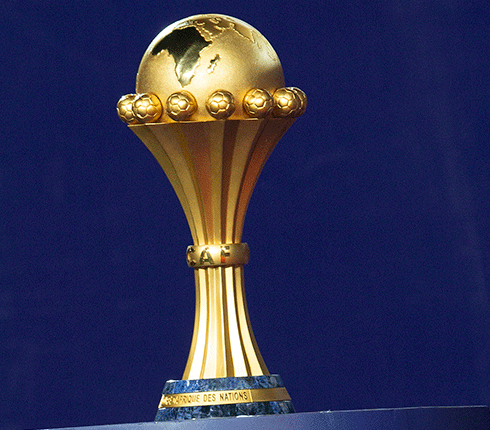
    Ivory Coast were crowned continental champions for the third time, becoming the first Africa Cup of Nations hosts to lift the trophy since Egypt in 2006. PHOTO CREDIT- CAFOnline


    One week after the Elephants of Cote d’Ivoire completed their fairy tale comeback to win AFCON 2023, Afrik Digest International magazine, through Tolulope Omotunde writes about the country that has tried using football to rebuild, heal and unite.

    In 2002, civil war engulfed Cote d’Ivoire, with the cries of a divided nation echoing through its streets. Fast forward to 2024, and the roar of the crowd at the Alassane Ouattara Olympic Stadium, Ebimpé, on Sunday, 11 February, told an entirely different story.

    The Elephants were the story of the competition as they sacked manager Jean-Louis Gasset after a poor group-stage performance and still went on to lift the trophy.

    The Elephants, the senior national football team, stand triumphant, having conquered Africa at AFCON 2023, which Cote d’Ivoire hosted. The victory transcends mere football; it was a testament to a nation’s resilience and the unifying power of the beautiful game.

    The scars of the past still linger, but Cote d’Ivoire chose not to be defined by them. Hosting the 2023 AFCON was a bold step, a declaration of intent to move forward, heal divisions, and showcase the best of the country to the world.

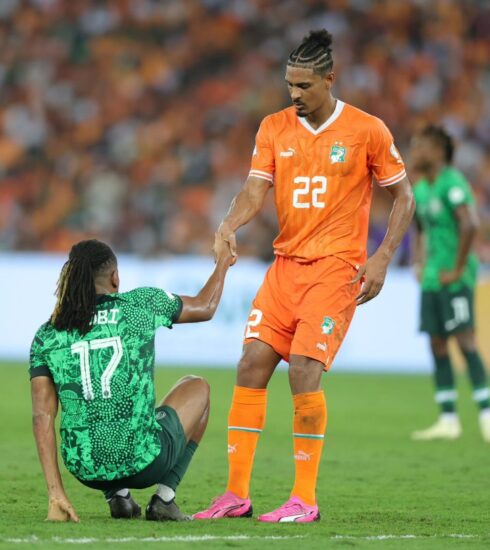
    Sébastien Haller with the AFCON trophy. Haller had a running battle with Cancer eighteen months before the tournament. He recovered and scored the winning goal against Nigeria. Credit-Cafonline


    The passion and unity displayed by the Ivorian people throughout the tournament was a powerful message of hope and reconciliation. On the pitch, the Elephants embodied this spirit. Despite a rocky group stage, they defied expectations through sheer grit, determination, and tactical tweaking.

    The come-from-behind victory in the final against Nigeria was a moment of pure magic, one that will be forever etched in the hearts of every Ivorian.

    Sébastien Haller’s winning goal is particularly poignant. A symbol of the nation’s fight for recovery after the striker battled and overcame testicular cancer just 22 months ago. It was a victory not just for football, but for life itself.

    AFCON 2023 wasn’t just about a single match. The tournament set high standards with VAR, superb officiating, and magnificent stadiums. For 30 days, all that mattered in the football world was AFCON. It was a celebration of African football, showcasing the continent’s rising talent and the unique passion that defines the sport here.

    Cote d’Ivoire’s victory shattered the 17-year hoodoo of host nations failing to win, their last triumph dating back to 2006. This symbolic feat mirrored the nation’s battle against ghosts of the past, proving that resilience and unity are most often the paving stones that lead to success.

    Veterans like Youssef Msakni (Tunisia) and André Ayew (Ghana) cemented their legacies by equaling the record of eight AFCON appearances. On the individual front, Oumar Diakhite joined the exclusive club for the latest goal ever scored with his dramatic 120th-minute winner against Mali in the quarterfinal.

    AFCON 2023 also provided a stage where stars were born while the existing ones shone brighter.

    In a tournament that had proven goal scorers like Nigeria’s Victor Osimhen, Mohamed Salah of Egypt, and Senegal’s Sadio Mané and Emilio Nsue, the forward from Equatorial Guinea proved to be a revelation, his boots striking gold as he scored five goals in four games to win the Golden Boot Award. It is also relevant to say he missed a penalty in the round of 16 loss to Guinea.

    William Troost-Ekong of Nigeria was named the tournament’s most valuable player. PHOTO CREDIT- CAFOnline


    Another player who left an indelible mark was William Troost-Ekong from Nigeria. Despite the loss in the final, Troost-Ekong’s exceptional performance earned him the Player of the Tournament award.

    His three goals and his team’s best defense were a testament to his versatility and leadership on the pitch.

    The tournament also saw breathtaking displays in between the posts, with South Africa’s Ronwen Williams taking home the Best Goalkeeper award ahead of Nigeria’s Stanley Nwabali.

    Williams’ heroics, which included saving four penalties against Cape Verde and two more in the third-place match, were nothing short of spectacular.

    The Best Young Player award went to Simon Adingra from Ivory Coast, a promising talent who showed maturity beyond his years.

    Emerse Faé, the man in charge of Ivory Coast’s successful campaign, deservedly received the honor of Best Coach as he became part of the exclusive group of indigenous coaches who secured the prestigious AFCON trophy.

    Nigeria’s Stephen Keshi of blessed memory is on this list, along with legends like Hassan Shehata (Egypt) and Charles Gyamfi (Ghana).

    It was a tournament to forget for Ghana as they failed to make it out of the group stages with just two draws and a defeat. A team that included West Ham star Mohammed Kudus, Crystal Palace veteran Jordan Ayew and Athletic Bilbao forward Inaki Williams struggled to help Ghana make any progress in the competition. Former Brighton manager Chris Hughton was sacked after less than 12 months in charge and the Black Stars have started their search for a new coach before the 2026 World Cup qualifiers in June.

    Emilio Nsue won the golden boot for the top scorer at the tournament, despite Equatorial Guinea exiting in the last 16. Credit-BBC


    Not many would have predicted South Africa would reach the semi-finals of the tournament and Bafana Bafana certainly caught the eye. Their biggest challenge came when they took on 2022 World Cup semi-finalists Morocco in the round of 16. Goals from Evidence Makgopa and Teboho Mokoena sealed a famous 2-0 victory as PSG star Achraf Hakimi missed a penalty late on for the Moroccans.

    Mauritania qualified for AFCON for the first time in their history in 2018 and heading into this year’s competition they had new hopes of improving on their last performance. The Lions of Chinguetti were still searching for their first win heading into the last group game against Algeria and they pulled it off with a shock 1-0 victory to also send them to their first knockout match against Cape Verde. Mauritania could not pull off another upset against Cape Verde but they sealed their place in AFCON history with an impressive performance.

    According to CAF, since the inaugural AFCON tournament in 1957, 11 African coaches have now officially lifted the title, with the list expected to grow over the upcoming editions as young African tacticians, both men and women, continue to emerge from all corners of the continent.

    Emerse Faé who won 41 caps as a player for Cote d Ivoire took charge of the team midway into the tournament and emerged victorious. Credit-BBC


    These individual performances, coupled with the overall commendable quality of the tournament, underscore the undeniably bright future of African football.

    The 2023 AFCON wasn’t just a football tournament; it was a cultural and historical celebration. This marked the second time Cote d’Ivoire hosted the AFCON, showcasing its development and passion for the game.

    The 2023 AFCON tournament showcased Africa’s vaunted hospitality, embodied by the “Akwaba” mascot, and the “Pokou” match ball honored the legendary Ivorian player Laurent Pokou. A vibrant official song featuring diverse African artists captured the tournament’s unifying spirit.

    This edition of AFCON proved even more popular, with viewership soaring to nearly 2 billion—a 300% increase from 2021. Expanded broadcast rights, amplified media coverage, strong partnerships, and the power of social media all contributed to its resounding success.

    Financially, both CAF and participating teams reaped rewards. Sponsorships brought in roughly $75 million, and champions Cote d’Ivoire earned an impressive $7 million prize.

    Cote d’Ivoire’s journey from a nation impacted by conflict to AFCON champions serves as inspiration for the next host, Morocco. The Atlas Lions, with only one AFCON title since 1978, will undoubtedly aim to emulate the Elephants’ success by hosting and winning in 2025.

  • The Continent Roars: AFCON Fever Grips Africa

    The Continent Roars: AFCON Fever Grips Africa

    Growing up on the continent, the Africa Cup of Nations tournament generated incredible excitement. The sport was called football, not soccer. The name Football was apt, as players only ran after, trapped, and kicked the round leather with the intention of scoring a goal. Some people called it soccer then, but that was when the commentator wanted to sound elitist. The one-month-long all-Africa tournament sparked as much festivity as a colorful street carnival.

    Supporters of the Nigerian National soccer team a.k.a The Super Eagles cheering the team at a recent tournament


    It’s that time again (January 13th – February 11th, 2024), so let the drums beat, the vuvuzelas blare, and the chants echo across the land. For the next month, Africa holds its breath and celebrates – because this is our moment, our stage, our AFCON.

    Cote d’Ivoire’s air crackles with a vibrant symphony: vuvuzela chants, drumbeats echoing off concrete canyons, and the jubilant cries of fans draped in their nations’ colors. The Africa Cup of Nations, CAF’s crown jewel, is here, and the continent holds its breath in unison.

    From vibrant fan parks in Nigeria to packed pubs in Morocco, a collective electricity hangs thick. This isn’t just a tournament; it’s a celebration of unity, passion, and unbridled hope. It’s a continent of 54 diverse voices singing the same hymn: football.

    Senegal, draped in the mantle of defending champions, carries the weight of expectation. Will Sadio Mané’s magic weave another continental triumph? The indomitable spirit of Nigeria pulsates under the watchful gaze of Moses Simon’s dribbling artistry. Can the Pharaohs of Egypt, led by the talismanic Mohamed Salah, reclaim their throne?

    Supporters of the South African soccer team a.k.a Bafana Bafana supporting the team at a recent tournament with Vuvuzelas. Vuvuzelas are commonly used by a lot of Southern African supporters in generating noise and excitement.


    Each clash is a story etched in sweat and skill. Every goal erupts in a kaleidoscope of colors and joyous pandemonium. Streets transform into vibrant canvasses, painted with flags and murals of heroes past and present. The air thrums with anticipation even before the first whistle blows.

    Thousands of Senegalese soccer fans thronged the streets of Dakar to welcome the Teranga Lions after their victorious outing at the last edition of the African Cup of Nations tournament held in Cameroon.


    This isn’t just about who lifts the trophy, though every nation dreams of that golden embrace. It’s about the journey, the shared pulse of a continent united in its love for the beautiful game. It’s about a young boy in Cameroon, eyes wide with wonder as his idol dances past defenders. It’s about a grandmother in Ghana, her weathered hands clutching a flag, memories of past glories rekindled by the present roar.

    AFCON is more than football; it’s a tapestry woven with threads of pride, resilience, and a collective dream. It’s a continent holding its breath, then exhaling in a joyous cacophony of celebration. This is AFCON. This is celebrating Africa. This is the roar of a continent united again for the round leather game.

    All the participating teams at this year’s tournament.


  • Cote d’ivoire welcomes the Continent as AFCON 2023 begins

    Cote d’ivoire welcomes the Continent as AFCON 2023 begins

    Security forces officers stand guard in front of the Alassane Ouattara Olympic Stadium of Ebimpe during a visit by African Nations Cup officials on July 11, 2023. Credit: Reuters


    Street merchants draped in samples of the orange-white-and-green Ivorian flags stacked for sale on their shoulders. Women decked in the jersey of Les Elephants, cocktails being named after famous African footballers. Women decked in the jersey of Les Elephants, the senior men’s football team, dancing in the market. Wire designs of soccer balls hung as overhead street decor alongside signs flanking the road from the airport into the Abidjan city centre. Big screens going up at large open-air beer parlors or maquis, across the length and breadth of the nation.

    As the 34th edition of the African Cup of Nations (AFCON) gets underway, host country Ivory Coast is agog with anticipation. Nowhere is this more evident than in its commercial capital Abidjan, the economic powerhouse of Francophone Africa.

    While the goals the 24 participating countries score during the footballing spectacle will likely elicit the loudest cheers, the tournament is also a source of patriotic joy for millions in this West African nation, where football has often been a tool for unity.

    On several occasions, legendary striker Didier Drogba has used his stature as one of football’s greats and one of the most popular Africans alive, to call for lasting peace in his home country.

    In October 2005, immediately after Les Elephants qualified for their first-ever appearance at the World Cup, Drogba, surrounded by his kneeling teammates, pleaded with warring factions in the ongoing civil war, to lay down their arms. That wish was granted within a week.

    Just over two years ago, the former Chelsea striker again called for peace in his country following unrest that caused the deaths of nearly 100 people after President Alassane Ouattara  – whose 2010 win triggered the second civil war – secured a controversial third term in office in November 2020.

    President Ouattara alluded to the potential reconciliatory role of hosting the Nations Cup for a second time – the other time was in 1984 – when he told the nation during his New Year’s address: “We must show our ability to unite, to make our country shine.”

    From the mood around the country, everyone can’t wait to host the whole of Africa again.

    Ouattara’s government has been busy ahead of the tournament. In addition to a new shiny $260m, 60,000 capacity stadium on the outskirts of Abidjan named after Ouattara, several stadiums have been built or upgraded across four other cities: the capital Yamoussoukro, Korhogo to the north, the central hub of Bouake and dreamy coastal San Pedro near the Liberian border.

    A worker spreads fertiliser on the lawn of the Bouake stadium, ahead of the 34th edition of the African Cup of Nations [AFCON] scheduled to take place from January 13 to February 11, 2024, in Bouake, Ivory Coast. Credit: BBC Sport

    Two new bridges crossing the Ebrie Lagoon in Abidjan have been commissioned in the last seven months, to manage traffic in the city. Roads and hotels have also been upgraded.

    The month-long event is expected to boost tourism in the Ivory Coast, especially from within the Economic Community of West African States (ECOWAS) which is home to 11 of the 24 participating teams. Fans are taking advantage of freedom of movement within the bloc to pour into the country to support their teams.

    But the world’s largest cocoa producer spending an eye-popping $1bn to host Africa’s biggest sporting event when almost half of its 25 million people live on $1.2 or less a day, has led to criticism for the Ouattara administration’s priorities.

    And there has been more controversy.

    Last September, the new Abidjan stadium, the main venue, was flooded after a downpour. It cost Patrick Achi and Paulin Danho their jobs as prime minister and sport minister respectively, and an unnamed amount to relay the pitch.

    The initial construction of the stadium was financed by a $180m “gift” from the Chinese government as a gesture to celebrate 35 years of friendship between the two countries. It is the latest example of Beijing’s controversial “palace diplomacy” projects across Africa.

    The president of the Ivory Coast Football Federation thinks the investment is for a worthy cause.

    “This investment is not only for football but for the entire country. The roads will be used by the people of the country, the hospitals too and the stadiums will be used by sports teams,” enthused Diallo to newsmen just weeks before the tournament opener.

    The new 20,000-seat stadium in San Pedro, named after legendary Ivorian striker Laurent Pokou, was finished not long after the road linking it to Abidjan was fixed, halving the arduous eight-hour road journey between both places. Consequently, San Pedro’s two top division teams Sewe Sport and San Pedro FC no longer have to go to Abidjan where they were forced to play their home games due to the absence of an adequate venue in their hometown.

    Diallo, a former vice president of 29-time Ivorian league winners ASEC Mimosas, is also hopeful that the modern facilities – including four new training pitches in the host cities – will accelerate the development of the country’s next generation of talent.

    “The academies are very important, and it is from there you can build good teams,” he says. “We are trying to improve this across the country because we have lots of players from areas outside Abidjan…our football [teams] will have nice infrastructure to play and Ivory Coast will become a hub for football in West Africa. Many countries will now come to play on our fields.”

    A general view of the main entrance of the upgraded Felix Houphouet-Boigny stadium ahead of the 34th edition of the African Cup of Nations [AFCON], scheduled to take place from January 13 to February 11, 2024, in Abidjan. Credit: Reuters

    Diallo highlights the emergence of Wilfried Singo and Simon Adingra from remote areas to star respectively with top French side Monaco and impressive Brighton who have lit up the English Premier League.

    Paul Melly, a consulting fellow with the Africa Programme at London-based think-tank Chatham House, believes the massive expenditure to host the tournament could be beneficial in the long term.

    “The $1bn capital outlay is hefty and open to complaints the money could be better spent on basic public services,” he says. “But taking the long view, it could prove a shrewd investment: with host stadiums in five different cities the economic impact of the tournament will be spread around the country. Moreover, the Nations Cup will showcase [the Ivory Coast’s] potential as an emerging market and business services hub.”

    Meanwhile, the International Monetary Fund (IMF) has forecast that the Ivorian economy, currently Africa’s 10th largest, will grow by a healthy 6.6 percent in 2024. This would place it among the top 10 best-performing economies in the world. Still, there are concerns about whether that can trickle down to the households most vulnerable to the soaring costs of living, nationwide.

    Bright Simon, Research Lead at IMANI, an Accra-based pan-African think tank, highlights the experiences of previous tournament hosts who envisioned post-cup growth that barely came.

    Former Chelsea striker and Ivorian soccer legend Didier Drogba has called on his countrymen to welcome the rest of Africa with open arms. Credit: Bein Sports


    “Research shows that South Africa’s World Cup effort added about 0.5 percent to [gross domestic product] in 2010 but the aftermath has been economically disappointing”. “Ghana saw the new stadia built for the 2008 Nations Cup deteriorate rapidly and has still not found a means for them to pay for themselves.”

    While the cost-analysis debate continues, Ivorian authorities are excited about bringing to life an idea that Ouattara has had since 2014. The country has come very far. Ten years ago it was tough here [because of the civil war], but now you see the country is quiet, there is peace and everybody is working hard to improve their lives. Hosting the tournament is very important for nation-building. During the Africa Cup of Nations, you will see the passion for the game in this country.”

    The current feel-good factor among Ivorians about hosting the Nations Cup could be boosted by an above-average performance by the Serge Aurier-led Elephants, one of the favorites to win the competition.

    However, while many Ivorians are hoping their team repeats the success of their predecessors of 1992 and 2015, analysts are saying the citizens shouldn’t get their hopes too high about the Elephants’ chances of lifting African football’s most coveted prize for a third time.


  • Our youth deserves more attention to keep them mentally healthy

    Our youth deserves more attention to keep them mentally healthy

    Meet Mr. John Abum, a soccer coach and community organizer, who is accomplishing an extraordinary feat in Aurora Colorado. He and his wife, Yayra Abum, and a team of passionate sportsmen and women have been on a mission to positively engage young people in competitive soccer in Colorado and some African countries. John Abum and his team are not only giving these young people the skills of a lifetime but also seeking opportunities for them and positioning them to win and fulfill a greater destiny. Afrik Digest caught up with the couple recently.

    What can you tell me about yourself?

    My name is John Abum, I am a Gambian by birth and a Ghanaian by origin. So, I call myself a man of many nations because my parents originated from Ghana. My primary and secondary school education was in Gambia. After high school, I proceeded to the School of Public Health, Gambia College. I am the last born of a family of fishermen, and the only one with a college education.

    Can you walk us through how you started Bright Stars of Colorado?

    Bright Stars of Colorado (BSC) is a 501c3 charitable and educational organization. I am currently the technical director of the Bright Stars of Colorado Soccer Academy and the United Africa Premier Soccer League. It all started when I relocated to the USA as an international student. I loved soccer as a little boy, playing on the streets of Brufut-Ghanatown, a small fishing town in Gambia.

    In the US in 2005, my college, which was composed mostly of international students, won the first club state championship for the Western Wyoming Community College. That same year, I had a full scholarship to attend Columbia College Missouri to compete in the NAIA (Intercollegiate Athletics). During my stay at Columbia, I failed my physicals and lost my scholarship due to a knee injury I sustained while I was in the Gambia. Having lost the opportunity to play professionally, I decided to work with the kids in my fishing community, coaching them in soccer and at the same time helping them to stay focused on their education.

    What circumstances led you to relocate to the United States?

    Being the last born of my parents, my father had made me a promise that if I focused on my education and stayed away from fishing, he would send me abroad after college. The day my family announced that I would be going to the United States to study and play soccer, I thought my dream of becoming a professional soccer player was on its path to being achieved. I came to the United States of America to attend college and play soccer as well.

    At what point did you realize that running a soccer club is what you’d want to do?

    I had always wanted to be a professional soccer player and many people in my community thought I would. That dream was shattered when I failed my soccer physicals at Columbia College. I returned briefly to Africa and decided to help the youth community in Brufut-Ghanatown. We played in teams in which players were not placed according to their age groups. That arrangement didn’t make sense to me, so I resolved to find a solution. I started Bright Stars Club to help young people play in teams of their age groups. The first name we gave the club was Abum’s International Soccer Academy. I bought soccer uniforms, boots, and other necessary equipment that they needed to play the game. While helping kids in Africa get organized, I also found that kids within my community here in the United States were facing the same issue. Many of them wanted to play but their parents were not able to pay the fees in Colorado. We decided to establish a similar club in Colorado, but that process has not been easy.

    How has the experience of your injury and your truncated dream impacted your life?

    It was tough at first, but I worked my way out of it. After I lost my scholarship, it felt like my world had come to an end. It was difficult hearing from the doctor that I would no longer be able to play for the college because of my knee injury. The experience made me more determined to do my part for our young ones. It inspires me to mentor many young men here, and in Africa. I believe that our youth deserves more attention than we give them. I had been a youth leader as a young man growing up in the Gambia. I was the youth president of my church parish and served as an active community youth leader for years. Today we have a branch of Bright Stars in Ghana, playing in the Ghana third division league, and another branch in the Gambia.

    Can you talk more about the United Africa Premier League?

    As I mentioned earlier, starting a soccer club is tough so we started a youth soccer program instead. It became the Bright Stars of Colorado. Afterward, our 7-member team decided that we needed to have a separate program to keep our young adults physically and mentally healthy, and out of trouble all at the same time. Soccer is a universal language and as an African, I believe that this is one thing that can bring people together. We see this expressed in the Africa Cup of Nations and the World Cup. This is how the United African Premier League – UAPSL, the first of its kind in Colorado, came about. The league aims to create an elite soccer team for Africans and communities of African descent. Here in Colorado, communities have their own leagues but none of them is a continental African league. In 2019, we put up a plan to initiate a league for all our African communities in Colorado and other states. We are hoping to expand the league to other African communities in the USA. We are already talking with communities in New York and Georgia.

    The goal of UAPSL is to expand its membership to accommodate additional teams from other communities other than the African community. UAPSL is hoping to give an opportunity to all young people who wish to continue to play and reach their highest potential as well as those who wish to play for the fun of the game.

    Can you walk us through how you have progressed in your soccer career in Colorado?

    As I mentioned earlier, my parents wanted me in the healthcare field, so I enrolled in the School of Public Health- Gambia College, but I had developed a love for the game since my childhood. When I was not able to play college soccer, turning to my community gave me courage. When we started Bright Stars of Colorado Soccer Academy, most of the kids were Rwandan refugees, and a couple of others came from the Hispanic community, but most of the kid players were of African origin.

    The pandemic has been devastating for a lot of businesses and sporting clubs like yours, how have you been able to navigate it?

    Yes, the pandemic has affected every community and business. It has also had a big effect on our program. I just thank God that we are almost at the end of the pandemic. We had to pause most of our activities as parents were not registering their kids. Our sponsors also stopped funding our programs. It has been a rough road but when you have great people around, you will succeed. My wife Yayra Abum has been a great energizer in this journey.  She has supported me with the last penny in our bank account. I also get enormous support from Coach Phillip Alvaro who has been with us from the time I brought up the idea of a soccer program. Coach Mannue Giplaye has been the master planner of all our programs, and all of us are doing this for the love of the game.

    I imagine there are conflicts sometimes. Where do you see most of the conflicts and how do you deal with them?

    So long as we are alive, there is bound to be conflicts; it depends on how we approach the conflicts. As members of a community, we must know how to approach people and situations. We had many obstacles when setting up the program, within and outside the community, but we figured out ways to resolve them.

    What do you think other people should know about your organization?

    We want people to know that we are here to create the American dream for so many kids. We are a non-profit organization. We help kids to connect to colleges through soccer, train them to be leaders in their different communities, and engage them positively so that they can stay out of trouble. There’s a lot of work to be done and we need funding to stay on top of it. We need help from organizations within and outside of our community, to be able to fund our programs. We have been soliciting funds within the African community churches, African stores, and social gatherings.

    What is the most difficult decision you had to make as the founder of a soccer league?

    In life we make difficult decisions at times. During the formation of this program, I let many good people I came across go because I wanted to make sure this program worked. I let some good friends go and those are hard decisions to make. If you want to succeed in life, things like that will happen and you must make those hard decisions. During the first season of the league, we decided to ban a team from the league. It was hard for me and my team, but we had to do that for the benefit of the league.


    What do you do during the off-season?

    During the off-season, I spend more time off the field with my family. I try to go out for vacation not thinking about soccer, but as a soccer fanatic, I cannot readily stop thinking about it. Also, at the end of each seasonal year, we have a UAPSL banquet where all countries are represented. The event brings all our teams together.

    I’m using this opportunity to invite all sports stakeholders and members of the public to help us do more in our community through soccer. We need sponsors for this league to grow as our numbers increase every year.

    What has been your key driving force?

    My family and my team of coaches are my driving force. I work with a team that engages with all their heart to make sure the league and the club run smoothly. My wife is the number one supporter of our programs. She has been on my side from the very first day we started. Mannue Giplaye is the head of high school boys of Bright Stars of Colorado Soccer Academy. He has been a great force behind the club. Coach Philip Alvaro and Justine Mendy have also been strong pillars of this program.

    What have been your challenges?

    The biggest challenge for us is funding. As the only African community soccer academy, it is hard for organizations to support us. Securing fields to train or play games is always a problem. I have been in many fields and their offices in Aurora, but we have yet to find a place we can call home. The fields we train on this season will be hard to get for the next season because the city takes it and rents it to a different club, leaving our kids mostly crushed.

    To donate or sponsor an event, please contact us at League@uapsl.com or bstars@bscsoccer.org. You can learn about the United Africa Premier Soccer League and our programs at www.uapsl.com and www.bscsoccer.org.

  • AFRICAN WOMEN SHINE AT 2023 FIFA WORLD CUP

    AFRICAN WOMEN SHINE AT 2023 FIFA WORLD CUP

    The Moroccan ladies gave a good account of themselves. Credit:CAFonline


    Eight African teams have contested the FIFA Women’s World Cup across its nine editions, with a combined 20 appearances between them, from 1991 to 2023. Of those eight, Nigeria are the only team to play in all nine, their best-ever finish coming in 1999, when, after qualifying from the group and there being a lack of a round-of-16 due to fewer participants, the perennial African champions landed directly in the quarter-final.

    Nigeria came within minutes of reaching the semi-final, too. But, despite battling back to level the score after falling 3-0 behind against a rampant Brazil side, they lost to an extra-time golden goal by Sissi, whose sensational free-kick winner bumped the Nigerian fightback off the headlines the subsequent day.

    Between 1999 and 2015, African women’s football seemed to have come to a standstill: two teams would qualify to play at the quadrennial FIFA Women’s World Cup, and both would return home after the first round. But, recent editions have witnessed gradual improvements from the Confederation of African Football as a whole and the teams that have gone on to represent it in the international tournament.

    When the World Cup groups were drawn, a typical malaise set in around the hopes of the African sides at the tournament. All four of the teams had such low FIFA world rankings — Nigeria (40), South Africa (54), Morocco (72) and Zambia (77) — that they were each drawn into groups beset with European and North American powerhouses.

    With the expansion of the Women’s World Cup, nations from Africa broke new ground in Australia and New Zealand. The South African team did their reputations no harm. Credit: DW

    Further obstacles were laid in front of the players from all four countries as fights with their federations over equal pay, treatment, and in Zambia’s case, accusations of sexual abuse from their head coach Bruce Mwape, blighted their build up to the tournament.

    Yet, on the pitch, African players showed themselves to be athletes possessing immense talent, skill, and in many cases, untapped potential.

    The increased number of slots available to CAF at the Women’s FIFA World Cup, going from two to three in 2015 and four in 2023, has corresponded with more teams entering the qualification process. With several African nations now possessing a distinct women’s football programme, the number of participants in the qualifiers has swelled from eight for the first two editions to 45 in 2023. Four of those 45 — Nigeria, Zambia, South Africa, and Morocco — qualified directly by reaching the 2022 Women’s Africa Cup of Nations semi-finals, while two — Cameroon and Senegal — fell in the inter-confederation playoff tournament.

    The 2023 FIFA Women’s World Cup was a landmark moment for African women’s football; for the first time since its inception in 1991, all contesting African teams won at least one match and three qualified for the knockouts.

    Morocco beat Korea Republic and Colombia by identical 1-0 scorelines in the first round, progressing to the round-of-16 on their debut. Nigeria emerged on the right side of a five-goal thriller against hosts Australia in one of the tournament’s most exciting games and finished the group stage unbeaten. South Africa dramatically beat Italy in the final minutes of their last group match and leapfrogged them into the knockouts. Zambia, though already eliminated by then, beat Costa Rica 3-1 ahead of their return to Africa.

    The three African teams that qualified for the round-of-16 surpassed a record set in 2019 when two of the three appearing sides — Nigeria and Cameroon — made it to the knockouts. Nigeria became the second team after Cameroon to progress to the second stage in successive editions, with Morocco and South Africa joining the Super Falcons in the business end.

    Though Nigeria lost to England on penalties, they proved they have far more to offer than a kick and run game. Credit: DW

    Nigeria finished unbeaten in the groups, recording stalemates with 2020 Olympic Games women’s football tournament gold medallists Canada and the Republic of Ireland on either side of the memorable win over Australia. They can argue, perhaps due to the nature of their elimination in the next round, that they even finished the tournament unbeaten, with England needing penalties to defeat them after a scoreless draw. Their outing earned the 9-time African champions a 10th-place finish in the tournament ranking, ahead of football giants Germany, Brazil, Italy, Canada, Portugal, and Argentina.

    South Africa’s second participation in the FIFA Women’s World Cup resulted in three thrilling group games, with the Banyana Banyana, rightly or wrongly, acting as the protagonists in each. They lost to Sweden in the final minutes of their opening match after keeping them at bay for as long as possible before throwing away a two-goal lead in their subsequent game against Argentina. Their best result, however, came in round three, when they beat Italy 3-2 in an end-to-end tie, with the winner coming in the second minute of stoppage time, taking their place in the knockouts.

    For Zambia there was no fairy tale ending, but they did secure their first-ever World Cup victory when they swatted aside Costa Rica in their final group match in Hamilton.

    Zambia persevered in the face of the ugly controversy swirling around sexual abuse allegations leveled at coach Bruce Mwape. Credit: BBC

    On the eve of the tournament, reports emerged that coach Bruce Mwape has been under investigation by FIFA over sexual abuse claims from his players and a further allegation was lodged at the end of the group stage claiming the head coach had inappropriately touched one of his players during the tournament.

    Fans from various African countries traveled to both Hamilton and Auckland to support the Zambian side but were dismayed upon learning of the accusations. Despite all that, supporters in the stands felt it all the more important to be vocal and vibrant in their encouragement for the players in light of such allegations.

    Members of the Nigerian team drop to their knees after their victory over Australia. Photo;FIFA

    Debutants Morocco started the tournament with a 6-0 hammering by Germany but possessed the mental fortitude required to bounce back immediately. They did so with 1-0 wins over Korea Republic and Colombia before losing to France in the round-of-16. The Moroccan women team showed that their place is anywhere but the kitchen

    “Go back to your kitchen!” was a cry far too familiar to the 23-strong Moroccan squad that traveled to Australia and New Zealand.

    Despite the historic World Cup run the Arab country saw its men’s side enjoy in Qatar, the same enthusiasm for the women’s team just seven months later was sorely lacking.

    The Moroccan team celebrates after qualifying for the quarter-finals. Photo:FIFA

    It was a notable discord given the support the women’s side had received when they reached the Women’s Africa Cup of Nations (WAFCON) final as hosts in 2022.

    But, the Atlas Lionesses put all the noise from home aside to ensure their own slice of history was just as impressive and visible on the world stage.

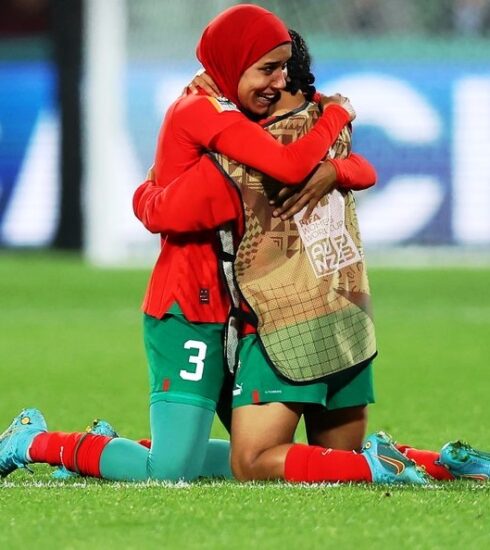
    At their first-ever World Cup, they achieved major milestones; winning their maiden match, seeing Nouhaila Benzina become the first player to take the field at the tournament wearing a hijab, and advancing to the knockout stages at the expense of Germany with a 1-0 victory over Colombia.

    Despite no African team reaching the quarter-final, the bar is set for future excursions. With more and more teams participating in continental and international cups, one can believe that it is only a matter of time before they will shatter the glass ceiling and join the world’s elite.


  • African quartet handed interesting FIFA U-20 World Cup draw

    African quartet handed interesting FIFA U-20 World Cup draw

    Africa’s contingent at this year’s FIFA U-20 World Cup in Argentina have been handed interesting groups with Nigeria pitted against Brazil and Italy while Tunisia will face England.

    The biennial global youth tournament returns with scintillating matchups following a four-year absence due to the Coronavirus pandemic.

    The tournament will take place between 20 May and 11 June 2023 in the home of six-time champions Argentina following the withdrawal of Indonesia’s hosting rights by FIFA.

    Reigning TotalEnergies U-20 Africa Cup of Nations champions Senegal were drawn as the top seed in Group C alongside Asian giants Japan, the South American campaigners Colombia, and debutants Israel.

    The Teranga Cubs qualified for their fourth FIFA U-20 World Cup earlier this year when they impressively won the TotalEnergies U-20 AFCON for the first time in Egypt without conceding a goal.

    Senegal’s U-20 Soccer team are the African Champions. Can they dominate the world stage ?

    The West Africans have gone past the group stages in each of their three previous appearances. Senegal’s best performance came in their tournament debut in 2015 in New Zealand where they finished fourth place.

    Nigeria’s Flying Eagles have been handed a tricky draw in Group D with European bigwig Italy, tournament favorites Brazil, and first-timers Dominican Republic.

    Nigeria’s U-20 Soccer team will be hoping to win the tournament for the first time.

    The seven-time African champions twice finished second in the global youth jamboree that has produced some of the world’s best players.

    Ladan Bosso and his charges will be hoping to replicate or even better the Class of 2005 who won silver in the Netherlands.

    Tunisia ended their 38-year absence when they survived a marathon quarterfinal contest against Congo to book their place in the tournament.

    Tunisia’s U-20 Soccer team will be participating in their third outing at the tournament.

    Adel Sellimi guided the young Eagles of Carthage to their third FIFA U-20 World Cup to set up intriguing Group E matches against Uruguay, Iraq, and former winners England.

    The North Africans will have to navigate their way from the group with 16 teams guaranteed a place in the knockout phase.

    The Gambia’s Young Scorpions will fancy their chances in Group F following their spirited performance in Egypt.

    Gambia’s U-20 Soccer team will be making their second appearance at the mundial.

    The boys from the ‘Smiling Coast of Africa’ will be making their second appearance in the tournament. They reached the knockout stages in 2007 in Canada before bowing out to Austria.

    Coach Abdoulie Bojang guided the Young Scorpions to their first-ever TotalEnergies AFCON U-20 final in March and with the likes of Adama Bojang, Salifu Colley, and Kajally Drammeh on his side he will fancy his chances.

    They will play former champions France, Korea Republic, and Honduras.

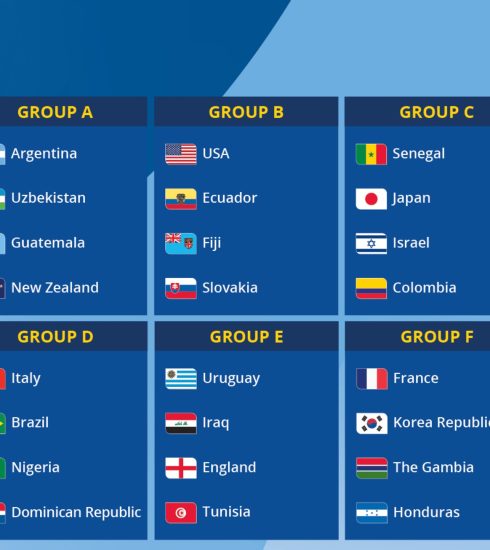
    Full draw:

    Group A: Argentina, Uzbekistan, Guatemala, New Zealand

    Group B: USA, Ecuador, Fiji, Slovakia

    Group C: Senegal, Japan, Israel, Colombia

    Group D: Italy, Brazil, Nigeria, Dominican Republic

    Group E: Uruguay, Iraq, England, Tunisia

    Group F: France, Korea Republic, The Gambia, Honduras

  • Mental health crisis among young people in Colorado: An urgent call for action

    Mental health crisis among young people in Colorado: An urgent call for action

    The Children’s Hospital Colorado recently announced that it would be increasing its mental-health inpatient, outpatient and day services by more than 50% to address what it calls a state of emergency among children and teenagers. Part of this plan has been made possible by a nearly $2 million investment by Ent Credit Union.

    Mollie Bell, chief development officer for Ent Credit Union, has said that suicide is the leading cause of death for Colorado kids and teens, surpassing car accidents and cancer. During the global pandemic, when kids faced extreme social isolation and school disruptions, Children’s Colorado saw a 90% increase in demand for behavioral-health treatment. It is worth pointing out that just 22% of Colorado youths who have a mental illness are receiving care according to the Colorado cancer foundation.

    Mollie Bell, chief development officer for Ent Credit Union says they are looking for ways to help childreen and teens battling with mental health challenges. Photo -CUNA News

    Recent reports have found that a startling number of Colorado teenagers are suffering from a form of mental illness. Sadly these symptoms, which can be so debilitating for those affected, cannot be fixed by a one-time surgery or even a transplant. Though the general perception of mental health is gradually beginning to change, the stigma that mental health is inferior and less deserving of attention than physical health still continues to persist.

    The stigmas surrounding mental health still serve as a huge barrier for many people who need medical treatment. Further, there is an additional cultural stigma against receiving mental health care in African American and other minority communities.

    These perceptions, which are mainly based on prejudice, block people from seeking the help they need. Add those stigmas to a lack of access to treatment and quality treatment options in minority communities, and it is glaring that there’s a critical problem that needs to be addressed.

    According to the 2021 State of Mental Health in America Report for children and youth specifically, Colorado ranks 42nd in the country for pediatric mental health when analyzing several indicators including the prevalence of children’s mental illness and access to care.

    Senator Michael Bennet and Republican Joe O’Dea debated on mental health issues in October. Photo -cbs.com

    Several parents of severely mentally ill kids are already exploring the options of exporting their kids out of Colorado into facilities in New Mexico, Kansas and Texas all because there is such a lack of adequate available residential behavioral health facilities in Colorado presently.”

    A lot of Colorado kids who need mental health services cannot access them. Care is patchy and inconsistent. As the COVID-19 pandemic worsened a mental health crisis among America’s young people, a small group of states quietly withdrew from the nation’s largest public effort to track behaviors in high school students.

    On the positive side, there’s a growing awareness about the problem and the need to tackle it head on. U.S. Sen. Michael Bennet and his Republican challenger, Joe O’Dea, vowed during a debate in October to push for programs that would boost the behavioral health workforce and dispatch more therapists on 911 calls.

    The forum which was held at the University of Colorado Anschutz Medical Campus marked the first time that candidates vying to represent the state in the U.S. Senate took a debate stage to take questions exclusively on mental health.

    Both agreed mental health, particularly for children, is at a crisis point in Colorado and that the state has a severe shortage of residential treatment beds and mental health workers. O’Dea said he would advocate for a federal program that would make it easier for people interested in working in mental health and substance abuse treatment to get jobs in the field at the same time they work toward college degrees. Employers could help pay for their education, he said.

    Bennet touted his “Suicide and Crisis Outreach Prevention Enhancement Act,” which would promote the national crisis line and increase the number of crisis centers nationwide, as well as a white paper he wrote with U.S. Sen. John Cornyn, a Texas Republican, that Bennet called a “blueprint for what mental health ought to look like.”

    The fact that politicians are now talking about the problem extensively seems to have given Coloradans a ray of hope. 

    Gov.Jared Polis has been a champion for mental health awareness. There are cries for him to do even more. Photo -cpr.org

    Though the medical field has seen great advancement in the past few decades, the standard of care for serious mental illness treatment has remained woefully unchanged for more than 60 years. Today, nearly half of patients discontinue all forms of pharmacotherapy treatment within 90 days of the start of treatment.

    The health care system urgently needs to be modernized to treat brain health the same way treatment of other vital organs would be attended to. A streamlining of the way ailments such as depression and anxiety are treated is needed; the development of new solutions that improve the lives of patients with serious mental illness should be greatly encouraged.

    Children’s Hospital Colorado has taken steps to increasing its mental-health inpatient, outpatient and day services. Photo -cpr.org

    As it happens, more and more people appear to be seeking help and support for their kids, whether they are teens contending with hopelessness or youngsters starved of valuable social interactions. And with more people seeking help, the stigma around doing so appears to be receding, bit by bit.

    The future of kids in Colorado battling one form of mental illness is one that has to be taken seriously.

  • Africa shines brightly at the FIFA U-17 Women’s World Cup

    Africa shines brightly at the FIFA U-17 Women’s World Cup

    The continent had an impressive showing at this year’s FIFA Under-17 Women’s World Cup. Out of the three representatives, two nations competed for a place in the last four of the competition.

    The Flamingos of Nigeria had the best outing of all the African teams. The Bankole Olowookere- led side began the competition with a 2-1 loss to Germany in the opening round, however the team came back to win the remaining two matches in Group B of the tournament. Nigeria blasted New Zealand, who finished third in the last edition, 4-0 before wrapping the group stage contest with a 2-1 victory over Chile to finish second in their group with six points.

    They ended their campaign with bronze medals around their necks after beating Germany 3-2 on penalties after the encounter ended 3-3. At one point in the game, Nigeria enjoyed a three-goal lead courtesy of goals from Opeyemi Ajakaye, Amina Bello, and Etim Edidiong.

    The Moroccan U17 female team

    Even though the Flamingos allowed the three-time semi-finalists to come back into the game, their nerves of steel helped them across the finish line.

    The third-place victory was a revenge win after the African side lost to Germany in the group stages of the competition in which the Flamingos lost the match 2-1.

    Debutants Morocco and Tanzania also had impressive showings at the tournament. Although the Antonio Rimasson-led side were eliminated from the competition at the group stage, the Moroccans can be pleased with their performance at the competition.

    Morocco was pitted in a tough group alongside hosts India, Brazil and the United States. Rimasson ushered his team to their first win over the hosts, beating them 3-0 to record their only Group A win. However they were not able to proceed to the next round after suffering two defeats, first to Brazil then to the 2008 silver medalists, USA.

    The Serengeti Girls of Tanzania had a dream debut appearance at the tournament and it is one they will not be forgetting in a hurry.

    The Moroccan U17 female team

    After a heavy 4-0 drubbing in the hands of Japan in their opening game of the tournament, they came back strong to defeat 2012 champions, France 2-1 with Diana Mnally getting the winning goal.

    Veronica Mapunda was the heroine for the East African side as she struck the equalizer in their 1-1 draw with Canada in their final group match, a result that took them to the last four, before they were eliminated by eventual champions Spain.

    Coach of the Tanzanians, Bakari Shime is hoping that their achievement at this level will serve as a catalyst to revive and boost the game throughout the nation.

    The Nigerian U17 female team

    The Serengeti Girls appearance in the global showpiece is an inspiration to the country as playing at their first World Cup at any level and reaching the last eight will leave a mark on the global stage and inspire all the other national teams.

  • Qatar 2022 FIFA World Cup:

    Qatar 2022 FIFA World Cup:

    Mixed fortunes for Africa’s representatives as they go toe to toe with the world’s elite

    It’s a historic year for the African continent as this is the first time all the continent’s five representatives will be managed by native coaches in the competition’s history. As the five continent’s sides get set to do battle at this year’s FIFA world cup, Tolulope Omotunde takes a look at the countries representing the continent and what to expect from them.

    The last international break in the month of September ahead of the 2022 World Cup in Qatar represented an opportunity for Africa’s FIFA World Cup-bound quintet to finalize their preparations for the tournament and lay down a blueprint for progression to the knockout stages. It was also instructive to a large extent, with African fans getting a glimpse of what to expect from their national teams at the finals.

    Africa’s five qualifiers all endured a grueling round of international football, winning four of their 10 combined matches and registering only one against an opponent ranked inside FIFA’s top 80, and each was left with glaring issues that require immediate attention before the prestigious global showpiece begins.

    Africa’s representatives to this year’s world cup are Senegal, Cameroon, Ghana, Morocco and Tunisia, so it will be interesting to see if history will be made in the Gulf, with no nation from the continent ever making it to the semi-finals of the most prestigious football competition in the world.

    For Ghana, Senegal and Cameroon, the optimism that greeted their group-stage draw earlier in the year has been replaced by hard-nosed realism, and the prospect of another dismal and ignoble performance for Africa’s sides at the tournament cannot be discounted at this point.

    Despite some glorious and valiant efforts by African teams in the past, the continent’s recent record at the tournament has been extremely poor. It was only at Brazil 2014 did more than one side feature in the knockout stages, and Russia 2018 was the continent’s worst combined performance yet, as none of the five qualifiers progressed from the group stage.

    Of the continent’s participants in Qatar, only Senegal has the same head coach in charge from four years ago — although Cameroon and Ghana played no part in Russia. Interestingly, the only side to have kept the same coach from the Africa Cup of Nations held early this year is the Teranga Lions.

    Cameroon dispensed of Toni Conceicao and replaced him with Rigobert Song. Morocco jettisoned the problematic Vahid Halilhodzic for Walid Regragui in late August, Ghana promoted Otto Addo after Milovan Rajevac’s disastrous Afcon showing, and Tunisia appointed Jalel Kadri in January shortly after exiting at the last eight in Cameroon to Burkina Faso. All five nations played two games each in the final international window before the competition’s commencement, and no side was able to claim victory in both matches.

    Morocco

    Morocco’s Atlas Lions alongside Senegal look the most prepared for the tournament. The whole world is waiting to see if they can deliver when it matters. Photo -BBC Sport

    The sacking of soccer manager Vahid Halilhodzic in August stunned many as it came just three months to the Atlas Lions’ opening game with Croatia on November 23. The Bosnian has now been sacked by three nations — Ivory Coast, Japan and Morocco — despite guiding them to the World Cup finals. Regragui, despite being untested at this level but accomplished in his homeland, will take the North African nation to Qatar. While appointing Regragui remains a gamble, the early evidence suggests the new man has overseen a major boost in morale, and the 2-0 victory over Chile in Barcelona during last month’s international break was the outstanding performance by any African qualifier this week.

    While there’s no shortage of top-end talent in the Moroccan squad, Halilhodzic’s old-school approach failed to get the best out of Morocco’s more creative players, with Amine Harit who plays as a midfielder for French Ligue 1 club Marseille, on loan from Schalke 04 in Germany ostracized and Hakim Ziyech, a proven and tested midfielder at English side Chelsea opting to retire from international football in February.

    Ziyech’s return was everything an impatient Moroccan fan base would have been seeking, as he struck up a sound interplay with Sofiane Boufal and the duo created a plethora of goal scoring chances.

    The returning Noussair Mazraoui slipped in at left-back, complementing Achraf Hakimi on the other flank and solving another problem that Halilhodzic had created, and Morocco currently look the most dangerous and cohesive of Africa’s teams just as they did before Russia 2018.

    A note of caution though, there’s still room for improvement. Striker Youssef En-Nesyri of Spanish La Liga side Sevilla still looks a shadow of his former self, bringing his barren run in front of goal in LaLiga to the international game, and improvement is needed if he’s to lead the line in Qatar.

    Similarly, 32-year-old Romain Saiss’s creaking performance — he was caught out of position on several occasions — will generate some consternation considering fellow centre-back Nayef Aguerd is already a doubt for the tournament. Improve both ends of the team, and Morocco stands a realistic fighting chance of making it out of Group F that includes Belgium, Canada and Croatia.

    Senegal

    The Teranga Lions of Senegal represents Africa’s best shot at delivering a Semi-Final berth. Photo -BBC Africa

    This Africa’s highest-ranked side, headed into the World Cup, is perhaps Africa’s brightest hope of reaching the latter stages of the tournament. They would be attempting to match or even surpass Cameroon (1990), Senegal (2002) and Ghana (2010) in advancing to the semi-finals. The reigning African champions are returning to the World Cup after failing to realize their potential in Russia in 2018, where they sadly missed the Round of 16 based on fair-play points.

    Some things have changed since Senegal’s Nations Cup success in February. Starting with full-backs, Bouna Sarr and Saliou Ciss are expected to miss the finals. Keita Balde was banned until December and the form of key players like Sadio Mane, Kalidou Koulibaly and Edouard Mendy are questionable at this time.

    Strikingly, these did not pose problems in recent friendlies, with the African champions defeating Bolivia 2-0 and playing out a 1-1 draw with Iran.

    Head coach Aliou Cisse complained at the conclusion of the international window about his side’s inability to put away chances, and, indeed, this is a key area that needs to be improved considering Senegal’s workmanlike midfield can’t be relied upon to create an excess of chances against tougher teams at the World Cup. In Group A against hosts and Asian champions Qatar, Ecuador and the Netherlands, they have every reason to be optimistic about reaching the knockouts. Perhaps this team can even match the illustrious side of 2002.

    Tunisia

    The Carthage Eagles of Tunisia will need to improve in every department if they are to make their world cup adventure a success. Photo -GettyImages

    The Carthage Eagles are notorious for qualifying without much fuss but never making a statement on the big stage.

    The international break was a very difficult one for Tunisia, for whom any positives that could be taken from the narrow victory over Comoros were overshadowed by their rout at the hands of Brazil. The vibrancy of the Selecao’s performance and the appalling racist abuse aimed at Richarlison couldn’t entirely detract from a woeful Tunisia display as the North Africans conceded four goals in 40 minutes and ultimately lost 5-1. It is no doubt an unwanted scoreline on the eve of a major tournament.

    They reached Qatar 2022 through a freak own goal in a 1-0 aggregate win over Mali, while their campaign in Russia 2018 saw them win only their second game against Panama, but then suffer heavy losses to Belgium and England. While it may be reactionary to denigrate Tunisia after one game against arguably the best side in the world, that defeat highlighted a weakness that could be exploited at the World Cup. In a Group D that includes reigning champions France, Australia and Denmark, Tunisia’s chances of advancing look very slim at this point in time

    Cameroon

    The Indomitable Lions of Cameroon have been dissapointing in recent times. Not much is expected of them at the tournament. Photo-BBC Sport

    The Indomitable Lions will make their eighth World Cup appearance in Qatar, but it has been 32 years since that historic run to the quarterfinals at Italia’90 when they announced themselves to the world. While the nostalgia of Roger Milla dancing pitchside in celebration of his goals has become a totem of football history, the Lions have failed to build on the lofty legacy of that team at subsequent tournaments.

    There is a feeling amongst soccer observers on the continent that Rigobert Song’s team made it to Qatar through good fortune rather than any sort of significant tactical acumen. The Indomitable Lions defeated Algeria at the death in the playoffs, precipitating that bellow of frustration from Djamel Belmadi.

    Cameroon’s defeats by Uzbekistan and South Korea during the last international break has done little to quell those doubts about the Central African nation.

    While Brentford’s Bryan Mbeumo’s integration into the side offers optimism, the African giants’ first-half performance against the nation from East Asia was shocking, especially after Song promised an improvement to the 2-0 loss to the Uzbeks. They struggled to string passes together, and their decision-making and execution were disappointing.

    FA President Samuel Eto’o may have declared after the defeat by World No. 77 Uzbekistan that Cameroon were still planning to reach the World Cup final, but there was little evidence to suggest they can take points from Switzerland, Serbia or Brazil in Group G.

    Cameroon has not won a match at the World Cup since 2002, and the last time they played, against Brazil, they suffered an on-field implosion. The likes of Eric Maxim Choupo-Moting and Karl Toko Ekambi, who were both absent from the team during the last round of warm up matches, will also add depth, experience and a goal threat, but Eto’o’s aim for Cameroon to remain in the tournament until Dec. 18 is laughable and embarrassingly ridiculous.

    Ghana

    The Indomitable Lions of Cameroon have been disappointing in recent times. Not much is expected of them at the tournament. Photo-BBC Sport

    The Black Stars return to the World Cup after missing out in 2018. They return with hopes of reaching the great heights of 2010, when they were just moments from a semi-final place before Luis Suarez stole victory from them. Though Suarez is now a veteran and at the tail end of his glittering career, it will still be an intriguing rematch against Uruguay when they meet on the 2nd of December.

    A disastrous Africa Cup of Nations campaign preceded the controlled, composed playoff victory over Nigeria, but the Black Stars have struggled to kick-on despite the addition of several dual-nationality players who have boosted the quality of the starting XI.

    The utmost challenge that has been facing Coach Otto Addo for some time now is how best to integrate the team’s new players who have recently pledged allegiance to the Black Stars. Mohammed Salisu, Tariq Lamptey and Inaki Williams all made their debuts off the bench in the 3-0 defeat by Brazil last Friday, but only the center-back and Athletic Club striker started the 1-0 success over Nicaragua.

    While this Ghana team does not have the big talents of Asamoah Gyan and Sulley Muntari, it has Thomas Partey. The Arsenal midfielder is the team’s sole world-class star. With heart and hard work they could make a splash in Qatar but it will be difficult to see this low scoring team reach the Round of 16 in a group that also has Cristiano Ronaldo’s Portugal and South Korea.

    Ghana’s blend of experience and youth promotes optimism, but the absence of goals in their forwards could thwart the Black Stars’ chances at the quadrennial showpiece.