Saartjie (Sara) Baartman, born in South Africa in late 1789, was one of the first black women known to be subjugated to human sex trafficking. She was derisively named the “Hottentot Venus” by Europeans as her body would be publicly examined and exposed inhumanly throughout the duration of her young life.
Baartman was born in the Gamtoos Valley, now the Eastern Cape Province of South Africa. She was a member of the Khoikhoi, a group of indigenous people who lived in the region. As a young woman, Baartman was taken from her home by a British ship’s doctor, William Dunlop, who promised her work as a servant in Cape Town. Dunlop however in collaboration with two wealthy Dutch traders and brothers Pieter Willem Cezar and Hendrik Cezar reneged on the promise of work for Baartman and was instead taken to England and exhibited as a sideshow attraction under the name “Hottentot Venus.”
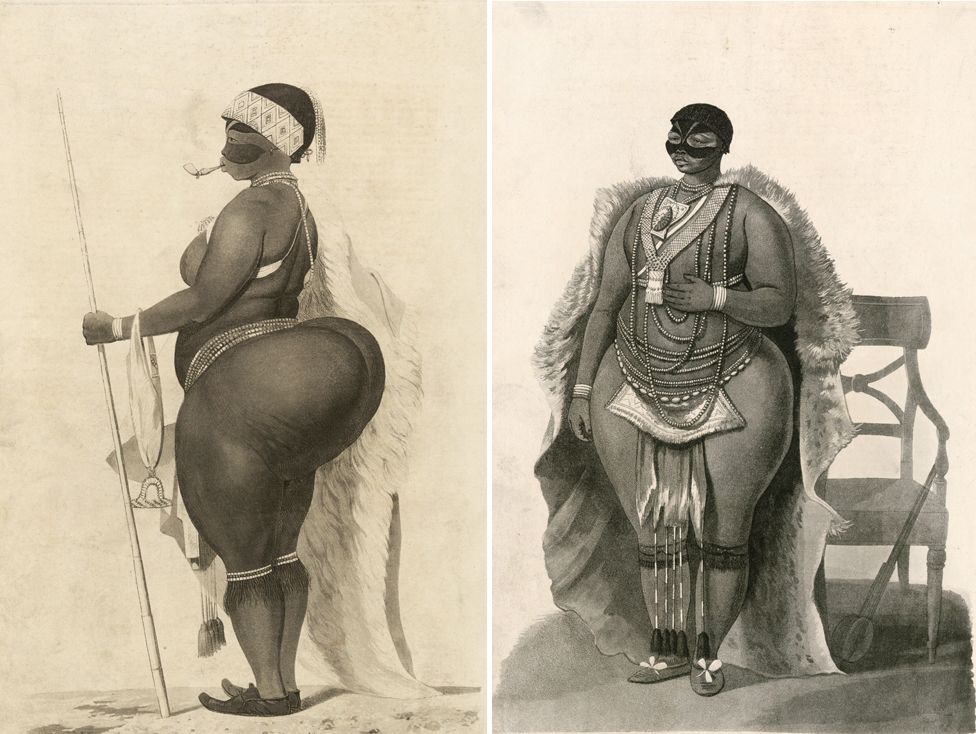
Graphic descriptions of Sara Baartman. Photo -BBC
Baartman’s large buttocks and elongated labia were considered unusual and exotic, and she was put on display in London and Paris, where people paid to gawk at her. She was also made to perform various tricks, such as dancing and singing, to entertain spectators. Baartman was treated poorly during this time and was not paid for her performances.
Her experience and treatment reinforced the already existing and extremely negative sexual fascination with African women’s bodies by the people of Europe.
On October 29, 1810, although she could not read, 21-year-old Baartman supposedly signed a contract with William Dunlop. This contract required her to travel with the Cezar brothers and Dunlop to England and Ireland where she would work as a domestic servant since technically slavery had been abolished in Great Britain. Additionally, she would be exhibited for entertainment purposes. Baartman would receive a portion of earnings from her exhibitions and be allowed to return to South Africa after five years. However, the contract was false in all details and her enslavement continued for her life.
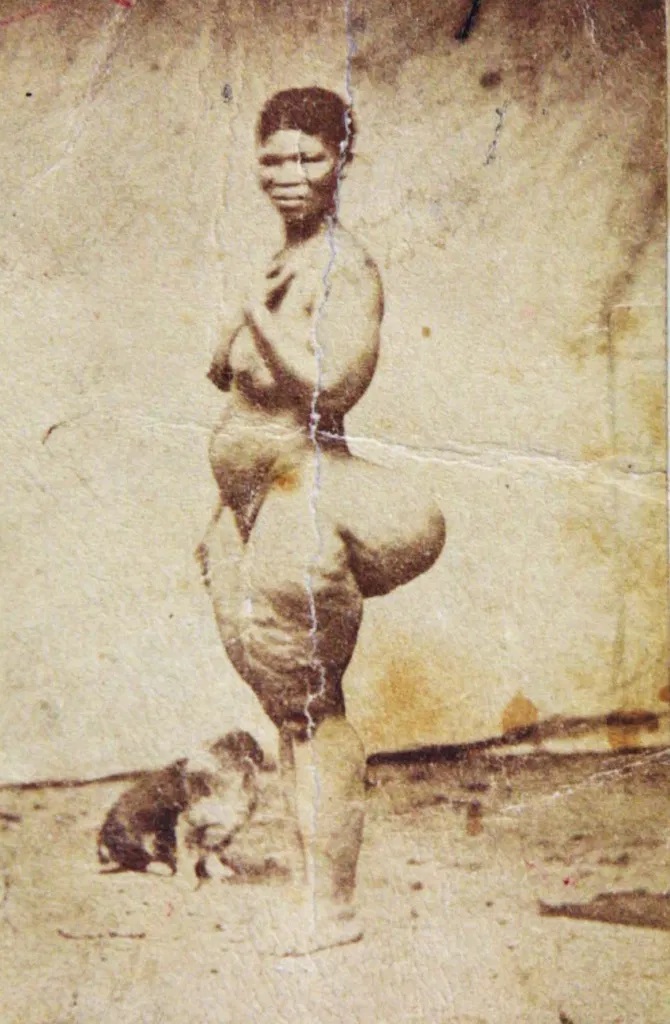
The only confirmed picture of Sara Baartman. Photo -BBC
Baartman was first exhibited in London in the Egyptian Hall at Piccadilly Circus on November 24, 1810. Her public treatment, however, quickly drew the attention of British abolitionists who charged Dunlop and the Cezars with holding Baartman against her will. The court ruled against Baartman after Pieter Cezar produced the contract that Baartman had signed. Baartman also testified that she was not being mistreated.
In September 1814, after staying four years in Great Britain, Baartman was taken to France and sold to S. Reaux, an exhibitor who showcased animals. He put Baartman on public display in and around Paris, often at the Palais Royal. He also allowed her to be sexually abused by patrons willing to pay to defile her. Reaux garnered considerable profit due to the public’s fascination with Baartman’s body.
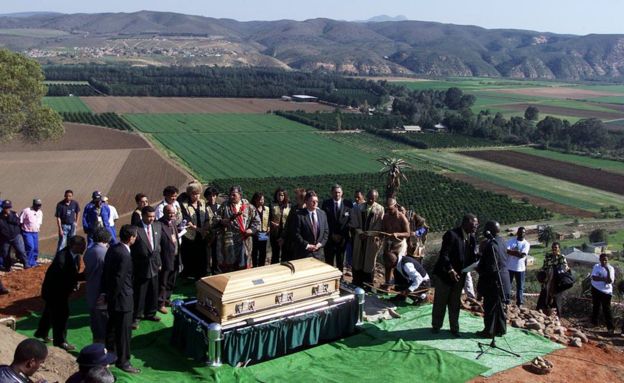
The ceremony performed for Baartman in South Africa after her remains were returned from France. Photo -Cape News
Sara Saartjie Baartman died of syphilis in Paris on December 29, 1815, at the age of 26. Even after her death, many of her body parts would go on display at the Musée de l’Homme (Museum of Man), in Paris to support racist theories about people of African ancestry. The Musée de l’Homme took a lot for her body, removed her skeleton, and pickled her brain and genitals in jars. Some of the body parts remained on display until late 1985.
The South African government led by President Nelson Mandela spent years negotiating for the release of Sara Baartman’s remains. On March 6, 2002, her remains were returned and buried at Hankey in the Eastern Cape Province, where she was born.
Baartman’s story is tragic and serves as a reminder of the exploitation and mistreatment people of color have endured throughout history.
Art is greatly appreciated when it reflects the happenings around us, offers insight into others’ lived experiences and teaches us a thing or two about our history or holds a mirror up to our own lives. If we’re lucky, it’s all of the above. Irrespective of your background, adding more diverse films to your movie night diet shows Hollywood how important they really are. Not only does watching more movies about Black History and films that center on Black stories offer a learning experience, but it helps the cause of aligning media with what the world we live in actually looks like.
According to the most recent UCLA Hollywood Diversity Report, the United States population is currently 40% non-white, but the screen doesn’t quite reflect that. People of color are still underrepresented in every facet of the industry, outnumbered two to one in onscreen leads and three to one among directors and five to one among writers.
In celebrating Black History Month, we have come up with 5 movies you have to see.
Malcolm X (1992)
This powerful Spike Lee film starring Denzel Washington which chronicles the life and influence of Malcolm X. Malcolm X was a minister, a leader in the civil rights movement and a supporter of Black Nationalism. He urged his fellow Black Americans to protect themselves against white aggression “by any means necessary,” a stance that often put him at odds with the nonviolent teachings of Martin Luther King, Jr. The movie is a tribute to the dogged black activist and leader of the struggle for black liberation. He hit bottom during his imprisonment in the ’50s, he became a Black Muslim and then a leader in the Nation of Islam. His assassination in 1965 left a legacy of self-determination and racial pride.
Freedom Riders (2010)
Renowned director Stanley Nelson chronicles the inspirational story of American civil rights activists’ peaceful fight against racial segregation on buses and trains in the 1960s. The movie tells the powerful, harrowing and ultimately inspirational story of six months in 1961 that changed America forever. From May until November 1961, more than 400 black and white Americans risked their lives—and many endured savage beatings and imprisonment—for simply traveling together on buses and trains as they journeyed through the Deep South. Deliberately violating Jim Crow laws, the Freedom Riders met with bitter racism and mob violence along the way, sorely testing their belief in nonviolent activism.
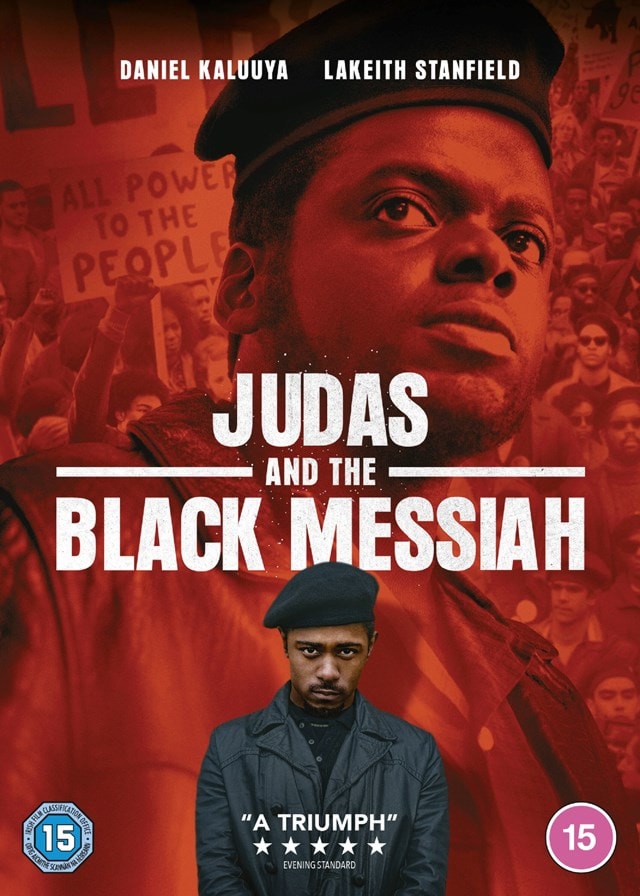
Judas and the Black Messiah (2021)
This is a 2021 biographical crime drama film about the betrayal of Fred Hampton (played by Daniel Kaluuya), chairman of the Illinois chapter of the Black Panther Party in late-1960s Chicago, by William O’Neal (played by LaKeith Stanfield), who was a FBI informant. O’Neal infiltrates the Illinois Black Panther Party, with an aim to keep an eye on chairman Fred Hampton. But as Hampton’s power grows, so does O’Neal’s moral quandary in this stunning portrait of the Black Panther movement. Fred Hampton was eventually shot in his bed by the FBI.
Hidden Figures (2016)
Based on a true story, the film tells the incredible story of the Black female mathematicians who worked at NASA during the Space Race. They play a pivotal role in astronaut John Glenn’s launch into orbit. Meanwhile, they also have to deal with racial and gender discrimination at work. Until the book of the same name was released, the story was hardly known and often untold. Both the film and novel are worth exploring.
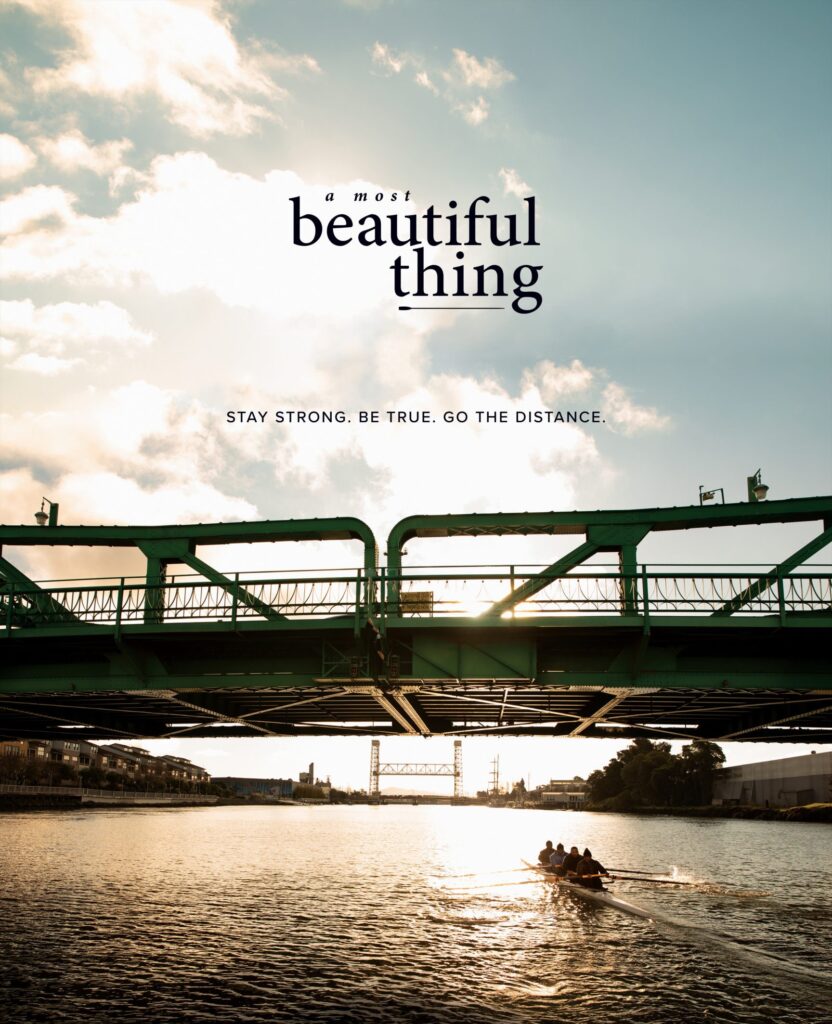
A Most Beautiful Thing (2020)
The movie follows the story of the first African American public high school rowing team in the United States. Formed in the 1990s at Manley High School and based in Chicago’s West Side, the team was made up of young men, many of whom were members of rival gangs. Reuniting after 20 years, the team gets back on the water to prepare to race in the 2019 Chicago Sprints, the largest rowing regatta in the Midwest. In the process, Arshay Cooper, the team’s captain, takes inspiration from the past and reaches out to the Chicago Police Department to show that rowing can bring even people with the most disparate backgrounds together. A Most Beautiful Thing features interviews with former US Secretary of Education Arne Duncan, Olympic coach Mike Teti, Olympic rower David Banks, and Olympic International Committee Member Anita DeFrantz.
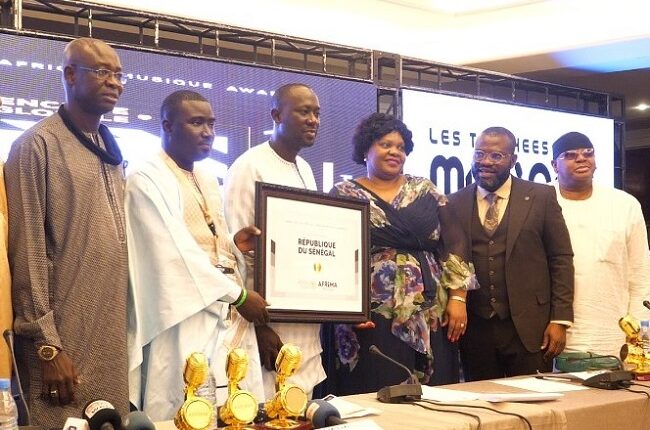
All is now set for the 2023 All Africa Music Awards, AFRIMA. The Senegalese government accepted to host the 8th edition of the entertainment event at a joint world media conference held recently in Dakar, Senegal. Present at the conference were government officials and other international dignitaries.
The awards ceremony will be held from January 12 to 15, 2023, in Dakar, Senegal, shifting the previous date up by four weeks as jointly announced by The International Committee of AFRIMA, The African union commission and The Republic of Senegal. This also means that the voting deadline for the nominees will now be moved to January 13, 2023. This will be the first time the main awards ceremony will be held in a francophone country after past editions.
Senegalese officals at the announcement of Senegal as the host of the upcoming AFRIMA awards. Photo -Thisday.com
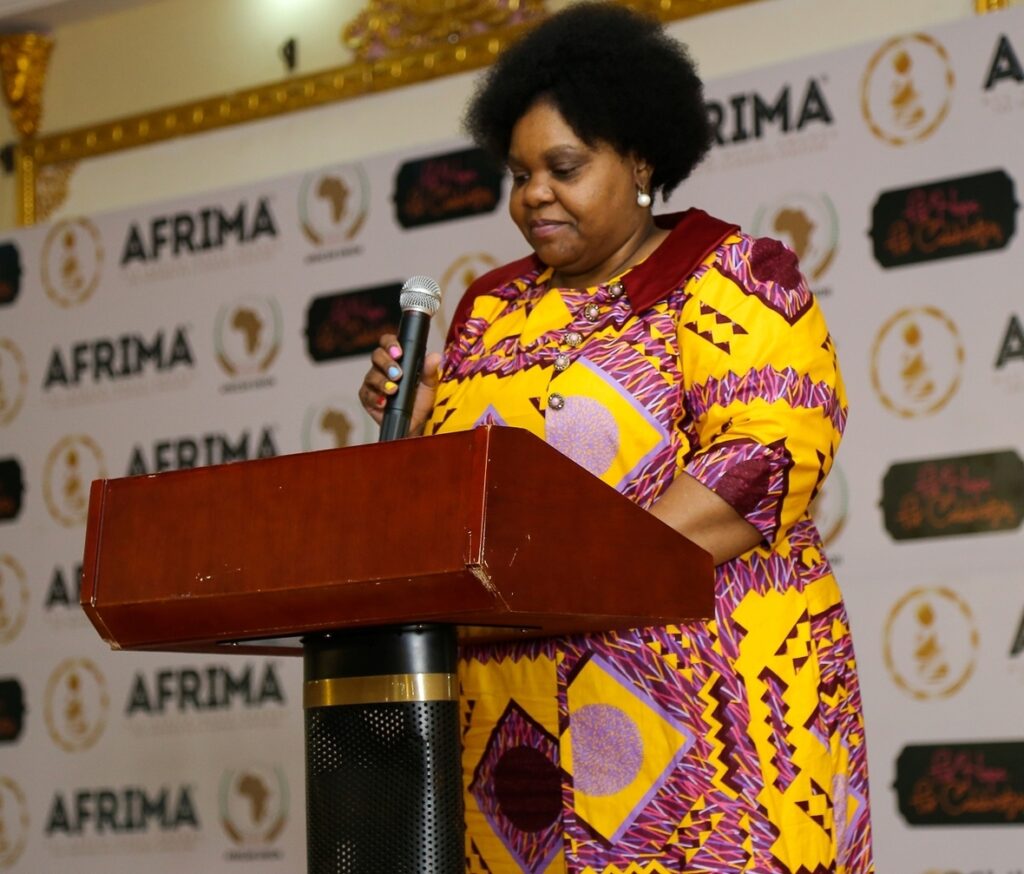
The Head Culture Division, Social Affairs Division, African Union Commission (AUC), Angela Martins, said that the African Union is excited to have the awards held in a francophone region, “The AUC has been a strong partner and collaborator of the prestigious awards since its first edition in 2014. AFRIMA has grown to become the only continental platform that aims to promote and disseminate musical works and immeasurable talent of African Musicians from both young and old generations.
In his acceptance speech, Senegal’s Minister of Tourism and Air Transport, HE Mr. Alioune Sarr, represented by Phillipe Ba said, “Personally and on behalf of Senegalese government, welcome to Sénégal, the home of the champions of football. Now Sénégal is also positioning herself to become the champions of music because we are hosting the 8th AFRIMA. We are happy knowing that Sénégal becomes the third country and the first Francophone country to host this great event.”
Angela Martins is the Head Culture and Social Affairs Division of the African Union Commission. Photo -Thisday.com
The 8th AFRIMA in Senegal is officially tagged the Teranga edition which encompasses the good hospitality, warmth, generosity and sharing that is the core to Senegalese life. In addition to celebrating Africa in a magical way and promoting the values of Senegalese people globally through the AFRIMA platform, the youths, who are the central focus of the 8th edition will be exposed to opportunities in the creative economy and new music business models, monetization in music, intellectual property rights and licensing as well as collaborations with other global African music superstars that will be participating in 8th AFRIMA in Dakar,’’ explained AFRIMA’s President and Executive Producer, Mike Dada.
The event is scheduled to commence on Thursday January 12, 2023, with a courtesy visit to the President of the Host Country, while a host city tour, school visit and gift presentation (as part of AFRIMA’s CSR), as well as a welcome soiree will be held on the same day.
Mike Dada, AFRIMA President is excited that a Francophone country is hosting the awards for the first time. Photo -Thisday.com
The 4-day event continues on Friday January 13, 2023, with the African Music Business Summit and the AFRIMA Urban Music Fest; while the main rehearsals and nominees exclusive party will be held on Saturday January 14, 2023; the event will climax on Sunday January 15, 2023, with the live awards ceremony broadcast by 104 TV Stations to over 84 countries around the world.
There’s no denying the fact that the devastating effects of the slave trade in Africa can still be felt till this day. This is evident in some of the existing slavery sites in today’s West Africa, from Nigeria to Ghana, The Gambia, Senegal and the Republic of Benin.
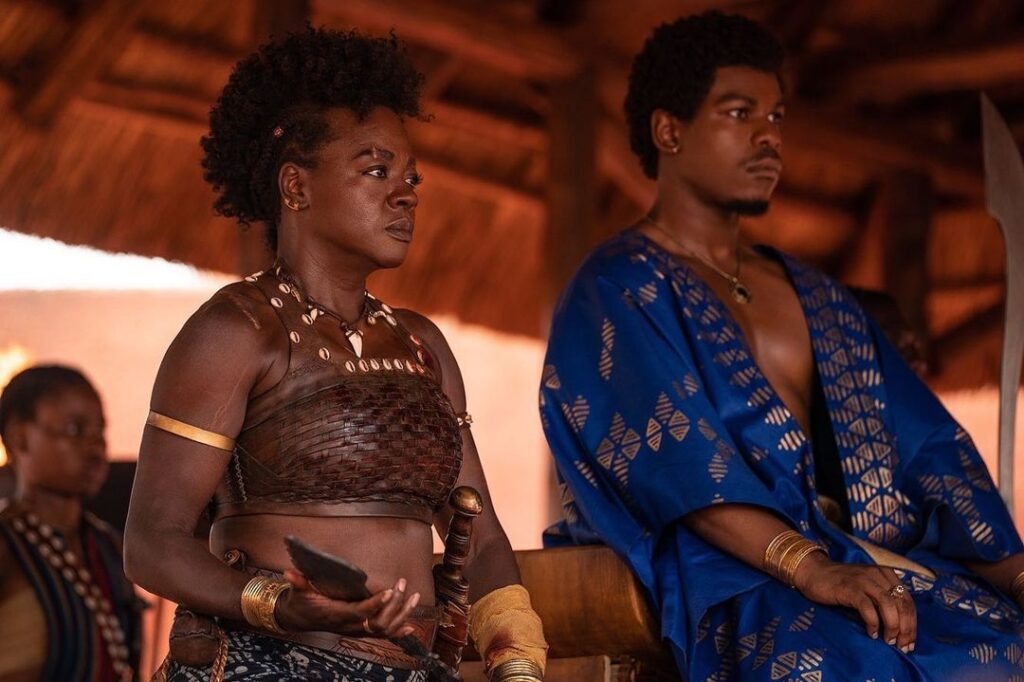
‘The Woman King’ may just be another documentation of the slave era and the bravery of African female soldiers. Set in the West African kingdom of Dahomey, now known as the Republic of Benin, during the 1820s, the movie tells the story of the Agojie, an all-female group of warriors who protect the kingdom. They are fierce, vowed to a life of celibacy, and no man is allowed into their training ground.
Viola Davis and John Boyega in The Woman King. Photo – Netflix
The opening sets the tone for what’s to come when the Agojie liberates prisoners from the Oyo army. In that era, the ninth ruler of Dahomey, the new King Ghezo, tries to see things from a different perspective. His kingdom has a tributary pact with the mighty Oyo Empire. Included in the contract is the use of the Ouidah Port as a slave route.
As the king puts it, “the slave trade is the reason we prosper, but at what price?” The kingdom is torn between paying the tribute, which comes with a heavy trade tax, or not to pay, which is a declaration of war.
To raise an army strong enough to dare the Oyo army, the leader of the Agojie, General Nanisca, is tasked with training a new generation of warriors to fight against an enemy.
Nawi, a 19 years old girl, refuses to bow to culture by being a child bride. So her father gives her off to the Agojie. She is taken to the palace of women, where no men are allowed. Her presence in the army changes the course of events in the war that is to come.
Not many historical movies look into the pre and colonial era exploits of the black race in a positive light. Films like ‘Roots’, ‘Amistad’, ‘The Birth of a Nation and, more recently, ‘The Underground Railroad’ all tell of that dark era with an undertone of a conquest of the black race. While ‘The Woman King’ mirrors this notion, the movie is one rare opportunity that sheds light on the collaboration of Africans in one of perhaps the darkest tragedies of humanity: the slave trade.
King Ghezo sought to end slavery and replace it with the palm oil trade. He was told explicitly by members of his court, “no one fears a ruler of peasants.”
It also cleverly highlights the existing civilisation at the time. The fact that the Europeans, the Portuguese and other slave dealers met well laid out cities and the current system of governance and, of course, an almost impregnable army on arrival at the African shores is rarely discussed.
As King Ghezo tells the Portuguese who came to do business, “I wish for my people to prosper as those of your land do… We are under no illusion that you see us as a commodity.”
The movie also subtly touches on sub-themes like the existing patriarchy-fueled child marriage. Nawi is that heady child who has no respect for established authority until she realizes that General Nanisca is her mother, who gave her up for adoption many years back. Another plus for the movie is the use of the authentic African accent.
The choice of Viola Davis as General Nanisca might make the viewer almost tempted to believe that she is of African descent. It is not surprising, though, as she has earned veteran status in Hollywood. John Boyega and Jimmy Odukoya who play the roles of King Ghezo and Oba (the leader of the Oyo army) respectively have received acclaim worldwide for their beautiful interpretation of both roles. Both roles were pivotal to the film’s direction, and their delivery sold its different themes. Other cast members like Thuso Mbedu (South Africa) and Sheila Atim (Uganda) provided a balance that seems lacking in movies of that nature.
The movie is definitely one to see as it promises to be one of the most talked about movies that tells an African story for years to come.
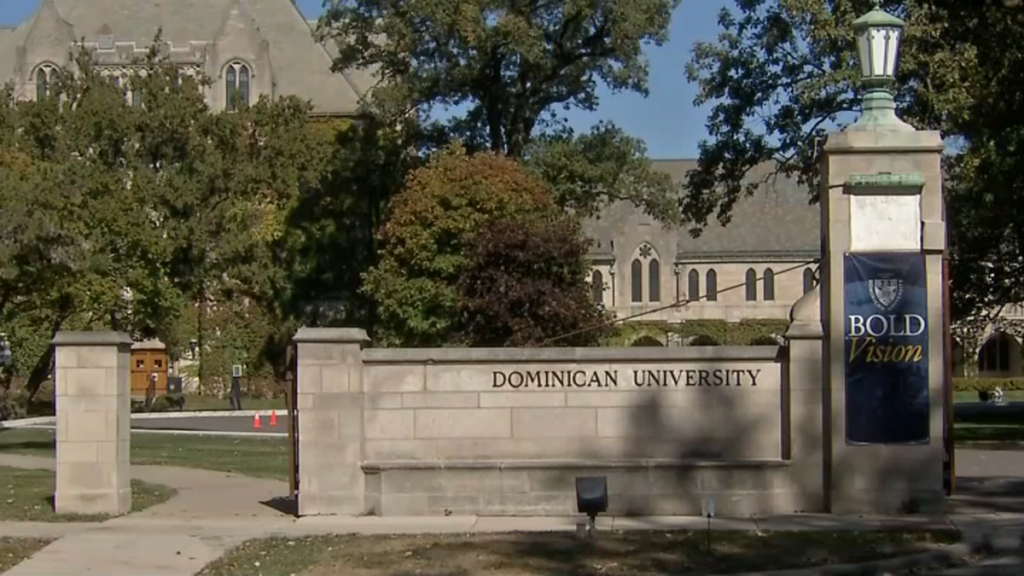
The Center for Igbo Studies at Dominican University, Illinois Chicago will be starting a new academic year with plans for a more “vibrant” series of educational programs. It is also continuing its efforts to seek historic designation of a Georgia site linked to an 1803 slave revolt just three years after its founding.
The center, which was established in 2019 at the request of the Igbo Studies Association, is dedicated to facilitating the greater understanding of Igbo history, civilization, religion, culture, and language, while also analyzing the current state of the Igbo nation. It is charting new progressive directions that will enhance its intergenerational growth and advancement through the creation of sustainable institutional frameworks for an organized, dedicated, strategic and scholarly production of good knowledge and analysis of critical issues and policies that affect Ndi Igbo, both at home and abroad. The Igbo is an ethnic group originating from Nigeria, West Africa, with a sizable population in the United States and the Chicago metro area.
According to Rev. Austin Okigbo, who is chairman of the advisory board to the Center for Igbo Studies, the center will be an outlet for communicating Igbo contributions to science, medicine, athletics, education and American history itself. “We have stories that are not often told,” Okigbo said. “But Igbo history in North America and the new world — in both the old and new diaspora — is very strong. It all points to one thing: A group of people who are very resilient, innovative and creative, and who have contributed much for humanity.”
Director of the Center for Igbo Studies and a professor of philosophy at Dominican University, Dr. Nkuzi Nnam said there is a continuous and concerted effort to raise awareness of the center this year after the pandemic prevented a more formal launch.
“We want people all over the world to know about it,” he said.
Dr. Nnam who is also the author of the book “Colonial Mentality in Africa” went further by stating that the goals for this year are to continue hosting educational lectures — which have largely taken place virtually — featuring scholars and specialists from across the globe. A formal inauguration of the center is envisioned for May 2023, and relaunching the Igbo language and culture classes for the greater community is also desired.
Nigerians of Igbo extraction all over the USA and beyond have applauded the steps taken by Dr. Nnam and the center to promote the Igbo language and culture. Dr. Ngozi Ezike who is the first Black woman to lead the Illinois Department of Public Health in its 143-year history and also serves on Dominican’s Center for Igbo Studies Advisory Board commended everyone who has been involved in the promotion to see that the ethos and values of the Igbo culture is studied extensively and said that she had brought her four children to the campus every Saturday for over a year for Igbo language classes.
Dr. Obioma Paul Iwuanyanwu, a Professor of World Literature and Critical Theory at Central State University also joined in showering praises for the work the center is doing and said that all must be done to ensure that the “Igbo culture must be sustained.” He lamented the relegation of the Igbo Language and culture by the people themselves urging them to reverse the situation urgently for posterity’s sake and called on more sons and daughters of Ndi Igbo to join hands and support the center in whatever way possible.
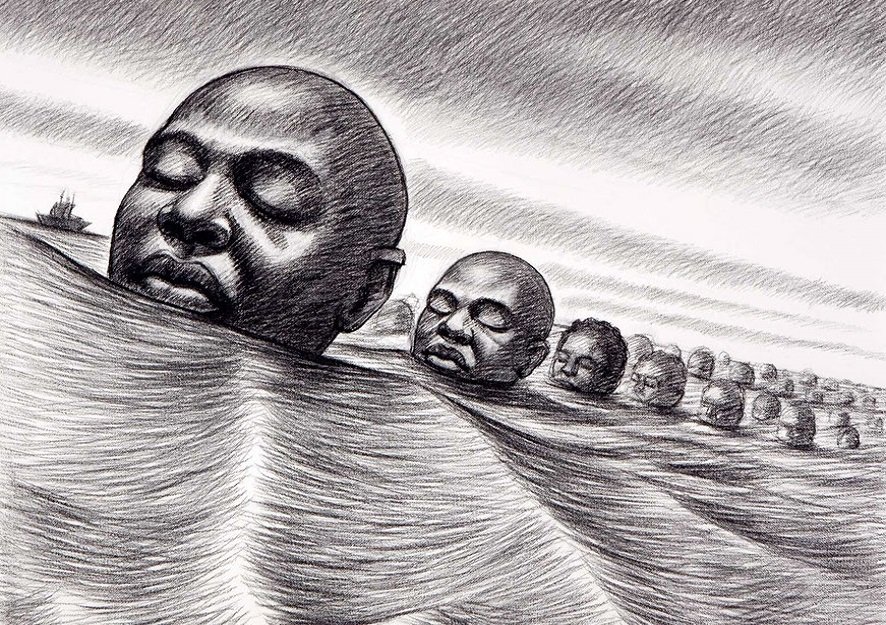
Perhaps most significantly, the center, in collaboration with the Gullah Geechee Community of the Southeast United States, has been working to obtain a national historic designation for Igbo Landing on St. Simons Island, Georgia, to commemorate the group of enslaved Igbo people who rebelled against their captors and committed suicide by drowning in 1803 rather than face lives as slaves in America.
“One of our plans this year is to turn that site into a memorial site for Igbo people all over the world to visit,” said Dr. Nnam, who traveled to the island this summer.
The events of St. Simons Island are a testimony to the Igbo spirit of resistance, countering the narrative that enslaved people willingly accepted their fate, noted Okigbo. The Black experience in America, he explains, has always been one of resistance and the quest for freedom.
“Igbo Landing is an important historic moment that tells the story from the very beginning,” Okigbo said. “Here are people brought as slaves, but they resisted. They would rather die than live out their lives as slaves.”
The Center for Igbo Studies was created through a $55,000 endowment funded by donations. A $25,000 contribution came from the organization of 100 Igbos USA, and another $25,000 from former Dominican University President Donna Carroll, Nnam revealed.
Several sites around the country were considered for the center, but Dominican was ultimately proposed based on several factors, including its proximity to Chicago and O’Hare Airport, Chicago’s sizable Igbo population, and the university’s welcoming nature, Nnam and Okigbo said. Dominican’s Black World Studies major was another important reason behind the selection, Nnam noted, while Okigbo pointed to the many Igbo who are members of the Dominican order around the world.
Rev. Austin Okigbo, is chairman of the advisory board to the Center for Igbo Studies at Dominican University. Photo -Colorado.edu
Even before the center was established, the Igbo Studies Association’s annual conference has been held at Dominican University for a number of years.
“Our hope is that by the time the center is fully operational and the story of the Igbo becomes much more mainstream, this will lead to the establishment of new centers in other institutions,” Okigbo said.
The African continent provides so many amazing destinations for tourists. The most attractive places of interest in Africa include its roaring wildlife, rustic historical sites and sprawling landscape. With the abundance of stunning tourist destinations, it’s no surprise that people often find it hard to decide on the places to visit.
Senegal is one of the African countries with several spectacular tourist sites. This West African country has great transportation, communication, and security systems which puts it among the safe and delightful places for tourists. One of the destinations that are certainly worth visiting in Senegal is the Pink Lake.
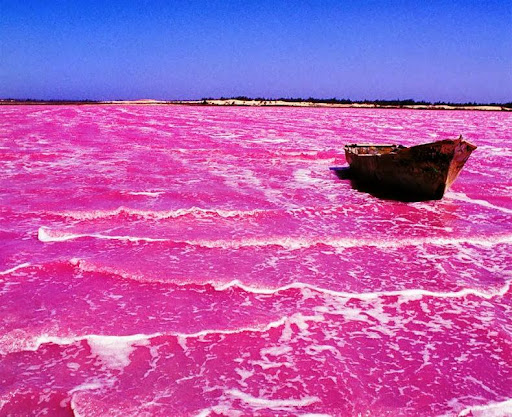
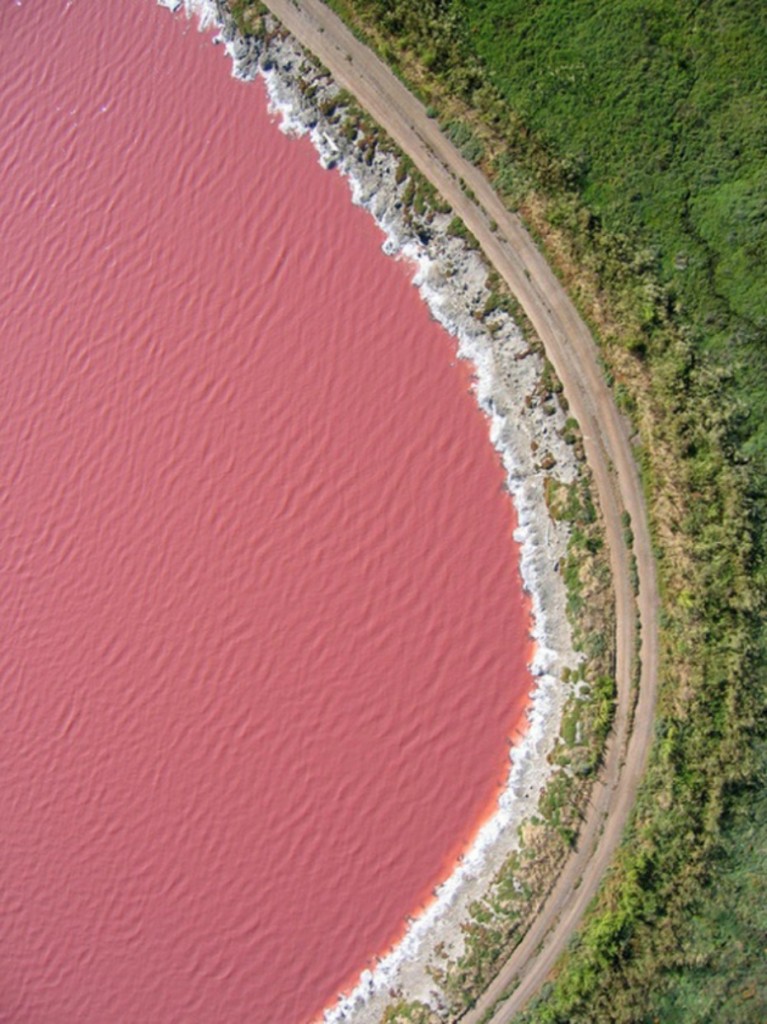
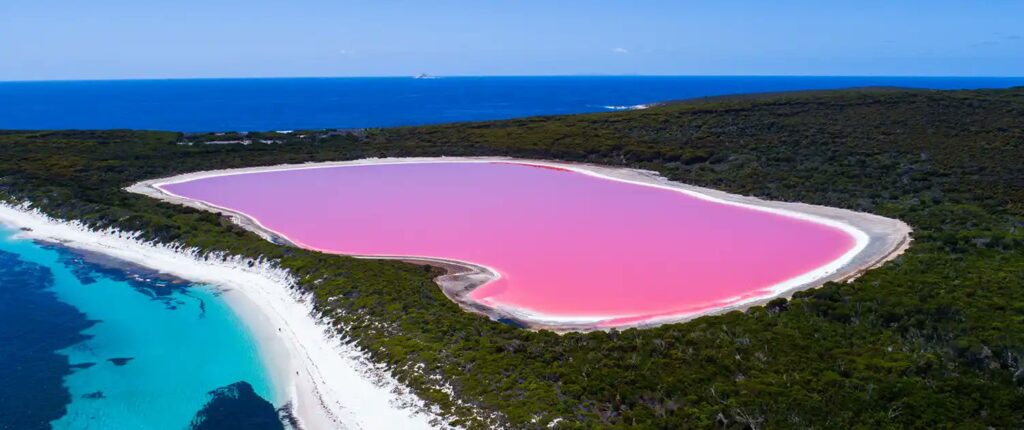
The Pink Lake, also known as Lake Retba lies north of the Cape-Verde peninsula of Senegal, some 30km northeast of the capital, Dakar. The lake is so named for its stunning waters that change color depending on the intensity of the sun and in the dry season. The color is due to a particular species of algae called “Dunaliella Salina” (an algae used in cosmetic and dietary supplements), which produces a red pigment that absorbs sunlight thus giving the lake its stunning appearance. The pink lake is particularly noticeable during the dry season (November to June), which is also the best time to visit Lake Retba. The bacterium is completely harmless to humans and swimming in the lake is allowed
Aerial view of the Pink Lake
The Atlantic Ocean borders the lake, separated from the lake by sand dunes. The lake means different things to different people. To the tourists, it’s a beautiful exotic place to be and gaze at. To the locals, it is a source of livelihood from which their daily food comes from.
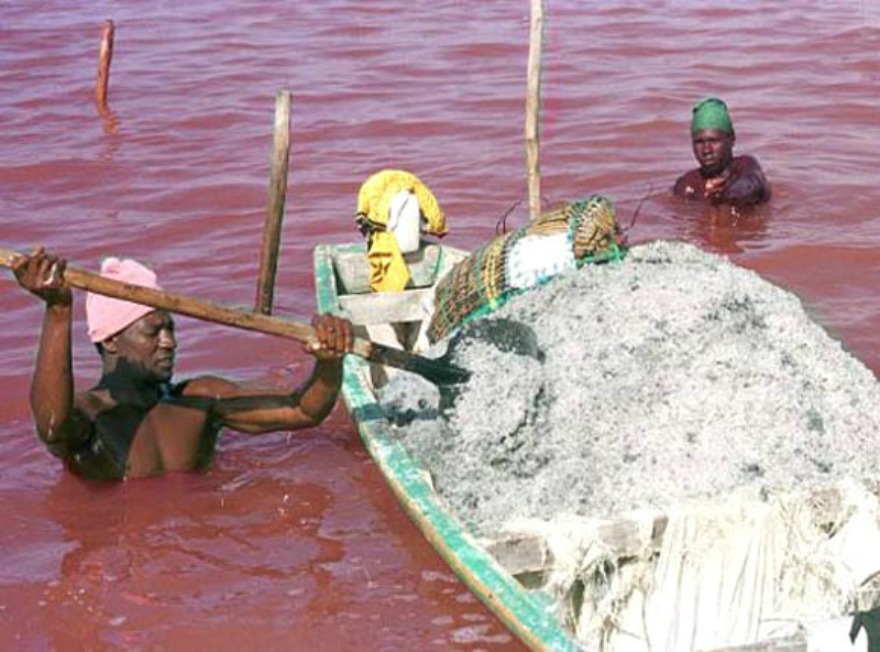
The lake is mainly a tourist attraction and valuable in the production of salt. Lake Retba is known for its high salt content (up to 40% in some areas), which is mainly due to the ingress of seawater and its subsequent evaporation. The locals scoop up the salt with their bare hands from the bottom of the lake, put it in baskets and carry them ashore. To protect their skin from the long hours in the water, the workers use shea butter, known in Senegal for its cosmetic properties and are an emollient produced from shea nuts which helps avoid tissue damage. Salt extracted from the lake is exported across the region and used by locals for preserving fish.
Fishermen extracting salt from the Pink Lake
About 38,000 tonnes of salt are harvested from this lake each year, which contributes to Senegal’s salt production industry. Senegal is the number-one producer of salt in Africa.
Not many living organisms are able to survive in Lake Retba because of its high salt content, so it serves mainly as a tourist point and for salt production.
Local experts are worried that the lake’s salt is being overexploited. Although action has been taken to protect it – the government has banned seashell mining and the lake is now given an annual biological rest – there is still a risk that if the environmental situation were to deteriorate, the effects could be quite severe.
Lake Retba is the only pink lake in Africa and is the largest natural pool of its kind. Its area is about 3 square km, and the maximum depth is 9.8 ft. This natural wonder of the African continent is separated from the Atlantic Ocean by a narrow strip of land rich in vegetation and sand dunes that contribute to its spectacular landscape.
Lake Retba is well known for having been the end-point of the famed Dakar Rally, which has since been relocated to South America and has been a candidate for UNESCO World Heritage status since 2005 and is fast becoming one of Senegal’s most popular tourist destinations on the continent.
Movies entertain as they tickle our emotions. They are also vehicles in which we temporarily escape from our immediate worries. Life has not been a crystal stair so far, but for some reason we know we will get there. For now, let’s get entertained. Locate your TV remote control as Tolulope Omotunde serves up a brief review of five African films from his catalog of excellent films currently trending. You can pick one or binge all.
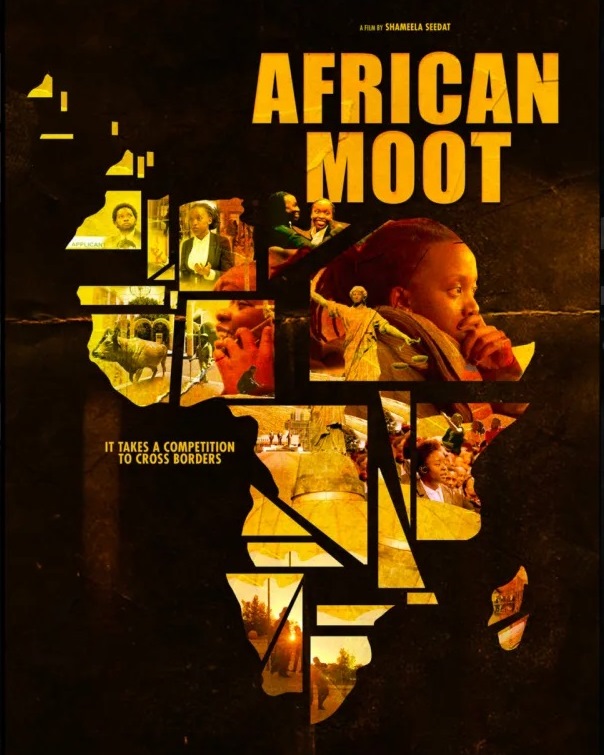
African Moot (South Africa) – A Documentary in which the next generation struts its stuff and learns what it means to fight for a cause.
Human-rights law specialist and filmmaker Shameela Seedat (Whispering Truth to Power) in this fly-on-the-wall documentary focuses on a group of bright, young, aspiring lawyers gathering for one week in Gaborone, Botswana’s capital, to take part in the annual African Human Rights Moot Court Competition. The feature, showcased at this year’s Hot Docs, begins with a very straightforward opening, wherein the helmer alternates archive footage depicting some of the participants in action with a few title cards explaining the moot’s basic rules. Every year, thousands of law students from a number of African universities join the competition, and each university chooses its two best orators to argue a fictional court case. Moreover, the participants will argue the case for both sides – as applicant and respondent. Her film details the interesting ways the students approach the fictional case of a people crossing fictional African borders to escape oppression.
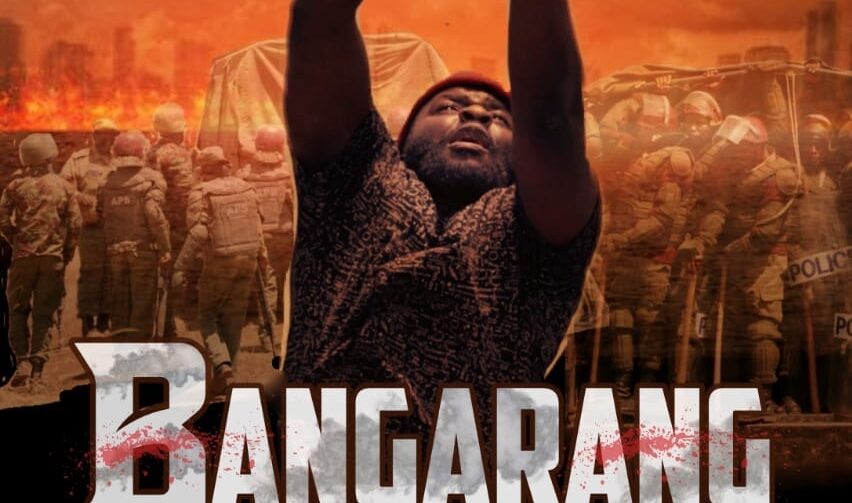
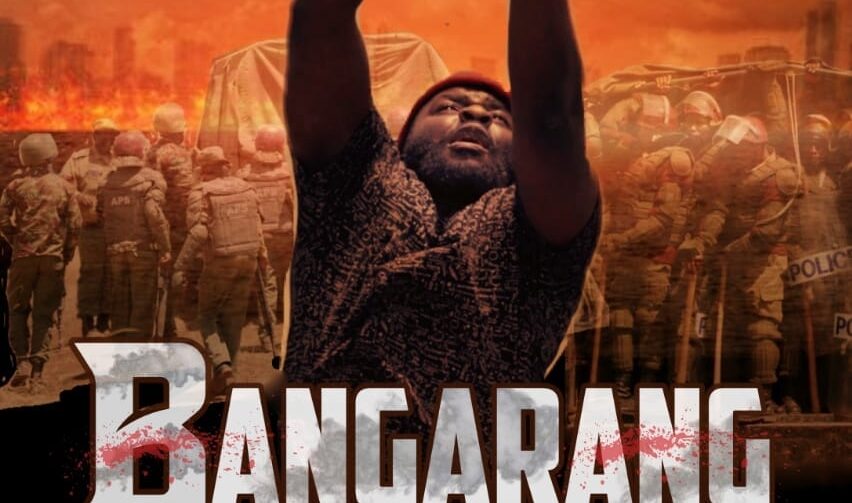
Bangarang (Kenya) – A story based on the life and death of Baby Pendo who was a victim of police brutality.
The film is inspired by true events of the post-election violence in Kisumu, Kenya that led to the death of the six-month-old Baby Pendo. Bangarang’s protagonist, Otile (David Weda) is a graduate of engineering who has failed to secure decent employment a decade after university. He makes a meager living as a bike rider instead. When election violence erupts after the disputed Kenyan presidential elections of 2007, an embittered Otile leads rioters on the streets of Kisumu. Before long, he is on the run from the law, accused of murder.
Collision Course (Nigeria) – The story of a police officer struggling to make ends meet.
A frustrated young man collides with the brutal power of the police force. Can a tormented official stop the descent into carnage? The third feature length title from Nigerian director Bolanle Austen-Peters (The Bling Lagosians, The Man of God) is a propulsive thriller set over the course of 24-hours. Starring Daniel Etim Effiong and Ade Laoye, Collision Course digs into the underbelly of urban crime, law enforcement gone rogue, and the desperate victims that suffer the consequences in Nigeria.
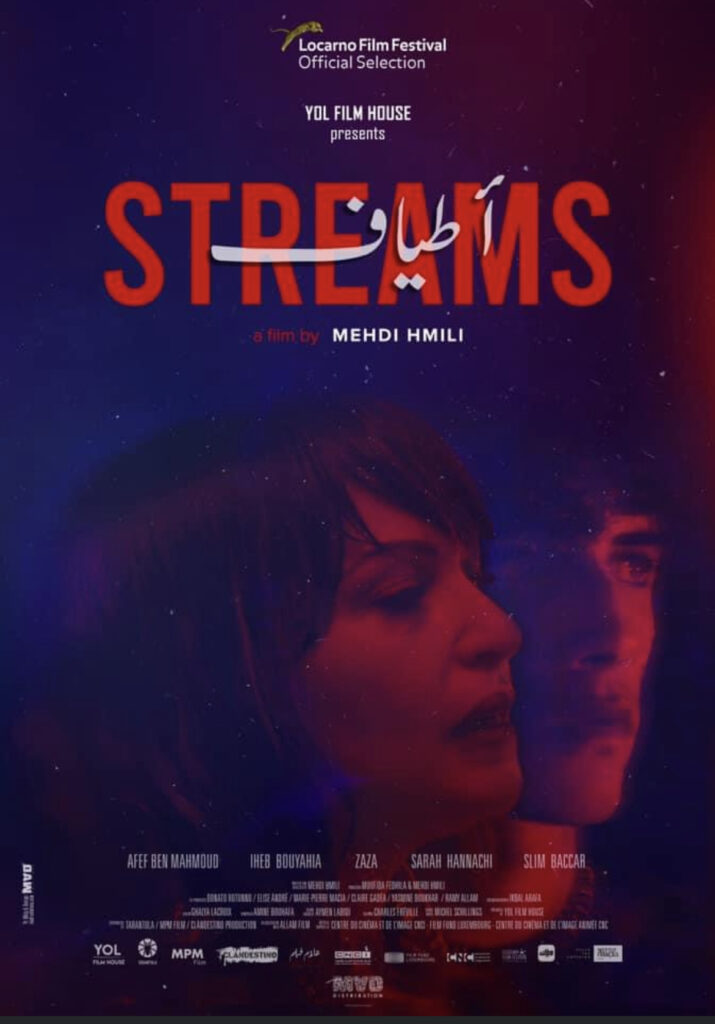
Streams (Tunisia) – A story of broken dreams, abuse and the decay of the Tunisian society.
Amel works in a factory in Tunis. She lives with her alcoholic husband Tahar, a former local football player, and their only son Moumen, a talented teenage football goalkeeper. To convince the boss of the factory to provide her with connections for her son, Amel betrays her fellow workers, who have been organizing a strike. Amel meets the connection: Imed, a wealthy businessman, who takes advantage of the situation and abuses Amel. She surrenders to his advances in order to offer her son the opportunity of a lifetime. But the police catch them. Amel is imprisoned, accused of adultery and prostitution. Moumen is destroyed by the scandal. He becomes violent, stops his football career and starts drinking and taking drugs.
After her release, she searches for Moumen in the lower and violent streets of Tunis. In this long quest for her missing son, Amel has to face the falling Tunisian society.
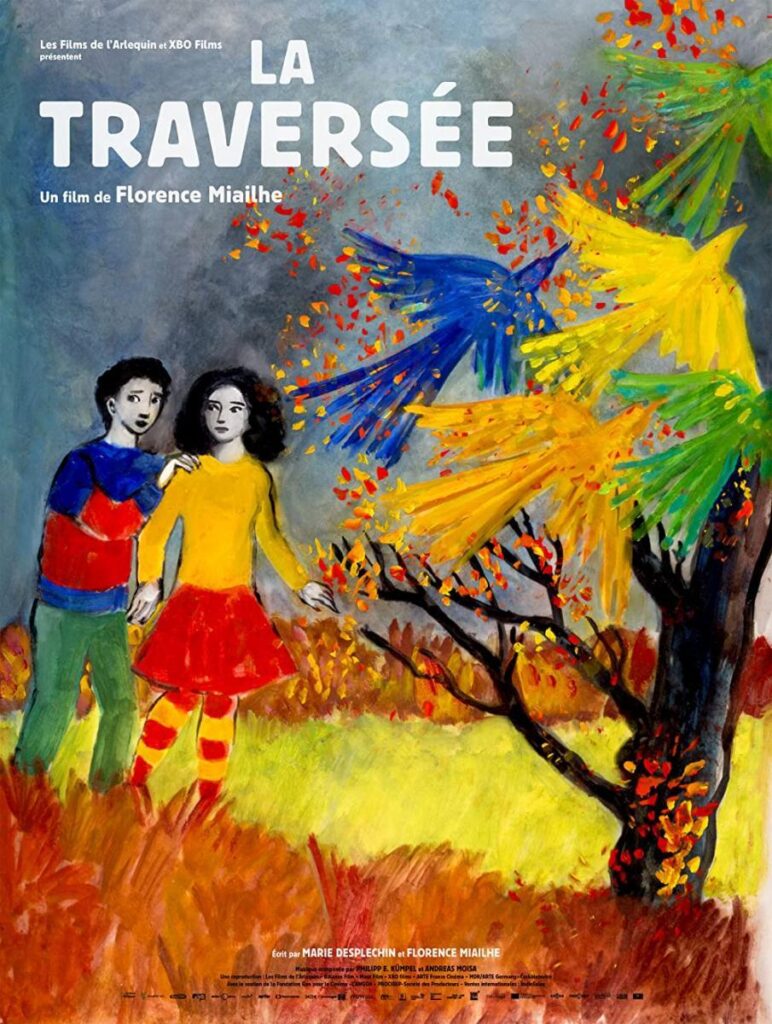
The Crossing (La Traversee) (Burkina Faso)
-A story of migration, guilt, dashed dreams and redemption.
After years in Italy, Djibi, a 40-year old immigrant returns to his native Faso with full pockets but carrying a heavy secret and begins to mentor a group of young people whose sole purpose is to leave for Europe. Djibi prepares them for this crossing through a tasking physical and intellectual program that helps bring them personal achievement and may end up neutering their resolve to migrate. Can he make this difference? Irène Tassembédo’s social drama embraces the complicated nature of the immigration experience.
My first glimpse of the majestic Victoria Falls was from the airplane as I touched down at Livingstone airport in Zambia. The stories I had read and heard about this UNESCO World Heritage Site and one of the Seven Wonders of the Natural World got me all giddy and excited in anticipation of what would be a most memorable experience for me.
After checking in into the Zambezi Sun Hotel in livingstone, which is located on the green banks of the Zambezi River and is only a few minutes walk away to Victoria Falls, i took a glance at my wristwatch and saw it was 6pm already, had a shower, fell into the bed and slept off immediately as i was exhausted from all the traveling i had done in addition to the delays i had at the Livingstone airport upon my arrival.
I woke up around 11pm and started preparing for my trip to the falls the next day. I was so caught up in the excitement of my visit to Victoria Falls that I almost forgot I hadn’t had anything to eat all day bar a quick snack I had in-flight.
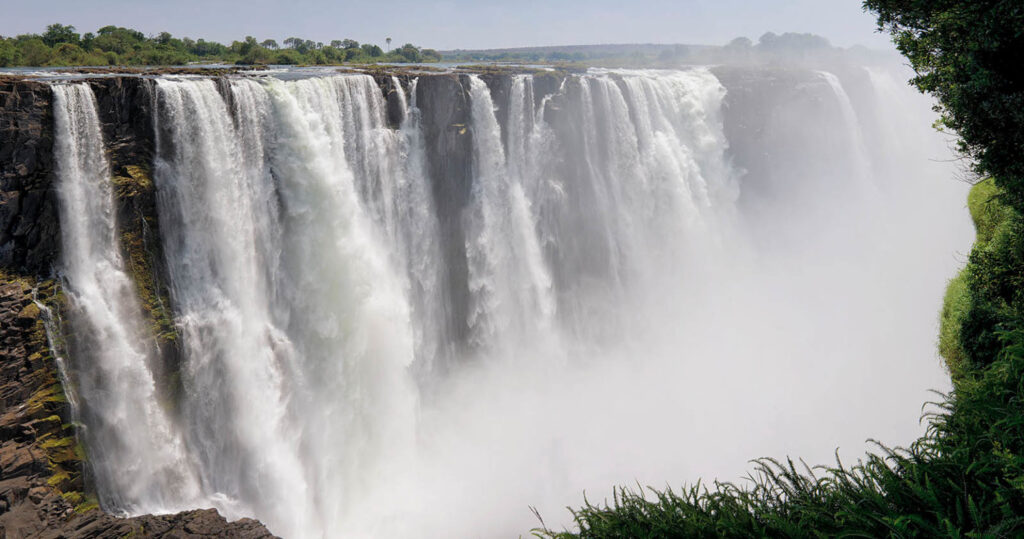
A view of the Falls from the Zambian border. Photo
I headed to the hotel’s restaurant and ran through their menu. I was keen on sampling some native cuisine so I ordered for “Chikanda”, a meat-like delicacy prepared using wild orchids, which are dried and pounded with a thick mixture of groundnuts and chili alongside some “Nshima”, a widely consumed dish in Zambia made from maize and serves as the country’s main staple food.
I retired back to my room and had a few minutes on my laptop before I eventually went back to sleep. Woke up the next day feeling refreshed and ready for my visit to see the Falls. The journey from my hotel to the falls lasted about 10 minutes by foot.
As you walk along, you will be immersed in the sprays and mists of the Falls. You will also encounter the Rainforest that fringes the Victoria Falls while taking-in the sight and sounds of the great River Zambezi as it makes its way down basalt gorges.
The strength with which the water falls is tremendous, and coupled with the heat, causes the evaporation of what looks like a gigantic wall of smoke several meters up in the air (during the rainy season). It was this enormous plume of mist that I could clearly see from the plane on my arrival. It’s no wonder the locals call it ‘Mosi-oa-Tunya’ , the smoke that thunders.
Victoria Falls is the biggest curtain of falling water in the world
In all honesty, nothing prepared me for the spectacular sight of Victoria Falls. Striking doesn’t even begin to describe them. It was like nothing I’d seen before and it beggared belief. Drenched from head to toe in the Zambezi water, I fell in love with this wonder of nature.
After spending two days taking in the sights of the Falls from my current location, I decided it was time to head over to Zimbabwe and see what it would look like from that side of paradise.
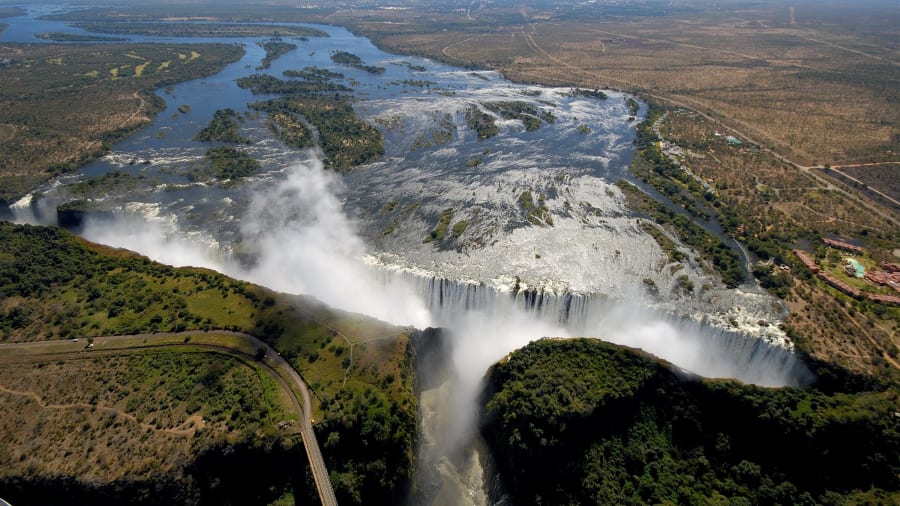
Victoria Falls forms the border between Zimbabwe and Zambia and to cross into Zimbabwe from where I was, I would need to use the Victoria Falls Bridge. Of course one would still need a visa to cross into Zimbabwe and that is issued on arrival as long as the visa that brought you into Zambia is a tourist visa.
Aerial view of Victoria Falls
Viewing the falls from the bridge was also another thrilling experience. I couldn’t spend much time on the bridge though as one has to constantly be on the move due to the amount of human traffic crossing the bridge in both directions, added to the fact the bridge isn’t exactly the widest.
Arriving in Zimbabwe, I stayed in a lovely old colonial-styled hotel where Zebras strolled along the pool and gazelles pranced about in the compound.
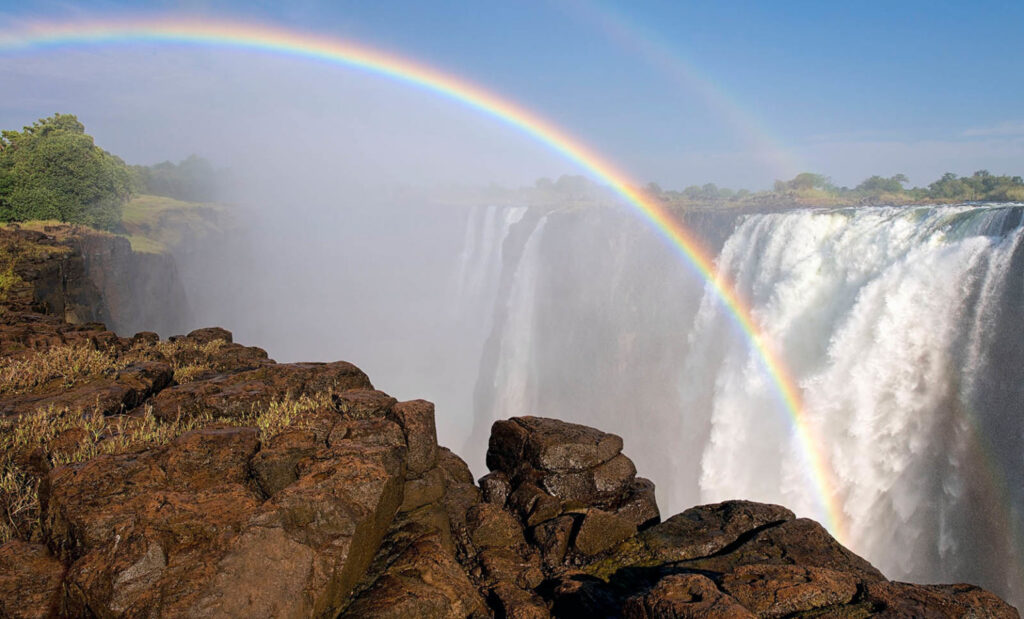
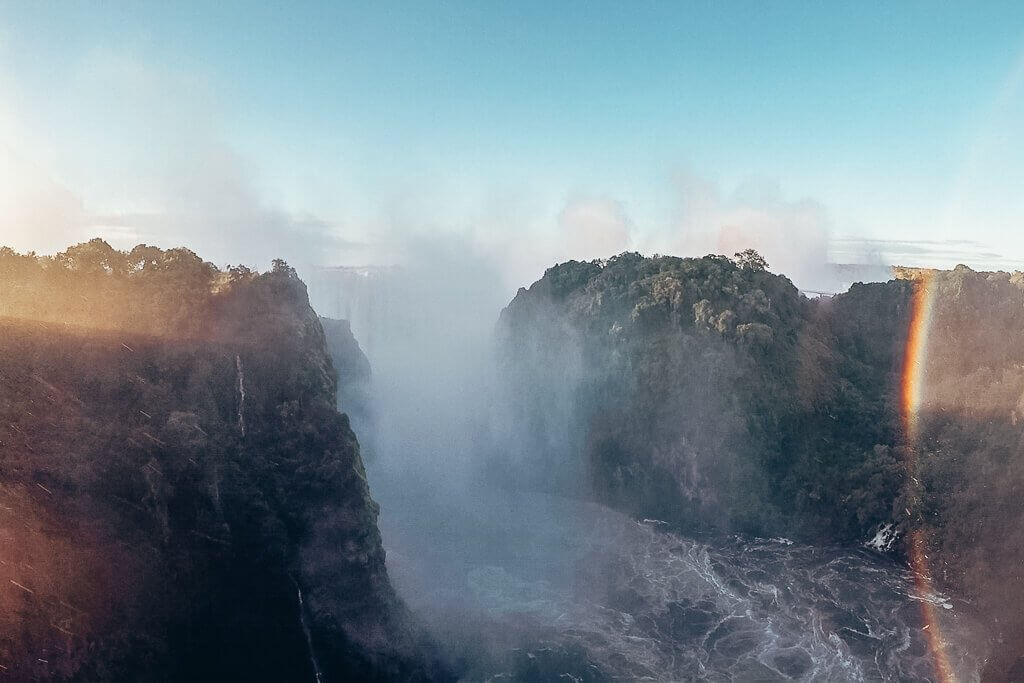
Viewing Victoria Falls from Zambia was an amazing experience and will forever live in my memory, but Zimbabwe was breathtaking. The huge body of water at the foot of the Falls creates a constant rainbow and in some instances, two.
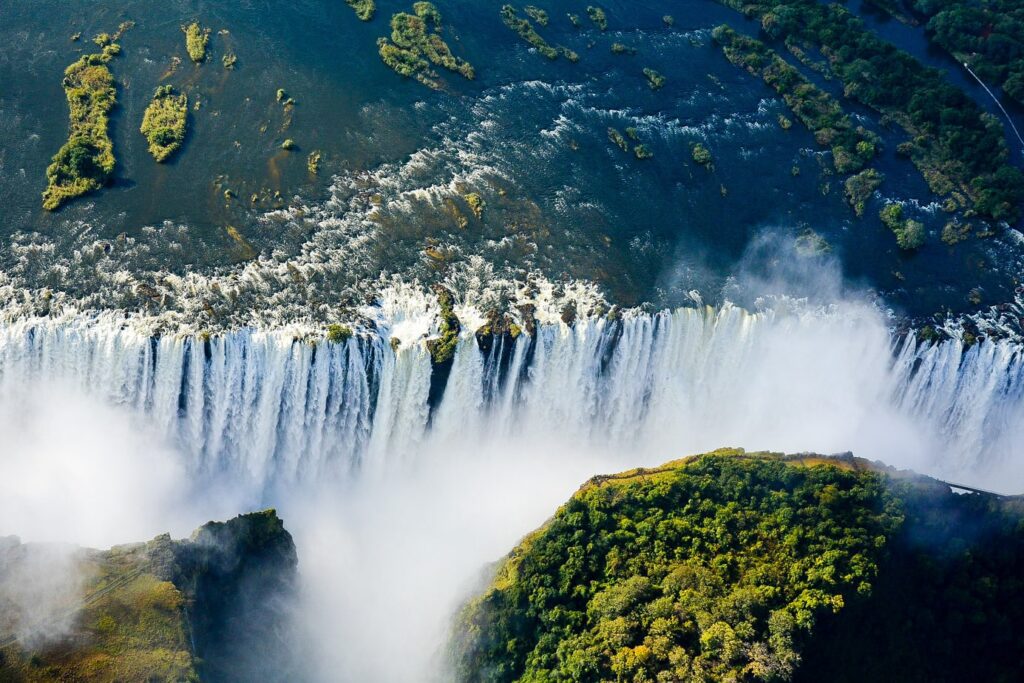
Another aerial view of the falls
As history has it, for centuries local African tribes around the region approached the falls in sacred reverence. In truth, Victoria Falls is so uncanny; so unlike anything else that the reverence in which the locals approach it makes perfect sense.
Victoria Falls is one of the world’s most incredible natural wonders. Locals call this raging expanse of water “Mosi-oa-Tunya,” or “The Smoke That Thunders.” Cascading over the edge of 1.7 kilometers of craggy gorge and plunging 100 meters to the rocks below, the waterfall gives off such a huge volume of mist that the plumes are visible for miles in every direction. The noise of Victoria Falls can be heard from a distance of 40 km and see the mist from a distance of 50 km away. In 1855, Scottish missionary and explorer, David Livingstone was the first European to see the waterfall. He named it Victoria Falls after Queen Victoria who was the Queen of Great Britain at the time.
The view of Victoria Falls from the Victoria Falls Bridge.
While they are neither the tallest (Angel Falls in Denmark) nor the widest falls (Khone Phapheng Falls in Laos) in the world, the falls are classified as the largest in the world due to the sheer amount of water that flows through the edge per minute. Roughly 625 million liters of water flows over the edge per minute making it the biggest curtain of falling water in the world.
The number of tourists like me who visited Victoria Falls was overwhelming. Tourists from all over the world visit the site annually to witness this breath-taking natural wonder. According to the Zimbabwe Tourism Authority over 1.8 million people came to Zimbabwe in 2018 just to visit the site which has been dubbed Africa’s tourist capital.
Victoria Falls is more than enough to merit a trip all the way to Zambia and Zimbabwe. Everything about my trip to see this UNESCO World Heritage Site was exhilarating and left me with immense joy and sorrow in equal measure. Joy because Africa is undoubtedly beautiful, rich and blessed. Sorrow because despite the resources and talent that abounds on the continent we still haven’t been able to harness our riches, resources and culture for the benefit and upliftment of everyone.
The experience of my visit to Victoria Falls will live long in my memory.
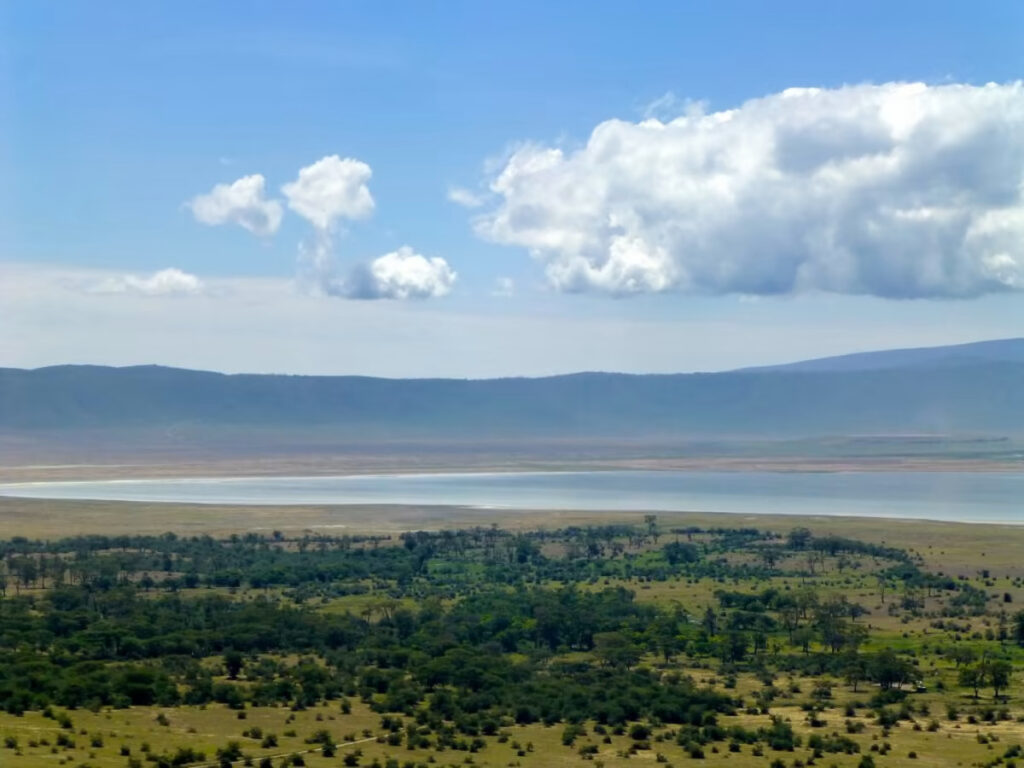
The Ngorongoro Crater is one of Africa’s most famous sites. It is said to have the highest density of wildlife in Africa. Often described as the ‘eighth wonder of the world’, the crater has continued to attract an ever-increasing number of visitors each year. While you are unlikely to escape other vehicles here, you are guaranteed a great and exhilarating wildlife viewing experience in a genuinely mind-blowing environment. There is nowhere else in Africa quite like Ngorongoro.
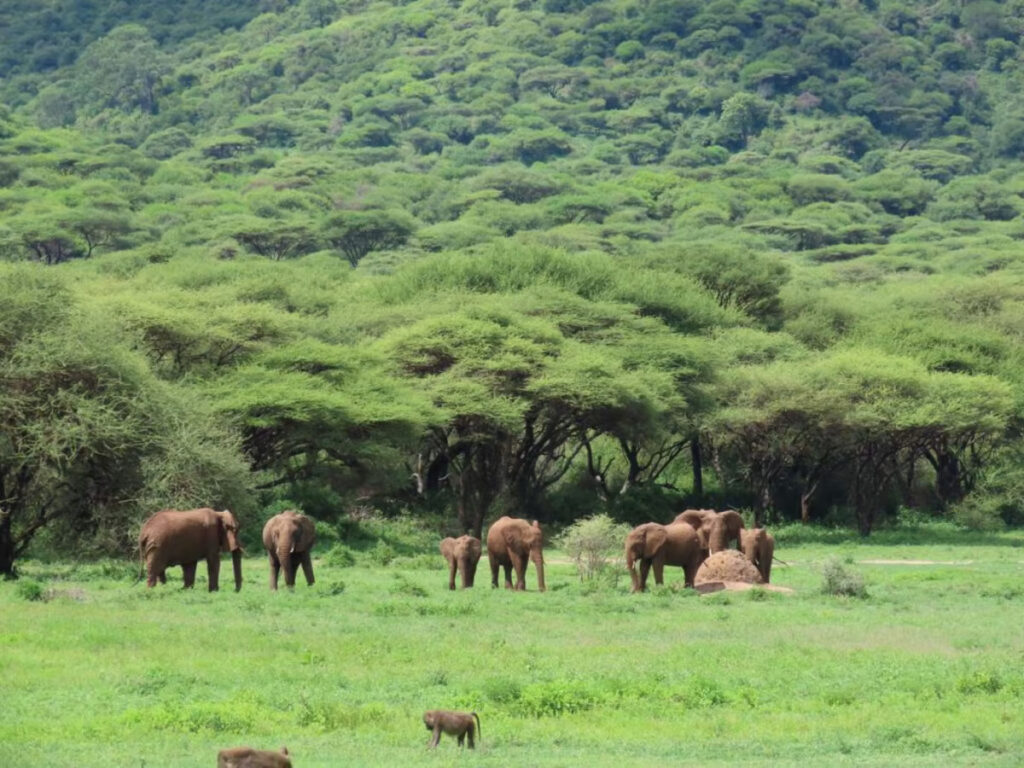
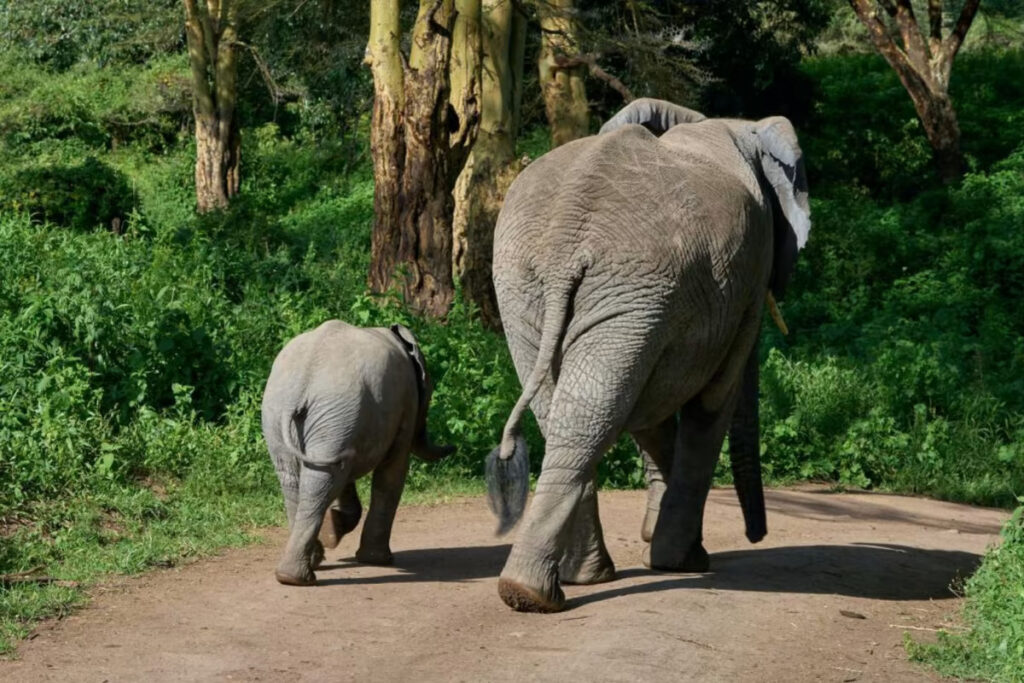
A view of Ngorongoro Crater’s Lake Magadi and Lerai Forest. Photo -RFPAn elephant herd near the thickly forested wall of Ngorongoro Crater. Photo-RFPA mother Elephant and her calf head into the forest along one of the game roads. Photo -RFP
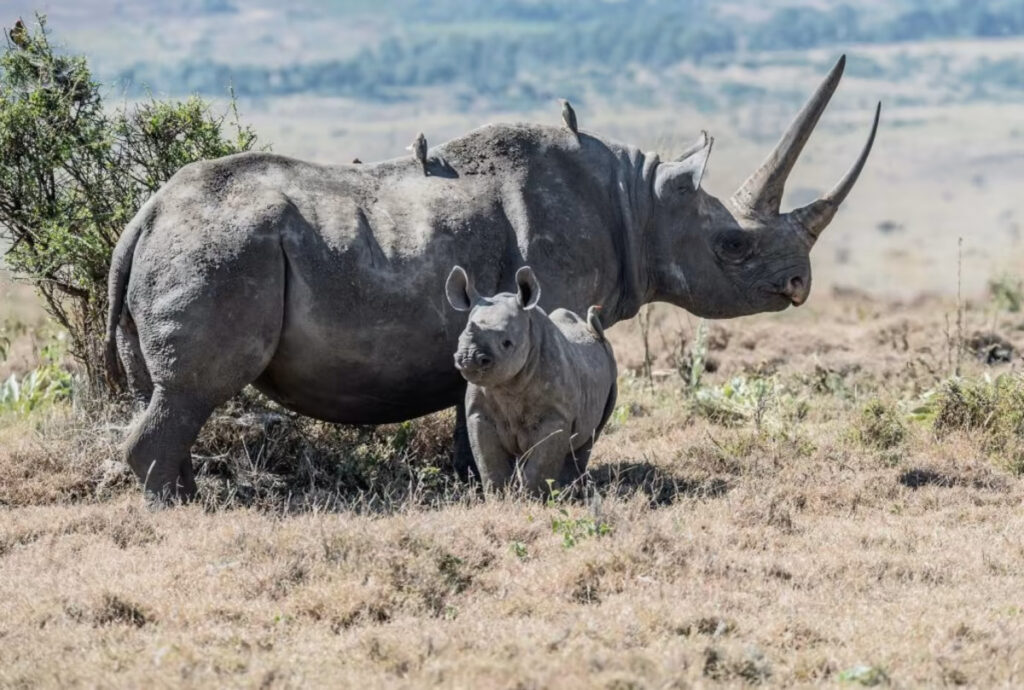
The Ngorongoro Crater is a breathtakingly beautiful setting and the best place in East Africa to see the Big Five (The Big Five is a term that is used to encompass the following wildlife that are commonly found in Africa: The iconic lion; elusive leopard; gentle elephant; hardy rhino; and the powerful African buffalo).
It is a great way to start your African safari adventure if you ever plan to go on one. However, as one of the world’s most astonishing and renowned natural wonders, the Ngorongoro Crater does get busy, and at times very very busy.
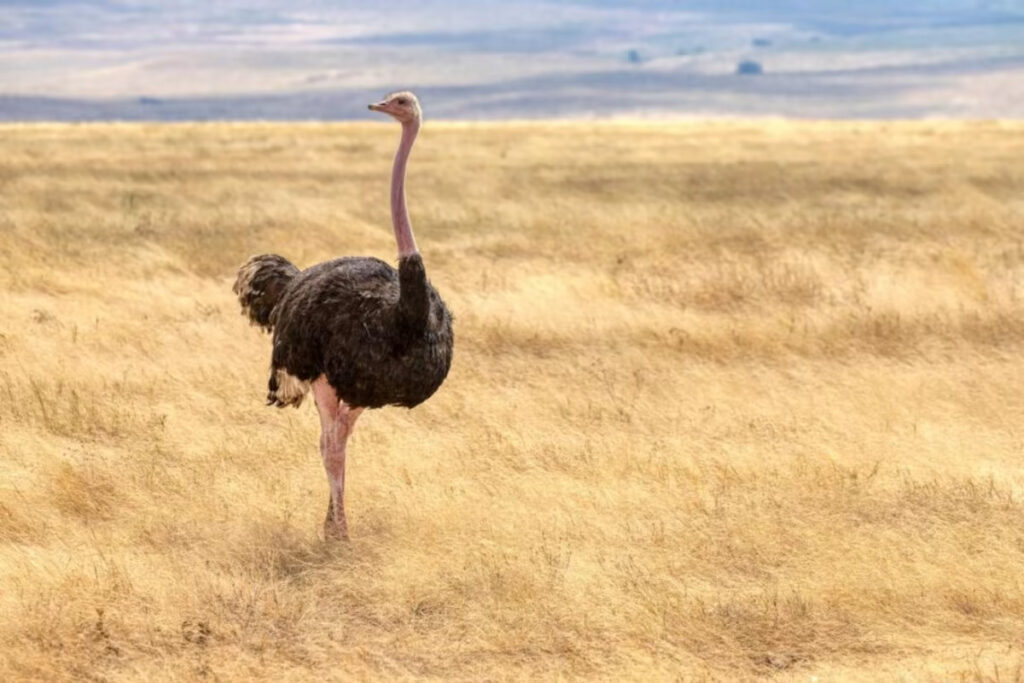
A lone ostrich presents a rather contemplative pose in the browned dry-season grass of Ngorongoro Crater. Photo-RFP
The entire Ngorongoro Conservation Area (NCA) is a UNESCO natural World Heritage site located in the northern highlands of Tanzania. The Ngorongoro crater, the world’s largest intact volcanic caldera, is often referred to as ‘Africa’s garden of Eden’. It is a commonly told anecdote that when Noah left his (Biblical) Ark, he let all the animals he had taken with him disperse from the Ngorongoro crater.
Black rhinos are very easy to spot at the crater as well. Photo -RFP
Some scholars have as a matter of fact even concluded that the ‘true’ Garden of Eden or cradle of humankind must have been located in East Africa.
The crater floor consists of a number of different habitats that include grassland, swamps, forests and Lake Makat (Maasai for ‘salt’) – a central soda lake filled by the Munge River. All these various environments attract wildlife to drink, wallow, graze, hide or climb. Although animals are free to move in and out of this contained environment, the rich volcanic soil, lush forests and spring source lakes on the crater floor (combined with fairly steep crater sides) tend to incline both grazers and predators to remain throughout the year.
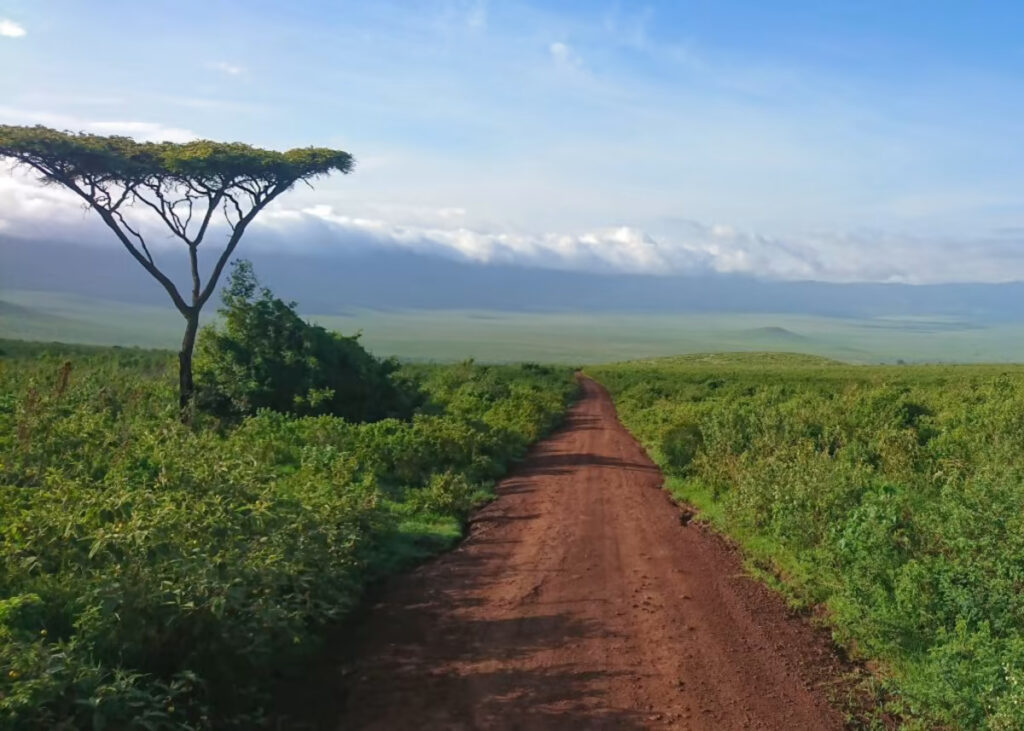
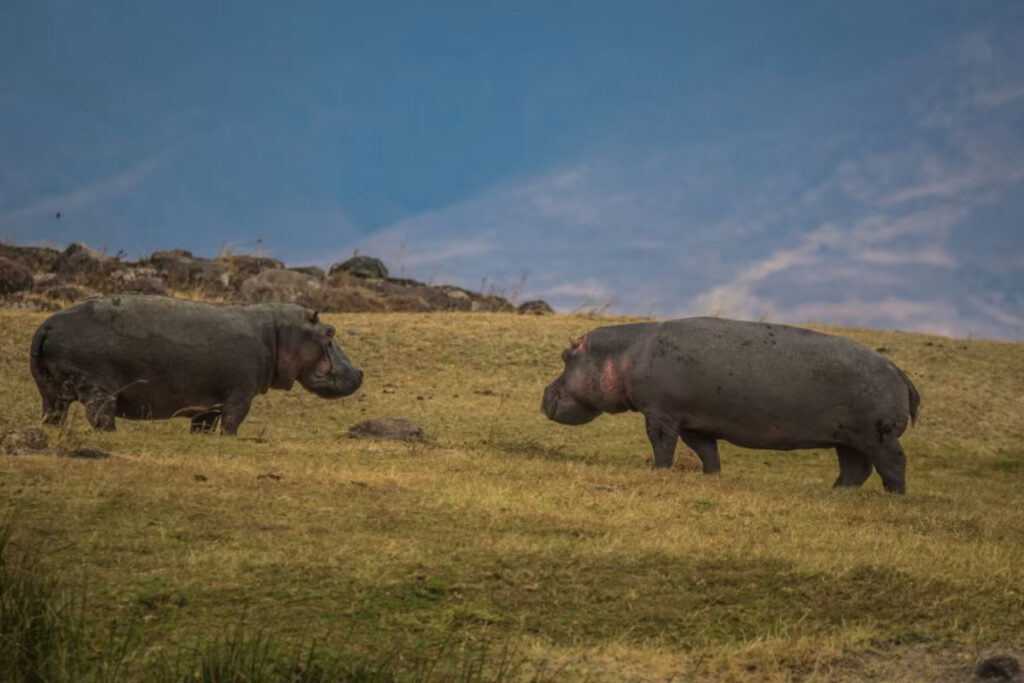
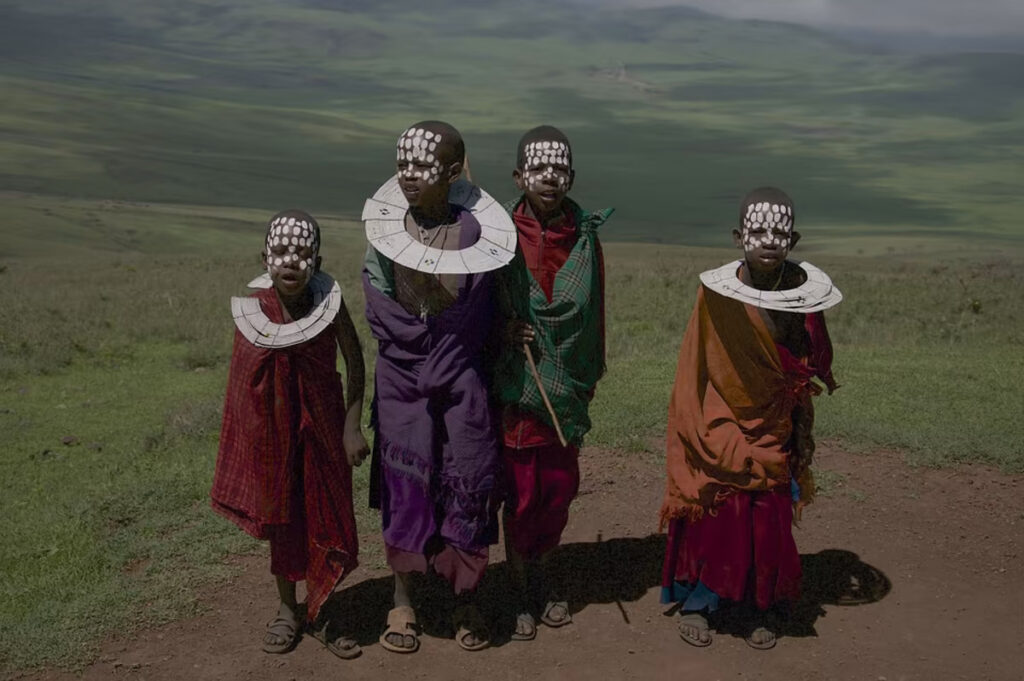
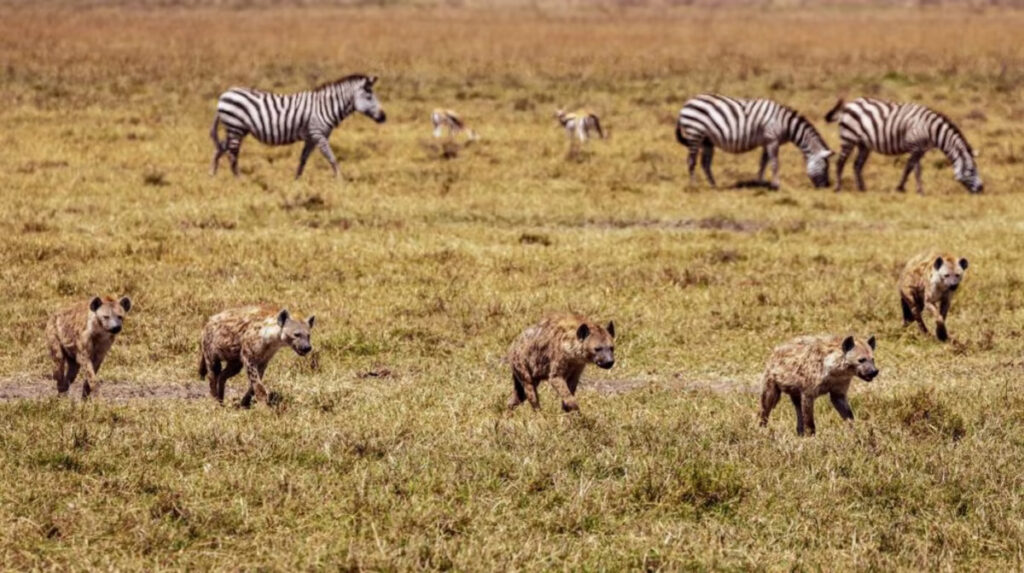
Dirt road through the centre of the Ngorongoro Crater, visitors are only allowed to explore the Crater in a safari vehicle. Photo -RFPHippos are a staple of the marshland ecosystem in Ngorongoro Crater. Photo -RFPHippos are a staple of the marshland ecosystem in Ngorongoro Crater. Photo -RFPMaasai children wearing traditional attire – the girls’ large, flat, beaded collars identify their clan and social status. Photo -RFPZebras, hyenas and gazelles in the grasslands of Ngorongoro Crater. Photo -RFP
Here are 10 great facts about Tanzania’s Ngorongoro Crater
1. The largest unbroken caldera in the world
2. The crater has several different ecosystems
3. The Ngorongoro Crater boasts 300 animal species
4. The crater has the Big Five, but no giraffes
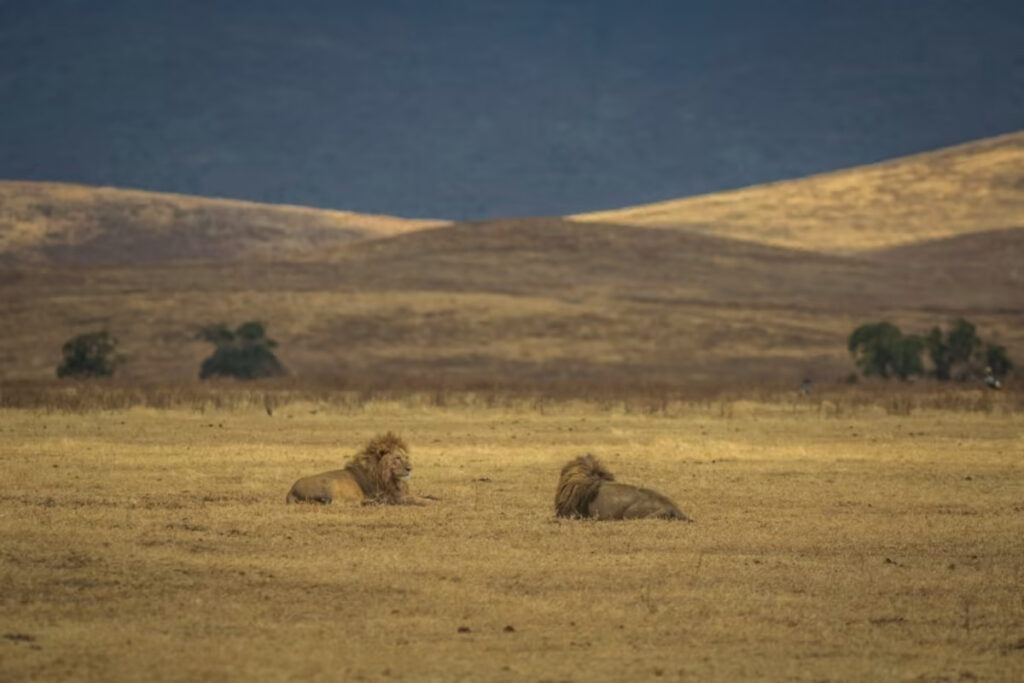
5. It has the world’s highest density of lions anywhere in the world
6. The lions at the crater are the world’s best-studied population
7. Over 550 species of birds can be seen here (Egyptian vulture, Black kite, Martial eagle, Kenya rufous sparrow and a Adbim’s stork are some of the many birds that exist there)
8. Three discrete tribes have historic roots here (Maasai – 97% of the resident population, Datooga – 2% of the resident population and the Hadza – 1% of the resident population are the tribes that have historic roots to the crater)
9. It’s a natural and cultural World Heritage Site
10. More than a quarter of all tourists to Tanzania visit the crater
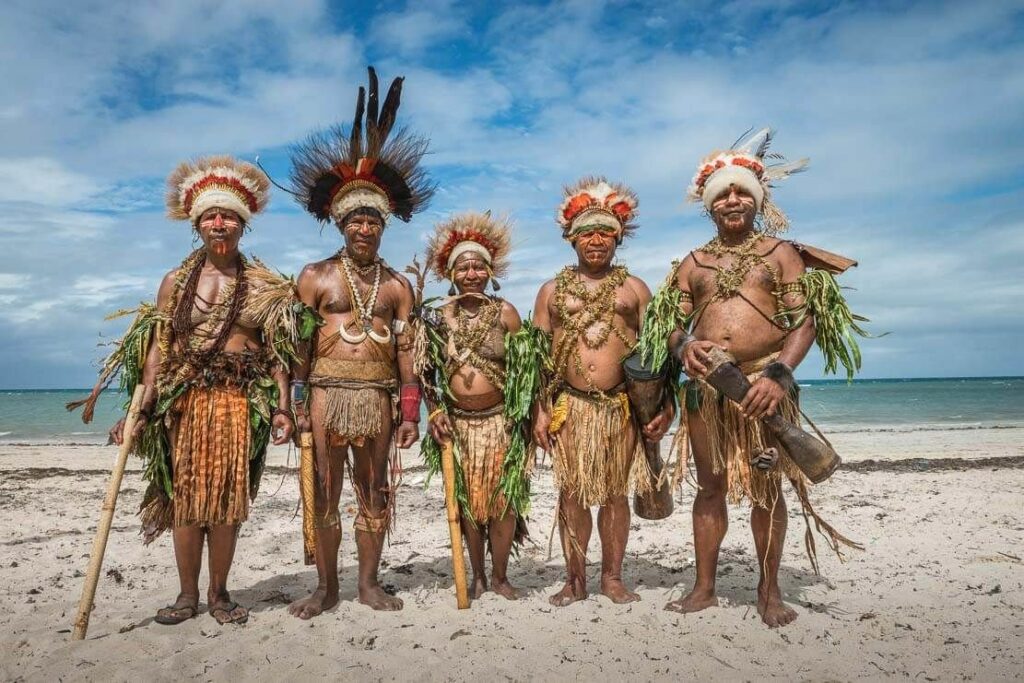
Situated to the north and east of the Australian continent lay the islands known as Melanesia (which means “black islands” in Greek).
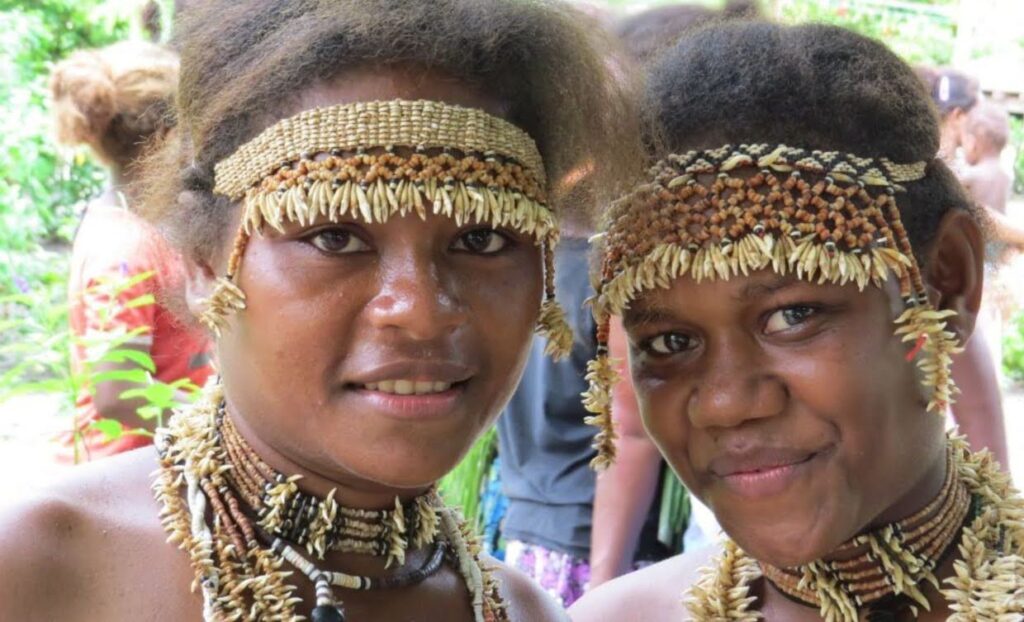
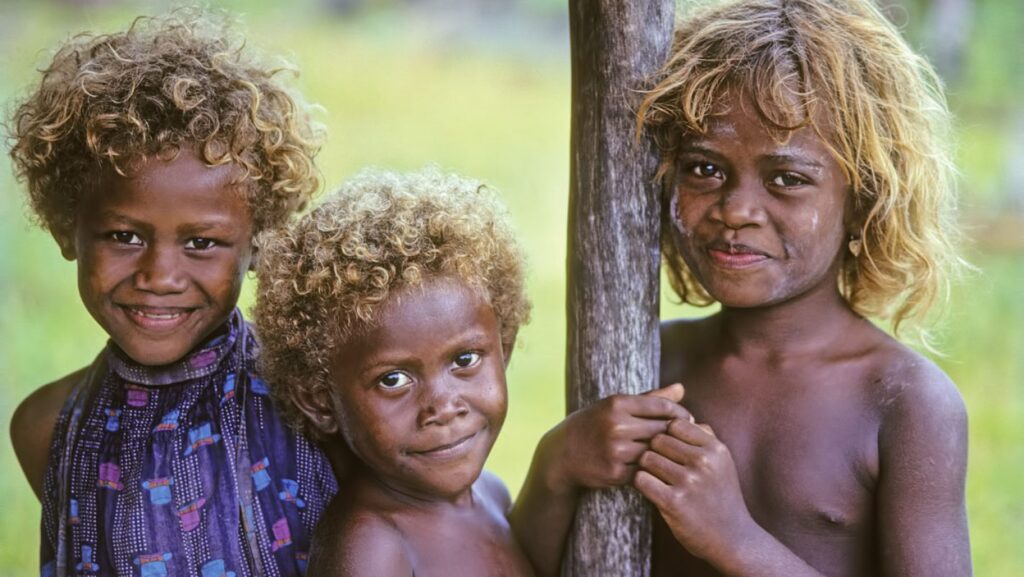
Melanesian Ladies. Photo -science.org
According to the new world encyclopedia website, Melanesia is a region extending from the western side of the eastern Pacific to the Arafura Sea, north and northeast of Australia. It consists of 2,000 islands with a total land area of about 386,000 square miles (one million square kilometers), and is home to about 12 million people. These islands have been inhabited for tens of thousands of years.
The term “Melanesia” was first used by French explorer Jules Dumont d’Urville in 1832 to denote an ethnic and geographical grouping of islands distinct from Polynesia and Micronesia.
Although the prehistory of most of the Melanesian islands has not been fully documented, evidence suggests that the cultural, linguistic, and political fragmentation that prevailed at the time of European arrival, with a half-dozen languages and cultures often represented on a single island, was partly a product of transformation that had occurred during the previous 2,000 years.
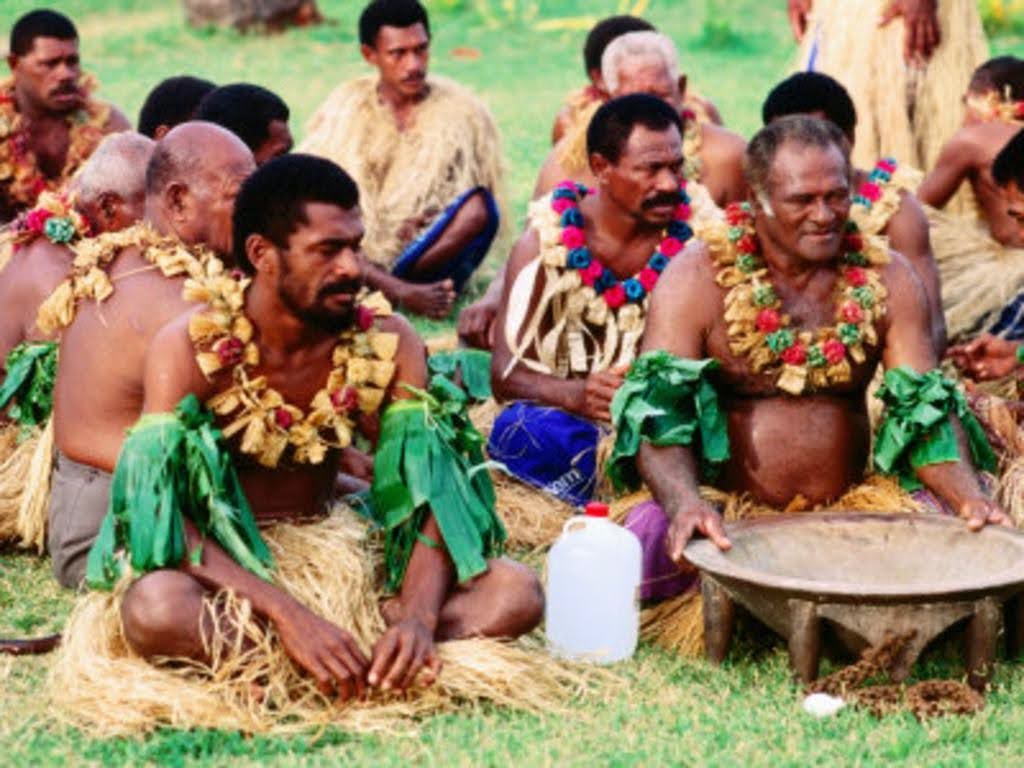
Melanesian children. -Photo-CoconetTV
Other accounts suggest the original inhabitants of the group of islands now named Melanesia were likely the ancestors of the present-day Papuan people. The region comprises the countries of Vanuatu, Solomon Islands, Fiji and Papua New Guinea. The indigenous Melanesian populations are thus often classified into two main groups based on differences in language, like Papuan-speaking and Austronesian-speaking groups, culture or genetic ancestry.
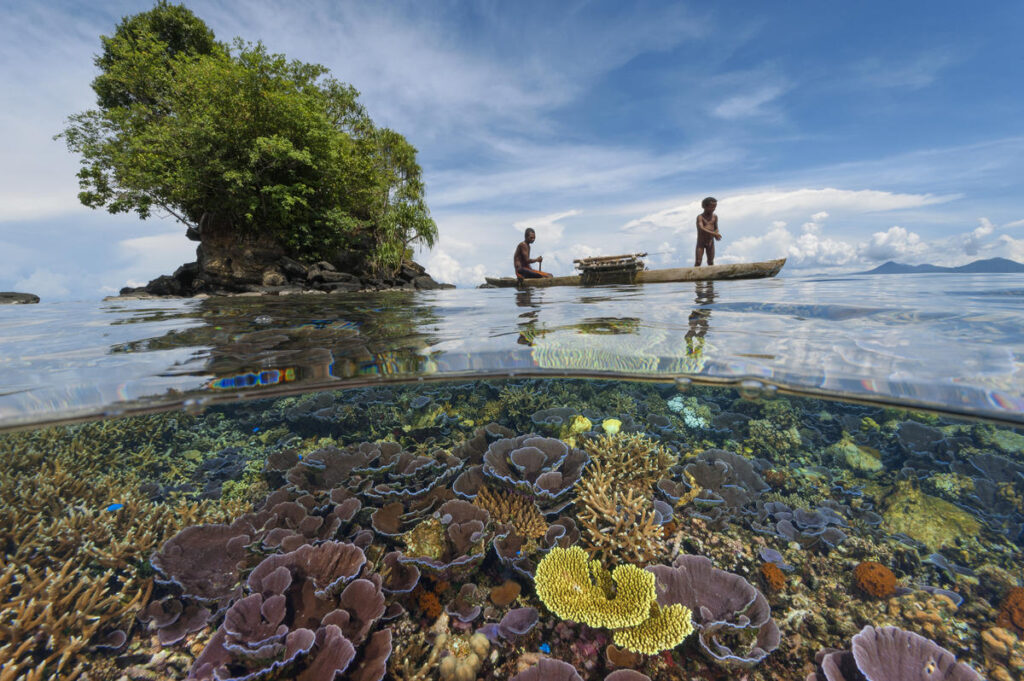
Melanesia as it stands today is one of the world’s biodiversity hotspots, with distinct and unique species found from the world’s largest and highest tropical islands, through one of the most biologically rich oceanic archipelagos on Earth, to isolated oceanic islands with impressive proportions of unique species. Among its many biological assets, Melanesia hosts one of largest remaining rainforest areas in the world in Papua New Guinea, where an estimated 9% of global terrestrial biodiversity occurs in less than 1% of global land area.
A picture depicting the beauty of the Melanesian coral reef. Photo- science.org
The Melanesian culture dictates a very strong duty to care for the environment from the top of the mountains to the seas, and recognize and respect that the persistence of cultural practices depends on healthy resources built on the foundations of rich Melanesian biodiversity. According to Britannica.com, in many areas of Melanesia, local groups live in scattered homesteads and hamlets rather than villages. Often these settlements are occupied for short periods until the groups move on to follow cultivation cycles.
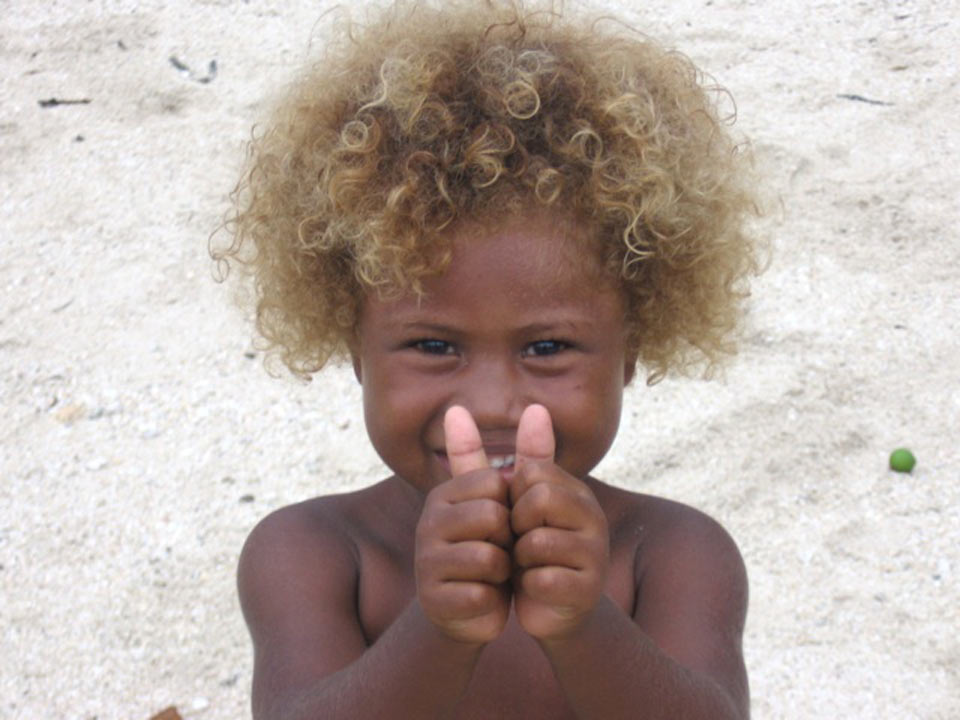
The physical characteristics of the Melanesian people include dark complexion, brown to blond hair, and long, narrow noses. The discovery that the Melanesian people occupying the mainland of West Papua and its surrounding small islands speak differently from each other literally is mind-blowing. Which makes one wonder how come the small scattered islands that make up Melanesia have hundreds of traditional languages. Although the Melanesian languages are on the whole in the same root, named Papuan, the words and accents are pretty dissimilar and a key reason why each village carries its own language is due to the geographical isolation and social disconnection as well.
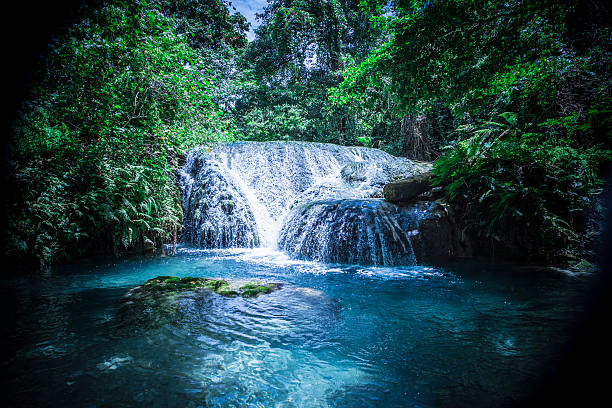
Another beautiful sight from the Melanesian region. Photo-istockphoto
The Melanesians living in Eastern Indonesia mostly practice Christianity, in contrast to the Malay and Javanese people in the Western part of the archipelago, who mostly practice Islam. Until recently, the indigenous Melanesian people practised cannibalism, head-hunting, kidnapping and slavery like the Asmat tribe, but with contact with Europeans, the population is now predominantly Christian. However, a minority still practice the ancient rural lifestyle.
The Melanesian people are very religious and cling tightly to their conventional customs inherited by their ancestors. Melanesian religious cultures have always been associated with animism practice. Although a good number of them are been increasingly converted to Christianity, the traditional religions of which ritual is worshiping the animist spirits can still be seen in the entire West Papua and the highland regions. Pigs, Bulls and Goats are the most common animals often presented for these offerings.
The pressures of Christianisation and Westernisation have ingratiated the indigenous people of Melanesia to become part of the world economic system. Majority of Melanesia’s wealth is driven by extraction of the region’s abundant natural resources. The combination of resource commercialization and loss of indigenous traditional practice have weakened their revered customary management systems, resulting in unsustainable farming, hunting, and fishing practices.
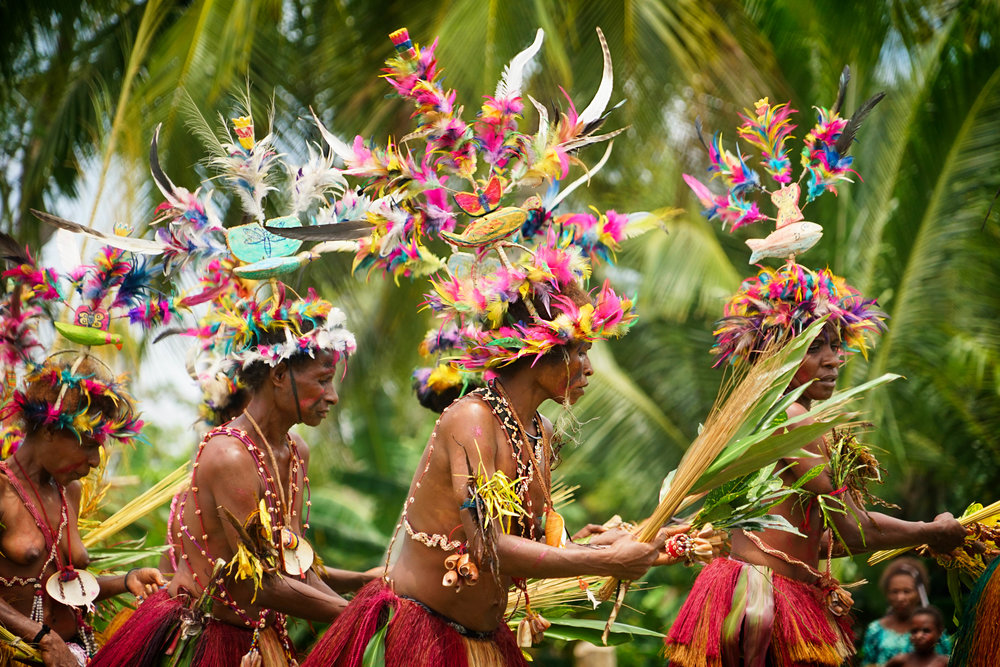
A Melanesian cultural festival. Photo -travel.org
By the early 21st century, even the most remote regions had become accessible and transformed. Also, different Christian denominations, and even individual missionaries, have in varying degrees been sympathetic to and knowledgeable about the local languages and cultures. Together, extensive missionary works and the imposition of colonial rule on the entire Melanesian region eliminated a variety of cultural norms and traditions, some of which were quite intricate and rich and others of which were violent, crude and exploitative.
In some Melanesian cultural traditions, carvings and other art forms had strong religious significance. Masks, which were a focus of creativity in several regions, were often used in elaborate ceremonies, with masked figures impersonating mythical beings or dramatizing cult secrets. Many peoples, however, decorated virtually every object not immediately discarded, however utilitarian.
A common misconception people the world over have about Melanesians is that they are blacks who all spot blond hairs. Now while that is true for a vast majority of the Melanesian population, a good number of them are no different from blacks who are of African descent with short, black hairs and skin tone to boot.
A group of Melanesian chiefs. Photo – pacifictravel.com
Hypotheses about the origins of this blond hair have included bleaching by sun and saltwater, a diet rich in fish, and the genetic legacy of Europeans or Americans. But a new study according to science.org fingers a random mutation instead, suggesting that blond hair evolved independently at least twice in human history. And other novel genes, including ones with serious health consequences, may await discovery in understudied populations.
Melanesia today is a vibrant and extremely dynamic region, rich with people and resources not seen in other parts of the world. However, political struggles, poverty and other social issues found in other parts of the world continue to impact its day to day life. Today, the population of Melanesia is approximately 10,000,000 people who live, work and participate in the global economy while still maintaining deep cultural traditions that distinguish them from their Pacific Island counterparts.
There have been widespread calls for Australia to open its doors to Melanesia, similar to the sort of relationship the United States of America shares with Mexico and the Caribbean and Central American region.
A group of Melanesian. Photo – pacifictravel.com
Graeme Dobell, a journalist fellow at the Australian Strategic Policy Institute asserts that “We’ve got many links to Melanesia, but opening our doors to Melanesians is a neighborhood task that’s just getting started. What presents as a foreign-policy challenge is really about letting Melanesians into the life of Australia. He states further that “opening our doors means offering the Melanesian arc some part of what we already give—by default—to much of Polynesia”. That’s primarily because New Zealand is in charge of picking most of the islanders who can live permanently in the Oz. Polynesians enter and settle in Australia, coming in via New Zealand.
Irrespective of whether Australia opens its doors to them, the Melanesian people are definitely content with their lives and continue to pique the interest of observers all over the world due to their unique nature—one they are determined not to lose no matter what.
Newsletter Signup
Subscribe to our weekly newsletter below and never miss the latest news and updates.