A Colorado state senator was killed in a recent multi-car crash that left three others injured.
Democrat Sen. Faith Winter was the sole victim in the five-vehicle pileup that shut down a portion of the highway in the city of Centennial just after 6 p.m., the Colorado Democratic Caucus announced.
“We are devastated to learn of the passing of our colleague and friend, Senator Faith Winter. Today, our caucus grieves the loss of a dedicated public servant whose commitment to the people of Colorado never wavered,” Colorado Senate President James Coleman and Majority Leader Robert Rodriguez said in a joint statement.
The fatal wreck happened on Interstate 25 near E Dry Creek Rd, 16 miles southeast of the statehouse in Denver. Three others were injured in the crash but the Police did not reveal the conditions of the others involved.
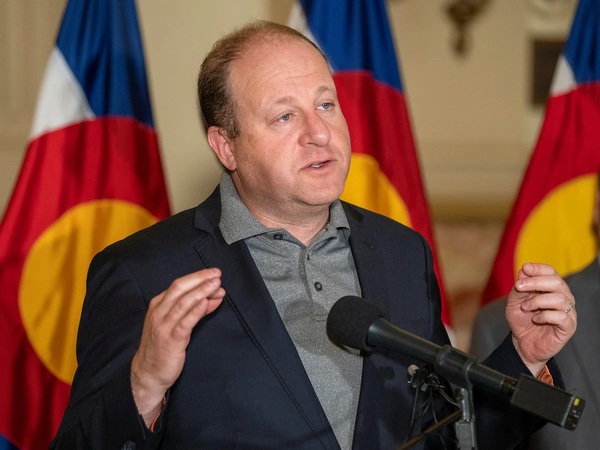
Colorado State Sen. Faith Winter speaks at a press conference at the Colorado State Capitol Building in Denver early this year. Photo -Denver Post
The 45-year-old politician was first elected to the statehouse in 2014 as a member of the Colorado House of Representatives.
She was voted to represent Colorado’s 24th Senate District in 2019, defeating Republican incumbent Beth Martinez Humenik.
Since 2023, Winter represented the 25th Senate District after redistricting and was named the Assistant Senate Majority Leader, the third-highest-ranking member in the chamber.
A deep dive by Tolulope Omotunde of Afrik Digest Magazine has revealed troubling patterns behind Nigeria’s recent surge in kidnappings and terrorist activities, revealing a complex mix of insecurity, political calculation, and fragile state mechanisms.
In the last fortnight alone, armed men abducted 25 female students from Government Girls Comprehensive Secondary School in Maga town, Kebbi State, killing two staff members, including the Vice Principal. Just days later, over 300 students and teachers were taken from St. Mary’s Catholic Primary and Secondary School in Papiri, Niger State, though 50 students managed to escape. Some weeks prior to that, a church in Eruku, Kwara State was attacked in which several members were left dead and others kidnapped.
While the nation has recently had cause to breathe a sigh of relief over the rescue of some students, there’s a school of thought that believes that these attacks are more than random criminal acts—they reflect a calculated exploitation of government weaknesses, negotiation dynamics, and, disturbingly, political interests.
Nigerian President Bola Tinubu has seen his administration come under serioius fire for Nigeria’s worsening security crisis. Credit-Aegis
For years, journalists, activists, observers, and many citizens have complained about the Nigerian government’s lack of urgency in dealing with the terrorism that has rocked the majority of the country. Since 2011, Nigeria has been consistently ranked in the top ten of the Global Terrorism Index (GTI), and rose up two spots to sixth place on the latest edition.
The last few weeks have brought arguably the highest attention to Nigeria’s gross insecurity crisis, since the 2014 abduction of the 276 Chibok girls that sparked the international outcry of ‘Bring Back Our Girls.’ This time, however, the catalyst is an alleged Christian genocide, a narrative being led by U.S. President Donald Trump. Earlier this month, the Trump administration designated Nigeria a “Country of Particular Concern” (CPC), alleging that the Nigerian government was doing little to curtail Islamist insurgents from attacking Christians.
In a social media post before the designation, Trump stated that the U.S. “may very well go into that now disgraced country, guns-a-blazing,” threatening military action. On Thursday, November 20, the U.S. Congress Subcommittee on Africa held a hearing on Nigeria’s CPC status, but it could not reach a consensus on whether the claim of a Christian genocide is fitting for the crisis.
It is factually correct to state that hundreds of Christians have been killed by armed insurgents in the last decade-plus, many in their places of worship. Just recently, at least two people were killed at a Christ Apostolic Church in Eruku, Kwara state. Perhaps the most gruesome in recent memory was in June 2022, when armed men opened fire into St. Francis Xavier Catholic Church in Owo, Ondo state, in the country’s southwest, far from the northern region where terrorism happens the most.
Eleven years before that, a suicide bomber detonated a car outside St. Theresa Catholic Church in Madalla, Niger state, an attack that killed at least 40 people. Boko Haram was responsible for the attack, as well as another in February 2012, when another suicide bomber drove a vehicle filled with explosives into the Church of Christ in Nations (COCIN) in Jos, Plateau state.
However, to frame Nigeria’s insecurity issue as a Christian genocide is reductive. That narrative simply oversimplifies the core issues that a typical Nigerian faces. In all of the violence that’s happening across these regions, it’s glaring to see that everybody falls victim to these events. Contrary to what a lot of people believe, majority of the communities in Northern Nigeria are religiously mixed, so when the narrative that a particular community has been targeted and that people from a particular religion are the main victims, it tends to complicate the understanding of the conflicts that Nigeria is currently facing.
The crisis is complex, with multiple actors and factors. Boko Haram, which has splintered into factions, based the beginning of its terrorist attacks on opposition to Western education. Armed groups, primarily operating in the northwest, ventured into kidnap-for-profit, a business that Islamist insurgents have also joined in on. Across the middle belt region, farmer-herder conflicts over resources have escalated into massacres, with roots in ethno-religious conflicts dating back to the early 2000s and even further back to pre-independence.
It is factually correct to state that hundreds of muslims have been killed by armed insurgents, considering that the northern parts of Nigeria are majority muslim. Some of the fatalities have also happened in places of worship. More than 80 people died after two suicide bombers detonated at the Kano Central Mosque in November 2014. Just over three years later, 86 were killed in a twin suicide bomb attack at a mosque in Mubi, Adamawa state, just six months after 50 were killed by a suicide bomb in a mosque in the same town.
Meanwhile, recent analysis shows that kidnapping in Nigeria has evolved into a lucrative economy. Armed groups manipulate fear, exploit gaps in security, and use negotiation as a revenue stream. The cycle is sustained because responses are inconsistent, sometimes delayed, and occasionally entangled with political agendas.
Further research indicates that political narratives play a pivotal role in how kidnappings unfold and are perceived. Analysts argue that abductions in schools or religious centers are sometimes leveraged to project claims of persecution, potentially influencing international attention and intervention. At the same time, other attacks highlight gaps in government capacity, undermining public confidence and feeding narratives of insecurity ahead of the 2027 general elections.
A picture of a terrorist sect that has terrorized large parts of Northern Nigeria. Credit-BBC
The rapid release of abducted students under non-kinetic military strategies, coordinated by the Office of the National Security Advisers (ONSA), has further fueled speculation about government complicity or political calculation. Armed groups themselves have posted on social media claiming that federal authorities negotiated the students’ freedom, adding to public suspicion.
Various security analysts believe that the country faces multiple, evolving threats from splintering criminal and terrorist networks. The scale of attacks shows Nigeria is no longer dealing with a single insurgency. These actors are rebranding and reorganizing, making them far more dangerous.
The President Bola Tinubu-led administration has moved to address recent security gaps. These measures include:
– Establishing 24-hour security cordons around forests in Kwara, Kebbi, and Niger States.
– Redeploying police officers from VIP duties to frontline security.
– Directing the Nigerian Air Force to intensify aerial surveillance of remote forested regions.
Security agencies have already rescued 38 worshippers in Eruku, Kwara State, and 25 schoolgirls in Kebbi State. Additionally, a five-year counter-terrorism strategy (2025–2030) has been unveiled, aimed at modernizing security architecture and enhancing national resilience.
A lot of people have cast doubts on the effectiveness of these directives as they believe they have heard the same lines over and over. Soldiers on the frontline have lamented about poor welfare and being underequipped to deal with terrorists, despite millions of dollars allocated in the yearly budget. With little to no accountability, it means military leaders and government officials loot a significant portion of the funds meant to combat terrorism.
Similar to former President Buhari, current President Bola Tinubu has been rather tepid in his response to the rampant insecurity in Nigeria. Perhaps, renewed agitation in the last few days could spur some positive action. However, there’s the possibility that the government is waiting for things to dial down. Even now, it has blamed the recent surge of violent activity on attention from the U.S., with a government official claiming that Trump’s threats have “inadvertently emboldened opportunistic violent groups.”
For Nigeria to finally take decisive action, the government must move beyond deflection and political posturing, committing to radical and comprehensive security sector reform. This includes ensuring strict accountability for the billions allocated to the military budget, prosecuting officials and commanders implicated in the diversion of funds, and ending the impunity that has allowed military abuses and war crimes to fuel public distrust and sympathy for insurgents. Only by addressing the root causes of the crisis — corruption, lack of trust, and the failure to provide basic security — can a true, long-lasting victory against terrorism and safety for the everyday Nigerian be achieved.
Brigadier General Denis N’Canha (C), head of the military office of the presidency gives a press conference at the General Staff of the Armed Forces. Photo – WNDC
A group of military officers say they have seized control of Guinea-Bissau amid reports that the president, Umaro Sissoco Embaló, has been arrested.
Shortly after gunshots were heard in the capital, Bissau, government sources revealed to newsmen that Embaló had been detained.
The officers then appeared on state TV, saying they had suspended the electoral process, as the West African nation awaited the outcome of Sunday’s presidential election.
They said they were acting to thwart a plot by unnamed politicians who had “the support of a well-known drug baron” to destabilise the country, and announced the closure of its borders and imposed a night-time curfew.
Sandwiched between Senegal and Guinea, the coup-prone country is known as a notorious drug-trafficking hub where the military has been influential since independence from Portugal in 1974.
The election results were expected on Thursday – both Embaló and his closest rival Fernando Dias hadclaimed victory.
Dias was supported by former Prime Minister Domingos Pereira, who had been disqualified from running.
Late on Wednesday afternoon, Embaló revealed to the press in a phone call: “I have been deposed.”
Government sources have since made it known that Dias, Pereira and Interior Minister Botché Candé have also been detained.
The putschists have taken army chief Gen Biague Na Ntan and his deputy, Gen Mamadou Touré, into custody too, the sources say.
Guinea-Bissau’s outgoing President Umaro Sissoco Embalo
Witnesses in Bissau heard gunfire earlier on, at around 13:00 GMT, but it was not immediately clear who was involved in the shooting or if there were any casualties.
Hundreds of people on foot and in vehicles fled, seeking shelter as the shots rang out, the AFP news agency reported.
Later on, General Denis N’Canha, head of the military household at the presidential palace, read out a statement declaring a takeover.
He said officers had formed “the High Military Command for the Restoration of Order” and instructed the population to “remain calm”.
Checkpoints have been erected across Bissau and the streets were deserted ahead of the curfew, that was due to start at 19:00 GMT.
Opposition figure Domingos Simoes Pereira. Photo – GBHC
Portugal has called for a return to constitutional order, with its foreign ministry urging “all those involved to refrain from any act of institutional or civic violence”.
The former Portuguese colony has witnessed at least nine coups or attempted coups over the last five decades.
Embaló has said he has survived multiple coup attempts during his time in office. However, his critics allege he has fabricated crises in order to crack down on dissent.
The 53-year-old had wanted to make history as the country’s only president to secure a second consecutive mandate in the last 30 years.
He had initially said he would not seek a second term. Prior to the delayed polls, his legitimacy had been questioned, with the opposition saying his term should have officially ended in February 2025.
Guinea-Bissau is one of the poorest countries in the world with a population of more than two million people.
Its coastline has many uninhabited islands, making it ideal for drugs traffickers – with the UN dubbing it a “narco-state” as it has been a key transit point for cocaine coming from Latin America en route to Europe.
Tina Peters, former Mesa County clerk, listens during her trial in Grand Junction, Colorado. Credit-Colorado Sun
Colorado state officials and the Colorado County Clerks Association are asking Gov. Jared Polis to deny a request that would transfer former Mesa County Clerk and Recorder Tina Peters from the custody of the Colorado Department of Corrections to federal custody.
Peters is an election denialist who was convicted on charges related to allowing unauthorized access to a voting machine in 2022. Since then, her case has garnered national attention as her supporters push for her release.
Just recently, President Trump, in a post on Truth Social, reignited calls for her release, writing, “FREE TINA PETERS, WHO SITS IN A COLORADO PRISON, DYING & OLD, FOR ATTEMPTING TO EXPOSE VOTER FRAUD IN THE RIGGED 2020 PRESIDENTIAL ELECTION!!!”
Now, the Federal Bureau of Prisons has requested that the Colorado Department of Corrections transfer Peters into federal custody. The move drew sharp criticism from the bipartisan Colorado County Clerks Association and state officials, who argue the transfer request would bow to political pressure and circumvent the law.
Recently, Colorado Secretary of State Jena Griswold asked the governor to deny the request, encouraging Polis to “uphold the authority of Colorado courts and Colorado law.”
She asserted, “Tina Peters stands alone as an example of the nefarious actions and outcomes of election denialism. Her deliberate and criminal actions were perpetrated in support of Donald Trump’s “Big Lie.” She violated Colorado law and her duty to administer Mesa County elections. She was found guilty of her crimes by a jury of her peers, after an extensive trial. Peters is serving her sentence in state prison for state crimes that harmed her community and violated the trust placed in her office. She is incarcerated because she broke Colorado law.”
The Colorado County Clerks Association echoed Griswold’s sentiments and said that the transfer would endanger clerks across the country who are already facing an increase in threats and intimidation.
“The risks to these public servants would only grow if she were allowed to use a new legal narrative to further these falsehoods. These election professionals stood up for the law, for the truth, and for the voters of Colorado. In return, they endured fear for their safety and reputational attacks that continue even today,” the association argued. “To remove Ms. Peters from Colorado custody now, at the urging of political actors outside our state, would send a deeply damaging message to the clerks who upheld their oath under extraordinarily difficult circumstances. It would imply that accountability for violations of Colorado law can be negotiated or avoided, while those who acted honorably were left to face the consequences alone. It would also undermine the work of Colorado’s prosecutors, jurors, and judicial system, each of whom fulfilled their responsibilities thoroughly and independently.”
Denver Clerk and Recorder Paul López said that the transfer would be “a betrayal to the thousands of bipartisan elections workers who, despite threats and intimidation, continue to put country before party.”
Peters was convicted in October 2024 on charges of attempting to influence a public servant, conspiracy to commit criminal impersonation, first-degree official misconduct, violation of duty and failing to comply with Colorado’s Secretary of State. The charges stemmed from Peters allowing a county security card to be misused and giving a man access to the Mesa County election system in May 2021.
Peters’ former chief deputy clerk, Belinda Knisley, and former county clerk’s office employee, Sandra Brown, took plea deals in 2022 for their part in the investigation. As part of her plea deal, Knisley was required to testify against Peters. Prosecutors said Knisley obtained the badge for the man, whom Peters said she was hiring in the clerk’s office.
During her sentencing, the judge admonished Peters, stating she did not show remorse for her actions. He sentenced her to nine years of incarceration.
In February, Peters requested that she be released on bail while she appeals her conviction, citing major health concerns. The application said she has suffered a recurrence of lung cancer, fibromyalgia, and physical and mental deterioration while in custody.
In a controversial move, the Department of Justice announced that it will review her case in March. Acting U.S. Assistant Attorney General Yaakov M. Roth said her sentence is “exceptionally lengthy” and that there are concerns over Peters’ prosecution.
Polis has not said if he plans to approve Peters’ transfer, and it’s unclear why the Federal Bureau of Prisons has requested her transfer to federal custody.
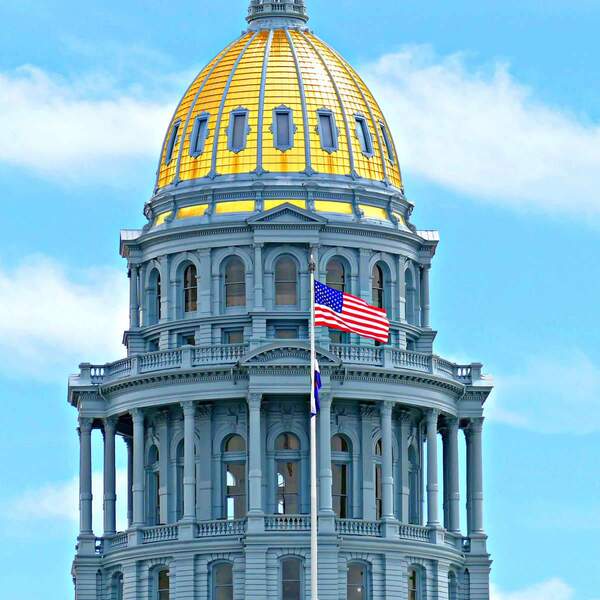
The presidential portraits hanging in the Colorado Capitol will be taken down at least through 2026 and replaced with an exhibit celebrating Colorado’s 150th statehood anniversary.
The Capitol Building Advisory Committee voted 9-2 recently to approve the change.
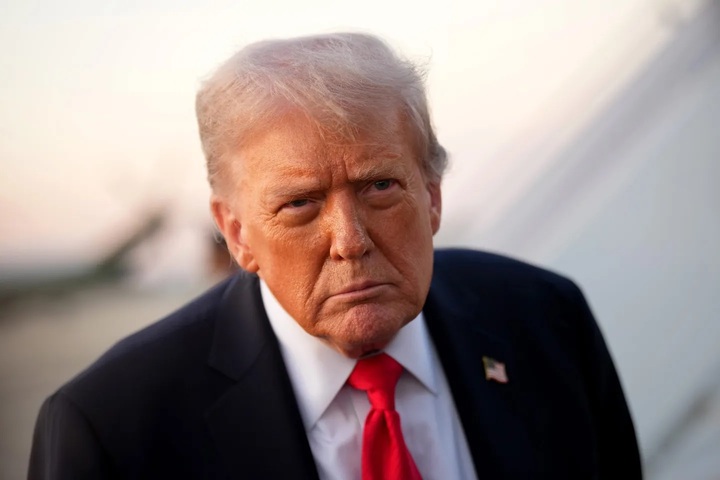
The decision to remove the presidential portraits in the third-floor rotunda, at least temporarily, comes after an uproar earlier this year when President Donald Trump complained about how he looked in his Colorado Capitol portrait. Trump called the portrait “truly the worst.”
The painting, which led to international headlines, was removed in response to Trump’s gripe and eventually replaced with a portrait provided by the White House.
The Capitol Building Advisory Committee initially was mulling, after Trump’s backlash, whether to permanently replace the presidential portraits in the third-floor rotunda with renderings of the state’s governors. But that posed its own problems.
History Colorado has portraits of all but four of the state’s governors. The missing portraits include one of Gov. Jared Polis. (The portraits are completed after a governor leaves office.)
Another issue is that the gubernatorial portraits are not uniform in size. The presidential portraits are. Displaying the paintings of the former governor on the curved walls of the rotunda would require some planning.
Instead, the Capitol Building Advisory Committee voted to move forward with an exhibit that will feature the official legislative photos of all 100 state lawmakers paired with pictures of them as children and blurbs about why they got into public service.
The idea behind the exhibit, which is projected to be relatively inexpensive, is to inspire the thousands of schoolchildren who visit the Colorado Capitol each year.
The presidential portrait gallery at the Colorado Capitol is unique among state capitols across the country. Nonpartisan staff in the legislature say there really isn’t a similar gallery at any other state capitol in the country.
An Aurora Police sergeant is currently facing misdemeanor assault charges after his intimate partner accused him of confiscating her phone during a domestic dispute, resulting in a physical altercation, according to police and court documents.
Aurora police were recently called to a southeast Aurora home at about 9 p.m. to investigate a report of domestic abuse, according to Aurora police and Arapahoe County Sheriff deputies.
“Upon arrival, officers determined the residence was associated with an Aurora Police Department employee and immediately requested the Arapahoe County Sheriff’s Office to assume the investigation as an outside agency,” Aurora police spokesperson Gabby Easterwood said in a statement.
When two deputies arrived, they interviewed Aurora Police Sgt. Matthew Schlauger, 36, and a woman investigators said was Schlauger’s intimate partner, both living at the address, according to an Arapahoe County court arrest affidavit.
When Schlauger arrived home that night, he and the woman started arguing about their relationship, Arapahoe County deputies reported.
“At one point, Schlauger took (the woman’s) phone from her and refused to give it back, ignoring multiple requests,” deputies said in the affidavit.
Schlauger however has denied confiscating her phone that night.
The argument between the two continued as they both went upstairs.
“While in the bedroom, a physical altercation took place where (the woman) elbowed Schlauger, causing his nose to bleed,” according to the affidavit.
Schlauger told police that the jab to the nose was inadvertent when the woman jumped on his back and he bent over to make her get off of him.
“When (the woman) was trying to leave the bedroom, Schlauger, still obtaining her phone, stood in the doorway to the bedroom and did not move,” investigators said in the affidavit. “Jones felt the need to slide by him and while doing so attempted to grab her phone but was unsuccessful.”
The woman headed for the stairs and Schlauger ran after her, police said.
“When at the base of the stairs, a struggle took place once again over Jones’s phone,” deputies said in the affidavit. “During the struggle, Schlauger grabbed Jones several times, twisting her left hand causing her pain and breaking several of her nails.”
Despite Schlauger insisting he never took the woman’s phone, deputies said details from the 911 call to police and physical evidence inside the home compelled them to insist on asking for charges and arresting Schlauger.
He was jailed and released on bond in lieu of $5,000, according to jail records.
Schlauger, on the APD force since 2016, is currently facing charges of third-degree assault, criminal tampering and domestic violence.
An internal investigation was initiated by the Aurora Police Department immediately following the incident and remains active and ongoing.
US President Donald Trump signing the bill to reopen the federal government in the Oval Office of the White House in Washington, DC. Credit- BBC
United States President Donald Trump recently signed a federal government spending bill less than two hours after the House of Representatives passed it, bringing an end to the longest government shutdown in US history, which hit workers and families in need and heavily affected air travel.
“With my signature, the federal government will now resume normal operations,” Trump said after the signing, while also pledging to work to lower the cost of living nationwide.
The new spending bill, which extends federal funding until January 30, was backed by a margin of 222 to 209 in the Republican-majority House. It was approved by the Senate earlier in the week, after seven Democrats and one independent agreed to support it.
Trump’s signature brings to an end a 43-day shutdown that began on October 1, during which all but essential government services had ground to a halt.
Federal workers will now return to their jobs as early as possible, but it is unclear how quickly full government services and operations will resume.
About 670,000 civil servants were furloughed during the closure, while a similar number worked without compensation, but will now receive back pay.
The shutdown’s end offers hope that services crucial to the country’s beleaguered air travel industry, in particular, will have time to recover before the Thanksgiving holiday travel wave, which is just two weeks away.
Restoration of food aid to millions of American families before Christmas may also make room in household budgets for increased spending during the festive season.
Crucially, however, the deal has not resolved one of the shutdown’s most central issues – health insurance subsidies for 24 million Americans under the Affordable Care Act, which the Trump administration has said it will not renew when they expire at the end of the year.
A vote on healthcare subsidies is due to take place in the Senate by December.
Both Republicans and the Democrats have sought to blame each other over the 43-day closure, but neither side appears to have won a clear victory.
A poll recently released suggested that half of Americans blamed Republicans for the shutdown, while 47% found fault with the Democrats.
During his late-night signing ceremony, Trump lambasted Democrats for their role, saying “this is no way to run a country” and “we can never let this happen again.”
“They knew that it would cause pain, and they did it anyway,” House Speaker Mike Johnson said of the Democrats. “The whole exercise was pointless. It was wrong and it was cruel.”
But Democratic Representative Mikie Sherrill, who was recently elected as New Jersey’s next governor, took aim at the funding bill and the Trump administration in her last speech on the US House floor.
“Do not let this body become a ceremonial red stamp from an administration that takes food away from children and rips away healthcare,” Sherrill told her colleagues.
“To the country: Stand strong. As we say in the Navy, don’t give up the ship.”
The new spending bill will see the federal government continue to add roughly $1.8 trillion a year to its $38 trillion in debt.
By some economists’ estimates, the shutdown was shaving more than a tenth of a percentage point from the US gross domestic product every six weeks. Most of that lost output is expected to be recouped in the months ahead.
The agreement to end the shutdown provoked anger among some Democrats, including Illinois Governor JB Pritzker, considered a contender for the 2028 presidential election, who called the Senate deal an “empty promise”.
Many Democrats preferred to keep holding out, feeling they had sufficiently strengthened their position on health insurance subsidies after several high-profile election wins this month, including New York City’s mayoral race and gubernatorial votes in New Jersey and Virginia
Efforts to revitalize a key segment of East Colfax Avenue in Aurora will now move into a new chapter after voters supported the creation of a new economic tool in a special election recently.
A vast majority of residents, business owners and property owners along East Colfax between Yosemite Street and Oswego streets who voted in that special election threw their support behind the creation of a Downtown Development Authority that is intended to supercharge efforts to improve safety, housing affordability, business opportunities and more in the area often referred to as “Original Aurora.”
The authority, known as a DDA, is a governmental entity separate from the city and defined by state statute. The DDA will be led by a board appointed by the mayor and confirmed by a majority of the City Council to oversee implementation of DDA programs.
The DDA will use tax-increment financing to fund work along the East Colfax corridor with focuses including safety, infrastructure, small business support, housing, and economic development as outlined in the Colfax Community Vision and Action Plan. The tax increment financing would come from reinvesting the growth in tax revenue as property values and commercial activity in the DDA area increase over time. It will not create new taxes.
The boundaries of the East Colfax DDA stretch from Yosemite Street on the western end, East 16th Avenue to the north, the Fitzsimons Urban Renewal Area to the east, and East 14th Avenue to the south.
Now that voters within those boundaries have supported this approach, the city’s elected officials will be tasked with forming the authority’s board. Board members will include one City Council member and between four and ten members chosen from the DDA area. Those members must be residents, landowners, or business lessees within the authority’s boundaries. Information will be provided later this year about the city’s application and appointment process for DDA board members.
Over the last year, a draft Colfax Community Vision & Action Plan has been created to serve as a long-term roadmap for revitalizing East Colfax and the surrounding areas of Northwest Aurora. Grounded in community input, this plan lays out a shared vision for the next 10 to 20 years and suggests practical steps to achieve that vision.
This draft plan also sets the stage for creating the Downtown Development Authority (DDA) and a nonprofit Community Development Corporation (CDC). Together, these organizations would help create public improvements, support local businesses, and protect the area’s character while promoting economic growth that benefits everyone. The CDC would be able to operate beyond the DDA boundaries. It would focus on housing, economic development, advocacy, and coordination around area-wide issues. It would be governed by a community-based board and funded through grants, philanthropy, and a self-sustaining real estate strategy.
The DDA will not immediately begin collecting tax increment or supporting projects and initiatives along East Colfax. Those revenues would only start to accumulate over the coming year.
For more information about the process and to review the draft version of the Colfax Community Vision & Action plan, please visit engageaurora.org/colfaxplan. Information about the formation of the DDA board will also be shared on that page later this year.
The city of Aurora and its government and nonprofit partners celebrated the substantial completion of the Aurora Regional Navigation Campus at a special event today, marking a bold step forward for homelessness resolution in Colorado’s third largest city.
Tier three accommodations in Aurora’s Homeless Navigation Campus. Credit: ColoradoPolitics
The navigation campus — formerly a Crowne Plaza hotel — at 15500 E. 40th Ave., has been in the works for more than a year after the city purchased the building in May 2024 for $26.5 million.
The 600-person facility will open to the public Nov. 17, when the operator Advance Pathways will shuttle homeless people over from the Aurora Day Resource Center as it shuts down.
The facility has come a long way from being a hotel last year, Mayor Mike Coffman said at the ribbon-cutting ceremony Thursday, adding that the facility will act “not as a handout, but as a hand up.”
His team chose Advance Pathways as the operator in a competitive bid process because of the organization’s “holistic” approach to homelessness, he said.
“That is what this facility will embody,” Coffman said. “A people-focused, progress-driven approach to homelessness that empowers and prepares people to come through these doors to improve their circumstances.”
Over the past year, Aurora City Council members have moved forward with what the mayor has called a “tough love” approach to homelessness, enacting a camping ban, alongside starting a court system to address low-level offenses by homeless people.
The campus is the final puzzle piece in that approach, Coffman revealed to newsmen previously, offering a place where people can access all of the services they need in one building while being incentivized to work toward self-sufficiency.
The campus has three tiers that officials are calling “compassion,” “courage” and “commitment.”
Ongoing funding for the operations of the facility will rely on private sector support. Aurora will contribute $2 million annually to support ongoing maintenance and the Tier 1 shelter. Advance is required to raise the remainder of the funding. The organization has received support from the Daniels Fund, Anschutz Foundation and other regional partners as it continues to fundraise for the campus.
Governor Jared Polis and Lieutenant Governor of Colorado Dianne Primavera conducted a tour of the facility.
“We are focused on creating more housing for every Coloradan, and this type of support can help make that possible for more people in our communities. I appreciate the partnerships that helped make this possible and the state is proud to support this important work,” Gov. Polis said.
Shantell Anderson, Mike Coffman, Jim Goebelbecker and Diane Primavera cut the ribbon in a ceremony to celebrate the opening of Aurora’s Regional Navigation Campus on Nov. 6, 2025. Credit: Coloradopolitics
“The Polis-Primavera administration is focused on helping make housing more accessible for everyone. The Aurora Regional Navigation Campus is more than a building—it’s a lifeline. And together, we are creating a Colorado where everyone has the opportunity to thrive,” Primavera said.
Members of the public are invited to get a closer look at the facility during a community open house event on Wednesday, Nov. 12. Doors open at 3 p.m. with a short program beginning at 3:30 p.m. Mayor Coffman, Mayor Pro Tem Steve Sundberg and other local officials will be in attendance. The open house concludes at 6 p.m.
At that event, the city will also dedicate a mural in the building’s “day room” painted by Colorado artist Mario Miguel Echevarria. The mural, titled “Weaving Together Improves the Pattern” was commissioned by Aurora’s Art in Public Places program and features a variety of birds, including a variety called “sociable weavers.” Sociable weavers build enduring communal nests not unlike the work Aurora and Advance will be carrying out at the campus.
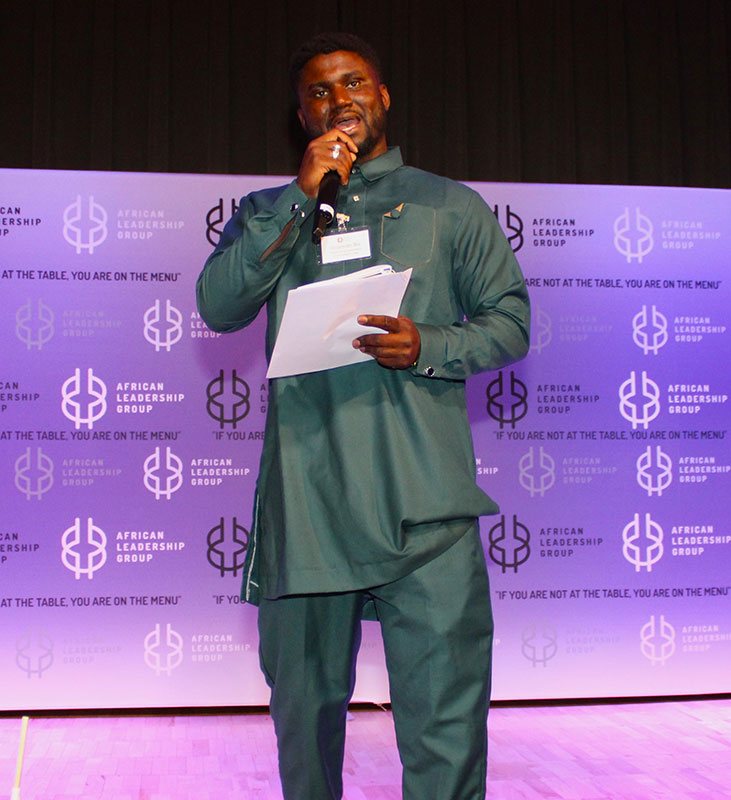
The energetic, passionate and charismatic finance professional launches his bid for Aurora Public School Board.
The city of Aurora has always been home to everyone. The city’s diversified and dynamic nature is one of the reasons immigrants have been able to contribute positively to its growth. One of those people who have done so is Ousman Ba. He brings an uncommon zeal, positivity and charisma that makes him a worthy and formidable candidate as he announces his election bid for the Aurora Public Schools Board of Education.
His Beginnings
Ousman was born in a refugee camp in Senegal to Mauritanian parents. At the age of six, his family immigrated to Colorado as refugees, where he began school in the 3rd grade with Denver Public Schools. From an early age, Ousman understood that education was a privilege he did not have in Senegal, and he embraced every opportunity to learn.
“When I first arrived in Aurora as a young immigrant, I carried a suitcase full of hope and determination. Like so many families who come here, I believed in the promise of America—that if you work hard, stay focused, and pursue an education, you can build a better life. Education was the bridge that helped me cross into new opportunities, and it is still the most powerful tool we can give to our children”.
After graduating from George Washington High School, Ousman attended Colorado State University in Fort Collins, where he majored in Political Science and International Relations.
After completing college, Ousman completed a year of service through AmeriCorps City Year, where he supported more than 100 9th-grade students from low-income communities in inner-city Miami. That experience solidified his commitment to equity in education. Ousman saw firsthand how the education system often benefits some students while leaving others behind. At his Red Jacket Ceremony, he made a promise: to always be an advocate for our students.
Why he’s running for the Aurora Public Schools Board of Education
For Ousman this is not just politics. This is personal. “I have lived the challenges that many of our students and families face—navigating a new language, trying to understand an unfamiliar system, and wondering whether people like me would ever be fully seen and supported. I have also seen the difference it makes when schools step up with care, resources, and high expectations”.
Over the years, he has mentored young people who were close to giving up until someone reminded them of their potential. He has sat with families who desperately want the best for their children but feel shut out of decision-making and has also talked to teachers who pour their hearts into the classroom, often without enough resources or recognition. These experiences has constantly reminded him of one truth: our schools can either open doors or close them. We cannot afford for any door to be closed.
“Aurora is one of the most diverse communities in the nation. That is our strength. Our classrooms are filled with students from every corner of the globe, speaking dozens of languages, bringing incredible resilience and creativity. But too often, our diversity has been treated as a challenge instead of an opportunity. I believe it is time to flip that script. We should celebrate what makes our students unique while making sure every child, regardless of zip code or background, receives an excellent education”.
His priorities are straightforward:
Students First. Every policy, every budget decision, every conversation should start with a simple question: does this help our kids thrive?
Support for Educators. Teachers and staff are the backbone of our schools. We must ensure they have the resources, training, and respect to do their jobs well. When educators succeed, students succeed.
Family Engagement. Parents and guardians deserve to be partners, not afterthoughts. We need stronger communication and meaningful opportunities for families to be involved in shaping their children’s education.
Transparency and Accountability. Taxpayers and families should know how decisions are made and how dollars are spent. Trust is built when people feel informed and included.
Four Ousman, this is about right and wrong. He strongly believes it is wrong to leave any student behind and it is right to ensure every child in Aurora has a fair chance to succeed.
He is stepping forward because he believes our district can do better. Better at preparing students not just for graduation, but for colleges, careers, and citizenship. Better at making families feel like true partners. Better at creating an environment where teachers are valued and supported.
In all of this, Ousman admits this is something he cannot do alone. “No single person can fix our schools. Real change comes when a community comes together—when parents, educators, students, and neighbors stand side by side and say, “Our children deserve the best, and we will not settle for less.”
That is what his campaign is all about. It’s about building a stronger Aurora, one classroom at a time. It’s about honoring the promise of education that brought him here years ago and ensuring it is alive for every child today.
Ousman believes our kids cannot wait. Their future—and ours—depends on what we do now. That is why he is running, and with your support, that is how he intends to serve.
Newsletter Signup
Subscribe to our weekly newsletter below and never miss the latest news and updates.