Tag: post

  • Night of Glamour at the United Liberian Organization’s Inaugural ball

    Night of Glamour at the United Liberian Organization’s Inaugural ball

    Saturday, June 19th, 2021 was a fun-filled day in Denver Colorado. It was the first time in more than a year that a large crowd would gather in one hall, unmasked and unfazed. It was at the United Liberian Organization of Colorado’s inaugural ball night. The event was organized by ULOC to install the newly elected members of the executives and to announce the presence of Liberian Americans as an active community in Colorado. The swearing-in ceremony was ably handled by Pastor Simeon Menso, of CVMI church, Aurora. The evening was graced by numerous dignitaries within and outside the state of Colorado, prominent among them were the Mayor of Aurora, Mike Coffman; the current Liberian ambassador to the United States, George S. W Patten Sr. and his wife; the Colorado HD40 Representative, Naquetta Ricks, and many more.
    Interestingly during the event, the newly sworn-in president and goodwill ambassador of the organization, the dashing Ebenezer Norman, brought in a splash of romance, as he got down on one knee to propose to his beautiful fiancee. It was a major highlight, and bet you, everyone is waiting for the wedding invitation.

  • Further evidence supports controversial claim that SARS-CoV-2 genes can integrate with human DNA

    Further evidence supports controversial claim that SARS-CoV-2 genes can integrate with human DNA

    A team of prominent scientists has doubled down on its controversial hypothesis that genetic bits of the pandemic coronavirus can integrate into our chromosomes and stick around long after the infection is over. If they are right, skeptics have argued that their results are likely lab artifacts the insertions could explain the rare finding that people can recover from COVID-19 but then test positive for SARS-CoV-2  again months later.

    Stem cell biologist Rudolf Jaenisch and gene regulation specialist Rich ard Young of the Massachusetts Institute of Technology, who led the work, triggered a Twitter storm in December 2020, when their team first presented the idea in a preprint on bioRxiv. The researchers emphasized that viral integration did not mean people who recovered from COVID-19 remain infectious. But critics charged them with stoking unfounded fears that COVID-19 vaccines based on messenger RNA (mRNA) might somehow alter human DNA. (Janesich and Young stress that their results, both original and new, in no way imply that those vaccines integrate their sequences into our DNA.)

    Researchers also presented a brace of scientific criticisms, some of which the team addresses in a  paper released by the Proceedings of the National Academy of Sciences (PNAS). “We now have unambiguous evidence that coronavirus sequences can integrate into the genome,” Jaenisch says.

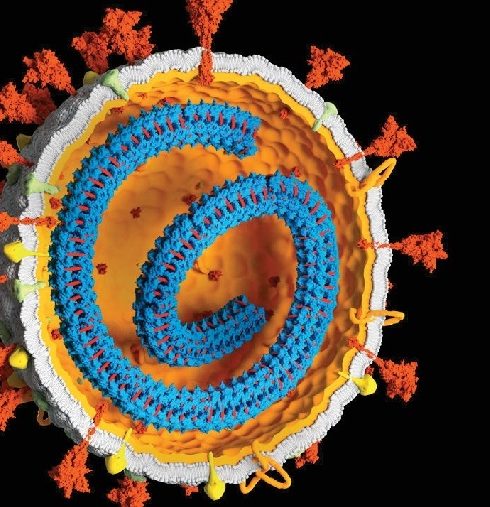
    SARS-CoV-2, the virus that causes COVID-19, has genes composed of RNA, and Jaenisch, Young, and co-authors contend that on rare occasions an enzyme in human cells may copy the viral sequences into DNA and slip them into our chromosomes. The enzyme, re- verse transcriptase, is encoded by LINE-1 elements, sequences that litter 17% of the human genome and represent artifacts of ancient infections by retroviruses. In their original preprint, the researchers presented test tube evidence that when human cells spiked with extra LINE-1 elements were infected with the coronavirus, DNA versions of SARS-CoV-2’s sequences nestled into the cells’ chromosomes.

    Many researchers who specialize in LINE-1 elements and other “retrotransposons” thought the data were too thin to support the claim. “If I would have had this data, I would have not submitted to any publication at that point,” says Cornell University’s Cedric Feschotte, who studies endogenous retrovirus chunks in the human genome. He and others also said they expected higher quality work coming from scientists of the caliber of Jaenisch and Young. In two subsequent studies, both posted on bioRxiv, critics presented evidence that the supposed chimeras of human and viral DNA traces are routinely created by the very technique the group used to scan for them in chromosomes. As one report concluded, the human-virus sequences “are more likely to be a methodological product, [sic] than the result of genuine reverse transcription, integration, and expression.”

    In their new paper, Jaenisch, Young, and colleagues acknowledge that the technique they used accidentally creates human-viral chimeras. “I think it’s a valid point,” Jaenisch says. He adds that when they first sub- mitted the paper to a journal, they knew it needed stronger data, which they hoped to add during the review process. But the journal, like many, requires authors to immediately post all COVID-19 results to a preprint server. “I probably should have said screw you, I won’t put it on bioRxiv. It was a misjudgment,” Jaenisch says.

    In the new PNAS paper, the team provides evidence that artifacts alone can’t explain the detected levels of virus-human chimeric DNA. The scientists also show that portions of LINE-1 elements flank the integrated viral genetic sequence, further supporting their hypothesis. And they have collaborated with one of the original skeptics, Stephen Hughes of the National Cancer Institute, who suggested an experiment to clarify whether the integration was real or noise, based on the orientation of the integrated viral sequences relative to the human ones. The results support the original hypothesis, says Hughes, a co-author of the new paper. “That analysis has turned out to be important,” he says.

    “The integration data in cell culture is much more convincing than what was presented in the preprint, but it’s still not totally clean,” says Feschotte, who now calls Jaenisch’s and Young’s hypothesis “plausible.” (SARS-CoV-2, he notes, can also persist in a person for months without integrating its genes.)

    The real question is whether the cell culture data have any relevance to human health or diagnostics. “In the absence of evidence of integration in patients, the most I can take away from these data is that it is possible to detect SARS-CoV-2 RNA retroposition events in infected cell lines where L1 is overexpressed,” Feschotte says. “The clinical or biological significance of these observations, if any, is a matter of pure speculation at this point.”

    Jaenisch’s and Young’s team do report hints of SARS-CoV-2 integration in tissue from living and autopsied COVID-19 patients. Specifically, the researchers found high levels of a type of RNA that is only produced by integrated viral DNA as the cell reads its sequence to make proteins. But, Young acknowledges, “We do not have direct evidence for that yet.”

    Harmit Malik, a specialist in ancient viruses in the human genome at the Fred Hutchinson Cancer Research Center, says it’s a “legitimate question” to ask why people who should have cleared the virus sometimes have positive polymerase chain Reaction tests for its sequences. But he also remains unconvinced that the explanation is an integrated virus. “Under normal circumstances, there is so little reverse transcription machinery available” in human cells, Malik says.

    The controversy has grown decidedly more civil since December. Both Young and Jaenisch say they received more intense criticism for their preprint than any studies in their careers, in part because some researchers worried it played into the hands of vaccine skeptics spreading false claims about the newly authorized mRNA vaccines. “If there ever was a preprint that should be deleted, it is this one! It was irresponsible to even put it up as a preprint, considering the complete lack of relevant evidence. This is now being used by some to spread doubts about the new vaccines,” Marie-Louise Hammarskjöld, a microbiologist at the University of Virginia, posted in a comment on bioRxiv at the time.

    And what of the original journal submission? “They rejected it,” Jaenisch says.

    Source: sciencemag.org

  • STOP AND CHECK ON YOUR MENTAL HEALTH

    STOP AND CHECK ON YOUR MENTAL HEALTH

    Every year, the month of May is Mental Health Awareness Month. It is the month designated to raise awareness, fight the stigma, provide support, educate the public, and advocate for policies that support people with mental illness and their families. There are up to 18.1% of Americans suffer from depression, schizophrenia, and bipolar disorder.

    As we take care of business and other people, let’s not forget to check in with ourselves. We should endeavor to stop and check our mental health status more regularly. Activities during the awareness month bring to the forefront the realities of living with these conditions and strategies for attaining mental health and wellness.

    Here are some important figures we should  keep in mind

    • 1 in 5 U.S. adults experience mental illness each year.
    • 1 in 20 U.S. adults experience serious mental illness each year.
    • 1 in 6 U.S. youth aged 6-17 ex perience a mental health disorder each year.
    • 50% of all life-time mental ill- ness begins by age 14, and 75% by age 24.
    • Suicide is the second leading cause of death among people aged 10-34.

    Ten things we can do for our mental health

    1. Value yourself: Treat yourself with kindness and respect and avoid self-criticism. Make time for your hobbies and favorite projects or broaden your horizons. Do a daily crossword puzzle, plant a garden, take dance lessons, learn to play an instrument or become fluent in another language.
    2. Take care of your body: Taking care of yourself physically can improve your mental health. Be sure to: Eat nutritious meals Avoid smoking and vaping, Drink plenty of water, Exercise, which helps decrease depression and anxiety and improve moods, and Get enough sleep. Researchers believe that lack of sleep contributes to a high rate of depression in college students.
    3. Surround yourself with good people: People with strong family or social connections are generally healthier than those who lack a support net- work. Make plans with supportive family members and friends, or seek out activities where you can meet new people, such as a club, class or support group.
    4. Give yourself: Volunteer your time and energy to help someone else. You’ll feel good about doing something tangible to help someone in need — and it’s a great way to meet new people.
    5. Learn how to deal with stress: Like it or not, stress is a part of life. Practice good coping skills: Try One Minute Stress Strategies, do Tai Chi, exercise, take a nature walk, play with your pet or try journal writing as a stress reducer. Also, remember to smile and see the humor in life. Research shows that laughter can boost your immune system, ease pain, relax your body and reduce stress.
    6. Quiet your mind: Try meditating, Mindfulness and/ or prayer. Relaxation exercises and prayer can improve your state of mind and outlook on life. In fact, research shows that meditation may help you feel calm and enhance the effects of therapy.

    7. Set realistic goals: Decide what you want to achieve academically, professionally, and personally, and write down the steps you need to realize your goals. Aim high, but be realistic and don’t over-schedule. You’ll enjoy a tremendous sense of accomplishment and self-worth as you progress toward your goal.

    8. Break up the monotony: Although our routines make us more efficient and enhance our feelings of security and safety, a little change of pace can perk up a tedious schedule. Alter your jogging route, plan a road trip, take a walk in a different park, hang some new pictures or try a new restaurant.

    9. Avoid alcohol and other drugs: Keep alcohol use to a minimum and avoid other drugs. Sometimes people use alcohol and other drugs to “self-medicate” but in reality, alcohol and other drugs only aggravate problems.

    10. Get help when you need it: Seeking help is a sign of strength — not a weakness. And it is important to remember that treatment is effective. People who get appropriate care can recover from mental illness and addiction and lead full, rewarding lives.

    Source: The National Council for Mental Wellbeing.

  • Millionaire Entrepreneur, Hanna Bogale, Calls for Unity

    Millionaire Entrepreneur, Hanna Bogale, Calls for Unity

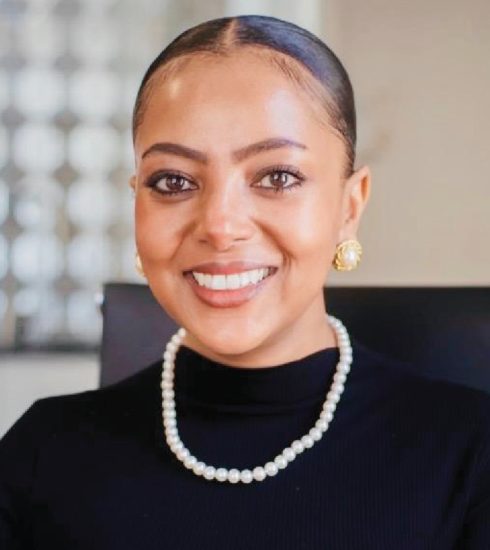
    Hanna Bogale, millionaire entrepreneur

    When I heard about a young Afri can immigrant millionaire in Colorado, I could not wait to know who she was. Then she called me, and we chatted briefly. I became excited to hear her story. When we finally met and talked face to face, I was blown away. She was interesting, sincere, empathetic, and brimming with ideas. Her name is Hanna Bogale, a second-generation Ethiopian. She is a very successful entrepreneur at a young age. Yes, why not? Read her interview with Denver Digest.

    Please introduce yourself

    My name is Hanna Bogale, a thriving entrepreneur with lots of business interests here in Colorado. I am a social justice defender and a community advocate. I am the founder of Lucy, a nonprofit with the goal of empowering and educating underprivileged women around the world to become an entrepreneur. I am a second-generation Ethiopian American involved in many social and political activities. I am currently the head of finance for the Ethiopian Ameri can Civic Council.

    Do you consider yourself a social entrepreneur? What social problems have you identified and responding to?

    I am a social entrepreneur because of my passion and effort at creating positive changes in our society through many of my mini initiatives. Over the past few years, our organizations have been able to provide job opportunities for a large number of people, and it’s not only an indicator of our growth, but having the consciousness of the suffering that families continue to endure daily, and being able to provide for hundreds of such families.
    These days we seem to be divided based on our race or religion, but I would like to debunk that concept. I have two stories that I think might help people see a different perspective. I was once nominated to be on the board of an African trade organization here in Colorado. I got all excited because I thought that position would help me reach out to more Africans. I eventually did not get that position because someone didn’t want me to be on the board. This lady is African and knows me and the work I have done within the community. However, I got help from an unexpected quarter. A white lady gave me the opportunity that changed my life without knowing me from Adam. I truly believe that I am a product of many good people, both white and black. I say this to stress the need for all people, blacks, whites, and everyone in between to come together for a happier world.

    How did you find funding to start off?

    I knew from high school that I would like to be a business owner, so I started saving up some money early. At this level of our business, you’ll be surprised to know that we have never taken out a loan for the business. So, my advice to other young entrepreneurs is not to take out loans until they really need to. The first five years of owning any business is mainly for learning and measured growth.

    Speaking of Unity, what is your opinion on all the crazy divisions we see all over the world, including your native country, Ethiopia?

    I would like to mention that I truly am saddened by the political and ethnic divisions that are taking place here in the United States and Africa. Why can’t people just get over themselves and sue for peace and unity? Ethiopia, for instance, is not a place for only Ethiopians. The AU and other key organizations are rooted there.

    I see many things wrong historically and the way they have been pushed over the years has not helped us to find unity and prosperity. The earlier we started fixing things by taking back the narratives, the better. I am actively involved in several civic movements helping to raise the consciousness of the youth not to be part of the same ethnic thinking of our ancestors and move towards oneness and prosperity.

    What were your key driving forces to becoming an entrepreneur?

    It takes constant learning. You become an expert in so many different things because at inception you are required to wear many different hats to keep the business afloat. People ask how I generate new ideas; I tell them new ideas come from the universe as it is infinite. All I do is align myself with it.

    As an entrepreneur, I take on a lot of foreseen and unforeseen risks. Besides the obvious financial risk, there are also emotional and career choice risks. But I have learned to be focused and not be distracted by people or things. To grow as an entrepreneur, I learned to anticipate my clients’ needs. I like to learn new ways and I love being with people and at places that I can learn. It has not been easy; the journey to becoming a successful entrepreneur is full of ups and downs but if one stays focused and run the course even in the toughest times, it can turn out to be a blessing.

    How did you avoid the bureaucracy as a government contractor to find a niche?

    That is a great question. It is called being astute in business. I did not try to avoid it, I probably couldn’t if I tried. There is no escaping the Kafkaesque bureaucracy. I only worked around it by building good relationships. For successful businesses, ethics and good organizational culture must be paramount.

    2020 was nerve wracking for some businesses but looks like a banner year for you. How did you pull that off ?

    I agree with you. The year 2020 was a peculiar kind of year but in spite of the odds we pushed on. I would say it takes discipline. Remember what I said about being eager to learn? We survived because we tried to keep abreast of all the available programs that we rely on to keep us busy. So, when some people were closing their businesses and other people were hunkering down due to the pandemic, we were working and get- ting paid. We needed the break to restructure and reset, so I did not see pandemics as a pandemic. The restrictions did not stop us, rather, it gave us more time to organize our activities.

    If you were to advise me on business decisions right now, what would it be?

    I would say, don’t ever impede yourself or begin on the notion that a venture will not work out. Start with the belief that you have a great product or idea and push along with that conviction. There is no pattern or formula to becoming a successful entrepreneur, you figure it out as you go but try to never lose yourself in pursuit of anything. Stay true to yourself. I don’t fear anything or get jittery about any situation, I have meditated my way out of fear, so I have none, not even death.

    What does your company culture emphasize?

    We worked on building trust and good relationships. If you ask anyone, they will tell you that transparency is at the forefront of our company value. Our clients always come first so I guess you can say we have a pragmatic culture. However, culture alone will not take a business far enough as it needs to be supported by other elements like clarity, capacity, and foresight.

    As a successful entrepreneur, what would you say are spe cific factors or decisions that contributed to your success?

    There are many factors, but since you say specific factors, I would include discipline, positive thinking, and being a risk-taker. Hard work and determination are also inclusive. I work between 7 and 10 hours daily because I always want to get things situated in one day. I do not have time to joke around other than running a successful business, I would recommend entrepreneurs invest their time in personal development and mental health. Those are what have contributed to my success. I hope to inspire younger women to become entrepreneurs. I encourage them to get a college degree as well, but I would like to mention to those who want to pursue entrepreneurship that many important skills are not actually taught in schools.

    Do you have people who doubted your business decisions? Did any of them turn out to be right?

    Oh yes, and it’s funny that you ask this question. Almost everyone I knew doubted that I was making the right decision. As things panned out, none of these people turned out to be right. I realize that doubts can also motivate. It can make you put in every energy you have in order to prove them wrong. Fortunately, I didn’t have to try too hard. I believe this has to do with providence. I have so much faith in God and what He is able to do, and He shows up for me at every point.

    What motivates you?

    I am motivated by life itself – living, learning, and finding ways to contribute to society. My family motivates me greatly. These amazing people are the main reason I wake up every day and strive to achieve success. My mentors and the entire community that is cheering me on and holding me together, even when I am on the brink of giving up motivate me. My employees and partners who put their trust in me motivate me daily.

    Has being an immigrant been a blessing or a curse to you or your business?

    It has been a blessing. I have faced some huddles here and there, but they have not been insurmountable. One thing with the African immigrant community is that they tend to be very close-knit, but that worries me. As good as being close-knit might sound, it can also lead to a lack of perspectives in diversity issues, which in turn can result in not having access to information needed to succeed.

    What advice can you give to women who aspire to be like you?

    Women have always been and will continue to be the pillar of society. There are numerous men out there that wouldn’t be standing but for the women in their lives. Yet I believe that women should not settle for what is available. It is important for women to have the growth mindset of learning and improving. The stronger the women are as pillars, the stronger the family unit and the better the community.

    Have you ever made any decision that you regretted?

    This is another surprising one, but I can tell you that I have never made any business decisions that I regretted. I have made moves that I thought were mistakes, but they turned out for the better. If you ask me if there is anything I would do differently, I will probably say, I should have invested my time wisely during my younger days. The older I get, the more I value my time.

    What support systems have helped you to be successful?

    The support I get from my family and community has helped me immensely. As a result, I’d like to pay it forward and inspire others, especially women, to stand in their power and be independent. Women face so many cultural, social, and religious challenges in the community which hinder their financial and personal growth. They have been conditioned to live a certain way, but they need to break from that and grow into their own potentials.

    Has being an entrepreneur affected your family life?

    It was challenging in the beginning, but I am doing fine now. I know many people do not discuss these things but becoming an entrepreneur is financially and mentally challenging. At times, I would get caught up in a Kafkaesque bureaucratic nightmare and my family has to witness my frustration. However, as I mentioned earlier, having a solid support system is priceless.

    What are your favorite  things to do?

    I love spending time with family, meeting good people, advocating for people, and lifting them up. I also enjoy traveling and experiencing authentic live music. I love all types of music including Opera and I enjoy every bit of fun our beautiful state has to offer, including hiking, skiing, horse riding and so on. I love reading books too. My favorite authors are Carl Jung, Charles Bu koski and Joe Dispenza. I also think John Dee is brilliant.