Category: Arts and Culture

  • Judas and the black Messiah

    Judas and the black Messiah

    A tragic real-life story of revolution
    and betrayal
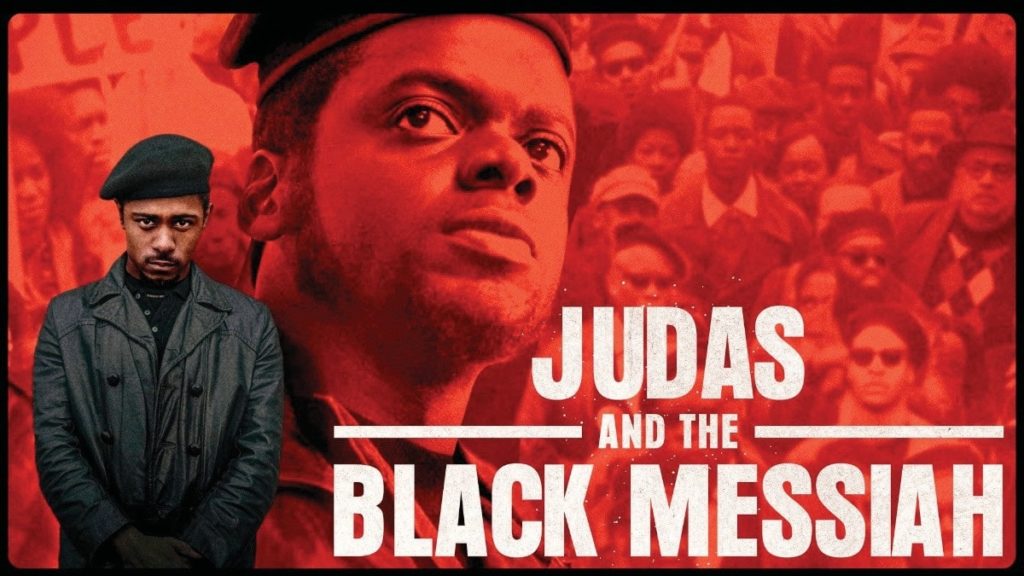
    To tell the story at the heart of Shaka King’s bracing and mournful picture, Judas and the Black Messiah, you have to begin at the end: on Dec. 4, 1969, Illinois Black Panther leader Fred Hampton was killed along with another young Panther activist, Mike Clark in a predawn raid by Chicago police. Law enforcement claimed that they faced a rain of gunfire as they approached the apartment where Hampton, Clark, and several other Black Panther Party members were staying. But a subsequent investigation concluded that the police had fired roughly 100 times and that nearly all of the shells and bullets recovered in the shooting’s aftermath had come from police weapons. Hampton was 21 years old when he died, shot in his sleep.

    There was evidence, too, that the FBI had been tracking Hampton ruthlessly, and that’s the angle King explores here. In Judas and the Black Messiah, Daniel Kaluuya plays Hampton, the charismatic chairman of the Illinois chapter of the Black Panther Party; LaKeith Stanfield is William O’Neal, a party member and the head of Hampton’s security detail as well as an FBI informant. Judas and the Black Messiah is a somewhat fictionalized version of fact, the story of two men who were supposedly devoted to the same cause one that arose in response to the country’s entrenched racism, and whose urgency was intensified by the despair that followed the assassination of Martin Luther King, Jr. But it’s also a story about one man’s betrayal of another, a breach of loyalty that would destroy the lives of both men, roughly 20 years apart.
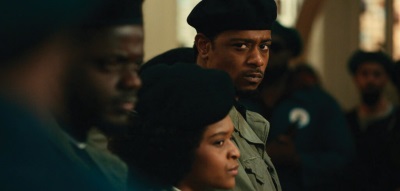
    The story of their dual fates has a Shakespearean ring to it, and King leans hard into that sonorous cadence. If the movie leaves you with justified rage at what happened to Hampton, it also teases out complex feelings about what can happen to a man when he sells his soul for illusory riches. Corpses represent only one kind of death; the death of ideals can be just as sorrowful. When we first meet him, Stan field’s O’Neal is a wily car thief whose MO involves disguising himself as an FBI agent so he can drive off with the goods. The idea sounds preposterous, but it actually works until it doesn’t. O’Neal gets caught, and the real FBI agent who interrogates him, Roy Mitchell (Jesse Plemons), is so impressed by his gonzo ingenuity that he offers him a deal: instead of going to jail, O’Neal can work through his sentence by infiltrating the Chicago Black Panther Party. O’Neal finds himself drawn to the party’s goals and ideals, even as he’s dazzled by the prospect of living the high life represented by trappings like good cigars and fine scotch that  Mitchell dangles before him.

    As O’Neal burrows deeper into his illicit work, he also draws closer to Hampton, a figure who is rising in the party: his speeches are eloquent and galvanizing, and he’s easily earned the loyalty of the group’s members. The Panthers were motivated to drastically change a system that had long kept them beaten down, took their role as revolutionaries seriously: they believed in arming themselves, and they were willing to use violence if necessary. King dramatizes some of that violence, without necessarily condoning it or romanticizing it. (He also depicts instances of the police baiting and taunting members of the Panthers and their community, spoiling for a fight.) But if the Panthers generally assumed an intimidating stance, they also administered breakfast programs for kids and sought to improve education for young people as a means of empowerment. Hampton hardly disavowed violence, but Judas and the Black Messiah put more emphasis on his desire to improve the lives of the people in his community.

    He hopes to build a medical center; he brings together a multiracial coalition that includes disenfranchised white people and local gang members who might otherwise be the Panthers’ enemies. And he falls in love with a young woman, Deborah Johnson (Dominique Fishback), who not only sees poetry in him but also helps lighten his burden of self-seriousness.
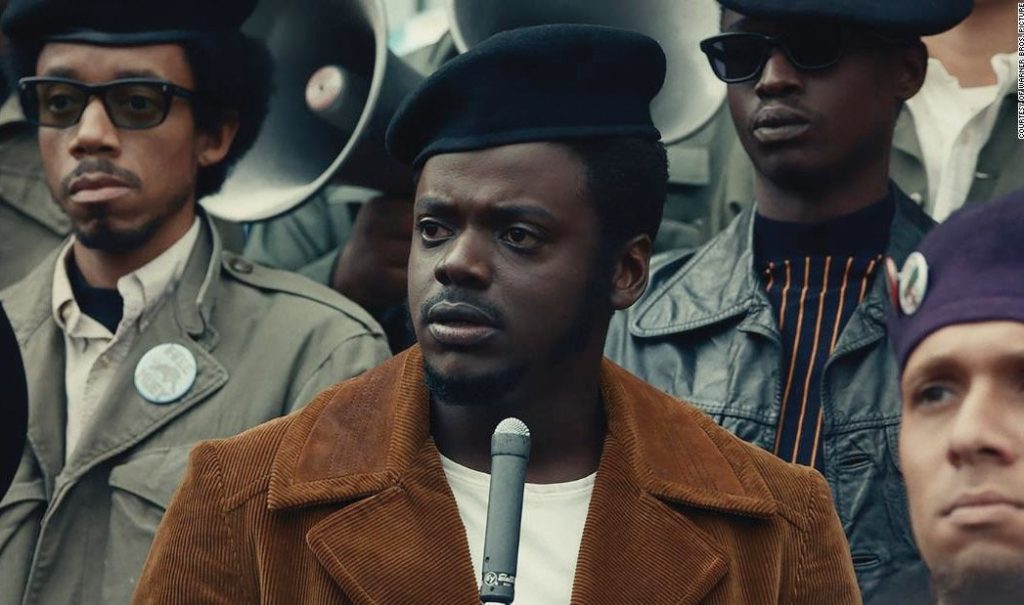
    Kaluuya’s portrayal of Hampton has a capacious magnetism as if to capture not just the spirit of one man, but also the potential that had already begun to bloom around him, a future he was ready to grow into This Hampton is ever thoughtful, given somewhat to brooding, but mostly to action. He’s cautious about his new friend and follower O’Neal, but ends up being won over by him. Because as Stanfield plays him, O’Neal is a natural seducer smart, seemingly sincere, and just awkward enough to be endearing. In one scene perched expertly between tense and funny, several Panthers who momentarily suspect O’Neal as a traitor challenge him to hot-wire a car, as proof that he actually knows how to do it. He pulls it off, but not without sweating and fumbling, and this is where you see his true vulnerability: he’s eager to pass any test of authenticity the Panthers may throw at him because he longs to truly be one of them even as he prepares to send the man he most respects down the river. If Kaluuya is the backbone of Judas and the Black Messiah, Stanfield is its agonized soul. William O’Neal wrote his own tragedy, and Stanfield breathes life into it here, a confused, twisting spirit forever trapped in a hell of its own making.

    Source: Time.com

  • Growing Up with Juneteenth

    Growing Up with Juneteenth

    How a Texan holiday became a national tradition.

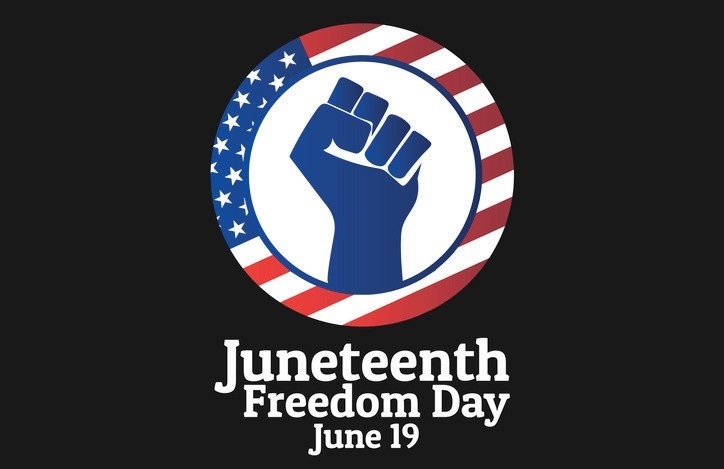
    When I was a little girl, in Texas, I thought Juneteenth belonged to us, meaning to the state of Texas generally and to black Texans specifically. In my small town, the story of Gordon Granger, the U.S. Army general who announced, in Galveston, on June 19, 1865, that slavery was over, was told with seriousness and bits of gallows humor. The older people joked that the Emancipation Proclamation had actually been signed two years before, but “the white people” wanted to get a few extra harvest seasons in before they told “the Negroes” about it. My father would say, with a sardonic smile and a short laugh, that it was worse than that: “the slaves have never really been freed.”

    The jokes played upon several basic truths. The Emancipation Proclamation had, in fact, been signed more than two years before, but its provisions could only be applied in areas controlled by the U.S. Army. Confederate forces in Texas did not surrender until June 2, 1865. Even after Granger’s announcement, many whites in Texas continued to enslave people who had not heard the news. Those who had heard were often forcibly prevented from acting as if any material change had taken place. Freedom had come in legal terms, but the story was not so clear on the ground as it was on paper. Former enslavers unleashed violence upon the people whom they had claimed as property, and others threatened to do so in order to make people work. Amid joy and hope was great malevolence and power. As my father’s jibe suggested, the legacies of slavery still lingered, putting true freedom out of reach.

    I don’t recall white Texans celebrating Juneteenth. Then again, I wouldn’t know; the holiday was part of the summer, and summer took kids in my hometown out of the schools and back into our racially separated communities. For our part, Juneteenth meant drinking red soda water and eating barbecued goat, along with other traditional Southern dishes. I loved the red soda water part. I was not so much into eating goats. It was not just that I disliked the taste. The goat was not a usual part of the menu in my area, so, if the goat was to be had, one had to be killed and prepared, which I watched a neighbor do on one occasion, to my horror. Whatever leanings I have toward vegetarianism grew out of watching a terrified animal as he was hung upside down, bleating, just before his throat was slit. But that ritual was easily avoided, and we kids, our mouths red, spent most of our time playing games, throwing firecrackers, and lighting sparklers until night fell. The holiday we celebrated with whites, though seldom together, was the Fourth of July. The difference between the two days was apparent to me even as a kid. Whites had much more reason to see the Declaration of Independence as the fulfillment of something: namely, of their desire to create a nation over which they exercised control. From the country’s earliest days, whites in the South, in particular, saw their freedom as inextricably linked to their power over African-Americans, the power that they maintained, through legal and extra-legal means, even after slavery’s end. The long effort to loosen that grip had been the project of black activists and their white allies during the second half of the twentieth century. By the time of my early childhood, those efforts were just beginning to bear fruit.

    For blacks, the Declaration carried a promise not yet fulfilled. It was in this sense that Juneteenth and the Fourth of July were, in fact, related. The words that Thomas Jefferson wrote in the Declaration about equality echo in the executive order that Granger read, that June, from the villa where he was living: The people of Texas are informed that, in accordance with a proclamation from the Executive of the United States, all slaves are free. This involves an absolute equality of personal rights and rights of property between former masters and slaves, and the connection heretofore existing between them becomes that between employer and hired labor. The freedmen are advised to remain quietly at their present homes and work for wages. They are informed that they will not be allowed to collect at military posts and that they will not be supported in idleness either there or elsewhere.

    The Confederacy, of which Texas had been a part, had emphatically rejected the Declaration’s language about equality. Indeed, in his famous “Cornerstone Speech,” from 1861, Alexander Stephens, the Vice-President of the Confederacy, called out Jefferson by name: Jefferson in his forecast, had anticipated [slavery], as the “rock upon which the old Union would split.” He was right . . . The prevailing ideas entertained by him and most of the leading statesmen at the time of the formation of the old constitution, were that the enslavement of the African was in violation of the laws of nature; that it was wrong in principle, socially, morally, and politically Those ideas, however, were fundamentally wrong.

    Our new government is founded upon exactly the opposite idea; its foundations are laid, its cornerstone rests, upon the great truth that the negro is not equal to the white man; that slavery subordination to the superior race is his natural and normal condition. This, our new government, is the first, in the history of the world, based upon this great physical, philosophical, and moral truth.

    As a child, I knew nothing of Stephens or his statement of the Confederacy’s bedrock principles. But it is no wonder that such attitudes, so passionately felt and expressed, would pass down through generations in some white families, and still remain resonant and be familiar to me when I gained consciousness as part of a community outside of my family. Although important, Granger’s reading of an executive order an order based upon the will of a President already assassinated, two months earlier, by a man who feared black equality was only a tiny step toward the work that had to be done.

    I also did not know, as a child, how intensely African Americans had fought to keep alive the memory of Juneteenth to commemorate our ancestors’ struggles and their hopes, and to link them to our own. As I grew older, I learned, from my mother, about Emancipation Park, in nearby Houston. Emancipation Park is one of the oldest public parks in the state. It was founded, in 1872, when four men who had been enslaved raised money from two churches and purchased ten acres of land on which to hold Juneteenth celebrations. A few decades later, in the nineteen-tens, the city gained control of the land and made it a segregated public park. On Juneteenth, black people gathered there, in their Sunday best, to hear speeches and readings of the Emancipation Proclamation. All of this took place in the years of Jim Crow. Texas, with a smaller percentage of blacks than more notorious southern states like Mississippi or Alabama, was a very hard place. Between 1882 and 1968, it had the third-highest number of lynchings in the United States.

    By the time I left for college, Juneteenth had become even more established in Texas, and I saw more instances of blacks and whites celebrating it together. Indeed, while I was home on Christmas break, in 1980, it became an official state holiday. This amounted to a big admission in a state that had long framed itself as the land of wide-open spaces and cowboys, instead of the land of mainly Anglo-American planters who had moved west out of Georgia, Alabama, and Mississippi, dragging enslaved people, my ancestors among them, to pick cotton, cut sugar cane, and fell trees in the piney woods of East Texas. Those same planters fought a war with Mexico, which had abolished slavery, to maintain their independence. We normally think of the enslaved running North. Enslaved people in Texas often ran South.

    Even before then, from my new vantage out in the world, it had begun to dawn on me that Juneteenth was not just an occasion for Texans to think of ourselves as special, in the way we do like to do. I noticed that blacks around the country spoke of celebrating Juneteenth. I admit to being nonplussed, at first, if not a tad resentful. What about Galveston? What about hiding the news to bring in two more harvests? What about the red soda water? That churlish attitude could not last, given the larger context in which the holiday was born. Black Texans had moved all over the country, carrying their traditions with them. It was fitting that their legacy was, in part, this celebration, which honored black humanity in the face of a powerful community that continued to reject it.

    Today, there is a strong movement to make Juneteenth a national holiday. If one thinks about it, it is staggering that there is no date commemorating the end of slavery in the United States. On the other hand, I know what my father, were he still alive, would have to say about that: something about counting chickens before they hatch. I take his point. There is some danger that holidays allow us to become too self-congratulatory. So many, many awful things happened after Granger made his speech, so much violence, and oppression. But I remember a conversation I had with my great grandmother, whose own mother had been enslaved as a child. I offered, in an old soul kind of way, that it seemed to me that people were acting as if Juneteenth were no longer a big deal. Her eyes met mine. “It was a big deal to us,” she said.

    Source: Newyorker.com

  • President Biden proclaimed June 2021 ‘Immigrant Heritage Month’

    President Biden proclaimed June 2021 ‘Immigrant Heritage Month’

    Every year in June since June 2014, after a group of Facebook CEO, Mark Zuckerberg’s associates met with and proposed the need to shape public perceptions about immigrants to corporations, media outlets, celebrities, and organizations, various states, and cities in the United States have taken turns to observe or issue proclamations that designate the month of June as Immigrant Heritage Month. The commemoration was introduced as a day to share inspirational stories about immigration in America.

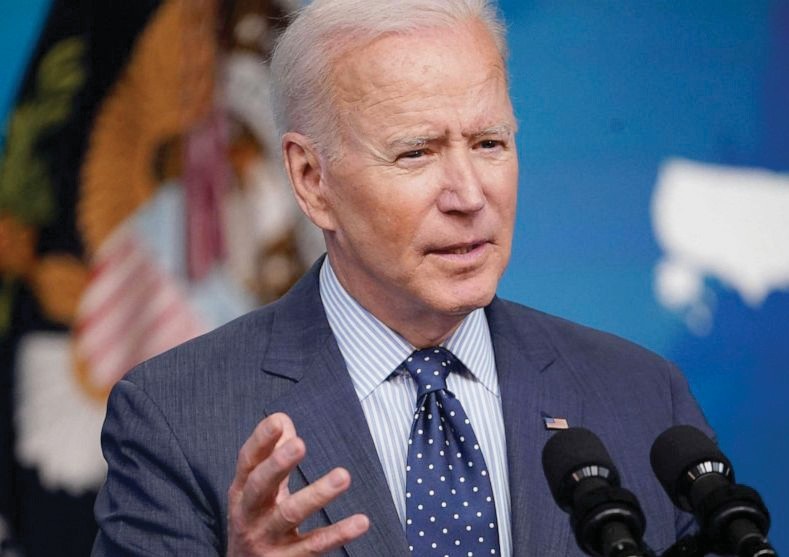
    On June 1st, President Biden joined in the fray and issued a proclamation announcing June 2021 as Immigrant Heritage Month. While acknowledging that the United States has been and will always be a nation of immigrants, he urged all Americans to appreciate and celebrate immigrants. Read an excerpt from the proclamation below:

    “Vice President Harris and I affirm that immigrants historically have made and continue to make our Nation stronger. I urge my fellow Americans to join us this month in celebrating immigrant heritage, stories, and cultures.

    NOW, THEREFORE, I, JOSEPH R. BIDEN JR., President of the United States of America, by virtue of the authority vested in me by the Constitution and the laws of the United States, do hereby proclaim June 2021 as National Immigrant Heritage Month. I call upon the people of the United States to learn more about the history of immigrant communities throughout the generations following our Nation’s founding and to observe this month with appropriate programming and activities.

    America is, always has been, and always will be a nation of immigrants. It was the premise of our founding; it is reflected in our Constitution;  it is etched upon the Statue of Liberty that “from her beacon-hand glows world-wide welcome.” During National Immigrant Heritage Month, we reaffirm and draw strength from that enduring identity and celebrate the history and achievements of immigrant communities across our Nation.”

  • Eritrea

    Eritrea

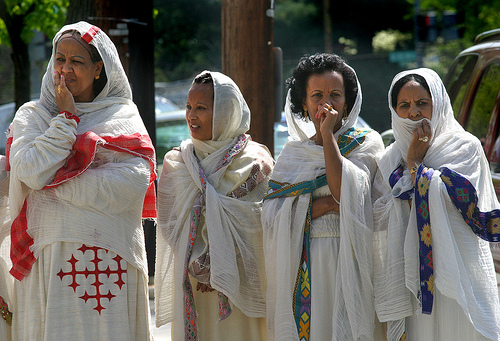
    The term “Eritrea” derives from Sinus Erythraeus, the name Greek tradesmen of the third century B.C.E. gave to the body of water between the Arabian Peninsula and the Africa continent (now known as the Red Sea). Later, during the Roman Empire, the Romans called it Mare Erythraeum, literary meaning “the red sea.” When Italy colonized a strip of land along the Red Sea in  1890, they gave it the name Eritrea. British forces liberated Ethiopia from the Italian colonizers and took control of Eritrea in 1941. Eritrea was administered by the British Military Administration until 1952 when the United Nations (UN) federated Eritrea with Ethiopia. Ethiopia soon violated the federal arrangement, however, and in 1962 Ethiopia annexed Eritrea as its fourteenth province. The year before the annexation, the Eritrean armed resistance against Ethiopian rule commenced. It would take thirty years of liberation war before the Eritrean People’s Liberation Front managed to oust Ethiopian forces from Eritrean soil, one of the longest wars of liberation in Africa. In 1993 the Eritrean people voted overwhelmingly in favor of independence in an UN-monitored referendum.

    Although the Eritrean Constitution recognizes all nine ethnic languages in the country as equal, the government of Eritrea has two administrative languages: Tigrinya and Arabic.

    Tigrinya is a Semitic language also spoken by the Tigreans of Ethiopia. Arabic was chosen to represent the low-land Muslim groups in the country. Nevertheless, only one ethnic group, the Rashaida, has Arabic as a mother tongue, whereas the other groups use it as a religious language. The majority of the population are Tigrinya-speakers.

    Tigrinyan People

    The highland Tigrinya ethnic group is the dominant group, numerically, politically, and economically. There is also a minority group of Tigrinya- speaking Muslims called Jeberti in the highlands. The Jeberti, however, are not recognized as a separate ethnic group by the Eritrean government. The lowland groups—the Afar, Beja/Hadarab, Bileyn, Kunama, Nara, Rashaida, Saho, and Tigre—are all, with the exception of the Tigre, relatively small and, taken together, they do not form any homogenous cultural or political blocs.

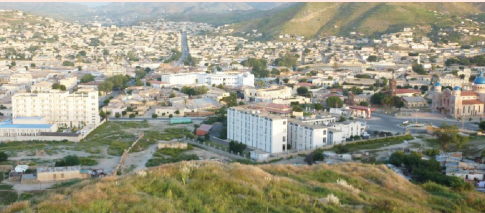
    The Eritrean capital, Asmara, is located in the highland plateau, the home region of the biggest ethnic group, the Tigrinya.

    Food in Our Culture

    Eritrean cuisine is a reflection of the country’s history. The Injera is commonly eaten in rural areas. It is a pancake-like bread that is eaten together with a sauce called Tsebhi or Wat. The sauce may be of a hot and spicy meat variety, or vegetable-based. In the urban centers, one finds the strong influence of Italian cuisine, and pasta is served in all restaurants. The lowland groups have a different food tradition than the highlands with the staple food being a porridge (aside from in Arabic) made of sorghum.

    Eritrea Bread
    Eritrea Sorghum Porridge

    Both Islam and the Orthodox Chris- tian tradition require rigorous observance of fasts and food taboos. Several periods of fasting, the longest being Lent among the Orthodox and Ramadan among Muslims, have to be adhered to by all adults. During religious celebrations, however, food and beverages are served in plenty. Usually, an ox, sheep, or goat is slaughtered. The meat and the intestines are served together with the injera. Traditional beer (Siwa) is brewed in the villages and is always served during ceremonial occasions.

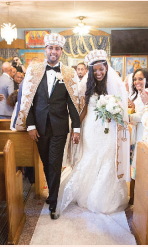
    Marriage in Our Culture

    Customary rules of marriage vary among ethnic groups. Generally, girls marry at an early age, sometimes as young as fourteen. A large share of the marriages in the rural areas are still arranged by the family groups of concern.

    Generally, people live together in nuclear families, although in some ethnic groups the family structure is extended. The man is the public decision-maker in the family, whereas the woman is responsible for organizing the domestic activities of the household.

    Inheritance rules in Eritrea follow the customary norms of the different ethnic groups. Generally, men are favored over women, and sons inherit their parents’ household possessions.

    The nuclear family, although forming the smallest kin unit, is always socially embedded in a wider kin unit. The lineage and/or clan hold an organizing function in terms of social duties and obligations and as a level of identity. With the exception of the Kunama who are matrilineal, all ethnic groups in Eritrea are patrilineal, that is, the descent is traced through the male line.

    Source: Everyculture.com