Tag: Africa

  • ETHIOPIA ON THE BRINK AS CRISIS THREATENS ‘PEACE AND STABILITY’ OF REGION

    ETHIOPIA ON THE BRINK AS CRISIS THREATENS ‘PEACE AND STABILITY’ OF REGION

    ETHIOPIA ON THE BRINK AS CRISIS THREATENS ‘PEACE AND STABILITY’ OF REGION

    – But what has fueled the conflict and criticism of Biden’s response?

    By Gloria Emeagwali

    What is the current situation in Ethiopia?

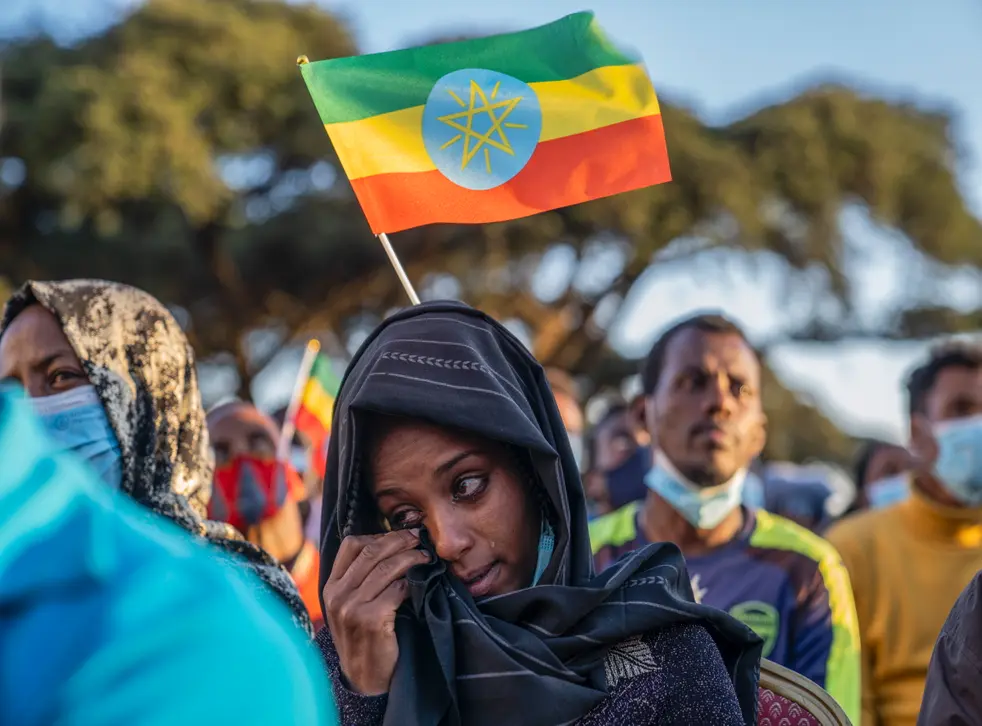
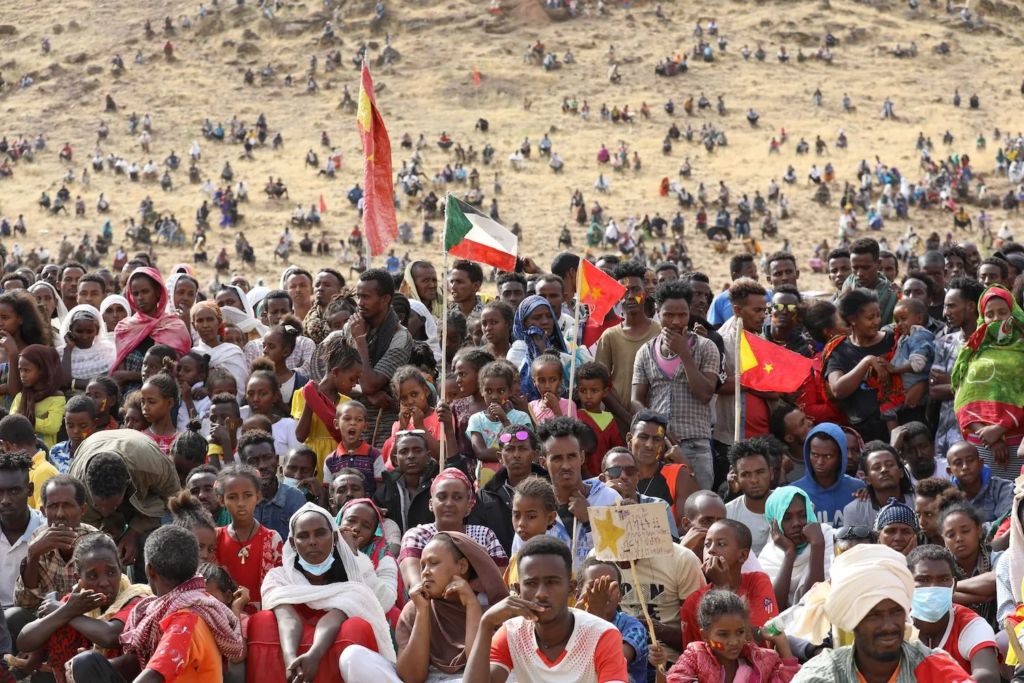
    The conflict in the Tigray region in northern Ethiopia has now been going on for more than a year. While major fighting has been between the Tigray People’s Liberation Front and Ethiopian government forces, armed groups from neighboring Eritrea have also been involved. The fighting has been particularly intense. Both the TPLF and federal government forces have been accused by the United Nations of human rights violations, including systematic ethnically based rape and massacres. Concern has recently turned to the risk of starvation for hundreds of thousands of people cut off from supplies.
    The Horn of Africa

    And things could get worse. There is a risk of an all-out civil war engulfing Ethiopia’s population of 110 million. Fighting has spread from the Tigray region, which was the focus of the early part of the conflict. The TPLF and its allies continue to move south from their base in Mekelle in the north, and have seized strategically important towns such as Lalibela and Dessie. The Ethiopian government has expressed fears that the fighting may soon engulf the capital Addis Ababa.

    What is the immediate cause of the conflict in Ethiopia?

    There is a long history to the fighting, but the spark to the current phase was an attack on federal troops based in Mekelle, by the TPLF, on Nov. 4, 2020. At least 1,000 troops were kidnapped and an undefined number were killed by TPLF insurgents. This sparked a retaliatory strike by government forces and a declaration of a state of emergency by Ethiopian Prime Minister Abiy Ahmed.

    What is the broader context of the crisis?

    For almost three decades, the TPLF controlled the government and military. During this period it gained enormous control over the country’s economy and land as well as over billions of dollars in aid received each year. The TPLF ruled in such a way that it redefined Ethiopia largely by ethnicity, with Tigrayans reaping most of the power. Opposition to the TPLF-dominated government contributed in April 2018 to Abiy Ahmed’s election. As prime minister, Abiy began limiting the economic dominance of the TPLF and instituting more centralized federal policies.

    The Abiy administration promised a new level of transparency, freed thousands of prisoners and brokered peace with neighboring Eritrea – leading to his winning the 2019 Nobel Peace Prize. But even before then, political resentment was brewing. An assassination attempt on Abiy in June 2018 was followed by a deepening power struggle between the TPLF and the new administration.

    How could an all-out civil war affect the region?

    A lengthy and bloody conflagration in Ethiopia would likely have ripple effects in neighboring Eritrea, Sudan and Kenya, with a steady flow of refugees, weapons and displaced population groups. Any further instability is likely to embolden terrorist organizations such as Al-Shabab, which could spread westward into Ethiopia and even Sudan from its base in Somalia. This would shatter the effective containment model put in place by the previous and current Ethiopian governments.

    More peaceful regions of the Horn – such as Djibouti and Somaliland – could attract terrorists seeking prisoners of war or forced recruits. A civil war could also worsen instability in Sudan, which itself is currently embroiled in a standoff between pro-democracy activists and the military. As for Ethiopia itself, all-out civil war could be catastrophic, igniting tensions in a country that consists of more than 80 ethnic groups, and potentially leading to the breakup of the country into unviable political entities and enclaves.
    Why has there been criticism of the US response?

    While the Biden administration has called for all “belligerents in the Tigray region” to agree to a cease-fire, Ethiopia and Eritrea have accused the U.S. of supporting the insurgents. In a letter to the United Nations, Eritrean foreign minister Osman Saleh blamed the Biden administration for “stoking further conflict and destabilization” in Tigray in a bid to “resuscitate the remnants of the TPLF regime.” The Ethiopian government similarly accused the U.S. of meddling in the region and of “treating on equal footing” the democratically elected government and the TPLF – which the Ethiopian government declared a terrorist group in May 2021.

    After Washington announced sanctions against all sides in the conflict in September, Abiy responded with an online letter to Biden accusing the U.S. administration of failing to “openly and sternly reprimand the terrorist group in the same manner it has been chastising my Government.” A decision in early November to remove Ethiopia from a U.S. trade program over what Biden described as “gross violations” has only worsened relations with Abiy’s government.

    Ethiopians suspect that U.S. foreign policy is being influenced in part by Washington’s support for Egyptian president Abdul Fattah al-Sisi in a dispute over the Grand Ethiopian Renaissance Dam, an enormous hydroelectric power project on the Blue Nile that Ethiopia says it needs for a reliable electrical grid and economic development. Ethiopia began filling the dam reservoir, which will take about five years, in July 2020. Yet Egypt, which sees the dam as a threat to its freshwater supplies, has said the dam reservoir should not be filled without a legal agreement about allocation of the Blue Nile’s water. Former U.S. President Donald Trump cut aid to Ethiopia in September 2020, with officials in his administration saying the country had not abided by its promise to resolve the dispute. It is important to note that the dam was pioneered by the TPLF-led government under Meles Zenawi. Critics argue that any disintegration of Ethiopia would strengthen Egypt’s position in negotiations over the dam.

    What can be done to avoid an all-out civil war?

    It may be almost too late to avert an all-out civil war in Ethiopia. But pressure from the African Union and member states that border Ethiopia, along with engagement with civil organizations within the country, may push the warring parties toward peace talks. Meanwhile, there are some actions that the main protagonists can take to bring down tensions. Declaring the TPLF a terrorist organization was likely a misguided policy by Abiy, and this could be rescinded as a gesture of goodwill. In return, the TPLF should recognize Abiy Ahmed as the democratically elected prime minister of Ethiopia – something it has refused to do so far. As for the role of the U.S., the visit to the region by Secretary of State Blinken is long overdue. Rising anti-Americanism in Ethiopia resulting from the Biden administration’s stance on the Tigray conflict has helped push Ethiopia toward closer military and trade ties with Russia and Turkey.
  • Burning History and Heritage: the problem of africans’ cultural self-immolation

    Burning History and Heritage: the problem of africans’ cultural self-immolation

    BURNING HISTORY AND HERITAGE: THE PROBLEM OF AFRICANS’ CULTURAL SELF-IMMOLATION

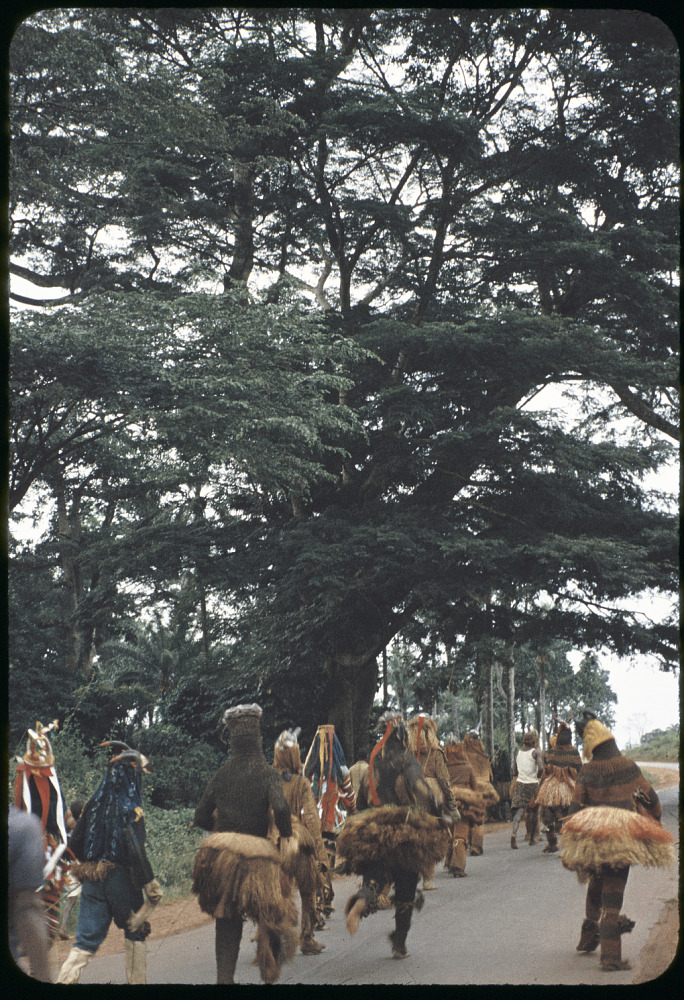
    A few years ago, I was invited to Michigan State University as a guest lecturer at a summer institute that was funded by the National Endowment for the Humanities (NEH). In my lecture and workshop, I made the case that African music and the arts in general comprise historical transcripts and archival encoding of African worldviews, aesthetic ideals, and values and sensibilities. I recall some of the Americans present challenging my ideas as to how many ordinary Africans have the same appreciation as I do about the value of African arts beyond their ritual and recreational uses. Fast forward to 23 September 2021, the Nigerian writer Chimamanda Ngozi Adichie, while speaking at the Humboldt Forum in Berlin, Germany, called out European nations to return the artifacts they looted from Africa as part of the colonial projects. Chimamanda rightly observed that “art lives in history and history lives in art. Much of what we call African arts are also documents, they tell African stories.” While acknowledging that they are sacred and hold spiritual values, she indicated that they “speak to the dignity of the people, to their worldview and to their aspirations.” She pushed back against what has become a dominant Europeans’ argument that African nations lack the capacity to care for the artifacts. I have read and heard that argument a lot in a lot of academic forums, and I was always offended to say the least, especially because the argument should have been preceded by the question of how Africans created and cared for the artifacts, many of which were more than a thousand years old before they were looted.

    The good news is that, after decades of being cajoled by African scholars, and roughly a month after Chimamanda’s speech at the Humboldt Forum on 29 October 2021, NBC news reported that Jesus College at Cambridge and the University of Aberdeen in Scotland have returned famous bronze arts, including the head sculptor of an Oba of the Ancient Benin Kingdom. The bad news on the other hand, is that a careful look at what is happening on the continent especially in Nigeria, may afford merit to the argument that

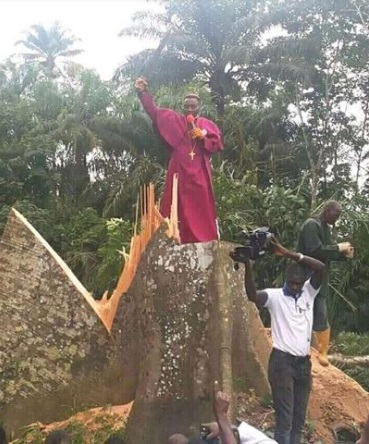
    Africans lack the ability to care for the artifacts. When I say, “what is happening on the continent,” I mean a lot of the destruction of history that is going on by pastors of new-found pentecostal churches in the name of “deliverance”. These modern-day seers have become notorious for cutting down trees that are hundreds of years old. Some of the trees are the remnants of their species which are already endangered, thanks to uncontrolled logging that began with the colonialists who exported timbers for the development of Europe’s infrastructure. Much later in post-colonial times, their subalterns carried on with the activities which has now resulted in deforestation and growing desertification. While the world is busy debating how to put a stop to the destruction of green reserves around the world for the sake of our healthy existence on this planet, Pentecostal pastors in Nigeria are busy seeing demons of misfortune and spirits of anti-progress in trees.

    The other issue is how churches, especially the Pentecostals (and sometimes even the charismatic movements in the mainstream churches such as the Catholic Charismatic Renewal Movement (CCRM) and the Evangelical Fellowship in the Anglican Communion (EFAC)) are in the forefront of destroying artifacts in the name of delivering families and communities from the demons and spirits of anti-progress. 

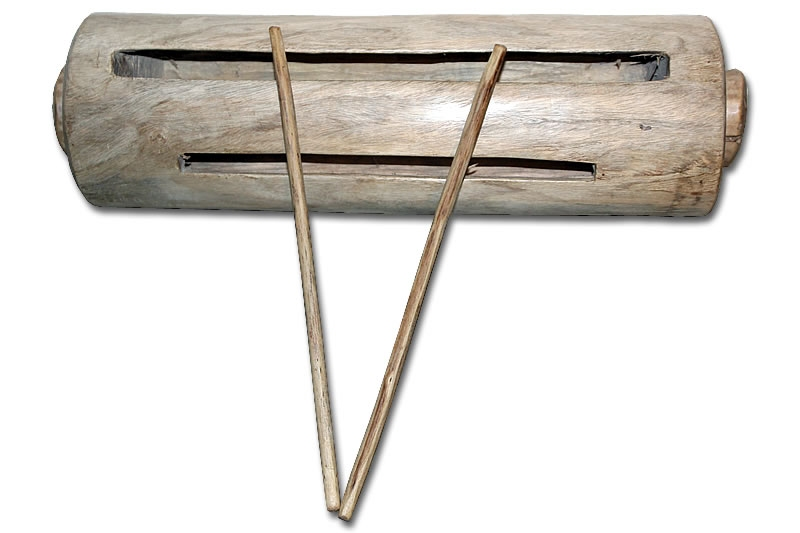
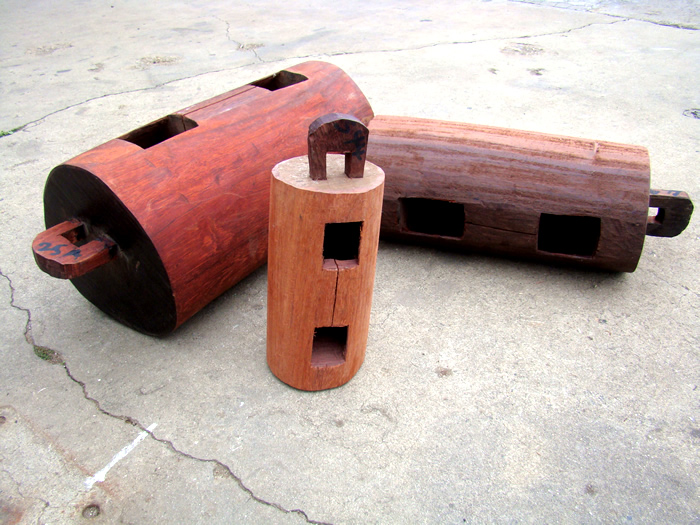
    A few months ago, I received from a friend a heart wrenching picture of a pentecostal pastor setting fire on an Ikoro in Uga, Anambra State, Nigeria. From my inquiry, the artifact in question is more than three hundred years old. Did the pastor understand the history of the instrument, its use and function in traditional society, and its meaning? Ikoro is a tuned wooden idiophone whose pitch inventory ranges from two to five. The nature of the instrument is significant in respect to its communicative function and ability to replicate the language of the people. Igbo is a tonal language that is also built on rhythm and quantity. It is for this reason that there are several instruments among the Igbo that are used for communication, so that anyone who is well grounded in the language and culture can decode the speech patterns performed on specific instruments. Perhaps the most extant reference to the use of ikoro to perform speech patterns among the Igbo is that written by Chinua Achebe in Things Fall Apart in which he described the announcement of the death of Ogbuefi Ezeudu. According to Achebe, one “of the things every man learned was the language of the hollowed-out wooden instrument” (1995:120). It is also in this light that western spectators came to call ukom, ikoro (also known as ekwe), dundun, and a host of other African instruments as talking drums.

    Ikoro is carved from the trunk of a tree by hewing in and thus creating a hollow in the trunk. The instrument is played with two mallets by hitting on different spots on the regions of the instrument with openings thus producing different pitches. The size of the instrument varies, and so the frequency of each depends on the intended density and spatial distribution of the intended audience. The largest sizes have lower frequencies and therefore can transmit across long ranges of space and time. Hence in Igbo villages, the ikoro is used to communicate messages of different sorts to the members of the community, namely to announce the death of a prominent member of the community; to summon the community to the village square for a meeting; to alert the community about a roaming wild and dangerous animal such as leopard; to alert them about an impending war; to summon people to come out to fight a raging fire; and to announce the emergence of the great spirit of the land in the form of a masquerade. Again, the communicative ability of the instrument consists in the fact of its ability to replicate speech patterns in Igbo. Hence an average Igbo person, especially adults, ought to master the language of the ikoro and to understand how to respond accordingly when the community is being summoned or being informed about an issue.

    Given the functional role of the instrument, communities normally built houses for it to protect it from the elements. Also, to prevent children and mischievous individuals from meddling with the instrument thereby causing unnecessary nuisance for the community, elders ascribe spiritual powers to the instrument and make believe that anyone not commissioned to play the ikoro would incur the wrath of the ancestors and the spirit of the land if they tried to play the instrument. In fact, the role of the ikoro in traditional Igbo society is much like the role of the toll bell in Medieval Europe which was tolled only by a designated civil servant to alert the community of a death by plague, raging fire, roaming wild animal, or bandits in the vicinity of the community. It is the toll bells that became the church bell, and which the European missionaries brought to Africa. Today in Europe, Africa, and Nigeria, no one operates the church bell unless you are a priest, deacon, or a commissioned lay minister, otherwise you may be charged for constituting a nuisance and desecration of sacred objects. Yet, it is the parallel instrument with a parallel function in society that a pastor is destroying.

    So many of such destructive acts are going unreported across Nigeria. They recall the actions of the Taliban and ISIS destruction of ancient artifacts in Afghanistan and Iraq respectively thereby finishing the work that Alexander “the Great” began in 330 BC. The vexing part of all the destructions going on now in Nigeria and other African countries in the name of born-again Christianity and deliverance from ancestral demons and spirits of anti-progress, is that it is happening while we are at the same time cajoling Europeans for stealing our artifacts and calling for their repatriation. So, if the European colonialists and missionaries who looted these artifacts had incinerated them, where or how would we be asking them now to return them? In fact, I give it to Europe for preserving these artifacts. At least when I go to Rome, I can still see and recognize the obelisk in the St. Peter’s Square in the Vatican as an African artifact which now stands tall with a cross on top of it. It served in Egypt as a sundial, and a solar symbol that represented a vital flow between heaven and earth, a way of communicating to the divine. It is taken by Emperor Caligula in 37AD. Today in the Vatican, it is a symbol of humanity reaching out to Christ (see http://stpetersbasilica.info/Exterior/Obelisk/Obelisk.htm). What a transformative reinterpretation. Yes, Europeans have been in the business of pillaging and looting African treasures since before the common era. So, it is not just the colonial loot that must be returned, even the Pope owes Africa an apology and repatriation of our artifact if I must say. The lingering question that Africans must answer however irrespective of how offensive it may sound coming from Europeans, is, can we keep and care for the things that belong to us? Yes, Europeans looted and stole African artifacts that tell our story, and speak to the dignity of our people, our worldviews, and our aspirations using the words of Chimamanda, yet it is debatable how these may survive the ongoing historical and cultural self-immolation in the name of religion.

    Austin C. Okigbo, Ph.D.

    Teaches Ethnomusicology and African Studies at the University of Colorado, Boulder.