
Colorado joins lawsuit challenging SNAP restrictions for some immigrant families
-
- December 3, 2025

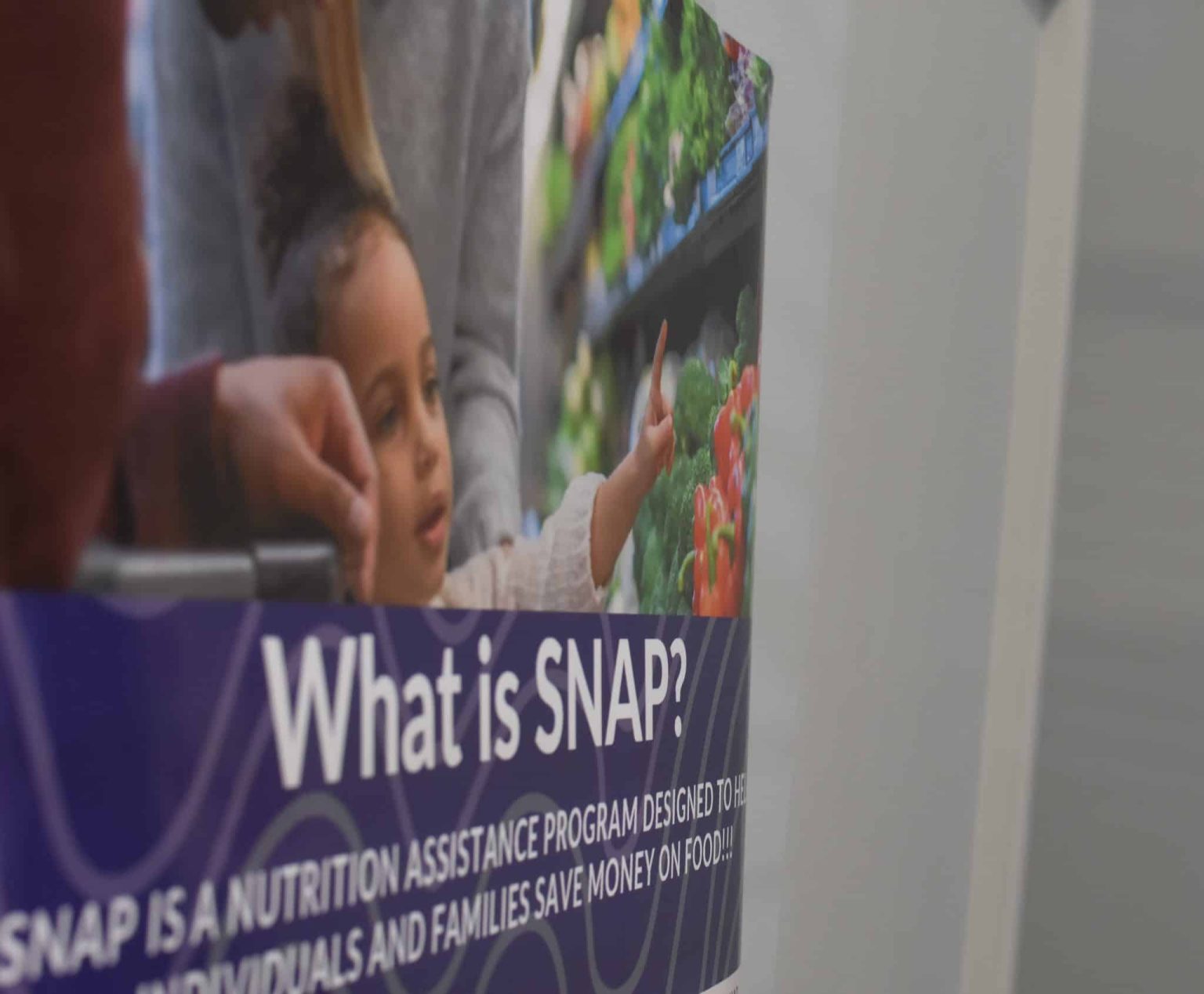
Information on the Supplemental Nutrition Assistance Program, or SNAP, is displayed at the Family and Intercultural Resource Center’s food pantry in Dillon, Colorado. Photo-Denver Post
Colorado, along with 21 other states, recently sued the federal government to stop the restriction of SNAP benefits for some green card holders — a move the coalition of states claims is unlawful and would create unjust restrictions for some immigrants.
Shortly after Supplemental Nutrition Assistance Program benefits were restored for roughly 600,000 Colorado residents, states began fighting against guidance released by the U.S. Department of Agriculture that labels some groups of legal immigrants as ineligible for food assistance, according to a news release from the office of Colorado Attorney General Phil Weiser.
The new guidance, issued to state SNAP agencies on Oct. 31, describes changes to program eligibility under the “One Big Beautiful Bill Act,” which narrowed eligibility for some non-citizen groups including refugees, asylum recipients and others admitted under humanitarian protection programs, the release states.
Where guidance becomes unlawful, the plaintiff states argue, is where the memo declared that people who entered the country through these humanitarian pathways would remain permanently ineligible for SNAP food aid, even after obtaining green cards and becoming lawful permanent residents.
The lawsuit, led by New York Attorney General Letitia James and Oregon Attorney General Dan Rayfield, argues that this position is not mentioned in the “One Big Beautiful Bill Act” or in any other federal law, and that the USDA’s memo “illegally rewrites federal rules” and threatens to cut off food assistance for people who are fully eligible under the law.
“This guidance will also create widespread confusion for families, increase the risk of wrongful benefit terminations, erode public trust, and place states in an impossible situation…” Weiser said in the release. “In the end, those who are legally eligible for food assistance will be harmed, and that is why we are filing suit.”
Roughly 300,000 SNAP recipients in Colorado are children. Recipients in Western Slope areas like Garfield County typically receive between $200 and $300 per month.
Only U.S. citizens and some lawfully present noncitizens may receive SNAP benefits. In 2023, less than 5% of all SNAP recipients were lawfully present non-citizens, according to data from the Department of Agriculture.
The attorneys general involved in the lawsuit argue that the memo’s guidance contradicts federal law and could impose massive financial penalties on states. Weiser added that the guidance has caused “significant confusion” for several states, which have been asked to either implement limitations on SNAP eligibility that they consider to be illegal, or accept severe financial liability.
Another part of the lawsuit argues that the agency broke its own regulations by requiring that states comply with the new guidance by Nov. 1, just one day after the guidance was released. Federal rules give states a 120-day grace period after new guidance is issued to adjust their systems without facing any penalties. By disregarding its own rules, the coalition of states argues that the USDA is “exposing states to major financial penalties for errors caused by the agency’s late and inaccurate memo.”
“States have already begun implementing the statutory changes enacted earlier this year, but USDA’s abrupt and incorrect guidance now forces them to overhaul eligibility systems overnight,” the release states. “The attorneys general are asking the court to vacate the unlawful guidance and block its implementation to ensure that families do not lose critical food assistance.”
The lawsuit was filed through the District of Oregon and also includes Colorado, New York, California, Connecticut, Delaware, Hawaii, Illinois, Maine, Maryland, Massachusetts, Michigan, Minnesota, Nevada, New Jersey, New Mexico, North Carolina, Rhode Island, Vermont, Washington, Wisconsin and the District of Columbia.