
Category: Arts and Culture

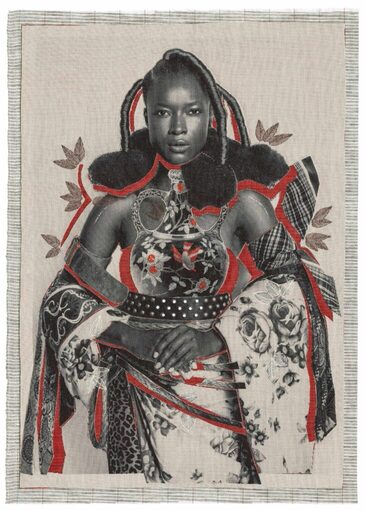
  • FNB Art Joburg Fair 2025 celebrates African creativity

    FNB Art Joburg Fair 2025 celebrates African creativity

    FNB Joburg Art Fair at the Sandton Convention Centre in Johannesburg. Credit: MweziNews

    The FNB Art Joburg Fair has become one of the continent’s leading celebration of African contemporary art, and this year’s fair marked its 18th edition.

    The FNB Art Joburg Fair was just recently concluded with the final day of events held at the Sandton Convention Centre, where hundreds gathered to celebrate African creativity.

    The exhibition, which is in its 18th year, champions Pan-Africanism through contemporary African art.

    It’s a space where artists, collectors, and enthusiasts meet to share, buy, and discuss the power of art across the continent.

    The fair brought together 14 African countries, showcasing over 100 artists through galleries like Stevenson, BKHZ, Goodman Gallery, and Everard Read.

    Managing director, Mandla Sibeko, said the curation was intentional, aiming to leave every visitor moved and inspired.

    “We made a decision five years ago to make sure it’s curated in such a way that as a customer, old or new, you walk into something and you are completely inspired.”

    Beyond the art itself, Sibeko said the fair had evolved into a vibrant cultural moment – filled with food, fashion, music, and connection.

    “It gives people the feeling of ‘this is who I am, this is what I love to do and it’s really in us’, reinforcing the styling in the way we package the fair, the communities and across the world and letting them know how dynamic we are. We use a lot of design language and we’re really trying to keep up with the trends.”

    He said the fair has positioned South Africa, and the continent, as a growing global cultural asset.


  • A Brief Spotlight on Uganda

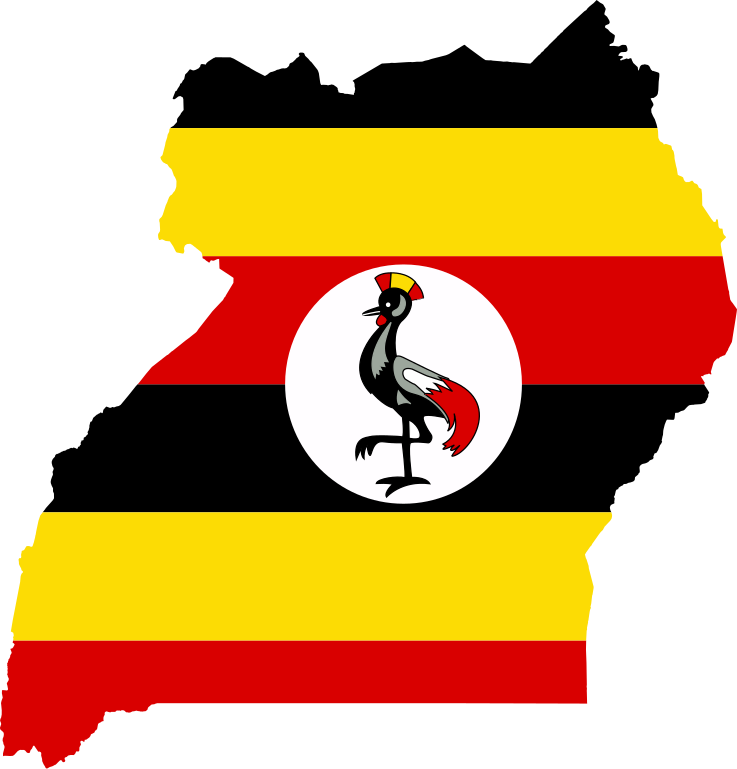
    A Brief Spotlight on Uganda


    Yoweri Museveni is the President of Uganda and has been in power since 1986.

    Uganda, officially the Republic of Uganda, is a landlocked country in East Africa. It is bordered to the east by Kenya, to the north by South Sudan, to the west by the Democratic Republic of the Congo, to the south-west by Rwanda, and to the south by Tanzania. The southern part includes a substantial portion of Lake Victoria, shared with Kenya and Tanzania. Uganda is in the African Great Lakes region, lies within the Nile basin, and has a varied equatorial climate. As of 2025, it has a population of 52.6 million, of whom 8.5 million live in the capital and largest city, Kampala.

    With a diverse population of over 50 million people, primarily speaking English and Swahili alongside numerous local languages, the nation’s economy relies heavily on agriculture, though it also benefits from tourism and oil. The capital and largest city is Kampala, and the country gained independence from the UK on October 9, 1962.

    The arrival of Arab traders in the 1830s and British explorers in the late 19th century marked the beginning of foreign influence. The British established the Protectorate of Uganda in 1894, setting the stage for future political dynamics. Uganda gained independence in 1962, with Milton Obote as the first prime minister. The 1966 Mengo Crisis marked a significant conflict with the Buganda kingdom, as well as the country’s conversion from a parliamentary system to a presidential system. Idi Amin’s military coup in 1971 led to a brutal regime characterized by mass killings and economic decline, until his overthrow in 1979.

    Idi Amin, ruled Uganda from 1971 to 1979 was considered one of the most brutal dictators in the world.

    Uganda embraces many ecosystems, from the tall volcanic mountains of the eastern and western frontiers to the densely forested swamps of the Albert Nile River and the rainforests of the country’s central plateau. The land is richly fertile, and Ugandan coffee has become both a mainstay of the agricultural economy and a favourite of connoisseurs around the world.

    The country’s sad record of political conflict, coupled with environmental problems and the ravages of a countrywide AIDS epidemic, hindered progress and growth for many years. Yet, even so, at the beginning of the 21st century a popularly elected civilian government ruled Uganda, which had attained political stability, had set an example for tackling the AIDS crisis that threatened to overwhelm the continent, and as of today enjoys one of the fastest-growing economies in Africa.

    The President of Uganda is both head of state and head of government. The president appoints a vice-president and a prime minister to aid them in governing. The Parliament of Uganda has 557 members. These include constituency representatives, district woman representatives and representatives of the Uganda People’s Defense Forces. There are also 5 representatives of the youth, 5 representatives of workers, 5 representatives of persons with disabilities, and 18 ex-officio members.

    Arial view of Kampala, capital of Uganda and its largest city.

    In 1966, following a power struggle between the Obote-led government and King Muteesa, Obote suspended the constitution and removed the ceremonial president and vice-president. In 1967, a new constitution proclaimed Uganda a republic and abolished the traditional kingdoms. Obote was declared the president.

    After a military coup on 25 January 1971, Obote was deposed from power and General Idi Amin seized control of the country. Amin ruled Uganda as dictator with the support of the military for the next eight years. He carried out mass killings within the country to maintain his rule. An estimated 80,000–500,000 Ugandans died during his regime. Aside from his brutalities, he forcibly removed the entrepreneurial Indian minority from Uganda. In June 1976, Palestinian terrorists hijacked an Air France flight and forced it to land at Entebbe airport. One hundred of the 250 passengers originally on board were held hostage until an Israeli commando raid rescued them ten days later. Amin’s reign ended after the Uganda–Tanzania War in 1979, in which Tanzanian forces aided by Ugandan exiles invaded Uganda.

    Uganda has 60 protected areas, including ten national parks: Bwindi Impenetrable National Park and Rwenzori Mountains National Park (both UNESCO World Heritage Sites), Kibale National Park, Kidepo Valley National Park, Lake Mburo National Park, Mgahinga Gorilla National Park, Mount Elgon National Park, Murchison Falls National Park, Queen Elizabeth National Park, and Semuliki National Park.

    A Grey Crowned Crane – a national symbol of Uganda

    Uganda is home to a vast number of species, including a population of mountain gorillas in the Bwindi Impenetrable National Park, gorillas and golden monkeys in the Mgahinga Gorilla National Park, and hippos in the Murchison Falls National Park. Jackfruit can also be found throughout the country.

    Lions and leopards are now present mainly in animal preserves and national parks, but they are occasionally seen outside these places. Hippopotamuses and crocodiles inhabit most lakes and rivers, although the latter are not found in Lakes Edward and George. Mountain gorillas, chimpanzees, and small forest elephants appear only in the extreme west. Elephants, buffalo, and the Uganda kob (an antelope) are limited to the west and north, while the black rhinoceros and giraffes are confined to the north. Zebras, topis, elands, and roan antelopes live in both the northeastern and southern grasslands, while other kinds of antelopes (oryx, greater and lesser kudu, and Grant’s gazelle) are found only in the northeastern area. Uganda is home to a diverse variety of bird life, including threatened species. Most of the country’s national parks provide excellent bird-watching opportunities. The country’s varied fish life includes ngege (a freshwater nest-building species of Tilapia), tiger fish, barbels, and Nile perch.

    Male Ugandan kob trying to seduce a female at Queen Elizabeth National Park.

    The country had a 2019 Forest Landscape Integrity Index mean score of 4.36/10, ranking it 128th globally out of 172 countries.

    Uganda’s religious heritage is tripartite: indigenous religions, Islam, and Christianity. About four-fifths of the population is Christian, primarily divided between Roman Catholics and Protestants (mostly Anglicans but also including Pentecostals, Seventh-day Adventists, Baptists, and Presbyterians). About one-eighth of the population is Muslim. Most of the remainder practice traditional religions. As in other parts of Africa, Islam and Christianity have been combined with indigenous religions to form various syncretic religious trends.

    Coffee fields in southwestern Uganda.

    In the countryside, the year is filled with a variety of festivals and ritual celebrations, including marriage “introductions,” weddings, births, christenings, and other familial gatherings. As in other places, the agricultural year is marked by a number of important events that require social gatherings. Other holidays, celebrated nationwide, are drawn from the Christian and Muslim calendars or commemorate events in Ugandan history, such as Martyrs’ Day (June 3rd), Heroes’ Day (June 9th), and Independence Day (October 9th).

    Great Nile River, Uganda

    The staple diet in most of the south is a kind of plantain called matoke, which is cooked in stews and curries; a Buganda legend relates that one of the first acts of the first man on earth, Kintu, was to plant a matoke tree for his descendants to enjoy. Sweet potatoes, Irish potatoes, and cassava are consumed along with a variety of vegetables. The central market in Kampala—Nakasero—offers an extensive array of vegetables and fruits, some of which are imported from neighbouring countries. Most northerners eat millet, sorghum, cornmeal, and cassava together with local vegetables. The pastoral communities tend to consume animal-derived products, especially butter, meat, and animal blood. Fish is eaten by a number of groups, and a favourite dish is luombo, a spicy stew steamed in banana leaves. Banana leaves also figure in another favourite, oluwombo, made of rice, chicken, and tomatoes.


  • A Brief Spotlight on Morocco

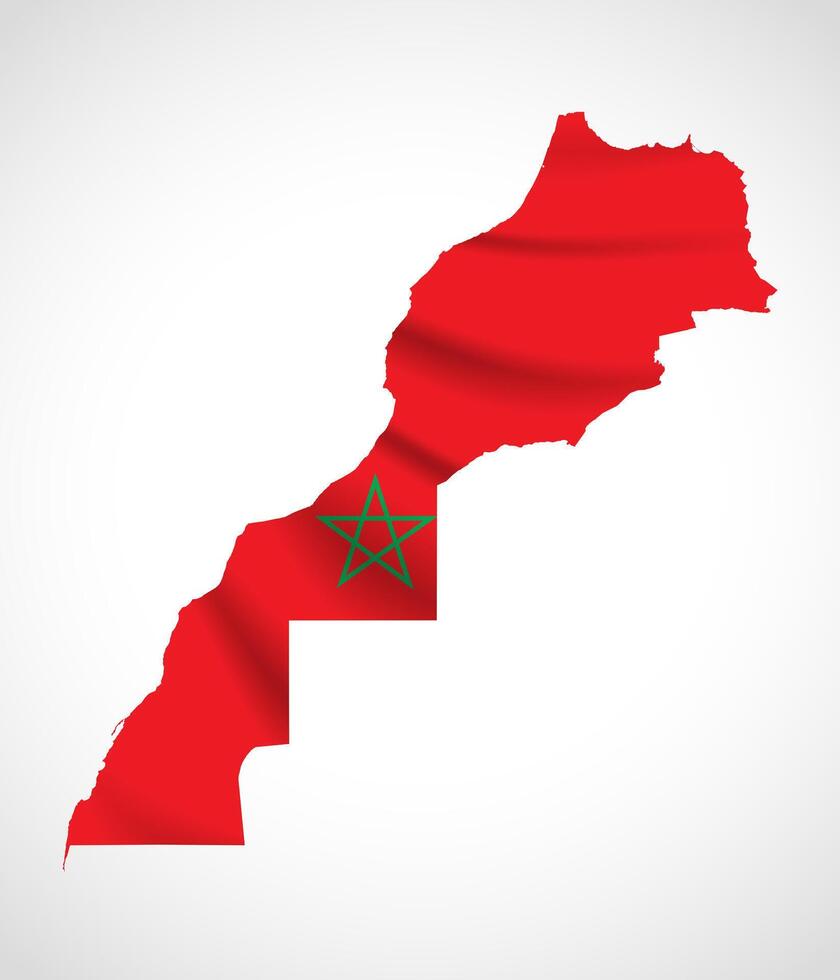
    A Brief Spotlight on Morocco

    King Mohammed VI is the paramount ruler of Morocco and ascended to the throne in 1999. Credit: BBC

    The Kingdom of Morocco is the most westerly of the North African countries known as the Maghreb – “the West”. It has Atlantic and Mediterranean coastlines, a rugged mountain interior and a history of independence not shared by its neighbours.

    Its culture is a blend of Arab, Berber, European and African influences.

    Morocco was a French protectorate between 1912 and 1956. Since independence, Morocco has remained relatively stable and wields significant influence in both Africa and the Arab world.

    Prime minister Aziz Akhannouch is the head of the Moroccan government. Credit: BBC

    It has a population of approximately 39 million and Islam is both the official and predominant religion, while Arabic and Berber are the official languages. Additionally, French and the Moroccan dialect of Arabic are widely spoken. The culture of Morocco is a mix of Arab, Berber, African and European cultures. Its capital is Rabat, while its largest city is Casablanca.

    Morocco gained its independence in 1956 and it has remained relatively stable. Although the country is rapidly modernizing and enjoys a rising standard of living, it retains much of its ancient architecture and even more of its traditional customs.

    It has the fifth-largest economy in Africa and wields significant influence in both Africa and the Arab world; it is considered a middle power in global affairs and holds membership in the Arab League, the Arab Maghreb Union, the Union for the Mediterranean, and the African Union.

    A group of tourists on the Erg Chebbi. The Erg Chebbi is one of Morocco’s several ergs – large seas of dunes formed by wind-blown sand and It is located on the far western edge of the Sahara Desert. Credit: Wikipedia

    Mohammed VI became king in 1999. He initiated political and economic changes and an investigation into human rights abuses during his father’s rule.

    A key reform was the Mudawana, a law which grants more rights to women. The king has said it is in line with Koranic principles, but religious conservatives have opposed it.

    Following pressure for reform inspired by the “Arab Spring” of 2010 onwards, a new constitution was introduced, expanding the powers of parliament and the prime minister, but leaving the king with broad authority over all branches of government.


    A Night marketplace, called the Jamaa-el-Fna in Marrakech, Morocco. Credit: Visitmorocco.com

    Morocco is a constitutional monarchy with two legislative houses. According to the constitution promulgated in 2011, political power in Morocco is to be shared between the hereditary monarch and an elected bicameral parliament, consisting of the House of Councillors (Majlis al-Mustashārīn; upper chamber) and the House of Representatives (Majlis al-Nawāb; lower chamber). A prime minister heads the cabinet, which constitutes the executive.

    Despite the existence of a constitution, a legislature, and a number of active political parties, however, the king continues to wield broad political authority, promulgating legislation, choosing the prime minister from the largest party in parliament, and approving government appointments. He holds absolute authority over religious affairs, the armed forces, and national security policy.

    As is true in many former African colonies, the Moroccan economy remains heavily dependent on the export of raw materials. Also of growing importance to the economy are modern sectors, particularly tourism and telecommunications. Altogether, the modern portion accounts for more than two-thirds of gross domestic product (GDP), even though it employs only about one-third of the country’s workforce.

    TheMoroccan Couscous is the country’s most popular dish. Credit: Wkipedia

    Social life for most Moroccans still centres on home and family. The sidewalk café is a favourite gathering place for men, and watching a football (soccer) match on television in the local café is a popular form of entertainment. Big cities such as Casablanca boast a variety of diversions, including cinemas, restaurants, and shopping in modern boutiques or in the souk, the open-air market in which vendors sell a wide array of local arts and crafts items alongside foods and imported commodities. Morocco’s extensive coastline has numerous fine beaches, some of them private and off-limits but many of them open to the public and within easy reach of the city. On weekends families often spend the day at the shore, swimming, picnicking, and playing sports.

    The Aït Benhaddou is a ksar, or fortified village, along the former caravan route between the Sahara and Marrakesh. Credit: BBC

    Moroccan cuisine has gained a following among connoisseurs worldwide, and the country’s rich agricultural regions provide ample products for Moroccan kitchens. Meat staples include fish, lamb, and fowl—including pigeon, which is considered a delicacy when baked in pastry, the b’stillah, a national favourite. Tomatoes, peppers, onions, and eggplants are among the numerous vegetables typically used in dishes, and fruits of all varieties are enjoyed. Bread is, as in all countries of the Middle East and North Africa, a deep cultural symbol as well as a daily staple. The premier Moroccan food, however, is couscous, a semolina-based pasta served with a meat stew. Kabobs of various types are common, as are salads and soups. Harira, a thick and hearty lamb soup, is served to break the fast at Ramadan and is a national speciality. The national drink is mint tea. Morocco is a wine-producing country, but production had begun to decline by the early 21st century under religious pressure that viewed alcohol consumption as inappropriate.

    Moroccans observe a number of secular and religious holidays. Islamic holidays include the two ʿīds, Eid al-Fitr and Eid al-Adha, and the Prophet’s birthday (mawlid); national holidays include Independence Day and the king’s birthday.

  • A Brief Spotlight on Ethiopia

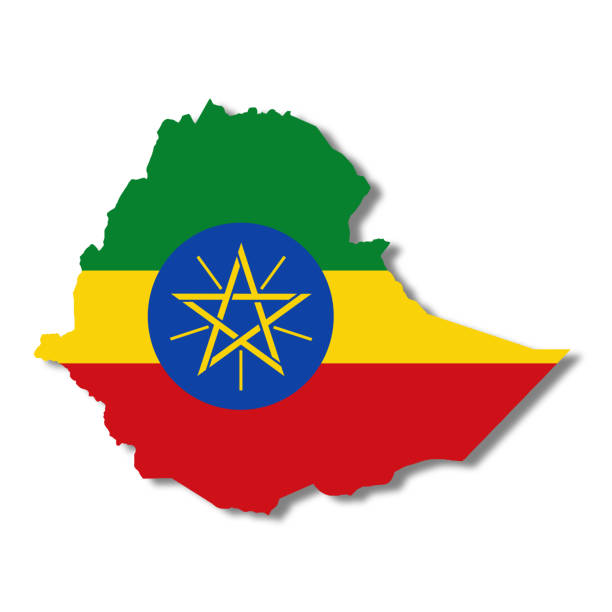
    A Brief Spotlight on Ethiopia

    Ethiopia, officially the Federal Democratic Republic of Ethiopia, is a landlocked country in the Horn of Africa, with a population of around 128 million, making it the thirteenth-most populous country in the world, the second-most populous in Africa after Nigeria, and the most populous landlocked country on Earth.

    It is also one of the fastest-growing economies in the region and it shares borders with Eritrea to the north, Djibouti to the northeast, Somalia to the east, Kenya to the south, South Sudan to the west, and Sudan to the northwest.

    The national capital and largest city, Addis Ababa, lies several kilometres west of the East African Rift that splits the country into the African and Somali tectonic plates.

    Ethiopia is Africa’s oldest independent country and its second largest in terms of population. Apart from a five-year occupation by Mussolini’s Italy, it has never been colonised.

    The Church of Saint George, Lalibela are thought to have been built in the 11th and 12th Centuries. It serves as a pilgrimage site for Ethiopian Orthodox Tewahedo Church; the site is part of the UNESCO World Heritage Site “Rock-Hewn Churches, Lalibela”. Credit: Wikipedia

    It has a unique cultural heritage, being the home of the Ethiopian Orthodox Church – one of the oldest Christian denominations – and a monarchy that ended only in the coup of 1974.

    It served as a symbol of African independence throughout the continent’s colonial period, and was a founding member of the United Nations and the African base for many international organisations.

    Over 6 million residents live in Addis Ababa, the capital and financial epicenter of the country. Credit: BBC

    The Derg, a Soviet-backed military junta, took power in 1974 after deposing Emperor Haile Selassie and the Solomonic dynasty, and ruled the country for nearly 17 years amidst the Ethiopian Civil War. Following the dissolution of the Derg in 1991, the Ethiopian People’s Revolutionary Democratic Front (EPRDF) dominated the country with a new constitution and ethnic-based federalism. Since then, Ethiopia has suffered from prolonged and unsolved inter-ethnic clashes and political instability marked by democratic backsliding. From 2018, regional and ethnically based factions carried out armed attacks in multiple ongoing wars throughout Ethiopia.

    Ethiopia is a multi-ethnic state with over 80 different ethnic groups. Christianity is the most widely professed faith in the country, with the largest denomination being the Ethiopian Orthodox Tewahedo Church. After Christianity, Ethiopia houses a significant minority of adherents to Islam and a small percentage to traditional faiths.

    The African Union Headquarters located in Addis Ababa. Since its conception, Ethiopia is a founding member to the AU. Credit: Wikipedia

    Addis Ababa is the headquarters of the African Union, the Pan African Chamber of Commerce and Industry, the United Nations Economic Commission for Africa, the African Standby Force and many of the global non-governmental organizations focused on Africa. Ethiopia became a full member of BRICS in 2024. Ethiopia is one of the least developed countries but is sometimes considered an emerging power, having the fastest economic growth in sub-Saharan African countries because of foreign direct investment in expansion of agricultural and manufacturing industries; agriculture is the country’s largest economic sector, accounting for over 37% of the gross domestic product as of 2022.

    Ethiopia is a global centre of avian diversity. To date more than 856 bird species have been recorded in Ethiopia, twenty of which are endemic to the country. Sixteen species are endangered or critically endangered.

    This meal consisting of injera and several kinds of wat (stew) is typical of Ethiopian cuisine. Credit: Travelnow

    Ethiopia has 31 endemic species of mammals and has many species listed as critically endangered and vulnerable to global extinction. The threatened species in Ethiopia can be broken down into three categories (based on IUCN ratings): critically endangered, endangered, and vulnerable.

    The best-known Ethiopian cuisine consists of various types of thick meat stews, known as wat in Ethiopian culture, and vegetable side dishes served on top of injera, a large sourdough flatbread made of teff flour. This is not eaten with utensils, but instead the injera is used to scoop up the entrées and side dishes. Almost universally in Ethiopia, it is common to eat from the same dish in the middle of the table with a group of people. It is also a common custom to feed others within a group or own hands—a tradition referred to as “gursha”. Traditional Ethiopian cuisine employs no pork, as it is forbidden in Ethiopian Orthodox Christian and Islamic faiths; Ethiopian Orthodox Christians also fast from meat on Wednesdays, Fridays, and leading up to Easter and Christmas.

    Chechebsa, Marqa, Chukko, Michirra and Dhanga are the most popular dishes from the Oromo. Kitfo, which originated among the Gurage, is one of the country’s most popular delicacies. In addition, Doro Wot (ዶሮ ወጥ in Amharic) and Tsebehi Derho (ጽብሒ ድርሆ in Tigrinya), are other popular dishes, originating from northwestern Ethiopia.

    The Blue Nile falls during winter provides over 86 percent of the Nile river’s water coming from melted snow in the Simien mountains below. Credit: Wikipedia

    Ethiopia has a proud history which can be traced to the beginnings of mankind. Among the most remarkable evidence of Ethiopia’s status as the cradle of civilization was the discovery of “Lucy,” a female hominid whose 3.2 million-year-old skeleton was found in 1974 near the Awash River at Hadar. Lucy is currently traveling to museums in the United States, introducing millions of Americans to Ethiopia and its remarkable past and future.

  • A Brief Spotlight on Kenya

    A Brief Spotlight on Kenya

    Kenyan President William Kipchirchir Samoei Arap Ruto has been in office since September 2022 and is the fifth President of the country. Credit: KenyaNow

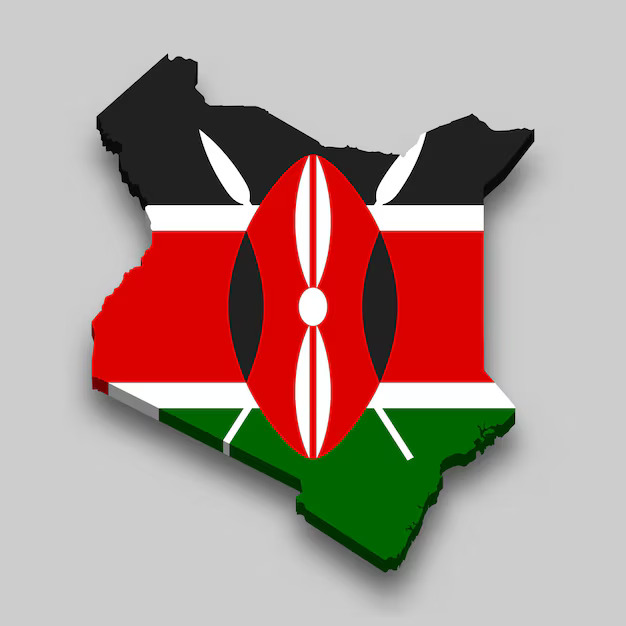
    Kenya, officially the Republic of Kenya, is a country located in East Africa. With an estimated population of more than 52.4 million as of mid-2024, Kenya is the 27th-most-populous country in the world and the 7th most populous in Africa. Kenya’s capital and largest city is Nairobi. The second-largest and oldest city is Mombasa, a major port city located on Mombasa Island.

    Kenya lies across the equator and covers an area of 582,646 Km2. It is geo-strategically located at the confluence of the Great Lakes, Horn of Africa and the Indian Ocean contiguity, making it a gateway to Africa’s major trading blocs such as the East African Community (EAC) and the Common Market for Eastern and Southern Africa (COMESA).

    It shares a border with Tanzania to the south, Uganda to the west, South Sudan to the north-west, Ethiopia to the north and Somalia to the north-east. Kenya also has a maritime border of 536Km along the Indian Ocean.

    Most of Kenya’s 52 million people live in the cooler highlands or the coast, which are best suited to food production. There are over 40 ethnic groups, mostly with their own language. Kiswahili and English are the national and official languages respectively. About 80 percent of Kenyans are Christians, 10 percent are Muslims and others retain indigenous beliefs.

    Kenya’s Presidential Villa. Credit: BBC

    The country’s diverse wildlife and panoramic geography draw large numbers of European and North American visitors, and tourism is an important contributor to Kenya’s economy.

    A former British colony, Kenya gained independence after the Mau Mau insurgency of the 1950s.

    The origins of the insurgency remain disputed by historians and its conduct became a controversial legacy for independent Kenya. In 2013, the British government paid compensation to claimants who said they had been the victims of abuses by colonial forces fighting the rebellion.

    In August 2022, Deputy President William Ruto narrowly won the presidential election. He took 50.5% of the vote. His main rival, Raila Odinga, got 48.8% of the vote. The incumbent president Uhuru Kenyatta was not eligible for a third term under Kenya’s constitution.

    In July 2015, Barack Obama visited Kenya for the first time since he became president of the United States. His father, Barack Obama, Sr., was born in Nyang’oma Kogelo and returned to Kenya in 1964, after he graduated from Harvard. Obama, Sr. lived in Nairobi at the time of his death in 1982. Kenyans have seen President Obama as a long-lost son and treated him as such during his 2015 visit, including welcoming ceremonies and lines of people holding signs greeting him wherever he went.

    U.S. President Barack Obama who has a Kenyan father delivers a speech, in front of American and Kenyan flags, at the Safaricom Indoor Arena in the Kasarani area of Nairobi, Kenya on July 26, 2015. Obama was traveling on a two-nation African tour where he became the first sitting U.S. president to visit Kenya and Ethiopia. Credit: AP Photo

    Kenya is home to breathtaking landscapes, interesting cultures, beautiful national parks and wildlife reservations. It is an ideal place to experience the fragrant smells of street food and colorful corner markets depicting its busy and bustling energy. With an abundance of successful conservation efforts, Kenya is known for preserving and protecting its stunning creatures and landscapes.

    Food in Kenya is rich in different types of breads, fried potatoes, eggs, rice, meat, fish, and vegetables. Meals are family times, so Kenyan families often sit down together and talk about their day during meals. Most people eat with their right hand.

    The first president and founding father of Kenya, Jomo Kenyatta was inaugurated as president after a bitter struggle for independence from Britain. Credit: Wikipedia

    There is no singular dish that represents all of Kenya’s wide cuisine. Different communities have their own native foods. Food staples such as maize and other cereals depend on the region, including millet and sorghum eaten with various meats and vegetables. The foods that are universally eaten in Kenya are ugali (maize), sukuma wiki (vegetables), and nyama choma (roasted beef).

    Grains are a food staple for groups that grow grains such as Kikuyu, Embu, Meru, and Kisii. Other communities such as the Luo and the Coastal communities have fish and seafood as their staple food. In semi-arid areas like Turkana, foods made from sorghum are more common staple foods. Towards the city, food eaten by working families varies according to preference and ethnicity. Rice and stew are more common with working families, and other dishes like chapati (parantha) and chicken stew.

    Flamingos in Lake Nakuru. Kenya’s Lake Nakuru is known for the vast numbers of pink flamingos that historically flocked to its waters, although their numbers declined in the early 21st century. Credit: Britannica

    Kenya is a hub for beautiful culturally inspired arts and crafts. Some of the items are sold as memorabilia to our visitors and they include:  sisal baskets, Maasai bead jewelry, musical instruments, soapstone sculptures, animal wooden carvings, tribal masks, paintings and prints on batik clothes, sculptures, kangas-women’s wraparound skirts with beautiful patterns with swahili proverbs printed on them, kikoi textile sarongs and more.

    Typical african sunset with acacia trees in Masai Mara, Kenya. Credit: Wikipedia

    Traditional African beliefs play a significant role in the lives of Kenyans in spite of adapting to modern values. Kenyans practice traditional values of humility, concern for neighbors and maintenance of kinship ties. Activities such as marriage, child naming, burials and other rites of passage are still heavily influenced by traditional beliefs and practices and range from community to community. Some communities have retained more of the traditional African lifestyle than others and consequently has gained great respect (and curiosity) internationally.


  • A Brief Spotlight on Senegal

    A Brief Spotlight on Senegal

    Bassirou Diomaye Faye is the President of Senegal. Credit: BBC

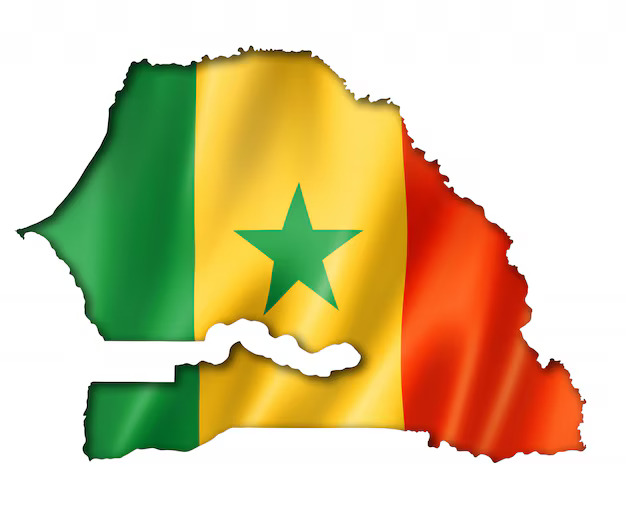
    Senegal is a West African nation known for its vibrant culture, rich history, and strategic location as the “Gateway to Africa”. It borders Mauritania to the north, Mali to the east, Guinea to the southeast and Guinea-Bissau to the southwest. Senegal nearly surrounds The Gambia, a country occupying a narrow sliver of land along the banks of the Gambia River, which separates Senegal’s southern region of Casamance from the rest of the country. It also shares a maritime border with Cape Verde. Senegal’s capital is Dakar.

    Long considered one of Africa’s model democracies, the west African nation of Senegal has a tradition of stable governments and civilian rule.

    Slaves, ivory and gold were exported from the coast during the 17th and 18th Centuries, and now the economy is based on agriculture. The money sent home by Senegalese living abroad is a key source of revenue.

    Hundreds of Senegalese were killed in a separatist conflict in the southern region of Casamance, but violence lessened after a 2014 ceasefire. The country’s stability has allowed it to send peacekeeping troops to DR Congo, Liberia and Kosovo.

    In February 2024, President Macky Sall plunged the country into a crisis when he postponed presidential elections, amid what some saw as a threat to one of the remaining democracies in coup-hit West Africa.

    The Senegalese island of Goree was the largest slave-trading centre on the African coast. Credit: BBC

    However, an election was held in March 2024 with opposition politician Bassirou Diomaye Faye winning the poll to become Africa’s youngest elected president.

    Almost two-fifths of Senegal’s people are Wolof, members of a highly stratified society whose traditional structure includes a hereditary nobility and a class of musicians and storytellers called griots. Contemporary Senegalese culture, especially its music and other arts, draws largely on Wolof sources, but the influences of other Senegalese groups (among them the Fulani, the Serer, the Diola, and the Malinke) are also evident. Wolof predominates in matters of state and commerce as well, and this dominance has fueled ethnic tension over time as less-powerful groups vie for parity with the Wolof majority.

    Senegal is home to several internationally renowned musicians and artists. Other aspects of Senegalese culture have traveled into the larger world as well, most notably Senghor’s espousal of Negritude—a literary movement that flourished in the 1930s, ’40s, and ’50s and that emphasized African values and heritage.

    Senegal’s Great Mosque of Touba is one of the largest in Africa. Credit:BBC

    Some 39 languages are spoken in Senegal, including French (the official language) and Arabic. Linguists divide the African languages spoken there into two families: Atlantic and Mande. The Atlantic family, generally found in the western half of the country, contains the languages most widely spoken in Senegal—Wolof, Serer, Fula, and Diola. Mande languages are found in the eastern half and include Bambara, Malinke, and Soninke.

    The towns of Saint-Louis (founded in 1659) and Dakar (1857) are the oldest in Senegal. Saint-Louis, originally the capital of French West Africa and noted for its colonial heritage, was designated a UNESCO World Heritage site in 2000. Dakar replaced Saint-Louis as the capital of French West Africa in 1902. Other towns, founded more recently and of colonial origin, typically developed as collection points for the peanut trade and later evolved into urban centres. These towns were often stops along the railroad lines, as at Thiès, Tivaouane, Mékhé, and Louga (between Dakar and Saint-Louis) or at Khombole, Bambey, Diourbel, Gossas, Kaffrine, and Koungheul (between Thiès and Kayes, Mali).

    The Ngor beach in Senegal is a popular tourist destination. Credit: Wikipedia

    The population of Senegal has been growing at a rate that is higher than the world average but is comparable to other countries in the region. Life expectancy figures for Senegal, averaging about 61 years for both men and women, are among the highest in sub-Saharan Africa.

    The Senegalese economy has traditionally revolved around a single cash crop, the peanut. The government, however, has worked to diversify both cash crops and subsistence agriculture by expanding into commodities such as cotton, garden produce, and sugarcane as well as by promoting nonagricultural sectors. The government was successful in making fishing, phosphates, and tourism major sources of foreign exchange at the beginning of the 21st century, although the condition of the transportation and power infrastructure placed limits on the amount of expansion possible. Exploitation of mineral resources such as gold, petroleum, and natural gas has also diversified the economy.

    Colorful fishing boats of the coast of Dakar. Credit: Wikipedia

    A wide variety of foods are available in Senegal. Millet, couscous, and rice form the basis of many meals; peanuts and fresh seafood are common sources of protein; and chiles and palm oil are used for flavouring. Common dishes include thiéboudienne, rice served with a fish and vegetable sauce; yassa au poulet or yassa au poisson, grilled chicken or fish in an onion and lemon sauce; and mafé, a peanut-based stew. Meals are generally eaten communally from a single serving dish, as they are in many parts of West Africa, and a code of conduct called fayda ensures proper sharing. Senegalese beer is produced primarily by breweries in Dakar.

    Independence Day is celebrated on April 4th. The country also celebrates various Christian and Islamic holidays.

  • Spotlight on DR Congo

    Spotlight on DR Congo

    DR Congo President Félix Tshisekedi. Credit:BBC

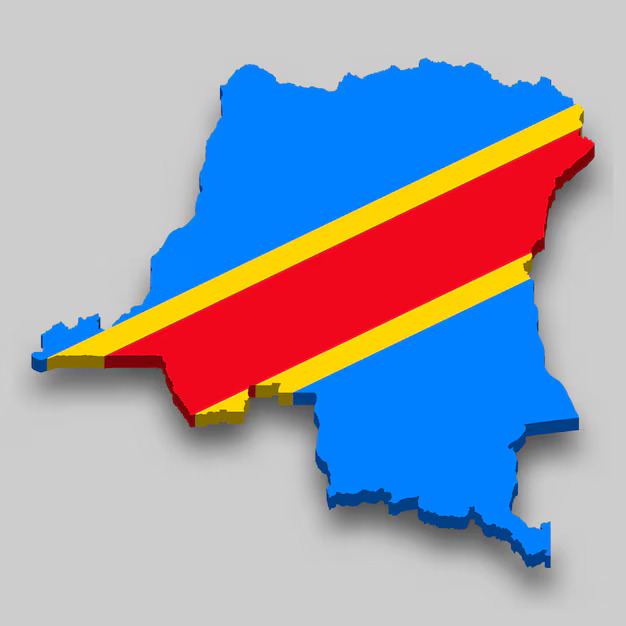
    Democratic Republic of the Congo (DRC), officially known as the Democratic Republic of the Congo is a country located in Central Africa and has a 25-mile (40-km) coastline on the Atlantic Ocean but is otherwise landlocked. By land area, it is the second-largest country in Africa (Algeria is the largest) and the 11th-largest in the world. With a population of around 112 million, the DR Congo is the most populous nominally Francophone country in the world. French is the official and most widely spoken language, though there are over 200 indigenous languages.

    The national capital and largest city is Kinshasa, which serves as the country’s official administrative, economic, and cultural center. The country is bordered by the Republic of the Congo, the Cabinda exclave of Angola, and the South Atlantic Ocean to the west; the Central African Republic and South Sudan to the north; Uganda, Rwanda, Burundi, and Tanzania (across Lake Tanganyika) to the east; and Zambia and Angola to the south. Centered on the Congo Basin, most of the country’s terrain is covered by dense rainforests and is crossed by many rivers, while the east and southeast are mountainous. 

    The country is often referred to by its acronym, the DRC, or called Congo (Kinshasa), with the capital added parenthetically, to distinguish it from the other Congo republic, which is officially called the Republic of the Congo and is often referred to as Congo (Brazzaville).

    Congo gained independence from Belgium in 1960. From 1971 to 1997 the country was officially the Republic of Zaire, a change made by then ruler Gen. Mobutu Sese Seko to give the country what he thought was a more authentic African name. “Zaire” is a variation of a term meaning “great river” in local African languages; like the country’s current name, it refers to the Congo River, which drains a large basin that lies mostly in the republic. Unlike Zaire, however, the name Congo has origins in the colonial period, when Europeans identified the river with the kingdom of the Kongo people, who live near its mouth. Following the overthrow of Mobutu in 1997, the country’s name prior to 1971, the Democratic Republic of the Congo, was reinstated. Congo subsequently was plunged into a devastating civil war; the conflict officially ended in 2003, although fighting continued in the eastern part of the country.

    Congo is rich in natural resources. It boasts vast deposits of industrial diamonds, cobalt, and copper; one of the largest forest reserves in Africa; and significant hydroelectric potential.

    Holidays celebrated in Congo include Commemoration of the Martyrs of Independence, observed on January 4; Labor Day and National Liberation Day, celebrated on May 1 and May 17, respectively; Independence Day, celebrated on June 30; Parents’ Day, celebrated on August 1; Youth Day, observed on October 14; Army Day and the Anniversary of the Second Republic, observed on November 17 and November 24, respectively; and Christmas, celebrated on December 25.

    The cities, especially Kinshasa, are the greatest creators, propagators, and promoters of national cultural life and arts. The Academy of Fine Arts in Kinshasa offers training programs in painting, sculpture, carving, architecture, and ceramics. The National Institute of the Arts offers training in classical as well as traditional music and drama. Congolese authors write poetry, plays, and novels in French, Lingala, or local languages.

    There are museums and public libraries in most large cities, with national museums in Kananga, Mbandaka, and Lubumbashi. The capital city houses the national archives and the National Theatrical Troupe. There are libraries at each of the universities as well.

    Democratic Republic of Congo has a number of unique tourist opportunities including wildlife reserves, indigenous cultures and geological wonders not found easily or anywhere else in Africa. Twelve percent of the country is made up of protected areas including 7 national parks and 57 reserve areas with great ecotourism potential.

    Found only in the rainforests of Congo, the okapi was unknown to science until 1901. Credit:Wikipedia

    However, many existing tourist facilities are in poor condition because of lack of proper maintenance. Democratic Republic of Congo has four endemic species including Mountain Gorillas, Okapi, Bonobos and Congolese peacocks. The country has a unique variety of species in its ecosystem covering almost 145 million hectares.

    Congolese food is heavily influenced by French and their Belgium colonizers. Mayonnaise is a favourite of the locals in the urban centers and can be mixed with peas, manioc, meat, fish, salads and chili pepper. Other readily available foods include roast chicken, roast goat and beef brochette, capitaine and the locally bred chicken with peanut source also known as poulet a la mwambe.

    There are many high-end restaurants in Lubumbashi, Kisangani, Bukavu and Kinshasa offering both local food and international cuisines. A large expatriate community consisting of aid workers and UN employees in the cities means one can also find restaurants serving Indian, Lebanese, Chinese and other continental dishes.

  • A Brief Spotlight on Tunisia

    A Brief Spotlight on Tunisia

    Tunisia’s Presidential Palace. Credit:AfriInfo

    Tunisia, officially the Republic of Tunisia is a North African country on the Mediterranean coast with a population of around 12 million, known for its diverse landscapes, including mountains, desert, and fertile plains, and its rich history and culture. It’s the northernmost country in Africa and shares borders with Algeria to the west and Libya to the southeast. Tunisia’s capital and largest city is Tunis, and the official language is Arabic, with French also widely spoken. It has a rich history, including being the birthplace of the Arab Spring uprisings.

    Tunisia achieved independence from France on 20 March 1956 with Habib Bourguiba as Prime Minister and the 20th of March is celebrated annually as Tunisian Independence Day.

    Tunisia’s culture is highly diverse, in part because of long periods of Ottoman and then French rule but also because populations of Jews and Christians have lived among a Muslim majority for centuries. Similarly, the capital, Tunis, blends ancient Arab souks and mosques and modern-style office buildings into one of the most handsome and lively cities in the region. Other cities include Sfax (Ṣafāqis), Sousse (Sūsah), and Gabès (Qābis) on the fertile coast and Kairouan (Al-Qayrawān) and El-Kef (Al-Kāf) in the arid interior.

    Tunisians are renowned for their conviviality and easygoing approach to daily life, qualities that popular French-Tunisian writer Albert Memmi captured in his 1955 autobiographical novel Pillar of Salt: We shared the ground floor of a shapeless old building, a sort of two-room apartment. The kitchen, half of it roofed over and the rest an open courtyard, was a long vertical passage toward the light. But before reaching this square of pure blue sky, it received, from a multitude of windows, all the smoke, the smells, and the gossip of our neighbours. At night, each locked himself in his room, but in the morning, life was always communal.

    Despite facing some economic and political challenges in recent years, Tunisia continues to attract foreign direct investment (FDI) and is known for its skilled workforce, favorable business climate and access to key markets. Its easy access to key markets in Europe, Africa and the Middle East, makes Tunisia an ideal hub for companies looking to expand their operations in these regions.

    Tunisia has the ambition of becoming a technological hub in the region by 2030, attracting talent, driving inclusive growth and promoting a better quality of life for all citizens.

    Tunisia’s status as the only democratic state in the Arab World is certainly one to be proud of. However, the country has experienced turbulent political upheavals in the five years since the state-wide protests, known as the Tunisian Revolution, led to the Arab Spring in 2010-2011.

    The protests, which began in December 2010, were spurred by concerns about corruption, lack of freedom of speech and political freedoms, unemployment and inflation.

    As a result of the protests, the country’s President Zine El Abidine and his single party system were removed from power and office on 14 January 2011. After his removal, an interim government was established which was eventually replaced by a new constitutional republic in 2013. As a great number of women took part in the protests, it is widely held that women played an instrumental role in the ousting of President Zine El Abidine and catalyzed the broader Arab Spring movement across the region.

    Tunisian President, Kais Saied. Credit: AfricaNews

    The number of legalized political parties in Tunisia has grown considerably since the revolution. There are now over 100 legal parties, including several that existed under the former regime. During the rule of Ben Ali, only three functioned as independent opposition parties: the PDP, FDTL, and Tajdid. While some older parties are well-established and can draw on previous party structures, many of the 100-plus parties extant as of February 2012 are small.

    Rare for the Arab world, women held more than 20% of seats in the country’s pre-revolution bicameral parliament. In the 2011 constituent assembly, women held between 24% and 31% of all seats.

    Ranked the most competitive economy in Africa by the World Economic Forum in 2009, Tunisia is an export-oriented country in the process of liberalizing and privatizing an economy that, while averaging 5% GDP growth since the early 1990s, has suffered from corruption benefiting politically connected elites. Tunisia’s Penal Code criminalises several forms of corruption, including active and passive bribery, abuse of office, extortion and conflicts of interest, but the anti-corruption framework is not effectively enforced. However, according to the Corruption Perceptions Index published annually by Transparency International, Tunisia was ranked the least corrupt North African country in 2016, with a score of 41. Tunisia has a diverse economy, ranging from agriculture, mining, manufacturing, and petroleum products, to tourism, which accounted for 7% of the total GDP and 370,000 jobs in 2009. In 2008 it had an economy of US$41 billion in nominal terms, and $82 billion in PPP.

    Among Tunisia’s tourist attractions are its cosmopolitan capital city of Tunis, the ancient ruins of Carthage, the Muslim and Jewish quarters of Djerba, coastal resorts outside of Monastir, and the night life-driven city of Hammamet. According to The New York Times, Tunisia is “known for its golden beaches, sunny weather and affordable luxuries”.

    The El Jem Amphitheatre in Tunisia is a Unesco World Heritage–listed coliseum and was the second-largest in the Roman world after the coliseum in Rome. Credit: Lonelyplanet.com

    Hundreds of international festivals, national, regional or local punctuate the calendar year. Music and theatrical festivals dominate the national cultural scene.

    Several festivals take place annually in summer: the International Festival of Carthage in July, the International Festival of Arts of Mahr from late July to early August, and the International Festival of Hammamet in July and August.

    The Carthage Film Festival is held in October and November of every other year, alternating with the Carthage Theatre Festival. It was created in 1966 by the Tunisian Minister of Culture to showcase films from the Maghreb, Africa and the Middle East. In order to be eligible for the competition, a film must have a director of African or Middle Eastern nationality, and have been produced at least two years before entry. The grand prize is the Tanit d’or, or “Golden Tanit”, named for the lunar goddess of ancient Carthage; the award is in the shape of her symbol, a trapezium surmounted by a horizontal line and a circle.

    A vegetable farm on the outskirts of Tunis. Credit: TunisNow

    The International Festival of the Sahara, celebrated annually at the end of December, honors the cultural traditions associated with the Tunisian desert. This attracts many tourists and musicians from all around the world, as well as horsemen who flaunt their saddles and local fabrics and skills.

    There are also a number of musical festivals; some honor traditional Tunisian music, while others, including the Tabarka Jazz Festival, focus on other genres.

    Tunisia’s warmth, joined with the country’s renowned hospitality and cuisine, has contributed greatly to Tunisia’s growing popularity as a destination for tourists from throughout Europe and the Americas.

  • A Brief Spotlight on Angola

    A Brief Spotlight on Angola

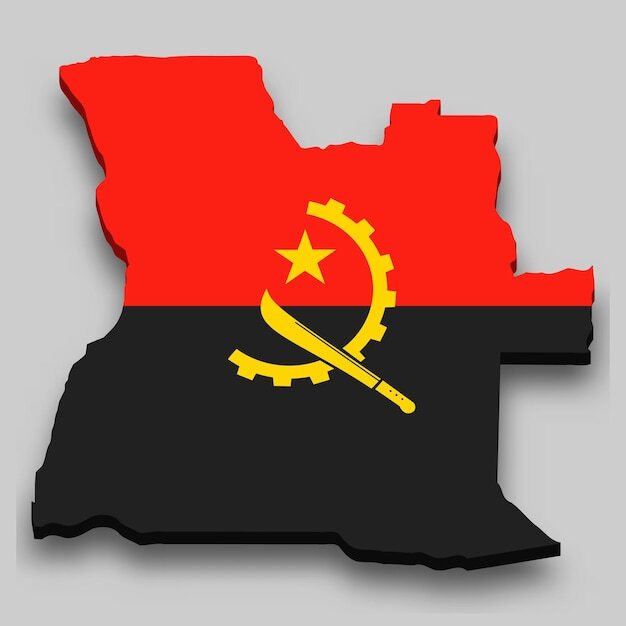
    Angolan flag. Credit: Wikipedia

    Angola, a southern African country with a population of about 36 million, is about twice as big as France. Angola is the second-biggest oil producer in Africa, behind Nigeria.

    The country borders Namibia to its south, Zambia to the east, and the Democratic Republic of Congo to the north.

    The capital and commercial centre is Luanda, a large port city on the northern coast that blends Portuguese-style colonial landmarks with traditional African housing styles and modern industrial complexes.

    Angola had been ruled by Portugal for about four centuries. After Angola won its independence in 1975, the People’s Movement for the Liberation of Angola (MPLA), a Communist movement backed by the Soviet Union, took control. But a brutal civil war raged in Angola for 27 years between the MPLA, the National Union for the Total Independence of Angola (UNITA), and the National Liberation Front of Angola (FNLA), the latter two backed by the US and China.

    Angola has significant economic potential. The country is rich in natural resources, it has large uncultivated arable land, benefits from favorable climatic conditions almost the entire year, adequate for almost all types of crops. Angola has also a demographic dividend potential, as about half of the population is young. Moreover, it benefits from a strategic geopolitical location that can facilitate the promotion of regional integration.

    ElephantS drinking at a waterhole in Quicama National Park, Angola. Credit: Britannica

    Angola is one of Africa’s most resource-rich countries. It is sub-Saharan Africa’s second-largest oil producer, after Nigeria, and the world’s fourth-largest producer (in value) of diamonds. The country also possesses a wealth of other natural resources, including minerals, water, agriculture, forestry and fisheries.

    Prior to independence in 1975, Angola was self-sufficient in key food crops (except wheat) and was an exporter of cash crops, in particular coffee and sugar. The war for independence and lack of investment severely hindered the agriculture and fisheries sectors, and the country has been dependent on food imports since 1990. A mere 10 per cent of the country’s arable land is currently under cultivation, and per-acre productivity is one of the lowest in sub-Saharan Africa.

    Apart from a few Europeans and isolated bands of Northern Khoisan speakers such as the !Kung (a San group) in the remote southeast, all Angolans speak Bantu languages of the Niger-Congo language family, which dominates western, central, and southern Africa. The largest ethnolinguistic group is the Ovimbundu, who speak Umbundu and who account for about one-fourth of the population.

    National Assembly building in Luanda, Angola. Credit: Britannica

    The use of the Portuguese language by indigenous Angolan groups dates back hundreds of years; in the Kongo kingdom, some were able to speak and read Portuguese as early as 1491. Beginning in the 1920s, Portuguese colonial policies sought to make Portuguese the only language spoken in Angola; these attempts met with limited success. Portuguese is often the only language spoken in Luanda and in much of the interior extending beyond the city and in other parts of the country; in some areas, however, indigenous languages are used in daily life. Because Portuguese developed as the lingua franca of the country and became the language of the present political leadership, those who did not speak Portuguese were effectively excluded from the political process. Since independence the government has recognized the major African languages, including six that were designated as official languages for educational instruction. However, widespread use of African languages in educational instruction never occurred, and the government continued to employ Portuguese for education, written documents, and official usage.

    Farm worker watering crops, Cabinda, Angola. Credit: Britannica

    Angola’s population is overwhelmingly Christian. About two-fifths of the population is Roman Catholic, about two-fifths is Protestant, and some one-tenth adheres to traditional beliefs or other religions.

    Angola is currently one of the world’s fastest-growing economies. A large oil producer and a member of oil cartel OPEC since 2006, most of Angola’s GDP comes from the oil sector. Much of the country’s oil reserves are found in Cabinda, an Angolan enclave wedged between Republic of the Congo and the Democratic Republic of Congo.

  • A Brief Spotlight on Somalia

    A Brief Spotlight on Somalia

    Somalian President Hassam Sheikh Mohamud. Credit: BBC

    Somalia, officially the Federal Republic of Somalia, is a country in the Horn of Africa. The country is bordered by Ethiopia to the west, Djibouti to the northwest, the Gulf of Aden to the north, the Indian Ocean to the east, and Kenya to the southwest. Somalia has the longest coastline on Africa’s mainland.

    Somalia has an estimated population of around 14.3 million, and has been described as the most culturally homogeneous country in Africa. Around 85% of its residents are ethnic Somalis. The official languages of Somalia are Somali and Arabic. Most people in the country are Muslims. Somalia is a country of geographic extremes.

    The climate is mainly dry and hot, with landscapes of thorn bush savanna and semi-arid, and the inhabitants of Somalia have developed equally demanding economic survival strategies. Apart from a mountainous coastal zone in the north and several pronounced river valleys, most of the country is extremely flat, with few natural barriers to restrict the mobility of the nomads and their livestock.

    Somalia’s main economic sectors are agriculture, with key exports including dry lemon, sesame, and banana, along with livestock and fisheries. The country also offers numerous attractions such as historical sites, pristine beaches, magnificent waterfalls, mountain ranges, ridges, and national parks.

    The scars of civil war are visible in Mogadishu’s historic port city. Credit:BBC

    Known as the “bride of the Indian Ocean,” Somalia’s coastline is the longest in mainland Africa and the second longest in all of Africa, stretching over 3,333 km. It features a highly productive upwelling zone crucial to the region.

    Created in 1960 from a former British protectorate and an Italian colony, Somalia collapsed into anarchy following the overthrow of the military regime of President Siad Barre in 1991.

    As rival warlords tore the country apart into clan-based fiefdoms, an internationally-backed unity government formed in 2000 struggled to establish control, with separatist movements in the two relatively peaceful northern regions of Somaliland and Puntland.

    However, unlike Somaliland, Puntland is not trying to obtain international recognition as a separate nation, but is part of the federal Somali state.

    Somalia is often simply portrayed as being affected by war and famine. Although many challenges exist, this is not the full narrative and it takes away from the many positive and exciting initiatives that have taken root and are having a positive impact.

    Somalia is strategically important, leveraging vast opportunities from its extensive coastline and serving as a historic sea route for traders like Arabs, Romans, and Greeks. The nation has abundant untapped resources, including marine assets, offshore oil and gas, and various minerals. It is the second African country, after South Africa, to have a power generation plant incorporating fuel, solar, and wind energy. Somalia is also a member of the Regional Center for Renewable Energy and Energy Efficiency (RCREEE).

    The Masjid al-Qiblatayn is a ruined mosque in Zeila. he name of the mosque reflects the belief that it was once aligned to both Mecca and Jerusalem. Credit: Wikipedia

    Somalia has a tradition of peaceful power transitions, with successive heads of state handing over power since the first elections in 1967. As a founding member of the African Union (originally the Organization of African Unity), Somalia hosted the 11th OAU summit in Mogadishu in June 1974. The country adopted its constitution in 1961, and Somali became a written language in 1972. Somalia has been a member of the Organization of Islamic Cooperation (OIC) since 1969 and joined the Arab League in 1974.

    Somali pirates gained global notoriety in the late 2000s and early 2010s due to a series of high-profile hijackings and attacks on international shipping. The Somali coast, with its vast and poorly patrolled waters, became a hotspot for piracy.

    The pirates targeted commercial vessels, seizing ships and demanding substantial ransoms for their release. One of the most infamous incidents was the 2009 hijacking of the Maersk Alabama, a U.S. cargo ship, which led to a dramatic rescue operation by the U.S. Navy and a high-profile trial. The incident highlighted the serious security threat posed by Somali piracy and led to increased international naval patrols in the region.

    At the moment, almost nothing is heard about Somali pirates, as the military and various PMCs have taken up the fight against them.

    With resilience and courage, Somalia is gradually regaining its status as an influential leader in the region and the aim is to see it transform into a fast-rising, stable, and sovereign federal republic.