

NIGERIA’S TERRORISM CHALLANGES: MATTERS ARISING
-
- November 27, 2025

A deep dive by Tolulope Omotunde of Afrik Digest Magazine has revealed troubling patterns behind Nigeria’s recent surge in kidnappings and terrorist activities, revealing a complex mix of insecurity, political calculation, and fragile state mechanisms.
In the last fortnight alone, armed men abducted 25 female students from Government Girls Comprehensive Secondary School in Maga town, Kebbi State, killing two staff members, including the Vice Principal. Just days later, over 300 students and teachers were taken from St. Mary’s Catholic Primary and Secondary School in Papiri, Niger State, though 50 students managed to escape. Some weeks prior to that, a church in Eruku, Kwara State was attacked in which several members were left dead and others kidnapped.
While the nation has recently had cause to breathe a sigh of relief over the rescue of some students, there’s a school of thought that believes that these attacks are more than random criminal acts—they reflect a calculated exploitation of government weaknesses, negotiation dynamics, and, disturbingly, political interests.
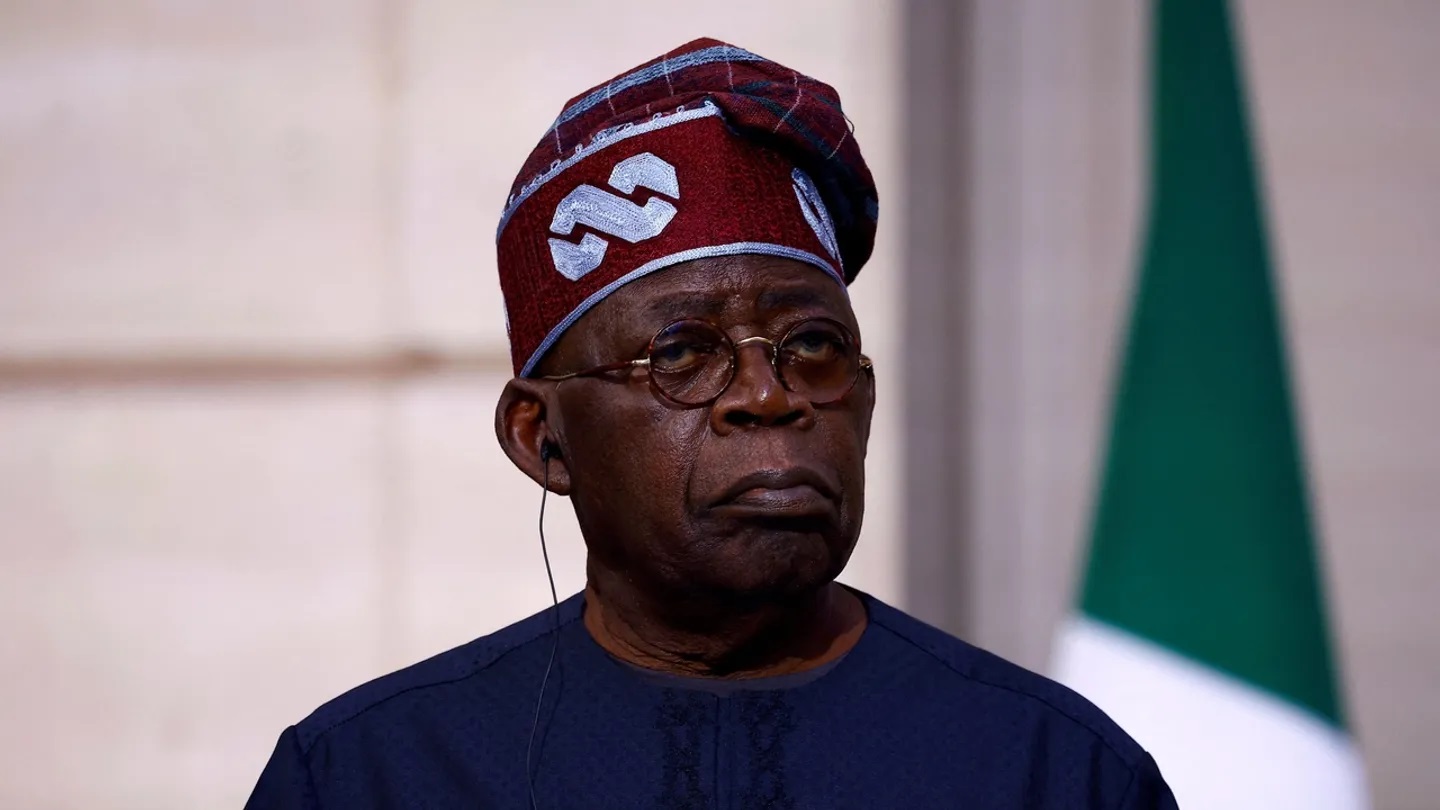
Nigerian President Bola Tinubu has seen his administration come under serioius fire for Nigeria’s worsening security crisis. Credit-Aegis
For years, journalists, activists, observers, and many citizens have complained about the Nigerian government’s lack of urgency in dealing with the terrorism that has rocked the majority of the country. Since 2011, Nigeria has been consistently ranked in the top ten of the Global Terrorism Index (GTI), and rose up two spots to sixth place on the latest edition.
The last few weeks have brought arguably the highest attention to Nigeria’s gross insecurity crisis, since the 2014 abduction of the 276 Chibok girls that sparked the international outcry of ‘Bring Back Our Girls.’ This time, however, the catalyst is an alleged Christian genocide, a narrative being led by U.S. President Donald Trump. Earlier this month, the Trump administration designated Nigeria a “Country of Particular Concern” (CPC), alleging that the Nigerian government was doing little to curtail Islamist insurgents from attacking Christians.
In a social media post before the designation, Trump stated that the U.S. “may very well go into that now disgraced country, guns-a-blazing,” threatening military action. On Thursday, November 20, the U.S. Congress Subcommittee on Africa held a hearing on Nigeria’s CPC status, but it could not reach a consensus on whether the claim of a Christian genocide is fitting for the crisis.
It is factually correct to state that hundreds of Christians have been killed by armed insurgents in the last decade-plus, many in their places of worship. Just recently, at least two people were killed at a Christ Apostolic Church in Eruku, Kwara state. Perhaps the most gruesome in recent memory was in June 2022, when armed men opened fire into St. Francis Xavier Catholic Church in Owo, Ondo state, in the country’s southwest, far from the northern region where terrorism happens the most.
Eleven years before that, a suicide bomber detonated a car outside St. Theresa Catholic Church in Madalla, Niger state, an attack that killed at least 40 people. Boko Haram was responsible for the attack, as well as another in February 2012, when another suicide bomber drove a vehicle filled with explosives into the Church of Christ in Nations (COCIN) in Jos, Plateau state.
However, to frame Nigeria’s insecurity issue as a Christian genocide is reductive. That narrative simply oversimplifies the core issues that a typical Nigerian faces. In all of the violence that’s happening across these regions, it’s glaring to see that everybody falls victim to these events. Contrary to what a lot of people believe, majority of the communities in Northern Nigeria are religiously mixed, so when the narrative that a particular community has been targeted and that people from a particular religion are the main victims, it tends to complicate the understanding of the conflicts that Nigeria is currently facing.
The crisis is complex, with multiple actors and factors. Boko Haram, which has splintered into factions, based the beginning of its terrorist attacks on opposition to Western education. Armed groups, primarily operating in the northwest, ventured into kidnap-for-profit, a business that Islamist insurgents have also joined in on. Across the middle belt region, farmer-herder conflicts over resources have escalated into massacres, with roots in ethno-religious conflicts dating back to the early 2000s and even further back to pre-independence.
It is factually correct to state that hundreds of muslims have been killed by armed insurgents, considering that the northern parts of Nigeria are majority muslim. Some of the fatalities have also happened in places of worship. More than 80 people died after two suicide bombers detonated at the Kano Central Mosque in November 2014. Just over three years later, 86 were killed in a twin suicide bomb attack at a mosque in Mubi, Adamawa state, just six months after 50 were killed by a suicide bomb in a mosque in the same town.
Meanwhile, recent analysis shows that kidnapping in Nigeria has evolved into a lucrative economy. Armed groups manipulate fear, exploit gaps in security, and use negotiation as a revenue stream. The cycle is sustained because responses are inconsistent, sometimes delayed, and occasionally entangled with political agendas.
Further research indicates that political narratives play a pivotal role in how kidnappings unfold and are perceived. Analysts argue that abductions in schools or religious centers are sometimes leveraged to project claims of persecution, potentially influencing international attention and intervention. At the same time, other attacks highlight gaps in government capacity, undermining public confidence and feeding narratives of insecurity ahead of the 2027 general elections.
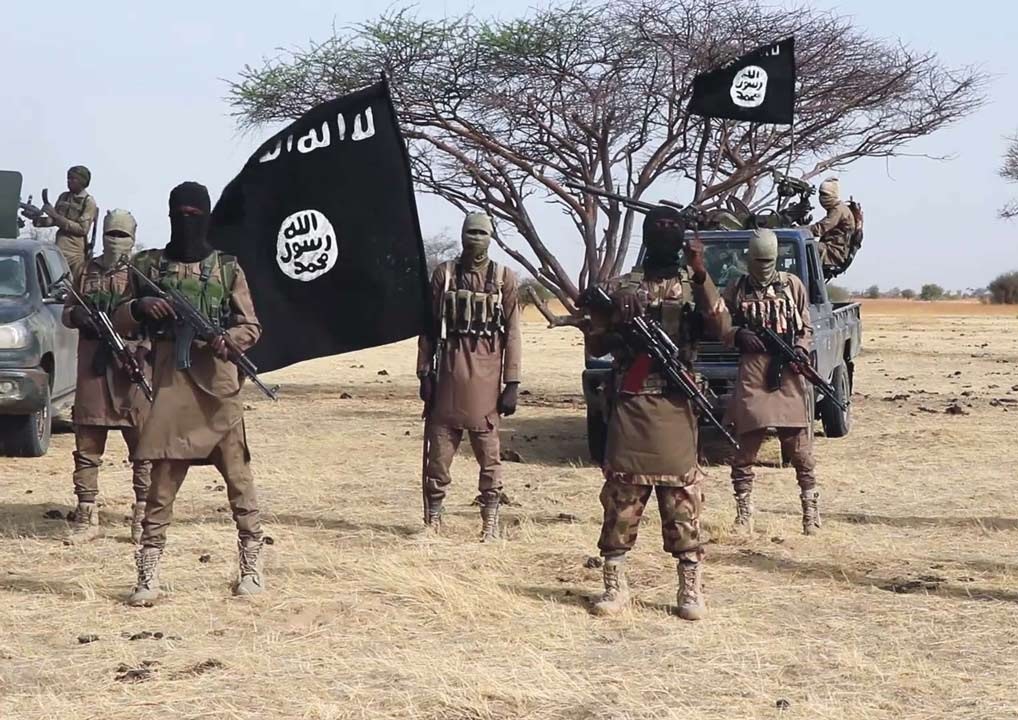
A picture of a terrorist sect that has terrorized large parts of Northern Nigeria. Credit-BBC
The rapid release of abducted students under non-kinetic military strategies, coordinated by the Office of the National Security Advisers (ONSA), has further fueled speculation about government complicity or political calculation. Armed groups themselves have posted on social media claiming that federal authorities negotiated the students’ freedom, adding to public suspicion.
Various security analysts believe that the country faces multiple, evolving threats from splintering criminal and terrorist networks. The scale of attacks shows Nigeria is no longer dealing with a single insurgency. These actors are rebranding and reorganizing, making them far more dangerous.
The President Bola Tinubu-led administration has moved to address recent security gaps. These measures include:
– Establishing 24-hour security cordons around forests in Kwara, Kebbi, and Niger States.
– Redeploying police officers from VIP duties to frontline security.
– Directing the Nigerian Air Force to intensify aerial surveillance of remote forested regions.
Security agencies have already rescued 38 worshippers in Eruku, Kwara State, and 25 schoolgirls in Kebbi State. Additionally, a five-year counter-terrorism strategy (2025–2030) has been unveiled, aimed at modernizing security architecture and enhancing national resilience.
A lot of people have cast doubts on the effectiveness of these directives as they believe they have heard the same lines over and over. Soldiers on the frontline have lamented about poor welfare and being underequipped to deal with terrorists, despite millions of dollars allocated in the yearly budget. With little to no accountability, it means military leaders and government officials loot a significant portion of the funds meant to combat terrorism.
Similar to former President Buhari, current President Bola Tinubu has been rather tepid in his response to the rampant insecurity in Nigeria. Perhaps, renewed agitation in the last few days could spur some positive action. However, there’s the possibility that the government is waiting for things to dial down. Even now, it has blamed the recent surge of violent activity on attention from the U.S., with a government official claiming that Trump’s threats have “inadvertently emboldened opportunistic violent groups.”
For Nigeria to finally take decisive action, the government must move beyond deflection and political posturing, committing to radical and comprehensive security sector reform. This includes ensuring strict accountability for the billions allocated to the military budget, prosecuting officials and commanders implicated in the diversion of funds, and ending the impunity that has allowed military abuses and war crimes to fuel public distrust and sympathy for insurgents. Only by addressing the root causes of the crisis — corruption, lack of trust, and the failure to provide basic security — can a true, long-lasting victory against terrorism and safety for the everyday Nigerian be achieved.